
Membership of Type allows unlimited access to our online library. Join to support new research and writing on the design of the built environment.
You can read more about membership here.
Already a member? Login to your account to avail of unlimited downloads.

Membership of Type allows unlimited access to our online library.
Join to support new research and writing on the design of the built environment.
You can read more about membership here.
Individual Membership Fees
Individual membership is available on a monthly or annual basis.
The fee is €10/month or €99/year.

Modern architecture meant vastly different things to different people, but the one thing it consistently stood for was change. Its proponents viewed change indisputably as progress, although critics could and did wonder if it represented a step forward in the right direction. Advocates of progressive or even radical social and political change did not necessarily also turn to architecture, however, as one of the means through which they could enact or even visualize the transformations they sought. For instance, building respectability and representing dignity mattered more to most middle-class African Americans campaigning in the interwar and immediate postwar period in the United States for economic opportunity and political empowerment than did departing from building types more closely associated with builders than professional architects. Housing and education were major architecture-related issues, but the emphasis was on access to decent living and classroom conditions rather than the International Style or the modern building materials that had inspired it. Of vastly greater importance than style or materials were more subtle expressions of modernity, such as electricity, hot and cold running water, and central heating, conveniences which many African Americans could not take for granted for most of this period.
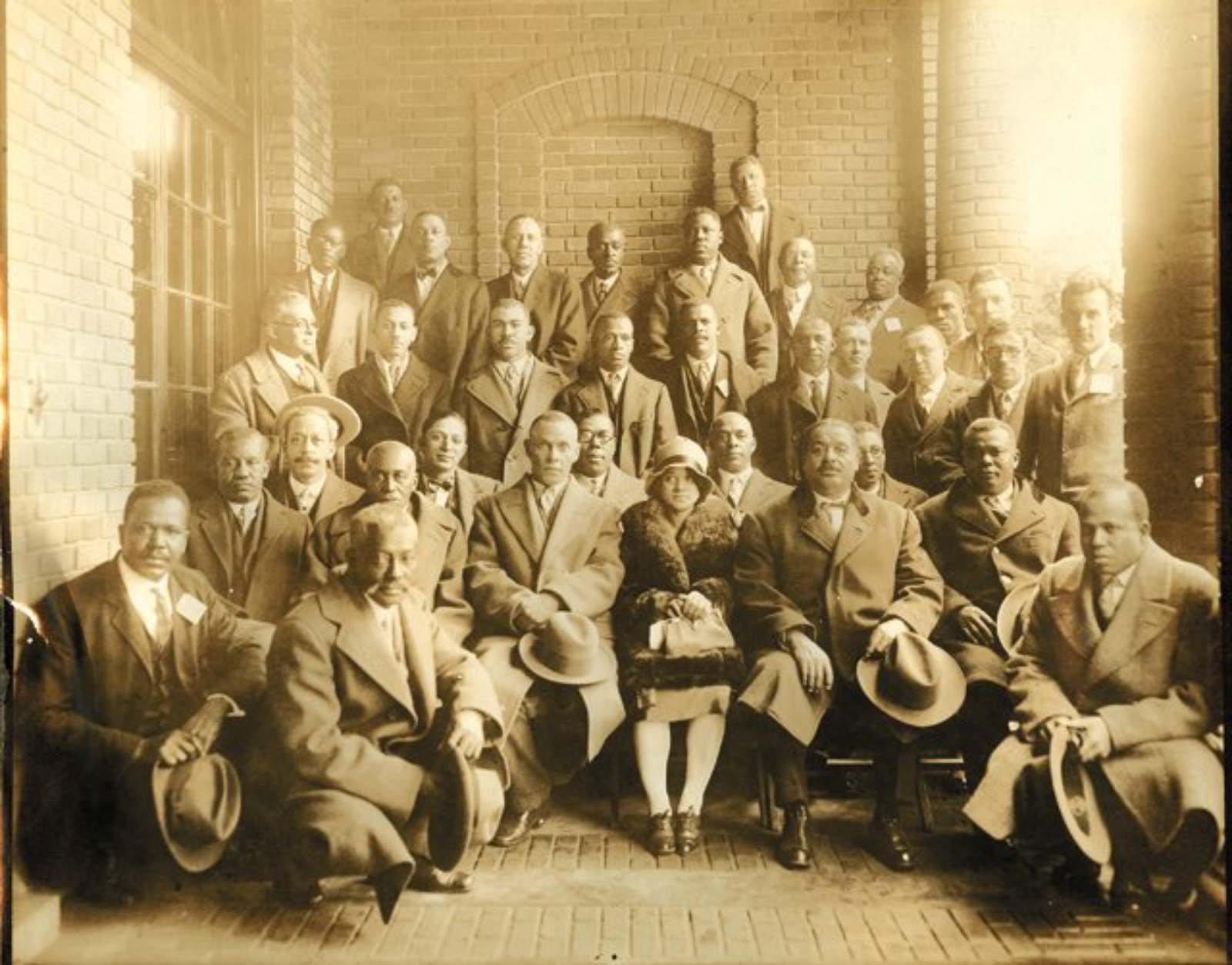
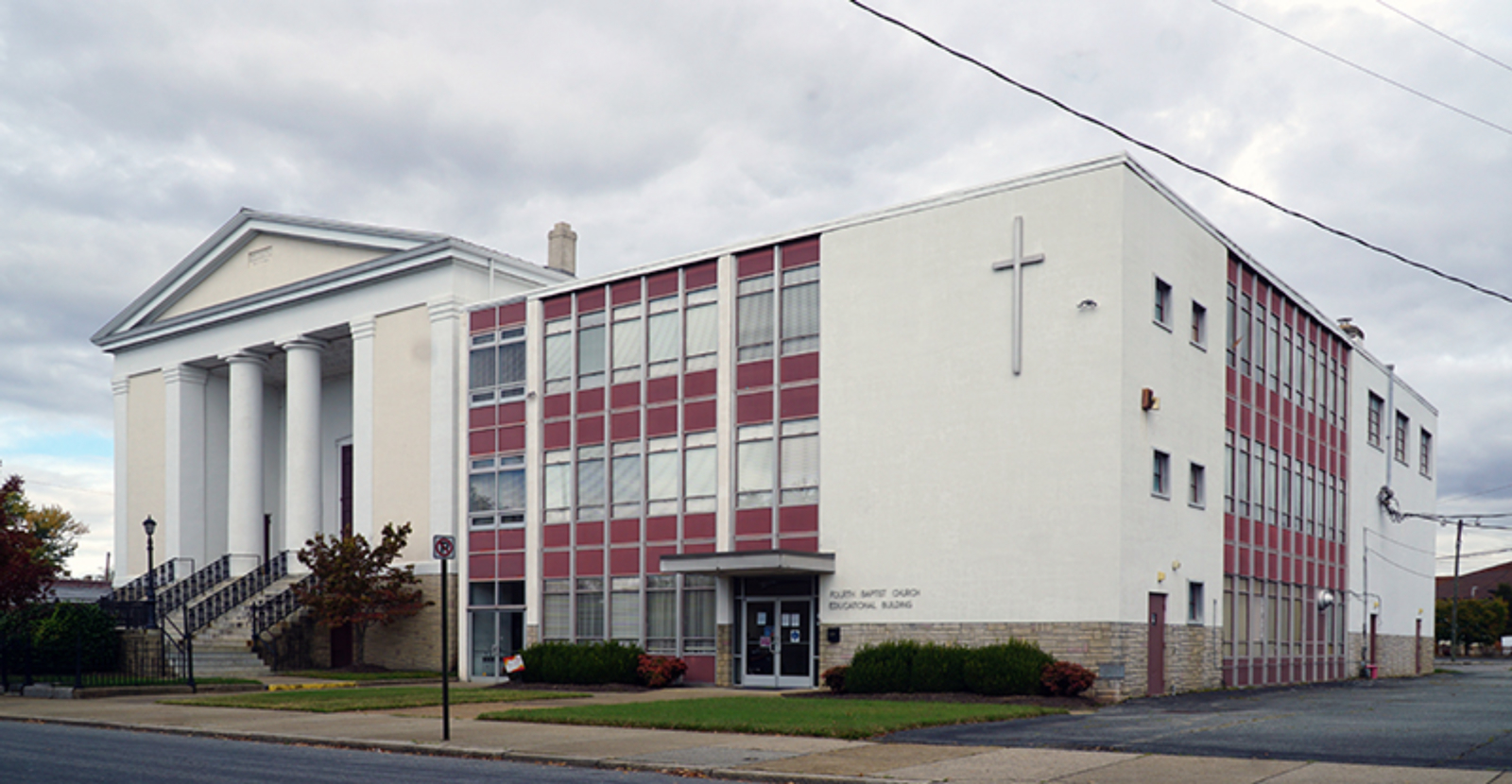
Some of the complexities of who sought change where and why can be seen in the career of Ethel Madison Bailey Carter Furman (1893-1976) (figure 1). In many ways Furman hewed to convention in the houses and churches she designed for fellow African Americans in and around her native city of Richmond, Virginia (Horner, 2004; Gaglio, no date; James-Chakraborty, 2025). Many of her clients undoubtedly took pride in exactly that. She was able to provide those members of her community who could afford them with one-off houses that matched the standards set in postwar white suburbia and its interwar streetcar predecessors. Small steeples and tall windows ensured that the function of her modest, mostly rural, churches was readily identifiable to their Baptist parishioners, even as she provided the bathrooms, preacher’s studies, and choir rooms that were welcome new facilities. A staunch churchwoman herself, Furman spent most of her life in the house just around the corner from Fourth Baptist Church that her contractor father, Madison Bailey, had built to show off his skills (figure 2). Her extension to Fourth Baptist, which houses Sunday school classrooms and offices, was the only well documented instance of her engaging with modern architectural styling. Here she adopted the language of recent local school construction, in what may as well have been a bid to provide parishioners with access to the formal vocabulary of Richmond’s newest, and only nominally integrated, high school.
The modernity of Furman’s designs should not be assessed simply in terms of the forms she chose, undoubtedly in close consultation with her clients. Her commitment to providing fellow African Americans with buildings that expressed Christian faith, economic achievement, and equal political rights in the face of Jim Crow segregation was itself modern, even if it only occasionally generated forms that were obviously so. Equally and obviously modern was that an African American woman was designing buildings in and around the former capital of the Confederacy, and in a state which adopted a policy of Massive Resistance to school integration. If we shift the focus in our evaluation of buildings from aesthetic to social and cultural innovation, Furman becomes not just a remarkable but a significant figure. This essay aims to illuminate her career as a designer within the context of the enormous racial discrimination she and her clients faced daily, as well as to elucidate the way in which the publications they read addressed housing. This was almost never in terms of style but instead focused on the ways in which architecture and interior design could represent as well as provide upward mobility. Her biography, including her struggle for professional recognition and the degree to which middle class African American women of her generation were more likely to work outside the home than their white counterparts, provide additional context for understanding the approach she took in the houses and churches she designed. Produced outside the professional architectural – but not the building culture of their times – Furman’s oeuvre reminds us of the degree to which the built environment is not entirely controlled by architects, and that the priorities of those shaping it often diverge from the aesthetic ambitions that dominate the upper echelons of architectural culture, including its preoccupation for much of the twentieth, and now the twenty-first, century with modernist aesthetics.
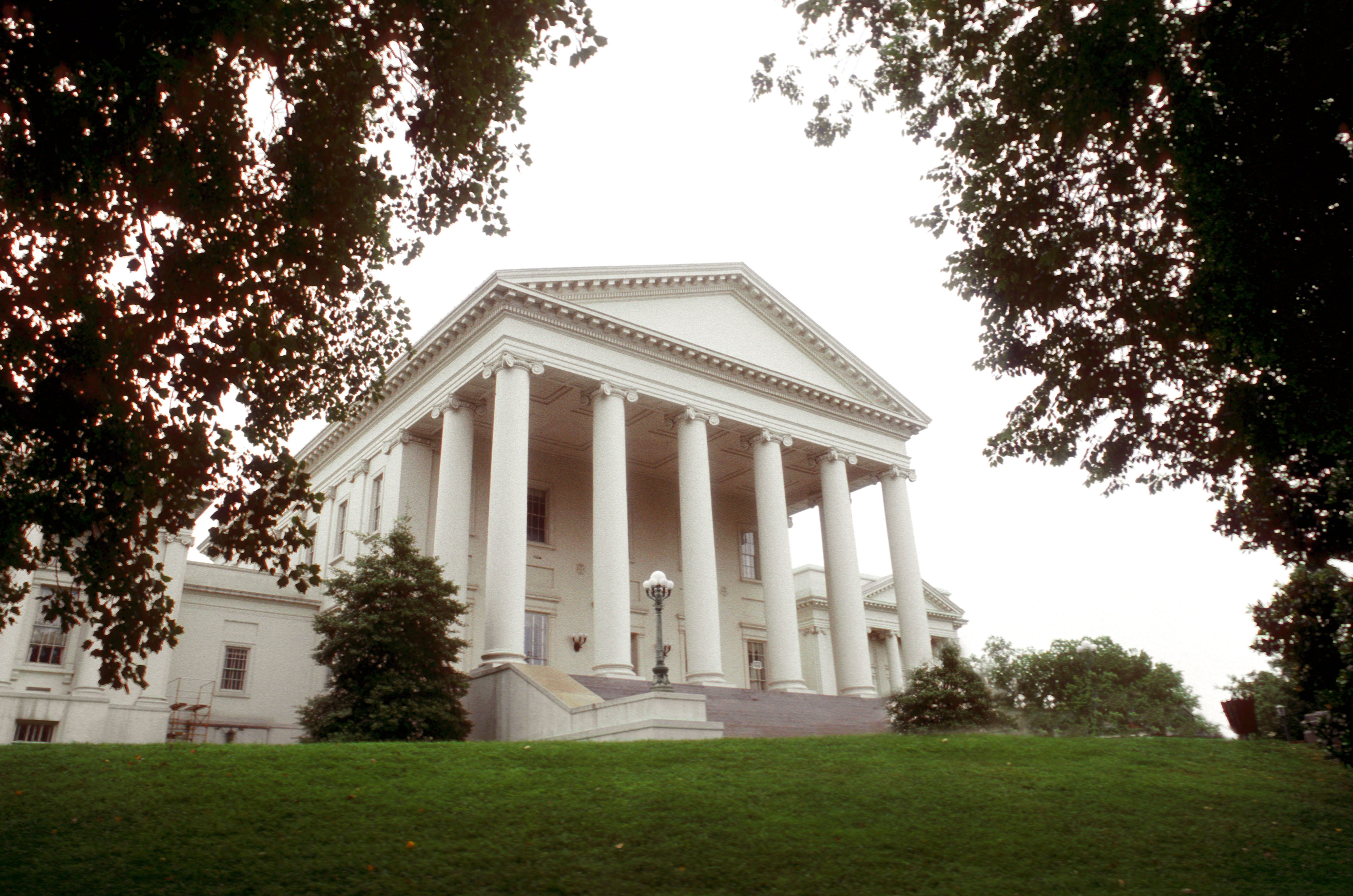
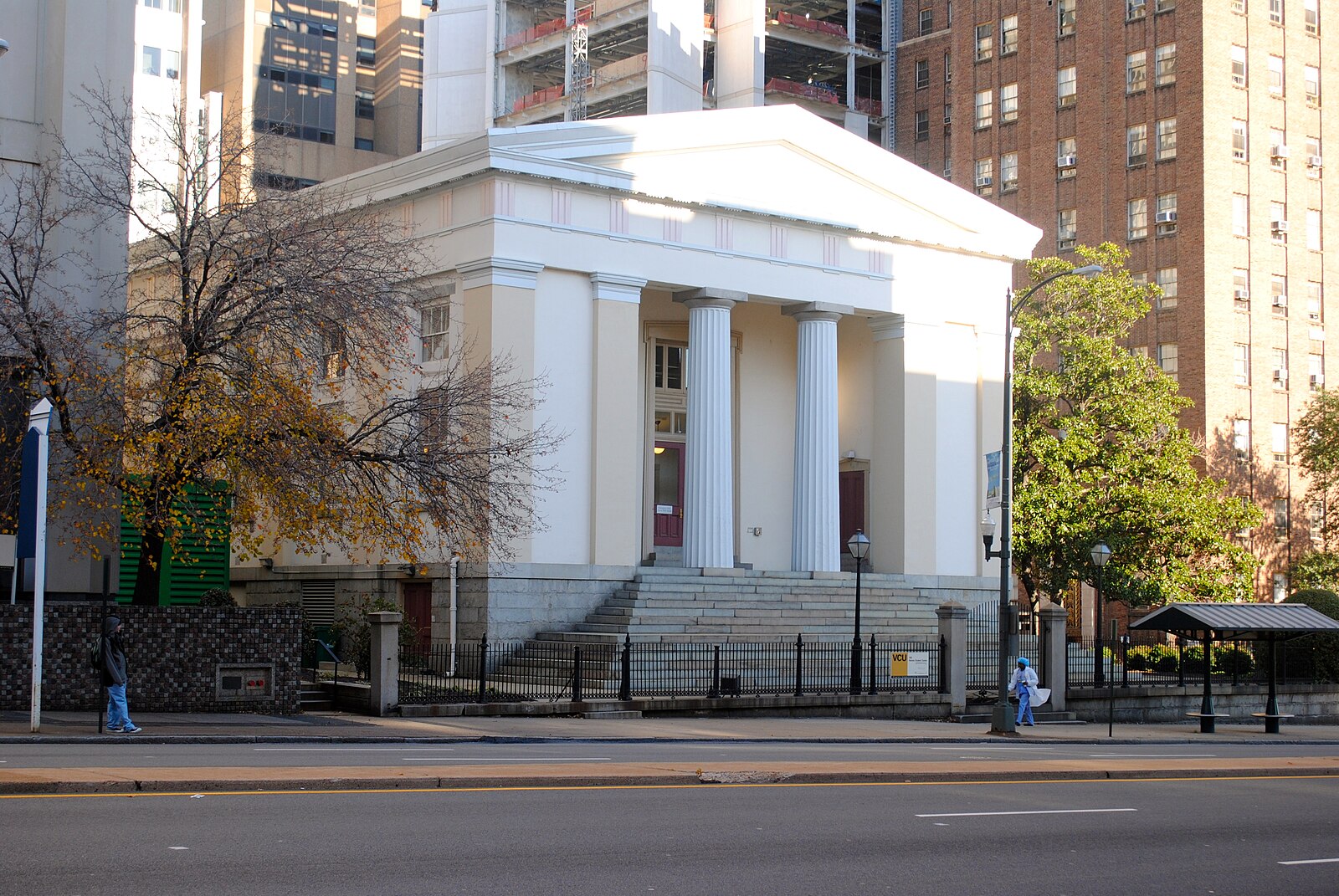
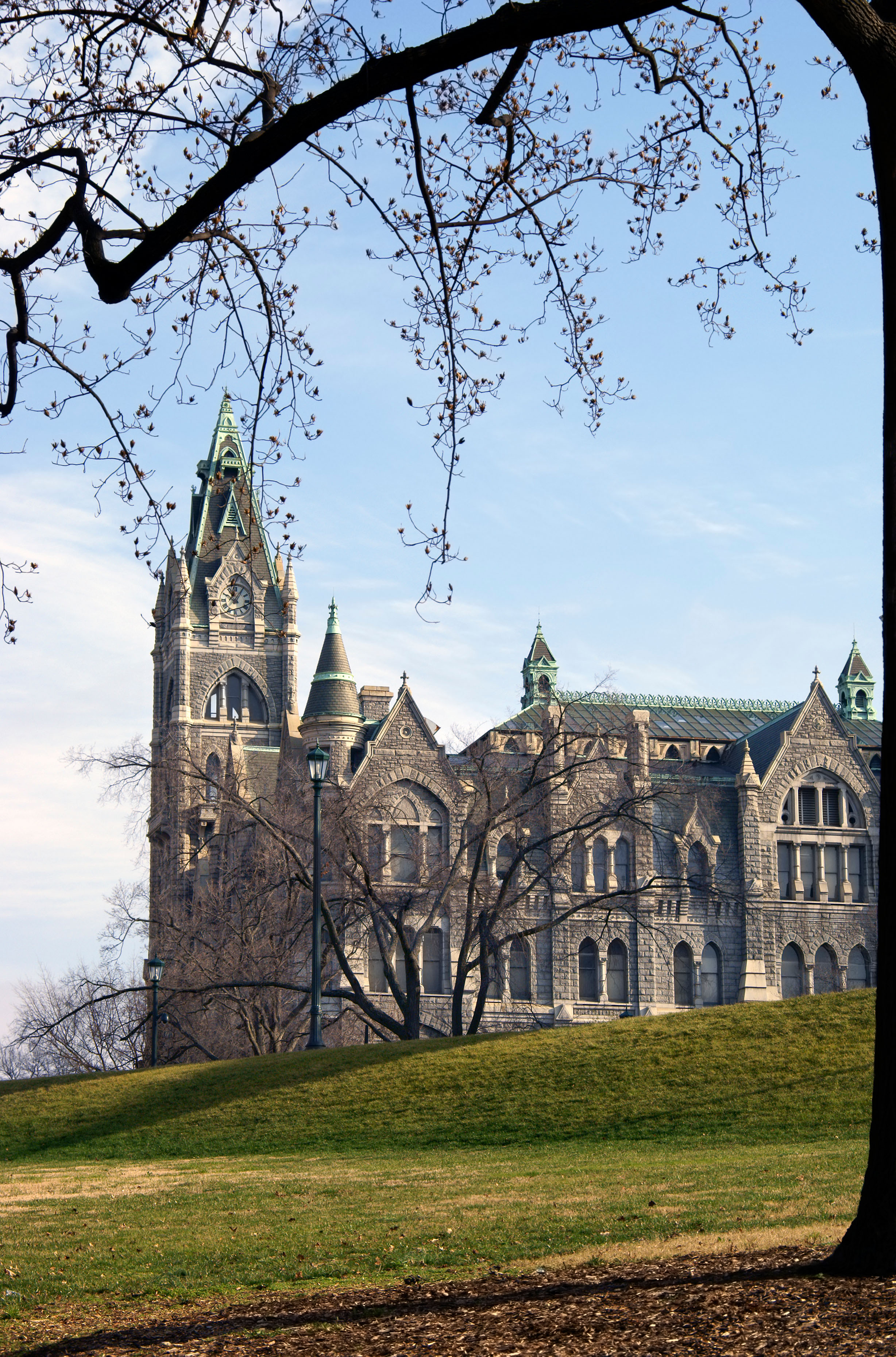
Furman’s initial reluctance to experiment with modern architectural styles may also have been a matter of location. Architectural conservatism was baked deep into Richmond’s built fabric. For instance, Fourth Baptist was built in 1884 in a Greek Revival style that had been used by many Baptist churches in Richmond since Thomas U. Walter’s redesign of First Baptist in 1841 (figure 3). Stylistic regression could also convey a political message. Already at the end of the nineteenth century the backlash against the social changes that followed from the defeat of the Confederacy and the resultant emancipation of the enslaved, was imprinted upon the city’s urban fabric. The development of Monument Avenue, inaugurated in 1890 with an equestrian statue of Robert E. Lee, firmly tied the city’s white elite to a nostalgia for the antebellum past. This stance manifested as well in the state constitution adopted in 1902 that limited suffrage for white as well as African American men; in the imposition, despite a brief boycott, of segregated seating on the city’s streetcars in 1904; and in the increasing dependence in local architectural culture upon the classicist precedents set by Thomas Jefferson in his state capitol building, his house at Monticello and his campus for the University of Virginia (Driggs, Wilson and Winthrop, 2001; Wilson, 2002; DeWitt and Piper, 2019) (figure 4). Furman could be outspoken in her own admiration for architectural precedent, albeit one that was not in lockstep with any of these traditions. In one of the few instances in which she was described in the local white press as an architect, it was to take the position in 1945 – unusual for the time among the profession – that the city’s Gothic Revival city hall was “pretty” and should be spared from demolition (Ashbel, 1945) (figure 5).
Even when modernism was on the table, Furman initially remained wary, although certainly her approach to domestic architecture changed over the course of her career, as she successfully provided her African American clients with the suburban ideal that has seldom been described as modern, and that has also been criticized by subsequent scholars for its whiteness (Lane, 2015; Harris, 2013). Nor should it be assumed that Furman eschewed more overt modernism simply because she was unaware of it. The presence in nearby Petersburg of Amaza Lee Meredith, who founded the art department at what is now Virginia State University and was active as an amateur architect, and in Richmond itself of the Belgian Friendship Building on the campus of Virginia Union University from which Furman’s son graduated, demonstrates that this was not the case (James-Chakraborty, Kuenzli and Green, 2025) (figure 6).
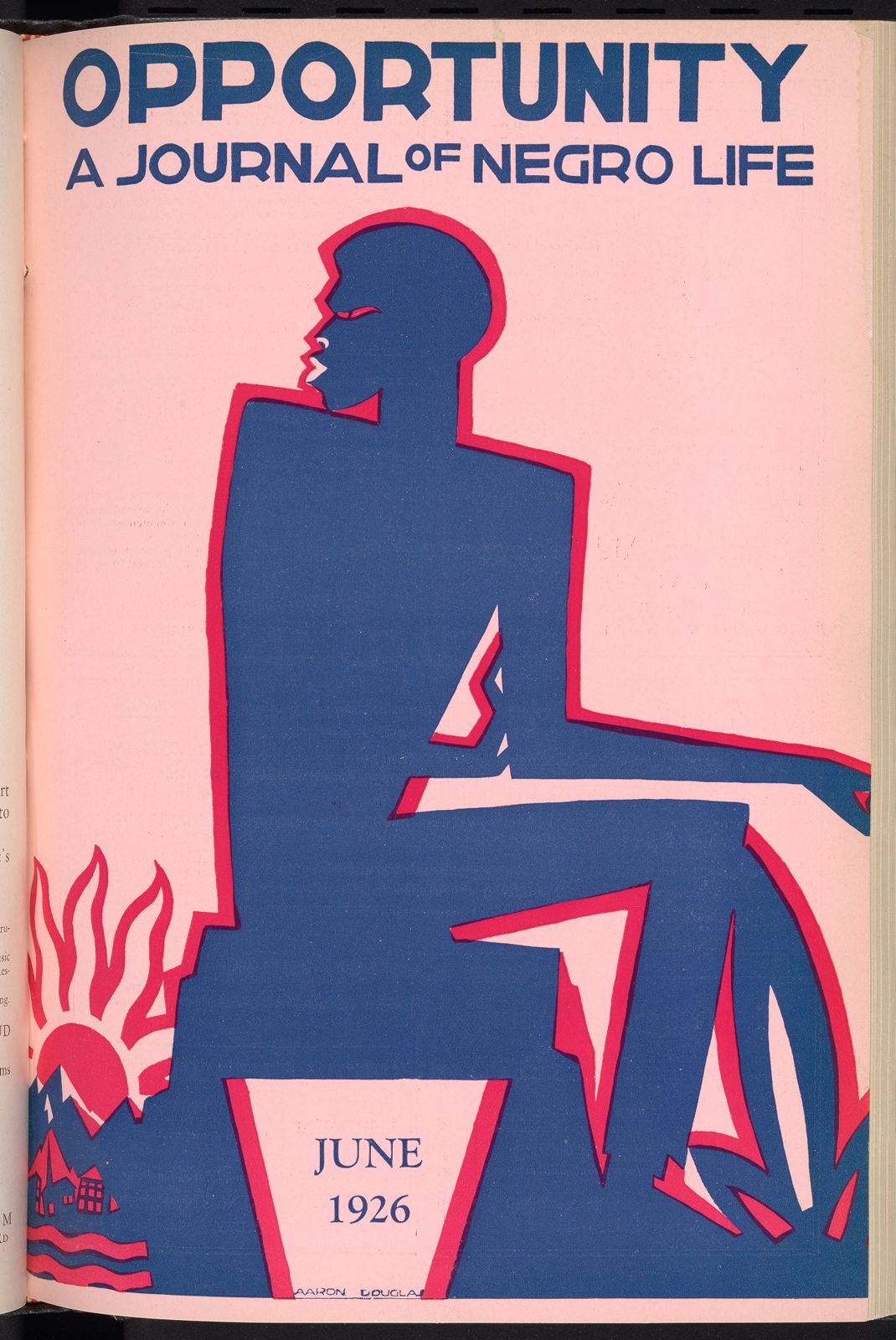
Recovering Furman’s motivations remains a challenge. Her archive at the Library of Virginia is modest, documenting only a small fraction of the number of commissions she undertook. Much of the context in which she worked can be fleshed out by consulting the publications that she may have read, and which were certainly familiar to other middle class African Americans in Richmond. The most important of these are Opportunity: Journal of Negro Life, Ebony and the Richmond Afro-American. Until 1949, when it ceased publication, Opportunity was the organ of the National Urban League, an organization founded in 1910 and devoted to the improvement of economic and political conditions for African Americans (figure 7). Although Opportunity did not have a large circulation, the Urban League did have a Richmond branch and two pillars of the local African American community, Virginia Union University and the Southern Aid Society of Virginia (the first African American-owned business of its kind in the country), advertised regularly in it. Writing in the 1946 number devoted to housing, Reginald Johnson, the League’s field director, noted that “from its beginning in 1923, Opportunity Magazine has constantly devoted its pages to housing, including an article on how low cost housing could be constructed” (Johnson, 1946, p. 144). The magazine paid relatively little attention to architecture per se, except to celebrate the professional achievements of individual male African-American architects, but Opportunity is a useful source on the position of African American women within the labour market. Moreover, many of its covers, which included designs by the German émigré Winold Reiss, and by Aaron Douglas, familiarized African Americans far from New York with the African-infused art of the Harlem Renaissance, an aesthetic that apparently never carried over from painting and graphic design into architecture.
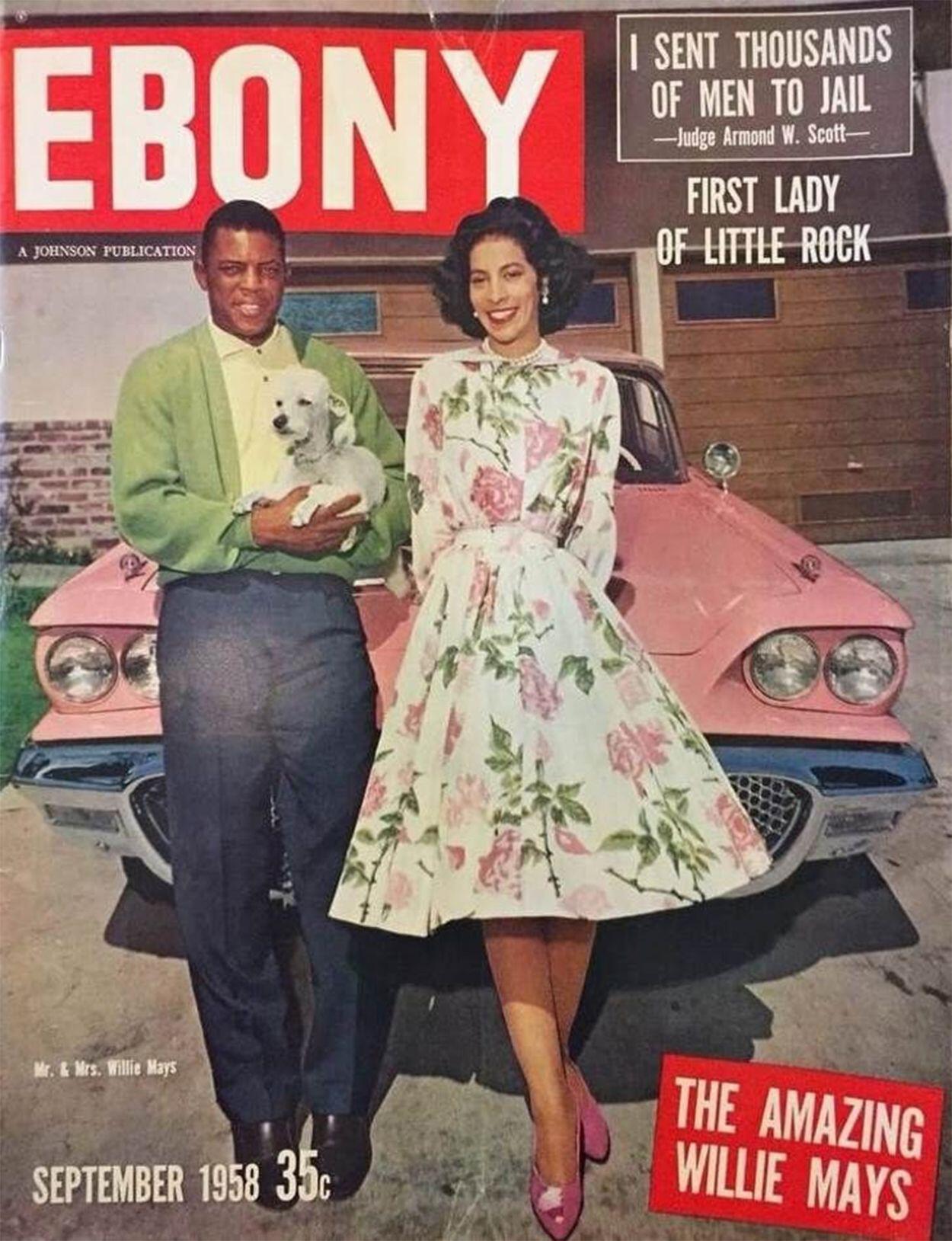
Ebony began publication in 1945. While Opportunity’s purpose was to keep politically engaged readers informed of policy developments and of African American achievements, Ebony was a mass circulation publication with a far less political and much more upbeat tone. Although architecture was peripheral to it as well, the lifestyles of accomplished African Americans were not (figure 8). It often profiled the houses of prominent African Americans, providing an image of success that had little or nothing to do with race. Whether or not she herself subscribed, Ebony was certainly a publication familiar to Furman and her social milieu, including those who commissioned her to design their homes. A glossy, large-format counterpart to Life and Look magazines, it was omnipresent in middle class postwar African American households and in the libraries of the schools their children attended. Finally, there was the weekly newspaper that served the community of which Furman was a pillar (she also read the white-owned Richmond Times-Dispatch, which is another key source in what follows). In 1938, the Richmond Planet, a weekly newspaper that began publication in 1882, merged with the Baltimore Afro-American, which continued to publish a Richmond edition. Although architecture was not an issue on which the paper focused, the Richmond Afro-American chronicled many of Furman’s own activities. In 1959, moreover, it featured her on its annual honour roll for service to the community (Richmond Afro-American, 1959, p. 20). Taken together, these publications confirm that while Furman’s achievements were singular, her approach to architecture was in sync with the interests and tastes of other African Americans.
Furman was born in Richmond on 6 June 1893. Her father, Madison Jefferson Bailey, was a licensed contractor. His professional success was built upon the engagement that enslaved and free African American labour had with the building trades well before the Civil War. In Bailey’s case, it manifested itself in the brick house in Richmond’s Church Hill neighbourhood that he built for himself and his family around the turn of the century, and in which Furman would live for most of her adult life. With a wrap-around porch, a domed bay window projection, quoins in a contrasting colour of brick, a dentil cornice, also in brick, and a slate mansard roof, it served as a demonstration of the full range of his considerable skills. It also cemented his daughter’s status as a member of the city’s middle class (figure 9).
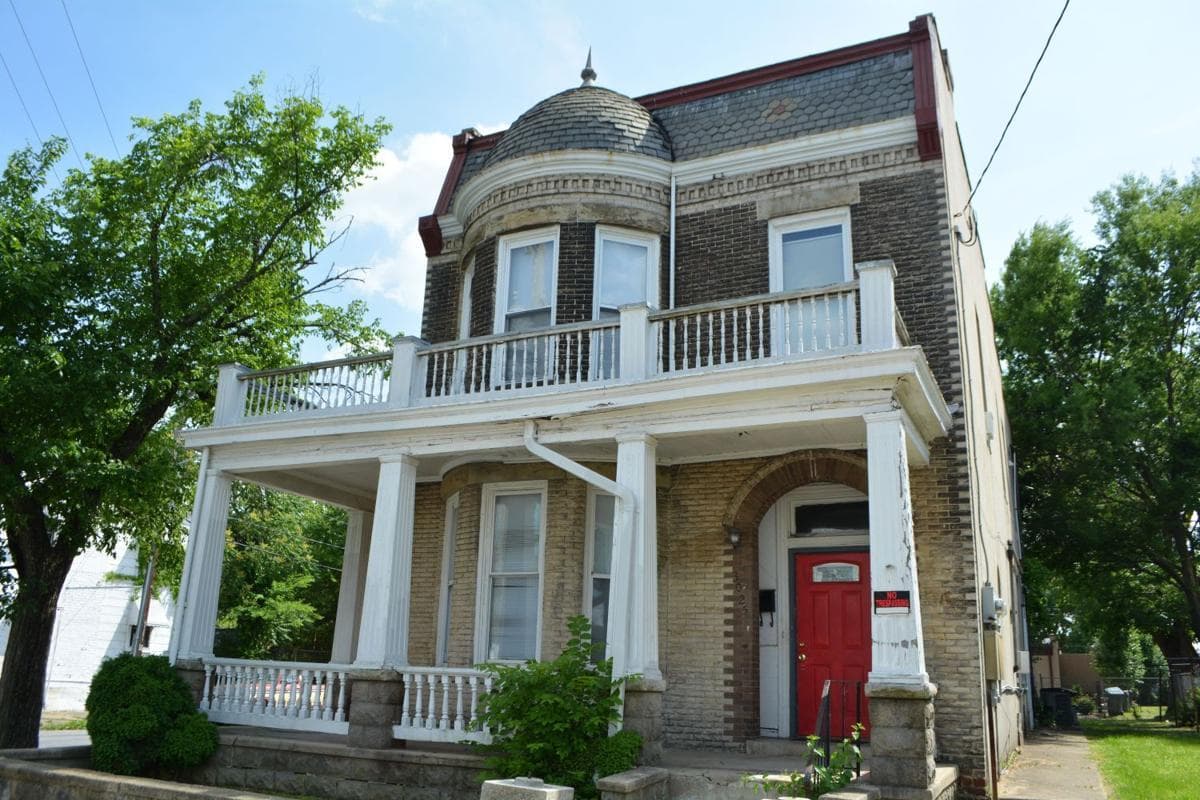
Bailey appears to have recognized from early on that, as a woman, his daughter was unlikely to have a career working with her hands on the building site. Instead, after attending an Armstrong High School in Richmond, which was segregated, and graduating from Germantown High School in Philadelphia, which was not, she studied drafting in New York. A short-lived early marriage to William H. Carter was followed in 1918 by a far more successful one to Joseph D. Furman, during which she received further training in New York from the African American architect Edward R. Williams, a Virginia native who had studied carpentry at the Hampton Institute (The Gloucester Gazette, 1936, p. 8). Furman, her second husband, her three children, and her parents returned to Richmond for good in 1923. She may later have moved briefly to Chicago as she obtained a drafting degree in 1946 from the Chicago Technical Institute. The mid 1940s must nonetheless have been a difficult time for her. Her husband, who had worked as a Pullman porter for the New York Central Railway, died in 1944, and her father less than a year later. At the time one of her sons was a sergeant stationed in France, while his brother, an army corporal, was posted to India (Richmond News Leader, 1945, p. 30).
Furman’s professional status remains unclear, which matters as, along with her gender and race, it determined the opportunities open to her and the credit she received for her work. Her death notice in the Richmond Times Dispatch described her as a retired architect, and there is no question that she designed an impressive number of buildings (Richmond Times-Dispatch, 1976, p. 22). As early as 1924 she received a local building permit (Richmond Times-Dispatch, 1924). Meticulous drawings for two dozen churches and houses, all dating to the postwar decades, are preserved in her archive at the Library of Virginia (Ethel Bailey Furman papers and architectural drawings, 1928-2003). In 1937, two African American newspapers, the Pittsburgh Courier and the Norfolk New Journal and Guide, described her as Virginia’s only licensed female architect (Pittsburgh Courier, 1937, p. 3; Jorden, 1937, p. A12). In 1946 the Richmond Afro-American profiled her as the state’s only woman architect, and the following year the Richmond News Leader described her as a registered architect (Richmond Afro-American, 1946; Richmond News Leader, 1947, p. 28). Virginia’s licensing laws for architects dates to 1920; two years later Charles Thaddeus Russell (1875-1952), who practiced in Richmond, and who Furman and her father certainly knew, as well as John A. Lankford (1874-1946), became the state’s first licensed African American architects (National Council of Architectural Registration Boards, 2018).
There is no record, however, of Furman receiving such certification, and in later years, possibly after an earlier license expired or licensing requirements changed, she was careful to refer to herself instead as an architectural draftsman (Richmond Afro-American, 1959; Lemon, 1963). In 1962, the Richmond News Leader named William Ernest Cook, as the architect of the addition to Fourth Baptist, for which autograph drawings by Furman survive (Richmond News Leader, 1962, p. 4). There may be other examples in which men signed off on projects she designed.
Furman began her career well before Beverley Lorraine Greene (1915-1957), the first African American woman to graduate with a degree in architecture, commenced her studies at the University of Illinois in 1932. Greene was licensed a decade later (Washington, no date). Nor was Furman the only African American woman of her time in Virginia who designed buildings. Just a few miles to the south of Richmond, her near contemporary Amaza Lee Meredith (1895-1984), possibly enjoyed a higher professional status and certainly was able to avail of better educational opportunities. Born in Lynchburg, Meredith, like Furman, owed her interest in building to her father, who was a carpenter. While Furman completed her high school education in integrated circumstances in Pennsylvania but never earned a bachelor’s degree, Meredith graduated from a segregated high school before attending what is now Virginia State University, a historically Black institution in Petersburg. After teaching school, Meredith, like Furman, briefly moved to New York, returning to Virginia State, where she set up the art department, with a master’s degree from Columbia Teachers College.
Less unusual than the career of any African American as an architect was Furman’s determination as an African American woman to have a career. Opportunity reported in 1925 that nearly half of married African American women worked, a figure that was more than double that for white women. The majority of African American women employed outside the home laboured as domestic servants, although already the number of those engaged in this demeaning occupation was declining (Opportunity: Journal of Negro Life, 1925, p. 226). In 1923, the year that Furman moved back to Richmond, Eva Bowles (1875-1943), an African American who worked at the national level for the Young Women’s Christian Association (YWCA) made clear the aspirations that Furman and Meredith undoubtedly shared with many of their generation of African American women:
In past generations the thought of a proper career for a woman was at home and the rearing of children. Who would vouchsafe to say that the present day woman should not feel this first and foremost? However, woman has found her place outside the home as well, and may we consider the doors that are open to her should she decide to enter. It is perfectly reasonable to assume that the educated Negro woman seeks a career as naturally as any of her sex. She, perhaps, labours under the handicap of her race and thru the past years prescribed limitations have been placed upon her, especially in pursuits other than teaching. During the past few years because of the changing world, barriers have been breaking away, and by degrees she has achieved success in avenues of life where formerly she dared not approach. She has not been wanted, especially, but she was needed (Bowles, 1923, p. 8).
Furman may have known and taken inspiration from Bowles, as in 1928 Bowles’s niece Clarice Winn married Arthur P. Davis, who taught at Virginia Union, and whom Bowles was visiting when she died in 1943 (The New York Age, 1942, p. 1). There is no question, however, that Furman knew a woman Bowles singled out in the articles as an example. Maggie Walker (1864-1934) was the first African American woman to be president of a bank chartered in the United States (Woodruff, 2003). Born into slavery in Richmond, Walker became one of the country’s most successful African American businessmen as well as a linchpin of Richmond’s African American community. She was also active at the national level in both the Urban League and the National Association for the Advancement of Colored People (NAACP). It is highly likely that Walker’s bank financed at least some of the houses that Furman designed and that her father built in their first decade back in the city.
The improved economic situation of the African American middle class after World War II did little to change the proportion of women who worked, although it did improve their career opportunities. By 1947, Ebony reported that the number of African American women classified as professional and semi-professional workers, many of them teachers, had nearly doubled in less than a decade (Ebony, 1949, pp. 19-22). More than a decade later, the magazine’s editor, Lerone Bennett, declared that “What distinguishes the [African American] woman, however, is her spirit, which stems from a long tradition of female dominance,” which he attributed to the after-effects of slavery. “Negro women,” he continued ambivalently, “as a result, have been as free, powerful and expressive vis-à-vis their men as any group of women in history.” He also charted their continued professional advancement, while also documenting how far their pay lagged behind that of white women (Bennett, 1960, pp. 39-40).
Across Furman’s lifetime, African American and white women alike, viewed participation in their local churches and in civic reform efforts as appropriate activities, and Furman was no exception. In addition to being active in trade organizations for African American builders and a stalwart of Fourth Baptist, she won community awards for her engagement in efforts to advance the education, healthcare, and voting rights available to Richmond’s African Americans.
Respectability and dignity mattered enormously to middle class African Americans like Furman and most of those who wrote about housing in Opportunity and Ebony, even if others, such as Meredith, were willing to flout convention. Although little or no record of its appearance apparently survives, Furman’s house for the Wilder family merits comparison in this regard with Meredith’s Azurest South, both of which are, as Opportunity makes clear, examples of the relatively unusual degree to which at least some African American Virginians were able to commission their own houses during the interwar years. During the New Deal and World War II, public funding replaced private enterprise at the centre of Opportunity’s discussion of African American housing. With it came an appreciation of what social housing, in an explicitly modern style, had provided for at least the upper echelons of the European working class in countries like Germany and the Netherlands. Relative postwar prosperity shifted the discussion in Ebony to showcasing the homes of high-achieving individuals and engaging the consumer rather than the architectural culture of the period. This provides the context for Meredith’s well documented designs of houses in Richmond’s exurbs that closely resemble the ones into which white suburbanites were moving across the United States.
The first commission that can be attributed with certainty to Furman is a house she designed, and her father constructed, in 1924 in Church Hill for her good friend Beulah Olive Richards Wilder and Wilder’s husband Robert Judson Wilder, an insurance salesman. Unfortunately, no photographs showing more than a corner of the front porch of what was probably a relatively conventional bungalow have apparently survived. The couple’s son Lawrence Douglas Wilder, born in 1931, grew up referring to Furman, who was also a neighbour, as “Cousin Peachie” (Wilder, 2015). A child of the Great Depression, he recalls living in far more straitened circumstances than those that probably allowed his parents to commission it. He went on to become the first African American governor of Virginia and indeed the first elected a governor anywhere in the country.
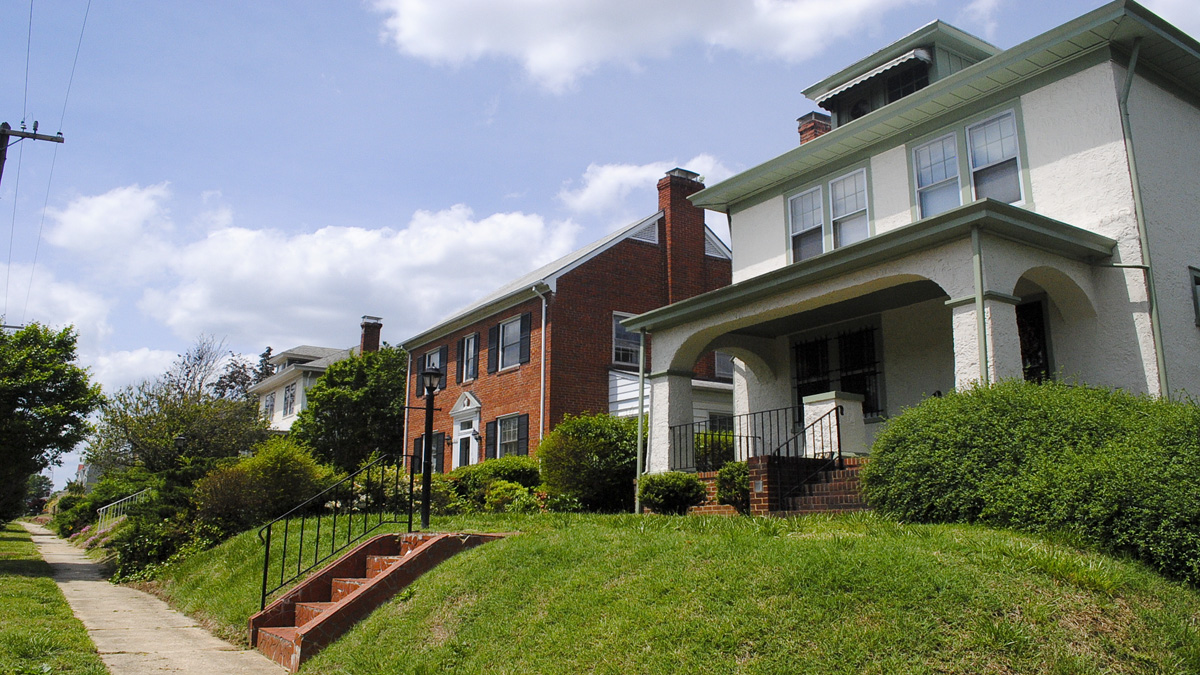
The Wilders were hardly alone, however, among Richmond’s African Americans in the relatively prosperous 1920s in managing this feat. Maggie Walker’s Universal Construction Company financed the construction of Frederick Douglass Court north of Jackson Ward, Richmond’s other historically African American neighbourhood, on land purchased from Virginia Union University, which it abutted. Typically, two stories and set well back from the street on ample lots, these dwellings were stylistically indistinguishable from the solidly middle-class neighbourhoods erected in the 1920s for whites in Richmond and across much of the country (figure 10). Although not startling in style, their scale, siting, and the presence of conveniences such as central heating, testified that more than a half century after Emancipation and, despite the continued oppression to which they were subjected by Jim Crow, at least a handful of African Americans had access to modern lifestyles, if only when they did not step outside their own neighbourhoods. Russell, who was responsible for the design of much of Jackson Ward’s commercial and religious infrastructure, is also credited with the prototype houses, although not everything that was eventually built in the neighbourhood adhered to his models (Richardson, 2008). It is likely that Furman and her father had a hand in the design and construction of some of these dwellings, but no documentation has been found to confirm this.
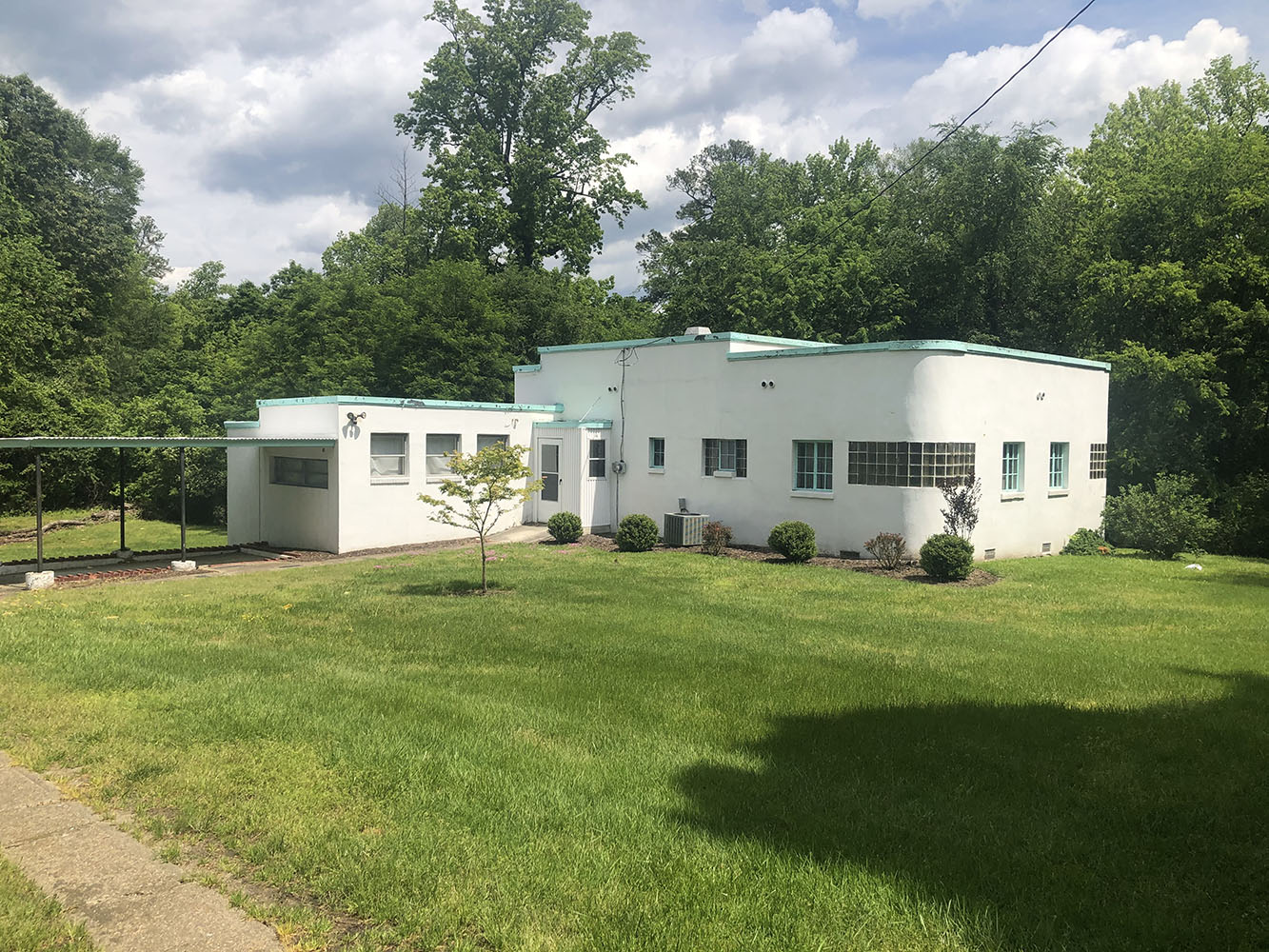
Very different in style was the Art Deco house Meredith built upon her return to Petersburg in which she lived with her partner and colleague Edna Meade Colson (1888-1985) (figure 11). Two steady incomes from public payrolls must have helped make its construction possible. Its appearance was quite unusual in Virginia, where this style made few inroads outside of commercial contexts such as shops, cinemas, and Texaco gas stations. Named Azurest South, it was the counterpart to the houses Meredith designed for the Sag Harbor vacation community of Azurest North, developed after World War II on Long Island by her sister Maud Terry. Azurest North provided a summer oasis for African American professionals and an inspiration for Colson’s relative, the novelist Colson Whitehead, who summered there as a child (Taylor, 2023; Whitehead, 2009). Although Meredith, like Furman, was a devout Baptist, she was clearly prepared to startle her neighbours in ways that Furman was not (Beverly Willis Architecture Foundation, 2023). In other ways, however, she avoided drawing attention to herself, keeping out of the newspapers, in which Furman by contrast was regularly mentioned.
Opportunity paid more attention to housing as an issue than to the houses of individual African Americans. At a time when the Great Migration swept many African Americans from the rural south into overcrowded housing in the urban north, the Urban League organ repeatedly reminded readers that most African Americans lived in rural shanties, urban tenements, or the small town and city castoffs of whites who had moved on, usually out to the suburbs (Opportunity, 1923, pp. 208-210; Weaver, 1938, pp. 198-203; McGraw and Corne, 1946, pp. 122-127). Opportunity, like most subsequent architectural historians, was less interested in the conditions that allowed African American architects and contractors, as well as Furman and Meredith, let alone clients like Walker, to shape their own built environment (Richardson, 2008).
The onset of the Depression demonstrated the inadequacy of market forces in housing the vast majority of African Americans as only a few had the resources of the Wilders or the inhabitants of Frederick Douglass Court. From 1930 until it ceased publishing in 1949, the number of pages Opportunity paid to housing increased dramatically. Its focus was on federally funded efforts to address the crisis. Although, after it set up a housing authority in 1940, Richmond quickly availed itself of federal monies to construct a series of housing projects for African Americans on land it cleared on the edges of Jackson Ward, Furman’s ambiguous professional status, compounded with her gender, made it unlikely from the start that she would be able to join the small coterie of African American architects busy with such commissions. These included Greene, who contributed to the design of the Ida B. Wells Homes while working for the Chicago Housing Authority.
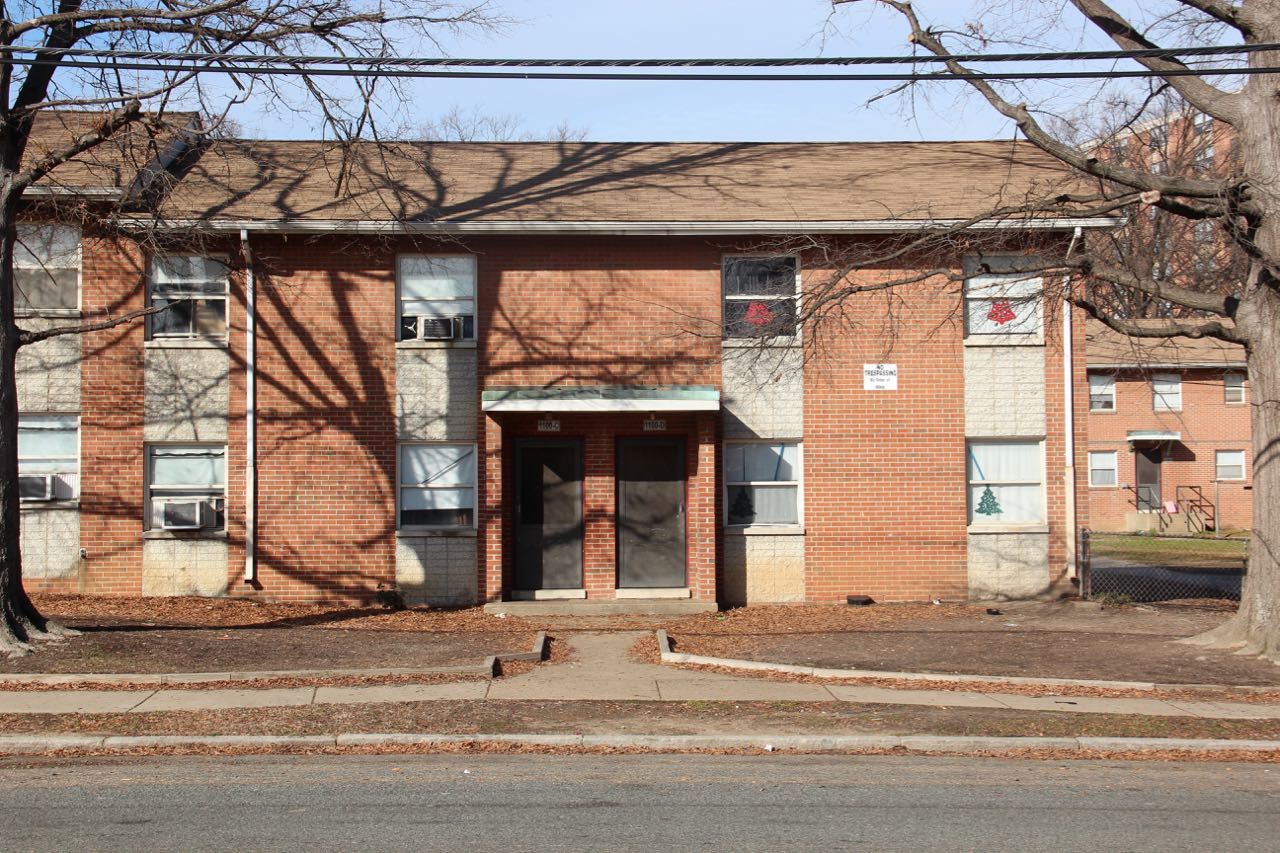
Today slum clearance is understood as urban renewal’s original sin, and one largely imposed by white bureaucrats and politicians, but, regardless of their race, reformers writing in Opportunity strongly supported it as the path to better homes and lives (Opportunity, 1934, p. 7). Their major concerns were that such housing be integrated in the northern cities where residential segregation was not as well established as in Richmond, and that African Americans get their fair share of jobs designing, constructing and managing the resultant units (Weaver, 1939, p. 73; Evans, 1940, pp. 106-110; Johnson, 1942, pp. 324-326, 344-345). African Americans in Richmond were not always as enthusiastic, even if Henry J. McGuinn, a professor of sociology at Virginia Union, served on the city’s housing authority that was responsible for the erection of Gilpin Court, the city’s first public housing project (figure 12) (McDowell, 1949, p. 65; Richmond Times-Dispatch, 1943, p. 8). Built between 1941 and 1943 for African American tenants, it replaced 210 houses, at least some of which were owned by their African American inhabitants. Although Robert Weaver, the special assistant to the US Housing Authority who would later become the first African American Cabinet member, lauded the opportunities that the design and construction of public housing could provide African Americans, Gilpin Court was designed by the local white architectural firm of Johnson and Wright, and constructed by the white-owned Laburnum Construction Company. Nonetheless the Furman family did eventually benefit from the management positions it created. Following his service in the army and his completion of a college degree at Virginia Union, Furman’s son, Livingston, managed both Gilpin and Creighton Court, the city’s two oldest segregated housing projects, before being eventually promoted to the post of Director of Housing Operations for the Richmond Redevelopment and Housing Authority (Richmond Times-Dispatch, 2018, p. 85).
Opportunity was most likely to be interested in architecture, as opposed to housing, when it was celebrating the professional achievements of a small number of male African American architects, most of whom had the university training Furman lacked (Opportunity, 1925, p. 127; 1938, pp. 349, 359; Laws, 1947, pp. 94-96). It hailed, for instance, the Los Angeles-based Paul Revere Williams, who had come up through the apprentice system, because he was the only African American associate of the American Institute of Architects (Opportunity, 1928, p. 81). Flat-roofed, unornamented architectural forms that reflected the influence of interwar European modernism appeared in the pages of Opportunity only in relation to housing rather than the privately built houses in which Furman specialized (Kastner, 1932, pp. 372-379). While extant examples and even images of her pre-war housing remain to be identified, the cache of autograph drawings in the collection of the Library of Virginia provide a strong sense of her approach to postwar housing.
With Opportunity out of the picture after 1949, there is no doubt that the circles in which Furman moved derived much of their image of African American success, including the way that it manifested itself in the architecture and decoration of the home, from Ebony. While Kristina Wilson has contrasted its coverage of these topics with the purportedly more “modern” aesthetic to which Life exposed its readers, relatively few people in the United States, regardless of their race, espoused the International Style when it came to the appearance of their homes (Wilson, 2021). African Americans in the Richmond area were not entirely frozen out of new housing, as the advertisements in The Afro American make clear, but Furman’s well documented houses for the Snead family were located on exurban sites in Goochland and Henrico counties as well as in Richmond. Original drawings survive for a total of six Snead houses. Those for the Junius and Ada Snead house on Springfield Road in Glen Allen are dated 1965, while the dwellings for Junius’s brother Edward and Edward’s wife Barbara in Goochland County, and the ones that James and Mack Snead shared with their wives are from 1968 (figure 13); no dates are given for the houses for the Samuel or Thomas Sneads. Junius, Mack, and their brother Isaac all ran hauling companies that collected and disposed of trash for the city of Richmond (Richmond Times-Dispatch, 1999; Richmond Times-Dispatch, 1999, p.19). Ada Fenner Snead worked for Wonder Bread (Richmond Times-Dispatch, 2008, p. 84).
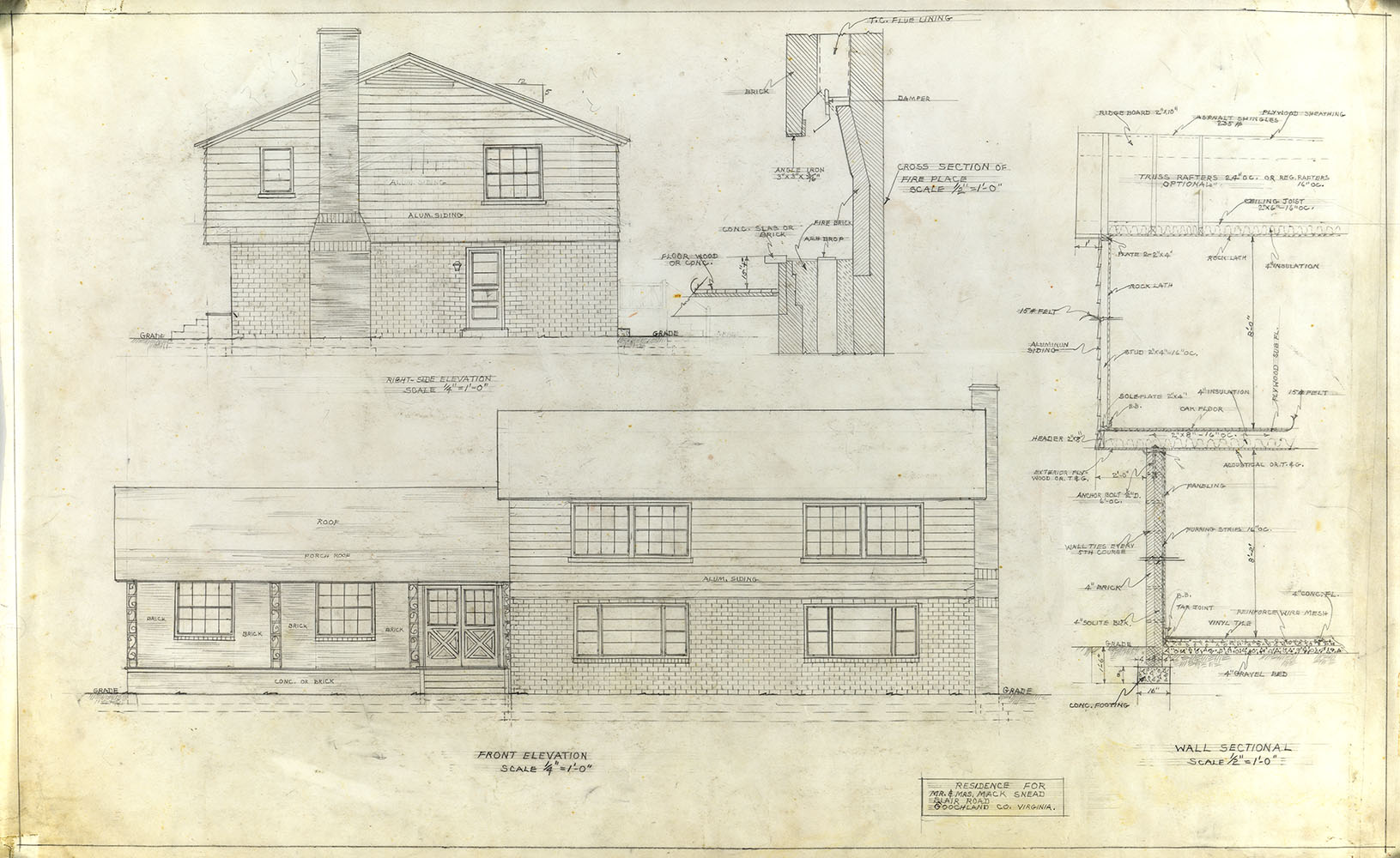
After the Civil War, newly emancipated African Americans moved, whenever it was possible, out of the slave quarters to new housing located away from the plantation and farmhouses of their former owners (Aiken, 2003). In the 1960s, in the wake of the successes of the Civil Rights movement, many middle-class African Americans in the rural South were finally able to obtain financing to build new houses, whether in new developments or on individually owned lots that had sometimes already belonged to their families for generations. Advertisements in the Richmond Afro-American document the presence of such developments on the outskirts of the city by the early 1960s (Ads for Allen, 17 June 1961, 20; 21 October 1961, 6; and 6 May 1961, 3). The Sneads, however, clearly appreciated the mobility that automobiles and trucks gave them to run their own businesses and to commute to urban jobs while living on their own land. They were able to get larger houses and a higher standard of detailing by working with Furman.
One can only speculate about how the Sneads financed their houses, but, in addition to red-lining neighbourhoods that were predominantly African American, banks across the United States were cautious about lending money for houses with flat roofs or other architectural features that made them uncertain about whether or not the designs would retain their value (Stiles, 2019, p. 87; Rohtstein, 2017). They may also have helped build them; Isaac Snead certainly contributed his labour and his building skills to the erection of Furman’s design for the church where he worshipped (Jackson, 1972, pp. 29-30). Celebrated modern houses often involved construction techniques that were unusual, and that did not always satisfy clients (for instance, Frank Lloyd Wright’s roofs were famously prone to leaking), creating another reason why Furman and her clients may have shied away from such designs (Cronin, 1994, pp. 8-31). The Snead houses were, however, certainly entirely of their time in resembling tract houses in white suburbs and thus appeared new when they were built.
The other area in which Furman was active was in the design of churches and church additions for African American Baptist congregations in and around Richmond. She was also responsible for the design of two churches in Liberia, erected by the Lott Carey Foreign Mission Convention. Drawings survive for thirteen such projects, executed between 1939 and 1972, but it is likely that she was involved in many more such commissions. Like the residences which she designed, many of these were too small to require the services of a licensed architect. In this arena as well, she benefitted from family networks among her clients. While most of Furman’s designs for Baptists are unremarkable in appearance, the exception, a Sunday school block for Fourth Baptist, where she herself worshipped is important, as is the fact that newspaper articles about two structures, for which her autograph drawings survive, attribute them to men who likely had little role in their design.
Furman’s earliest recorded church commission was for St. James Holiness in Church Hill, which dated to 1939, for which she built a modest replacement in 1957. Often, as at Mount Nebo Baptist Church in Barhamsville, New Kent County, she was responsible for an addition that brought a historic church up to date. In the case of this 1974 structure to the rear of the original frame building, this concrete block structure included toilets, a kitchen, and two community rooms. She also enlarged the choir room and built a rostrum over the baptistery pool. As was often her custom, she added the clear instructions that the carpentry “is to be first class so as to pass building code of county and all necessary inspection. All work to be done on this building is to be first class” (Ethel Bailey Furman archive, Library of Virginia, Richmond, drawer 1, folder 9).
A similar, but undated commission was for an addition and baptistery for St. James Baptist Church on Gumtree Road in Beaverdam, a crossroads north of Richmond in Hanover County. Here her client was the Rev. Leroy M. Bray. Undoubtedly not coincidentally, Furman would also work for his son Leroy M. Bray, Junior, the pastor of St. James on Blair Road in Goochland County, who also served at Rising Mount Zion Baptist Church, for which further Furman drawings survive (Legacy Remembers, 2023) (figure 14). When a student at Virginia Union, the younger Bray was arrested for trespassing in 1960 when, as part of the “Richmond 34” he participated in a sit-in at Thalhimers department store (Richmond Times-Dispatch, 2010, p. A14). The commitment to Civil Rights that Bray shared with Furman did not, however, prevent him for taking credit for her work.
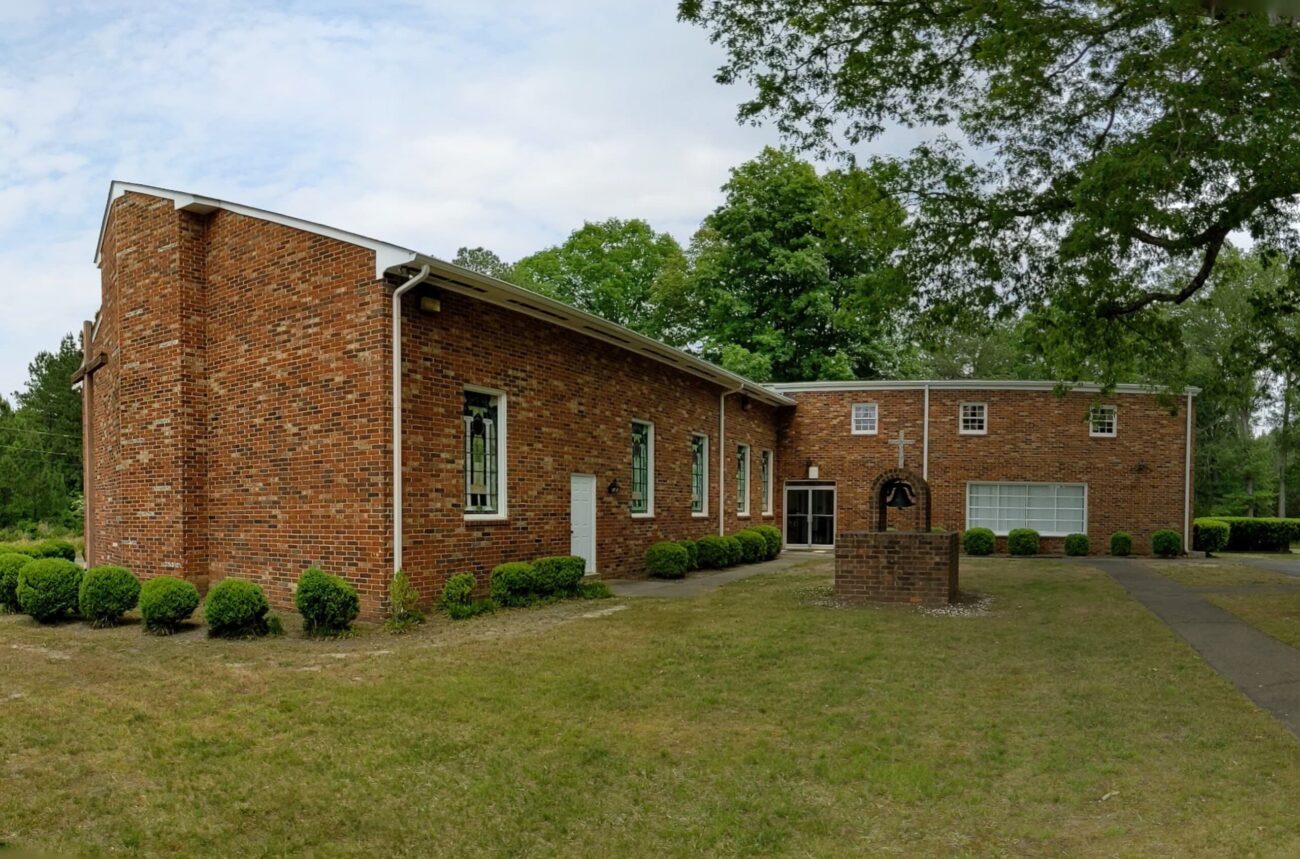
Furman allegedly came to the attention of the Snead family when she designed the Goochland County St. James Baptist Church after its predecessor burned down, but this church was completed in 1972, long after she designed most of the Snead houses (Breeden, 1977). Moreover, the far more modest wooden structure it replaced was still standing when the new brick church was finished. There is, however, a Snead connection, as Isaac Snead co-chaired the building committee and served as a volunteer contractor (Jackson, 1972, pp. 29-30). Five autograph drawings survive for this, one of Furman’s final commissions, completed less than four years before her death. Nonetheless, the younger Bray told Richmond Times-Dispatch reporter Estelle Jackson that he had designed and drafted the scheme. Jackson may have been on safer ground when she repeated Snead’s claim that he was responsible for the decision not to use cinder block, although it would have been less expensive than brick. Jackson wrote that the new church “include[ed] a strikingly beautiful sanctuary,” and that “virtually every member of the congregation can point to some feature of the building as the work of his [sic] own hands” (Jackson, 1972).
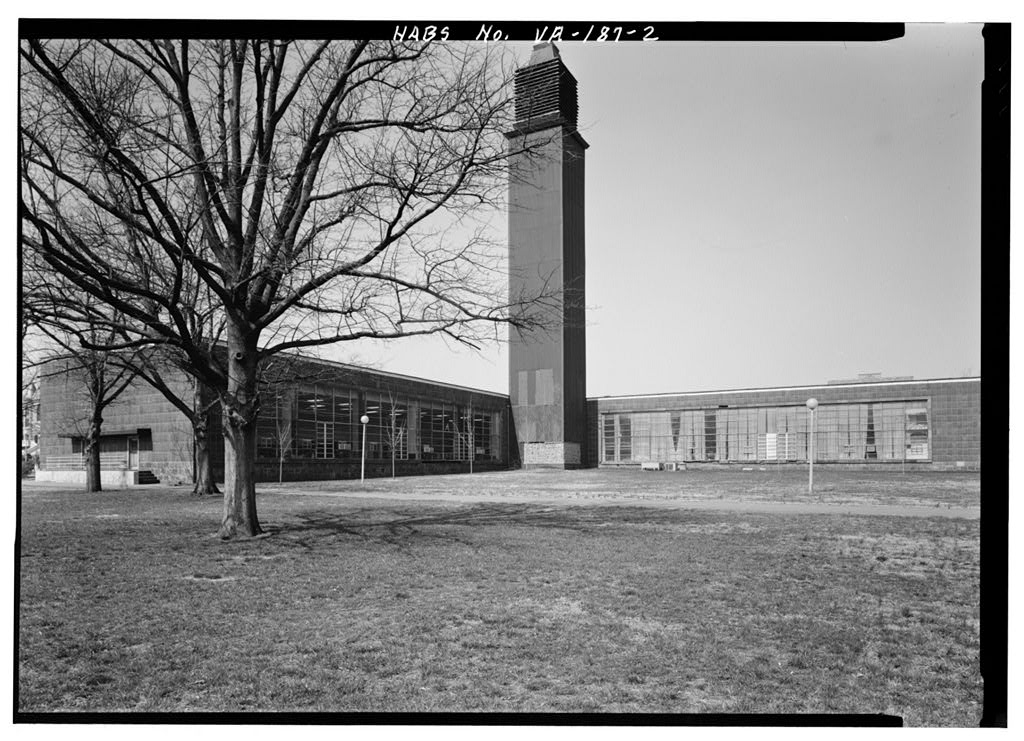
Undoubtedly, such collective efforts on the part of congregations with many of the skills needed to achieve such an impressive result were not unusual among Furman’s commissions, but the Fourth Baptist addition is an emphatic statement of her ability to work within modernist conventions when she wished to do so. Its modest curtain wall façades were scarcely adventuresome when they were designed in Richmond in 1961 but nonetheless stand out as a substantial break with her other work. Although it is impossible to reconstruct what she, the church’s energetic pastor Robert Taylor, and the other members of the congregation who paid a total of $200,000 for the structure wanted, Furman’s strong record of political activism in this period suggests that she was bestowing upon Fourth Baptist the architectural language employed for the recently completed John Marshall High School, to which nearly a decade after the landmark Supreme Court decision Brown v. Board of Education, African Americans still had only limited access (Richmond Afro-American, 1961, p.7; 1962, p. 18) (figure 15).
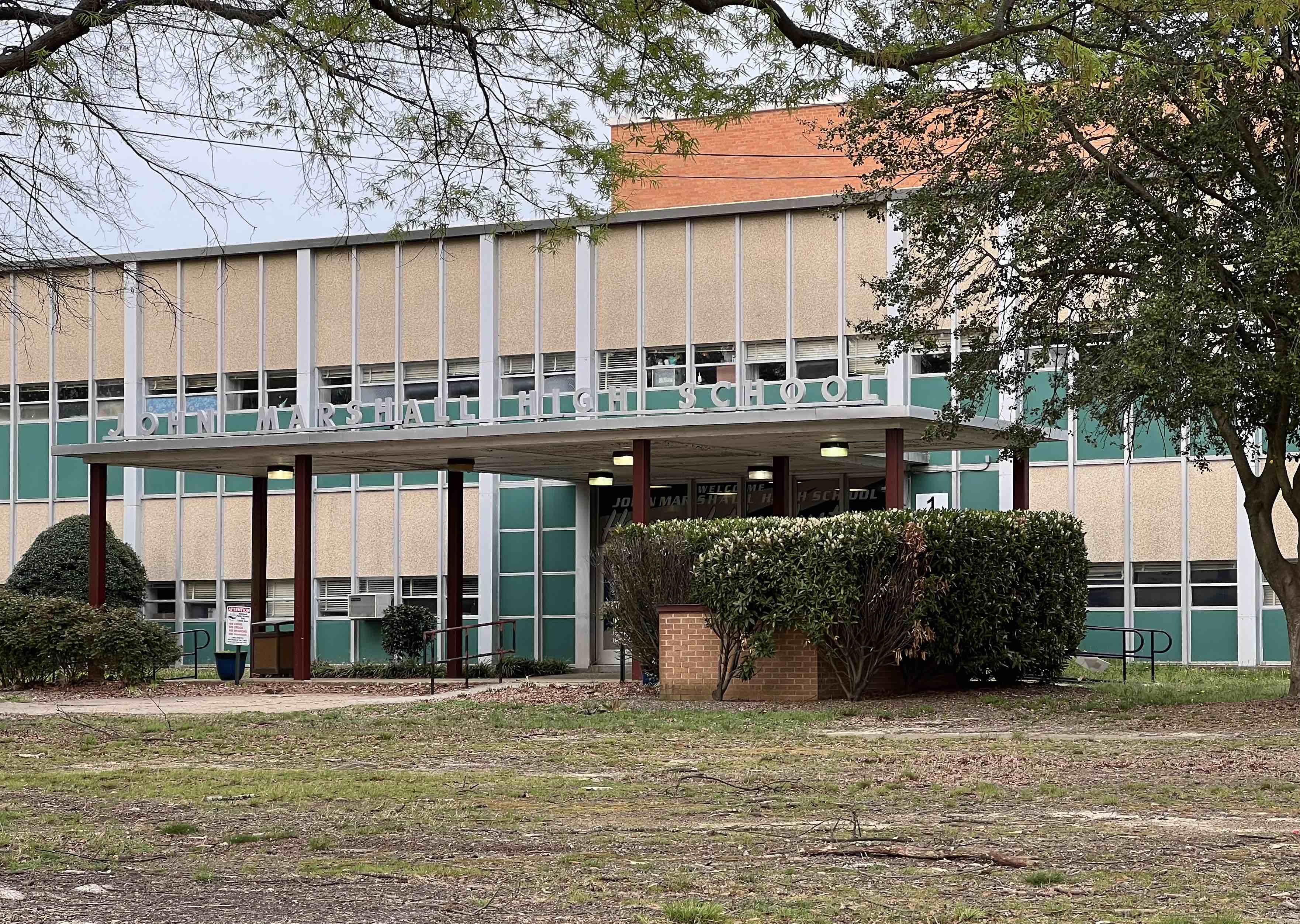
Furman had a strong stake in the wellbeing of the Richmond schools and in their integration. In 1936 she wrote a letter to the editor of Richmond Times-Dispatch arguing that the new segregated high school for African Americans should be sited in Church Hill rather than on the site in the Jackson Ward upon which Maggie Walker High School was eventually built (Furman, 1936, p. 10). She served on the Civic Council, the city’s leading civil rights organization, alongside Oliver Hill, a lawyer who worked closely with Thurgood Marshall on school desegregation, and was also involved in registering African American voters, for whom school integration was the chief civil rights issue in the 1950s (Richmond Times-Dispatch, 1952; 1953; Clark, 1959, p.3; Richmond Afro-American, 1959, p. 13; 1959, p.20; Edds, 2018). Josephine Epps Furman, who married Furman’s son Livingston in 1947, was a teacher in Richmond’s segregated schools before being transferred in 1970 to the majority white Brook Hill School, when as her daughter Kathie Teasley later described, “instead of integration, the Richmond schools took stellar teachers from black schools and put them in white schools” (Richmond Times-Dispatch, 2012, p. B7). The Sunday School block of Fourth Baptist used the same basic vocabulary as the John Marshall High School, which the year after it moved in 1960 into a new building, became the first formerly all-white public high school in the city to admit African Americans, albeit only in very small numbers (Eshleman, 2018; Richmond Times-Dispatch, 1961, p. 20; 1960, p. 2; 1960, p.17).
All architecture, including modern architecture, communicates messages, albeit not always ones that are easily legible or indeed constant across time. Modernism’s symbolic objectivity, to use William Jordy’s phrase, mattered more to the cultural elite who recognized and appreciated its relationship to abstract art than to those who wanted to signal economic achievement (Jordy, 1963, pp. 177-187). Although it was developed, in part, out of a hope of forging social unity by eschewing historic references difficult for working class audiences to decipher, its rejection of the most obvious symbolic markers, such as the steeples that identify the function of Furman’s rural churches, left it unable to satisfy clients like the Sneads (James-Chakraborty, 2000). Only when, as in Furman’s use of a construction system her fellow members of Fourth Baptist likely associated with the architecture of schools to which they were struggling to gain access, did it become meaningful for them to employ them.
The modernity of the houses and churches Furman designed, initially for her father’s contracting business, typically resides not in her choice of style, but in the way in which it dovetails with African American, and quite often specifically middle class African American, aspirations, and in the fact that she was responsible for their appearance. They represent real social progress in the face of the almost unimaginable oppression of a community whose members were only a few generations removed from enslavement. Architectural historians and critics, as well as architects, need to acknowledge that the approach to modernism propagated by much of the architectural profession across the years Furman practiced was in most situations entirely unable to convey what she and her clients wanted to communicate to themselves and other African Americans, as well as white audiences. Instead, it was commercial alternatives, for which architectural culture has displayed little respect, that most often were successful in delivering these messages. Only when modernism could, as in the case of Fourth Baptist, convey empowerment did Furman choose it over the alternatives available to her.
The project from which this article is drawn has received funding from the European Research Council (ERC) under the European Union’s Horizon 2020 research and innovation programme (grant agreement No 101019419).
Commissioning architects, historians and theorists, Modernism is Almost All Right seeks to offer new knowledge and methods to reappraise the movement’s canonical and, critically, non-canonical forms. It examines how its modes of theory and practice might be expanded to address the complexities of designing the future. The series is edited by Gary A. Boyd, Sarah Lappin and Brian Ward.
Ads for Allen & Rocks, Rocks, and Waters homes appeared respectively on 17 June 1961, 20; 21 October 1961, 6; and 6 May 1961, 3.
Aiken, C.S. (2003) The Cotton Plantation South Since the Civil War. Baltimore: Johns Hopkins Press.
Ashbel, B. (1945) ‘Architectural Wonder or Monstrosity, City Hall is Here to Stay Survey Shows,’ Richmond Times-Dispatch, 19 November.
Bennett, Jr., L. (1960) ‘The Negro Woman.’ Ebony, August, pp. 39-40.
Beverly Willis Architecture Foundation (2023) Amaza Lee Meredith: Love and Home. Available at: https://bwafnewanglevoice.libsyn.com/episode-8-amaza-lee-meredith-love-and-home.
Bowles, E.D. (1923) ‘Opportunities for Educated Colored Women,’ Opportunity: Journal of Negro Life 1, p. 8.
Breeden, J. (1977) ‘Ethel Bailey Furman,’ manuscript of AIA Lecture, 4th Baptist Church, Church Hill, Virginia, 16 April, Ethel Bailey Furman Archive, Library of Virginia.
Clark, A. (1959) ‘All Members Can Vote: Six Groups in Richmond Church Get Certificates,’ Norfolk New Journal and Guide, 6 June, p. 3.
Cronin, W. (1994) ‘Inconsistent Unity: The Passion of Frank Lloyd Wright,’ in Riley, T. (ed.) Frank Lloyd Wright: Architect. New York: Museum of Modern Art, pp. 8-31.
DeWitt, L. and Piper, C. (eds.) (2019) Thomas Jefferson, Architect: Palladian Democratic Principles, and the Conflict of Ideals. New Haven: Yale University Press.
Drawing for Mount Nebo Baptist Church, drawer 1, folder 9, Ethel Bailey Furman archive, Library of Virginia, Richmond, Virginia.
Driggs, S.S., Wilson, R.G. and Winthrop, R.P. (2001) Richmond’s Monument Avenue. Chapel Hill: University of North Carolina Press.
Ebony (1949) ‘Women Leaders,’ July 1949, pp. 19–22.
Edds, M. (2018) We Face the Dawn: Oliver Hill, Spottswood Robinson, and the Legal Team that Dismantled Jim Crow. Charlottesville: University of Virginia Press.
Eshleman, T. (2018) ‘An Incomplete Legacy.’ Richmond Magazine, 4 November. Available at: https://richmondmagazine.com/news/sunday-story/an-incomplete-legacy/
Ethel Bailey Furman papers and architectural drawings (1928-2003) Accession 41145, Personal Papers Collection, Library of Virginia, Richmond, Virginia.
Evans, W.L. (1940) ‘Federal Housing Brings Residential Segregation to Buffalo,’ Opportunity: Journal of Negro Life 20, pp. 106-110, 124.
Furman, E.M. (1936) ‘Suggests School Site,’ Richmond Times Dispatch, 15 October, p. 10.
Gaglio, M. (no date) ‘Ethel Madison Bailey Carter Furman’, Pioneering Women of American Architecture. Available at: https://pioneeringwomen.bwaf.org/ethel-madison-bailey-carter-furman/
Harris, D. (2013) Little White Houses: How the Postwar Home Constructed Race in America. Minneapolis: University of Minnesota Press.
Horner, S.G. (2004) ‘Ethel Madison Bailey Furman (1893-1976),” in Wilson, D.S. (ed.) African America Architects: A Biographical Dictionary, 1865-1945. New York: Routledge, pp. 222-225.
Jackson, E. (1972) ‘Members Build St. James,’ Richmond Times-Dispatch, 24 December, pp. 29-30.
James-Chakraborty, K. (2000) German Architecture for a Mass Audience. London: Routledge.
James-Chakraborty, K. (2025) ‘Ethel Madison Bailey Furman: Building African American Community in Richmond, Virginia,’ in Hernandez, F. and Osayimwese, I. (eds.) The Routledge Companion to Critical Approaches to Race and Architecture. London: Routledge, 2025, pp. 318-328.
James-Chakraborty, K., Kuenzli, K. and Green, B.C. (2025) The Belgian Friendship Building: From the New York World’s Fair to a Virginia HBCU. Charlottesville: University of Virginia Press.
Johnson, E.E. (1942) ‘Public Houser No. 1,’ Opportunity: Journal of Negro Life 20, pp. 324-326, 344-345.
Johnson, R.A. (1946) ‘HOUSING – No New Problem for the Urban League,’ Opportunity: Journal of Negro Life 24, p. 144.
Jorden, B. (1937) ‘Richmond Merry-Go-Round,’ Norfolk New Journal and Guide, 11 September, p. A12.
Jordy, W. (1963) ‘The Symbolic Essence of Modern European Architecture of the Twenties and Its Continuing Influence,’ Journal of the Society of Architectural Historians 22, pp. 177-187.
Kastner, A. (1932) ‘Houses for Ten Dollars a Month,’ Opportunity: Journal of Negro Life 10, pp. 372-379.
Lane, B. M. (2015) Houses for a New World: Builders and Buyers in American Suburbs, 1945-1965. Princeton: Princeton University Press.
Laws, C.A. (1947) ‘Ferdinand L. Roussève – Architect and Citizen,’ Opportunity: Journal of Negro Life 25, pp. 94-96.
Legacy Remembers (2023) ‘Reverend Dr. Leroy J. Bray, Junior,’ https://www.legacy.com/us/obituaries/legacyremembers/reverend-dr-leroy-m-bray-jr-obituary?id=52820655
Lemon, C. (1963) ‘Progress in Federal Housing Emphasized by FHA Leader,’ Richmond News Leader, 18 January.
McDowell, Jr., C. (1949) ‘Gilpin Court Tells Richmond’s Public Housing Story,’ Richmond Times-Dispatch, 11 September, p. 65.
McGraw, B. T. and Corne, F.S. (1946) ‘The House I Live in,’ Opportunity: Journal of Negro Life 24, pp. 122-127.
National Council of Architectural Registration Boards (2018) Available at: https://centennial.ncarb.org/registration-boards/virginia/
Opportunity: Journal of Negro Life (1925) ‘Social Progress,’ 3, p. 127.
Opportunity: Journal of Negro Life (1925) ‘Women Workers,’ 3, p. 226.
Opportunity: Journal of Negro Life (1928) ‘Paul R. Williams,’ 6, p. 81.
Opportunity: Journal of Negro Life (1934) ‘Editorials: Housing,’ 12, p. 7.
Opportunity: Journal of Negro Life (1938) ‘Survey of the Month,’ 16, p. 349.
Opportunity: Journal of Negro Life (1938) ‘Walter L. Roberts,’ 16, p. 359.
Opportunity: Journal of Negro Life 1 (1923) ‘Housing the Negro Wage Earner: An Experiment,’ pp. 208-210.
Pittsburgh Courier (1937) ‘Architect,’ 23 January, p. 3.
Richardson, S. (2008) Built by Blacks: African American Architecture and Neighborhoods in Richmond. Charleston: History Press.
Richmond Afro-American (1946) ‘Virginia’s Only Woman Architect,’ 6 July.
Richmond Afro-American (1959) ‘East End Civic Body has Set Pace in Area for 18 years,’ 7 March, p. 13.
Richmond Afro-American (1959) ‘Two Women, Six Men on AFRO Honor Roll,’ 28 February, p. 20.
Richmond Afro-American (1961) ‘Fourth Baptist, Chicago Avenue Start Additions,’ 2 September, p. 7.
Richmond Afro-American (1962) ‘Fourth Baptist Church,’ 14 July, p.18.
Richmond News Leader (1945) ‘Bailey,’ 19 August, p. 17; Richmond Times-Dispatch (1944) ‘Furman,’ 1 October, p. 30.
Richmond News Leader (1947) ‘Another Woman Architect in the City,’ 1 May, p. 28.
Richmond News Leader (1962) ‘Baptist Church to Occupy Building.’, 7 July, p. 4
Richmond Times-Dispatch (1924) ‘Building Permits Issued,’ 30 May.
Richmond Times-Dispatch (1943) ‘Gilpin Court Dedication Set for 5 P.M.’, 28 April, p. 8.
Richmond Times Dispatch (1952) ‘Civic Council Installs Officers,’ 19 January.
Richmond Times Dispatch (1953) ‘Eisenhower Democrats Prominent Among 27 Who Qualify to Join Party’s City Committee,’ 29 April.
Richmond Times Dispatch (1960) ‘School Board Still Believes It Should Convert Chandler,’ 15 April, p. 2.
Richmond Times-Dispatch (1960) ‘Six Million Dollars’ Worth of New Richmond High Schools Ready for Opening,’ 25 August, p. 17.
Richmond Times Dispatch (1961) ‘51 Negroes Have Filed Applications,’ 2 July, p. 20.
Richmond Times-Dispatch (1976) ‘Furman,’ 27 February, p. 22.
Richmond Times-Dispatch (1990) ‘Three Agree to Pay Back City Funds,’ 16 October, p. 19.
Richmond Times-Dispatch (1999) ‘Snead,’ 27 October.
Richmond-Times Dispatch (2008) ‘Snead,’ 15 November, p. 84.
Richmond Times-Dispatch (2010) ‘Sit-in,’ 14 February, p. A14.
Richmond Times-Dispatch (2012) ‘Retired educator, Richmond native dies at age 84,’ 6 December, p. B7.
Richmond Times Dispatch (2018) ‘Furman, J. Livingston,’ 16 May, p. 85.
Rothstein, R. (2017) The Color of Law: A Forgotten History of How Our Government Segregated America. New York: Liveright.
Stiles, E.B. (2019) ‘No Simple Dwelling: Design, Politics, and the Mid-Twentieth-Century Economy House,’ Buildings and Landscapes: Journal of the Vernacular Architectural Forum 26, p. 87.
Taylor, J. (2023) Amaza Lee Meredith Imagines Herself Modern: Architecture and the Black Middle Class. Charlottesville: University of Virginia Press
The Gloucester Gazette (1936) ‘Edward Williams, Famed Negro Architect, Buried Here,’ 30 April, p. 8. Quoted on: https://www.findagrave.com/memorial/186148221/edward_r-williams.
The New York Age (1942) ‘Miss Eva D. Bowles, Pioneer Y Worker, Dies in Richmond,’ 19 June, p. 1.
Washington, R. ‘Beverley Lorraine Greene,’ Pioneering Women of American Architecture, Available at: https://pioneeringwomen.bwaf.org/beverly-lorraine-greene/
Weaver, R.C. (1938) ‘The Negro in a Program of Public Housing,’ Opportunity: Journal of Negro Life 16, pp. 198-203.
Weaver, R.C. (1939) ‘Want a Job in Housing?,’ Opportunity: Journal of Negro Life 17, p. 73.
Whitehead, C. (2009) Sag Harbour. New York: Doubleday.
Wilder, L.D. (2015) Son of Virginia: A Life in America’s Political Arena. Essex: Lyons Press.
Wilson, K. (2021) Mid-Century Modernism and the American Body: Race, Gender, and the Politics of Power in Design. Princeton: Princeton University Press.
Wilson, R.G. (ed) (2002) Buildings of Virginia: Tidewater and Piedmont. Oxford: Oxford University Press
Woodruff, G. (2003) A Right Worthy Grand Mission: Maggie Walker and the Quest for Black Economic Empowerment. Washington: Howard University Press.
A Radical Functionalism
In 1967, Die Zeit published a review of a new book on the Swiss architect with the title ‘Who is afraid of Hannes Meyer?’ (24 February, 1967). At the time, Meyer was as obscure in West Germany as his surname was common. Those who did recognise him likely were afraid; they saw him primarily as the ‘red’, politicised architect– the former Bauhaus director turned defender of Stalinist Russia. In the heat of the Cold War, these associations were enough to justify either fear or total historical erasure.
The book reviewed by the German weekly was by another Swiss architect, Claude Schnaidt, who was the first to document Meyer’s expansive output in architecture and design, alongside his seminal texts. It brought to light early works like the Freidorf housing colony (1919) near Basel, as well as the projects that catapulted him to avant-garde fame: the Petersschule (a competition entry for a school in his native Basel) and the Palace of the League of Nations in Geneva (both in 1926). Schnaidt also presented two built works: workers’ housing buildings in Dessau (1930) and the Trade Union School in Bernau (1930), two projects Meyer undertook while directing the Bauhaus, and which today, fully restored, are UNESCO sites. Alongside these projects, during his career Meyer also published numerous manifestos and essays, which circulated widely across Europe and the Soviet Union. (Figure 1)
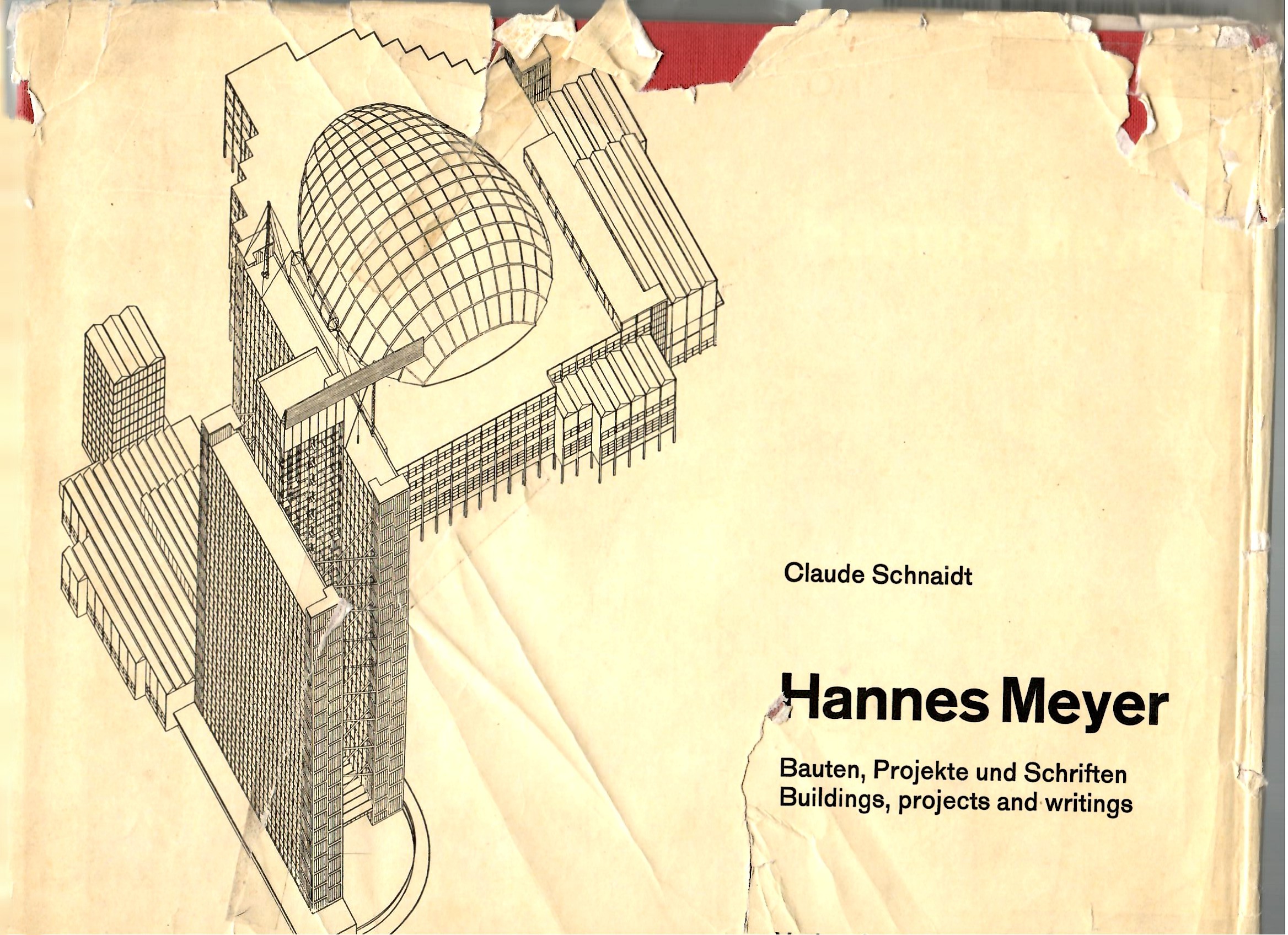
In this essay, I argue for Hannes Meyer’s profound legacy and relevance for architecture and design today. Meyer was deeply committed to a socially relevant architecture and design or, as he proclaimed volksbedarf statt luxusbedarf: popular needs over luxury goods. He pursued this through an approach that prioritised functional requirements over any aesthetic pretensions, a radical functionalism which resulted in architecture and design that were not only economically accessible to the masses but that also generated built environments and objects attending to all aspects of human life. In fact, the architect promoted what I term a ‘functionalism-widely-understood’, which delved into the realms of the human psyche and spoke to communal and social belonging. Nature was another key element in Meyer’s functionalist approach. Building compounds had to relate to the natural site, to highlight certain constructed elements over others or to relate users to the surroundings.
Meyer pushed methods of architecture and design to new limits. Any given project demanded a rigorous empirical assessment of its users’ needs by means of a host of scientific disciplines ranging from biology to psychology and sociology. This multi-disciplinary methodology called for a new conception of the architect as, in Meyer’s terms, ‘a specialist in organisation’. Gone was the figure of the ‘Grand Architect’ whose ambitions revolved around signing off on spectacular monumental buildings. (Figure 2)
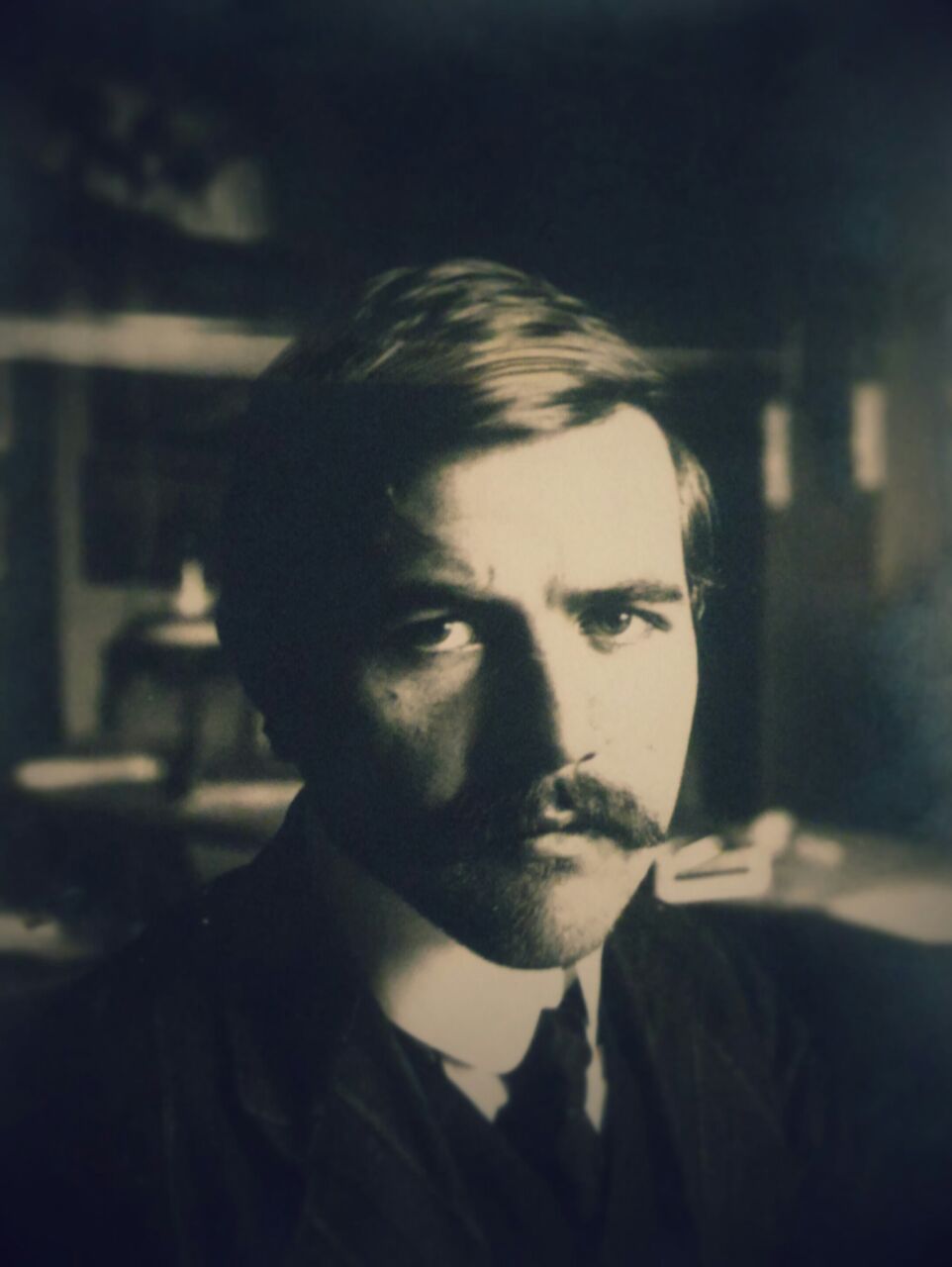
Meyer innovated continuously in the field of communication, be it through the written word, stage and exhibition designs, or photography. Promotion and propaganda formed an integral part of a radical modernism in his practice as publicist, cultural administrator and architect. Similar to his Swiss compatriot, Le Corbusier, Meyer coined a series of slogans that are still being evoked today: ‘building = function x economy’, ‘the architect, a specialist in organisation’ or ‘popular needs over luxury goods’.
Meyer practiced and promoted his forms of radical modernism from the vantage point of multiple locations across the world – he resided in Europe, Asia and Latin America – and from a global periphery, from the Far East of the Soviet Union and from Mexico. His global trajectory reaffirmed certain features of his work, such as the need for examining these vastly different and often peripheral geographical settings by means of a rigorous empiricism. His peripateticism also led him to become one of the first practitioners and spokespersons of what later became known as regionalism, which for Meyer – and his radical ‘functionalism-widely-understood’ – meant taking into account everything from climate, soil, and building materials to demographic and social conditions, as well as cultural practices.
Yet Meyer’s legacy received significant public exposure only some forty to fifty years after Schnaidt’s pioneering study. My own work on Meyer was motivated precisely by his long obfuscation in architectural historiography. I had been teaching the modern history of art and design, including the Bauhaus, in Mexico since 1998, and had never come across Hannes Meyer, until years later when I learned that this former director of the Bauhaus had also worked in Mexico for some ten years during the 1940s.
Reputation and Re-emergence
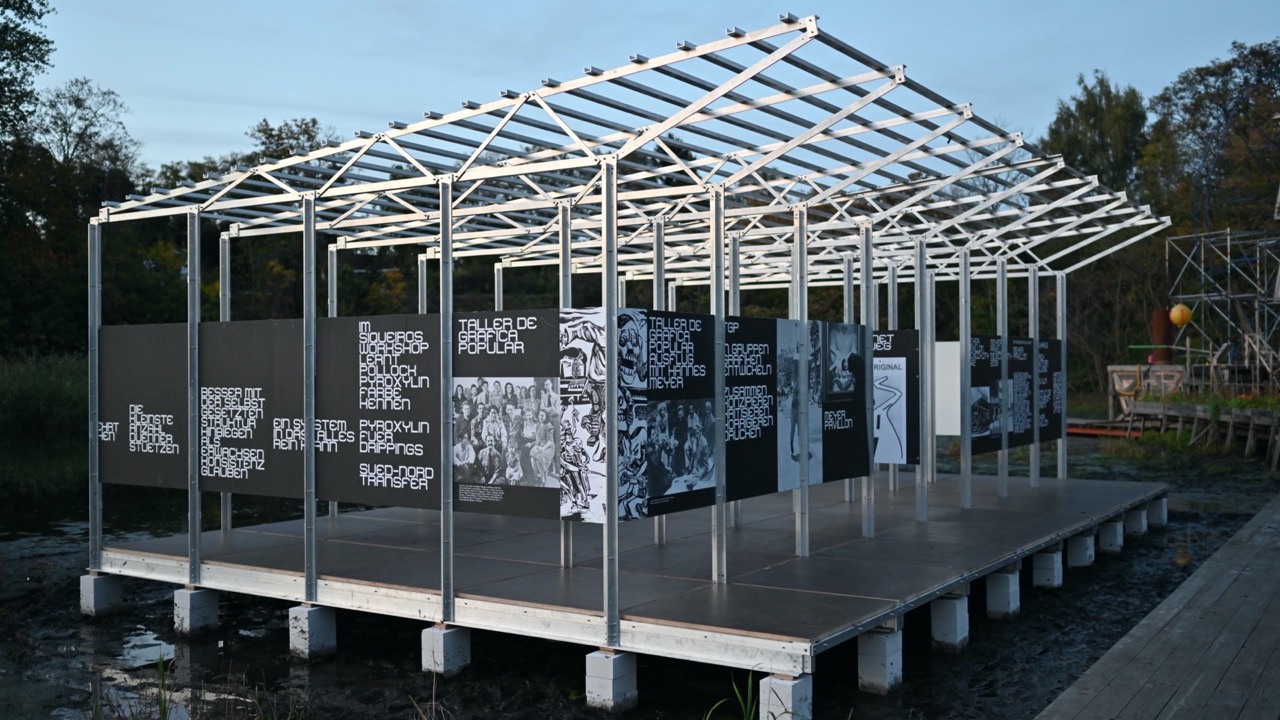
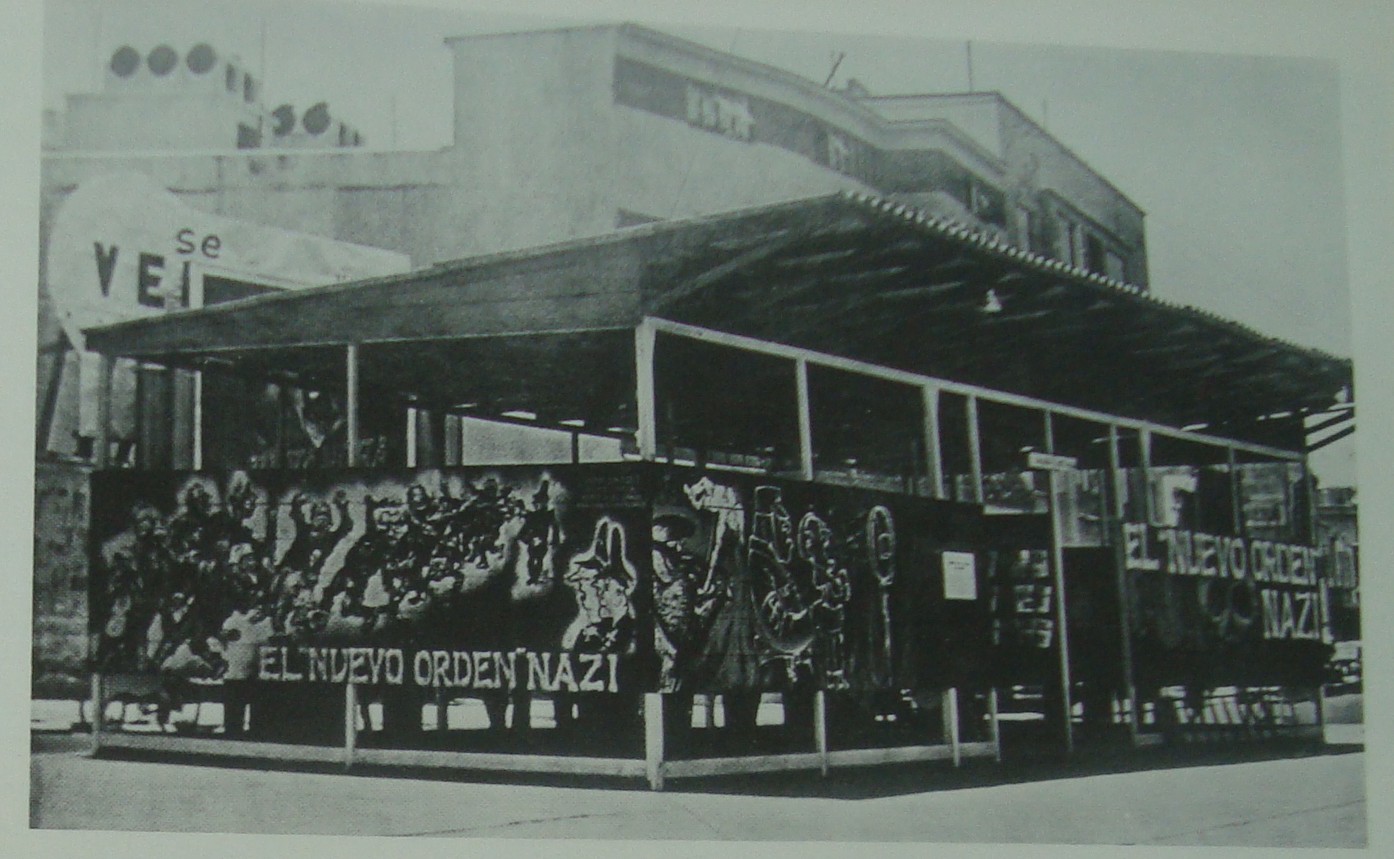
Then in 2018, a group of some ten German students of design along with the artist Knut Klaßen appeared at my door step. Sitting in my living room and having coffee, they passed around my copy of Schnaidt’s book, which had gone out of print, as if it were the Bible. The purpose of their visit to Mexico, they told me, was to find material for a project they were undertaking back home: the erection of a ‘Meyer-Pavilion’ in the centre of Weimar, as part of the commemoration of the opening of the Bauhaus in that city one hundred years earlier. Astounded by these students’ interest and knowledge of Meyer, I was thrilled to learn that this centennial pavilion was to recreate one Meyer and his wife, Lena Meyer-Bergner, had designed for Mexico City’s central square in 1943, and in which they exhibited the crimes of fascism in Europe. The designers-to-be explained to me that the pavilion was to highlight Meyer’s innovative work in the field of communication in which, in the context of the digital age, they found continuing relevance and inspiration. Within the pavilion Meyer was returning to the centre twice-fold: firstly, because he finally occupied a significant place in the historiography of the Bauhaus and, secondly, because a work he had undertaken in a global periphery, Mexico, was now being recreated in the supposed ‘centre’ of modern architecture. (Figures 3, 4, 5)
The Bauhaus Centennial featured Meyer in other ways. Exhibitions on the school, including one held in Mexico City, highlighted for the first time Meyer’s years as director. It displayed stools, desks and other furniture, whose design - unlike the iconic Breuer lounge chair or Wagenknecht lamp - was such that it could be cheaply, industrially-produced, and thus accessible to the masses. The gift store at the Dessau Bauhaus Museum sold sturdy (though not so low-cost) burlap bags with the already referred to Meyer slogan volksbedarf statt luxusbedarf. Other events highlighted his promotional engagements: exhibitions re-created the show cases he had designed to promote consumer products of the Swiss co-operative movement of the early 1920s; photographs depicted the Bauhaus exhibitions he had organised across Europe later that decade; and, inspired by the latter, a ‘Bauhaus bus’ ran from city to city in commemoration of the centennial. In 1983 the architectural historian Andrew Saint described Meyer as: ‘the most potent symbol of an alternate modernism that might have been’ (Saint, 1983, p. 135). The Centennial honoured him as such.

Yet from 1930 to at least the 1990s, he existed on the margins. In 1930, amidst the polarised political climate of the late Weimar Republic, Meyer was charged with facilitating the infiltration of Communist political cells into the Bauhaus and was summarily fired as its director. Meyer and some ten of his students at the Bauhaus moved to the Soviet Union, which seemed to offer the possibility of contributing to a grand socialist experiment. The timing proved all wrong, however; when the so-called ‘Meyer brigade’ set foot in Moscow, the Bauhaus was falling out of favour, its rationalism and austerity clashing with the incipient doctrine of socialist realism. During his years in the Soviet Union, Meyer proved busy enough – he planned one industrial city after another in its far eastern regions and taught in higher schools of learning. However, he received no chance to build.
The same held true after World War II, when Meyer, by then in Mexico, wrote one letter after another offering his services for the rebuilding of Communist East Germany. Yet, notwithstanding his socialist convictions, and his six-year stint in the USSR, the apparatchiks of the German Democratic Republic associated Meyer with the ‘cold’ aesthetics of the (former) Bauhaus. They also equated the institution’s legacy – and thus Meyer – with capitalism, and with the forms of a new International Style in the United States associated with the Dessau school and Bauhaus immigrants, such as Gropius, Mies van der Rohe and Breuer.
Meyer lived in Mexico from 1938 to 1949. Forced to escape from Stalinist xenophobic purges in 1936, he and his second wife, Bauhaus textile designer Lena Meyer-Bergner, had first moved to Geneva. When his communist legacy prevented Meyer from establishing a professional foothold, the couple moved to post-revolutionary Mexico. The timing was off once again. Shortly after his arrival and a promising assignment as director of the country’s first institute of planning, the socialist-inclined government of Lázaro Cárdenas (which had nationalised the foreign oil companies) gave way to a more conservative administration. Nevertheless, Meyer contributed greatly to the field of public-sector planning, developing prototypes for housing units, hospitals and public baths. But, while he kept true to a socially-relevant engagement, not only in planning but also in public administration and education, he did not actually build many building and thus remained in the shadows of prominent Mexican modern architects, such as Obregón Santacilia, Mario Pani and the young Luis Barragán. The Meyer family, by then with two children, returned to live in Switzerland in 1949 and Meyer – ostracised by both the capitalist West and the communist East – was offered little professional engagements. He died five years later, in 1954, at age 65.
Meyer’s legacy did not fare well at first – (Western) historiography of architecture and, in particular, the Bauhaus largely ignored this ‘communist functionalist’ (Johnson, 1932, p. 113). Gropius, by then employed at Harvard University, continued to feud with Meyer’s ghost. When he learned of the publication of Schnaidt’s monograph, he insisted with the editor (successfully!) to include an afterword, in which he depicted the subject matter of the book as a ‘radical petit bourgeois’ whose ‘[Marxist] materialism’ almost ruined the Bauhaus (Gropius, undated, p. 123). Still, Schnaidt’s publication, as well as another by the East German scholar Hans J. Winkler during the 1960s, did allow a new generation of architects and designers, from both East and West, to discover and engage with Meyer’s commitment to socially-applied architecture, planning and design. His legacy also rebounded in Latin America. In 1972, students of architecture at Mexico’s National University founded a ‘Hannes Meyer workshop’ which still exists today. Meanwhile in Chile, the Hungarian emigré and professor of architecture at the Universidad of Chile, Tibor Weiner, who had been a student at the Bauhaus under Meyer, put his teacher’s pedagogy into practice. Likewise in Argentina, Tomás Maldonado (who later became director of the Technical University in Ulm and wrote the foreword to Schnaidt’s book) based his neo-positivist approach to architecture and design on Meyer’s writings. However, during these decades, Meyer remained an underground figure until the end of the Cold War and its bipolar ideological split that had wreaked havoc on his life and legacy.
Functionalism-widely-understood
I now wish to examine the characteristics of Hannes Meyer’s modernism, especially with regard to the meaning of functionalism-widely-understood. Meyer was both a typical modernist and one who stretched its limits. He was typical in his rejection of historicism, his universalism (at least in his early career), and his didactical approach grounded in all modernists’ faith that through the built environment the world could be improved. He was radical in his rejection of any aesthetic pretensions in architecture and design; his constant commitment to the social; and his singular integral empiricism, meaning the need to relate design and architecture to all of life’s elements, at least those that could be objectified and measured. More than any one feature, perhaps it is that multi-valence in Meyer’s work (and life) that renders him such an important figure today.
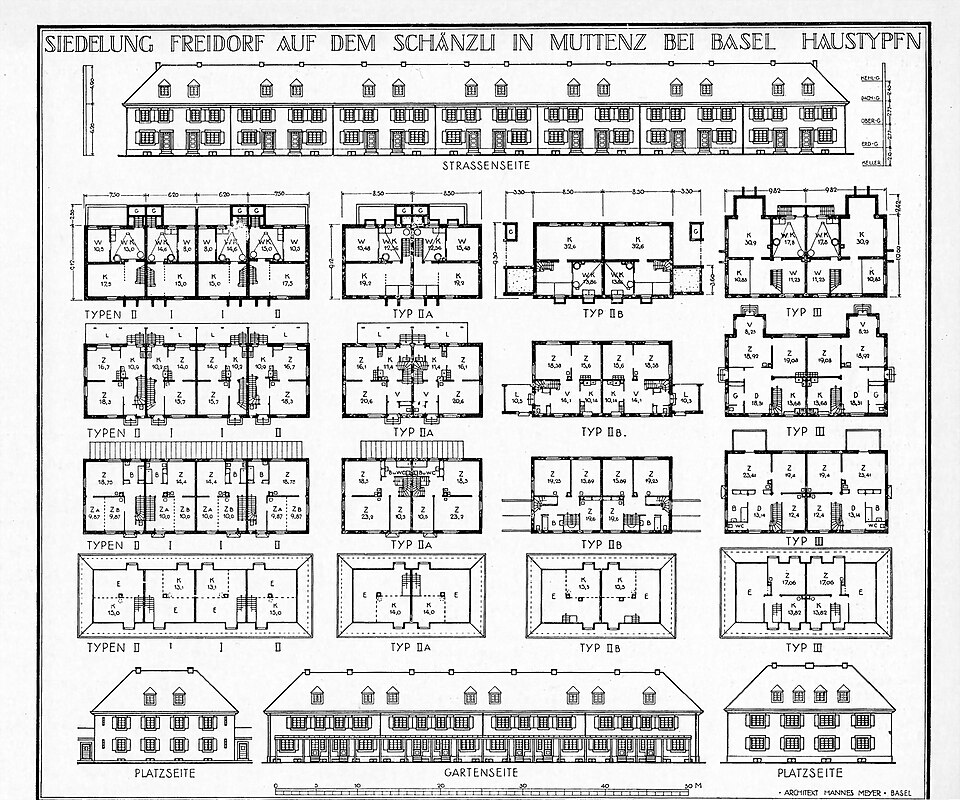
Meyer was a functionalist. He wished to ground building not in history and past styles, but in the exigencies of the present, in general, and the building project, in particular. The purpose or idea behind the latter defined its form. During the beginning of his career, in the early twentieth century, this meant the introduction and deployment of standardisation into building. His housing compound in Freidorf, Basel - while still clad in a regional Swiss style and classicism - was based on modular units. The sizes of its bedrooms, for example, were determined and unified by the size of beds. Likewise, Meyer standardised many of the compound's building parts, such as framing timbers, mouldings, balusters, windows, doors, stairs and porches – pioneering what he called ‘Freidorf-norms’ at a time when no national system of normative sizing existed. (Figure 6)
Meyer conveyed his version of modernism and functionalism by a formula, for which he is still known today: ‘building = function x economy’. Four words, twenty-five characters that comprise, perhaps, the most reductionist conception of ‘radical functionalism’: a process of designing buildings entirely based on identifying and satisfying the purposes and needs of all its users. The Swiss architect’s employment of a formula rather than a statement underlined the scientific basis of the dictum. Functions were entirely objective and could only be determined by an empirical set of data: gone and rejected were elements such as inspiration or subjectivity. Yet Meyer’s functionalism moved beyond technical elements. A dwelling was not a mere ‘piece of machinery’ -a clear reference to Le Corbusier's concept– ‘but also a biological apparatus serving the needs of body and mind’. Thus a wide array of bodily functions had to be considered: ‘1. sex life / 2. sleeping habits / 3. pets / 4. gardening / 5. personal hygiene’, etc. (Meyer, 1928, p. 12). In attending to the psyche, colour was Meyer’s favourite design element – especially rust red, as it evoked warmness and marked a contrast between the constructed and the natural environment. Furthermore, rust red was the colour of the sandstone common in his native Basel – though Meyer, at least during his universalist period, would not have liked to admit such a regionally-anchored preference. Red, of course, also stood for Meyer’s socialist politics, which he had fully embraced since the 1930s. At heart, his functionalism-widely-understood sought to create built environments in which people felt at ease. It was no surprise then that he received praise such as this: ‘[U]pon passing through the [Bernau trade union] school, probably everybody shared in the following desire: “I would have liked to have had such a school”’ (quoted in Leidenberger, 2023, p. 113). (Figure 7)
Like any modernist, Meyer was convinced that the built (cum natural) environment shaped and could improve human affairs, both with regard to the individual and the social. His designs thus entailed a didactical purpose: that of fostering social bonds and collective identity amongst people, while respecting the (spatial) needs of the individual. He described the layout of the Freidorf estate as ‘simply the outward expression of … an embodiment of its co-operative deed’ (Meyer, 1921, p. 6). The same was to hold true for later buildings, only that by then ‘co-operative’ gave way to ‘collective’ (Bernau trade union school) ‘socialist’ (Soviet cities) or ‘solidaristic’ (Mexican workers’ housing compound).
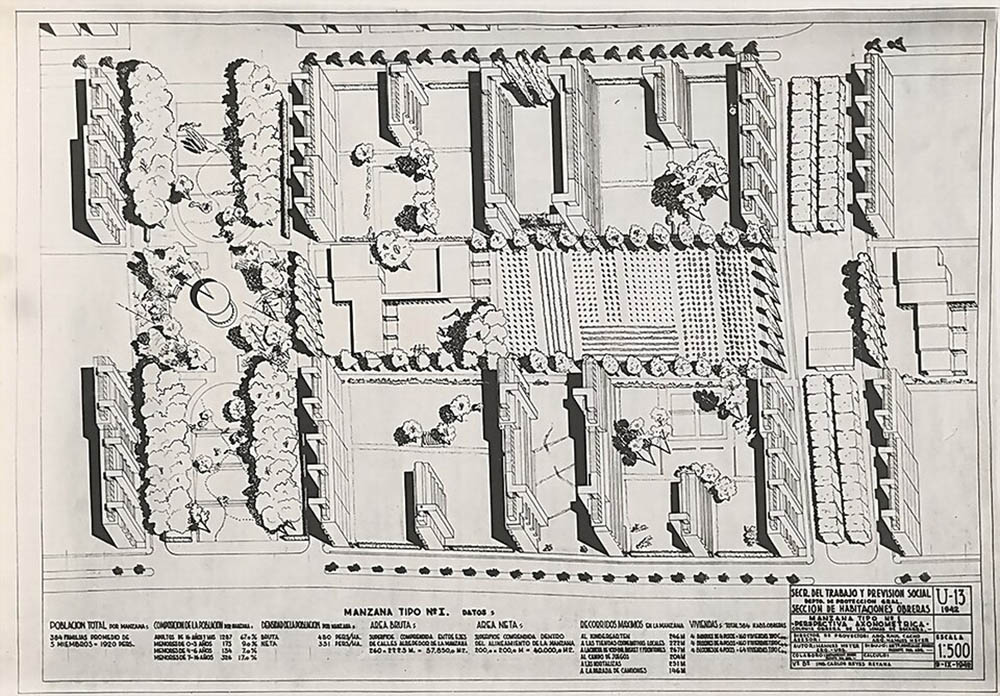
What is distinctive is the specificity with which Meyer charged his constructed spaces with didactical purposes. The layout of his first major work, Freidorf, was inspired by Johann Pestalozzi’s theory of human development which unfolded through a movement across concentric circles, the innermost one representing the intimate self and the following circles, family, community and nature. In Freidorf’s architecture these translated into four elements: single-family residences, housing rows, walkways, and finally, the main square and hall. The space of the house, or primary ‘cell’, was dedicated to private life, which then yielded to communal co-existence – forming what Meyer described as ‘a clan unrelated by blood’ (Meyer, 1925, p. 49). The architect would design similar schemes later on. For his socialist cities (sotsgorod) in the Soviet Union and a workers’ housing complex in Mexico, he included enormously wide boulevards that facilitated political marches and that led the masses towards high-lying central squares and communal buildings.
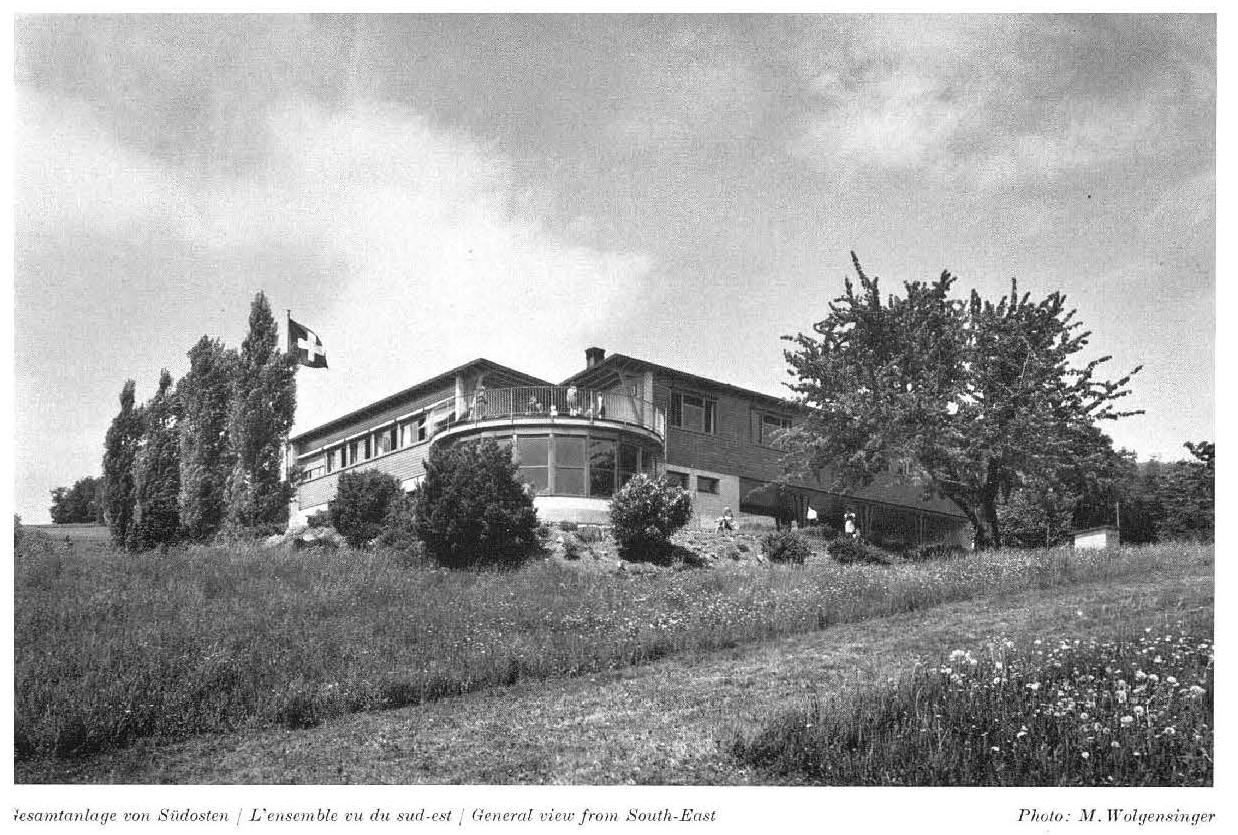
Meyer inscribed movement and timing into his built environments, or what he termed lebensräume – ‘spaces of/for life’. He had specific scripts in mind, and explained in his writings how these ought to function. With regard to a children's home in the Swiss mountains (Mümliswil, 1939), Meyer offered ‘a sequence of experiences in space that are framed by the landscape’ (Efrussi). Upon entering the playgrounds located in front of the building, the visitor could catch a glance of the mountains that lay behind; then upon entering the hall, s/he saw the village at the horizon, and finally upon stepping into the central Round Hall, he or she was to ‘be surprised by a complete view [of the mountain range] toward East, South and West’ (Meyer, 1953, p. 213). Similarly, different usages of communal space depended on a given purpose. In the Round Hall, during mealtimes, the children were to sit facing a semi-circular row of large windows, thus enjoying a ‘democratic’ view of the Jura mountains; for other activities, however, they were to sit in a circle, thus being able to visualise each other. (Figures 8, 9)
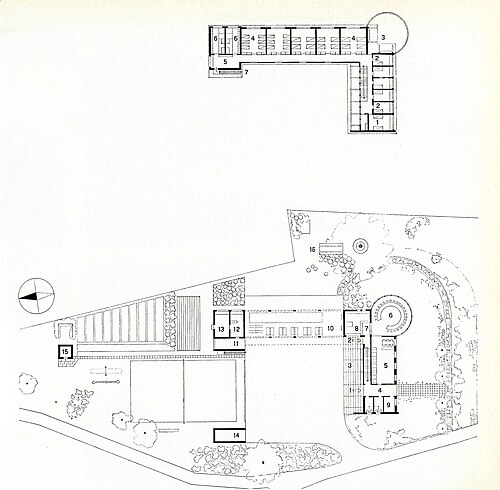
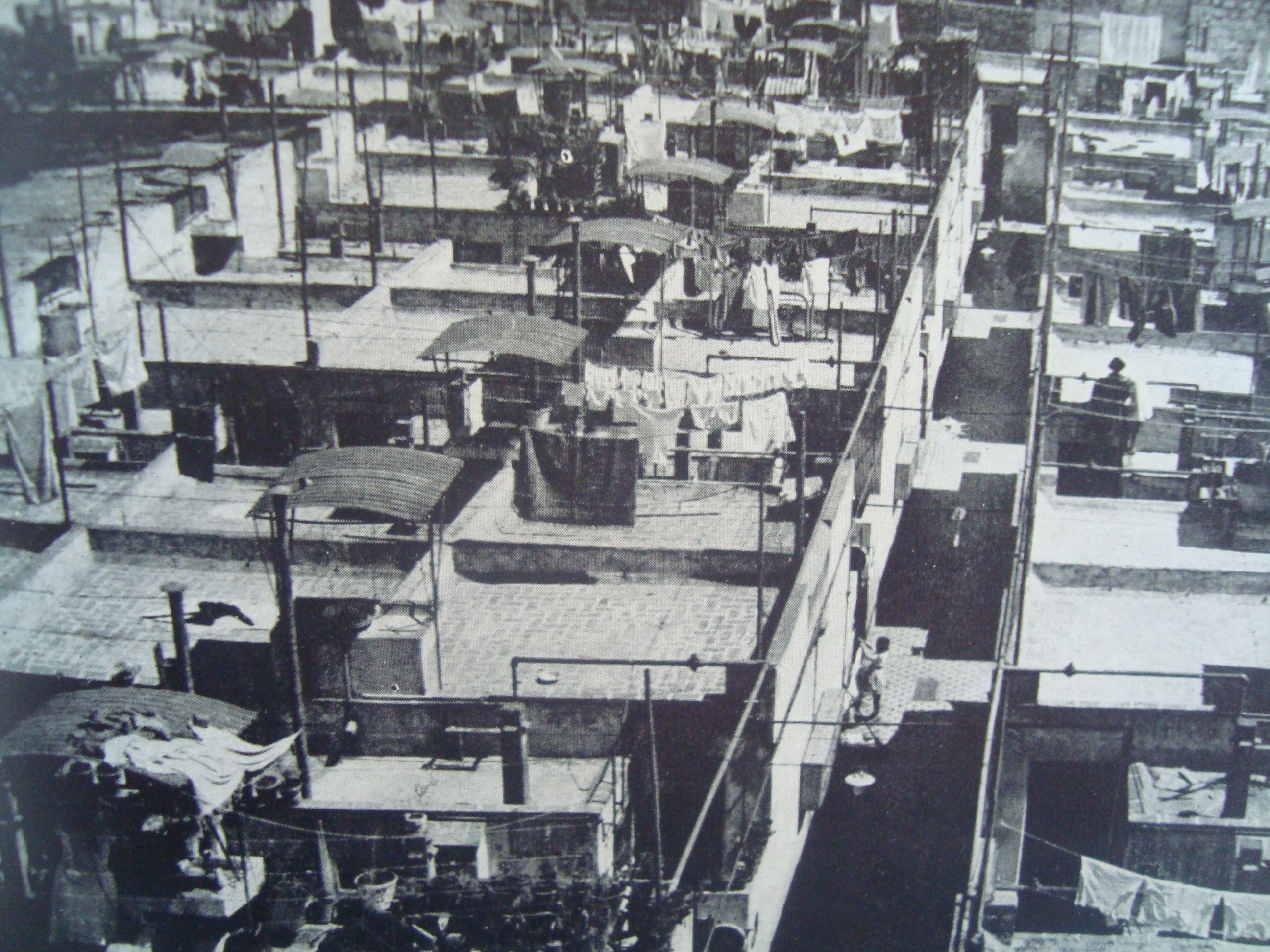
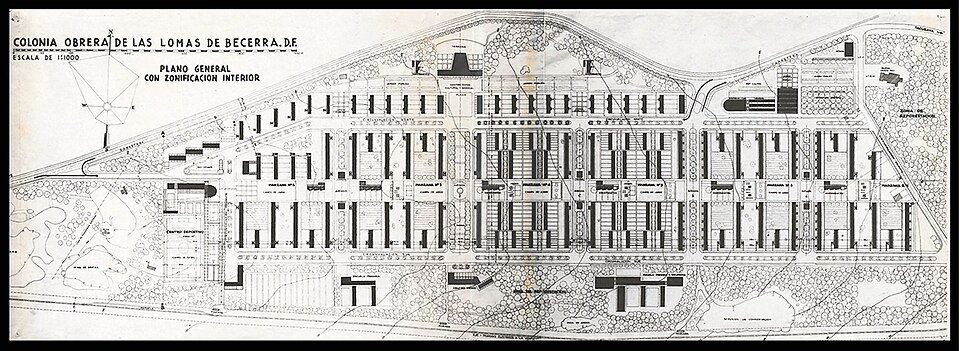
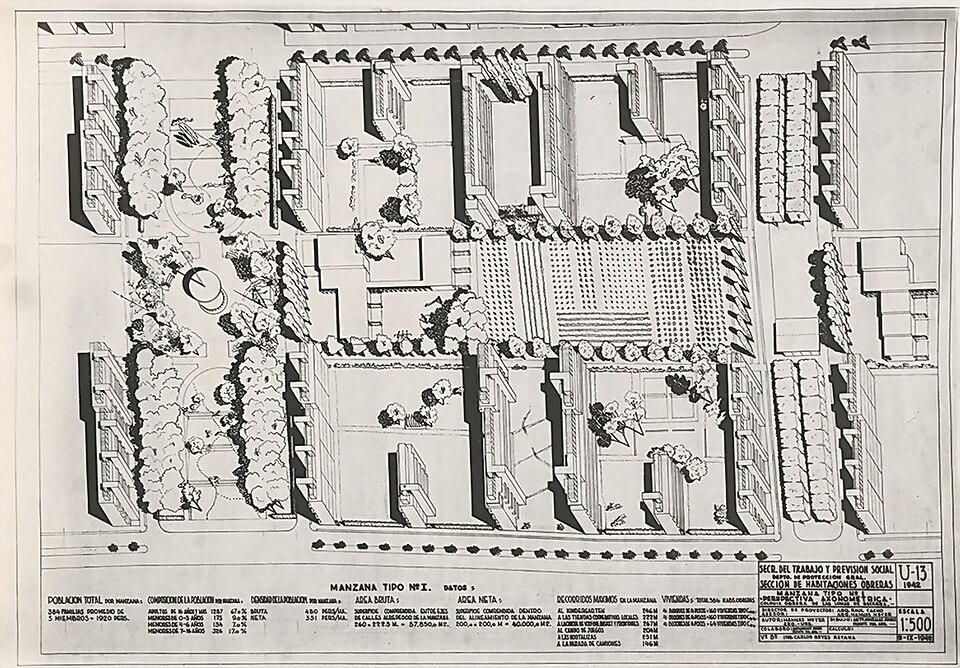
Yet notwithstanding Meyer’s modernist urge for control and the collective, he also developed a profound respect for the needs of the individual person, and especially the child. For Mümliswil, each child was assigned a closet with an adjacent bench that allowed it ‘to withdraw to its own self’ (Meyer, 1953, p. 216). Meyer himself had lived several years in an orphanage and thus knew all too well about children’s need for intimate and private spaces. The same held true for his recognition that design required taking into account existing cultural practices. For his conception of communal spaces in his Mexico City workers’ housing estate (Lomas de Becerra, 1942), he studied inner-city working-class neighbourhoods, in particular the so-called vecindades. These were (and still are) narrow and elongated lots with two parallel housing rows and inner patios that included washing facilities and other activities. Meyer studied and published photographs of neighbourhood life in these patios, at a time when most Mexican architects denounced the vecindades as places of vice and disease (Meyer,1943). He then designed similar areas for Lomas de Becerra’s housing rows. These included space for vegetable patches, for Meyer knew that most workers in Mexico City were migrants with a peasant background. (Figures 10, 11, 12)
His sensibility to local cultural practices in housing – or what today we call habitat – was one aspect of his emerging regionalism, a term he openly advocated by the mid-1930s, long before Kenneth Frampton reiterated it with the prefix of critical. Given the multi-layered complexity of Meyer’s approach to design, it comes as no surprise that he conceived of the architect as a ‘specialist in organisation’, for any given building project required a collection of experts from a wide range of fields. Of course, that collective notion of architectural practice also reflected his socialist convictions.
Nature
One key element in all his projects was nature. Upon being assigned a project, Meyer first examined the site, and then turned to the drawing board only to return again to the site. He stated a practical reason for this: ‘I never leave a construction site without a botanical querschnitt [cross section] in my pocket. For plants are clear indicators of the subsoil and the living conditions on each piece of the earth’s crust’ (Quoted in Westermeyer, 2006, p. 54). Yet his careful attention to the setting went beyond technical matters, and, in fact, represents an outstanding feature of his architecture: his deep respect for natural systems. For example, when in 1919, Meyer was asked to build the Freidorf housing compound, Meyer described the terrain, of some nine hectares, as follows:
On the day of its purchase, corn and oats, turnips and charlock wove a green carpet that stretched across the plane and the undulating terrain, with its few nut and cherry trees. From the surroundings the native outliers of the Jura [mountains] peer down onto the piece of land: Wattenberg and Winterhalde, Rüdihardt and Bruderholz. Beyond, the Schweizerblauen [blau, German for blue] loom blue, and toward the Northeast the limestone cliffs of the Black Forest, in ochre yellow, packed with grape vines, smile upon the Swiss Hardt, which keeps guard of the Rhine. (Meyer, 1921, p. 2)
This description could stem from a botanist or from a romantic painter who converts nature into an active agent that ‘looms’, ‘smiles’ and ‘keeps guard’. In this case it came from an architect who held detailed knowledge and deep sentiments for his native land. It was followed by Meyer’s recognition of his obligatory, almost unfortunate task: ‘with sharpened pencil, the little architect had to put an end to this unspoiled stretch of land!’
Many years later, in 1932, and far removed from his native land, in the Soviet Union, Meyer was charged to revise the plans for a socialist sotsgorod surrounding a chemical plant at Nizhne-Kur’insk, located in the Perm region, to the east of the Ural mountains. Upon his arrival, he was stunned by the poor planning of the site, but above all by the irresponsible destruction it faced:
the Chemical Plant … partly based on a project that had already been abandoned, felled whole sections of the most beautiful forest … designed by nature itself [as a] Park for Culture and Leisure. [The] Kamkhimstroi [Chemical Plant] is laying a highway 150 meters from the shore of the Kama River … On the side of the Shipyard, the forest is being cut down naked without any plan (Quoted in Efrussi, 2025, p. 160).
Meyer’s attachment to nature might seem unusual for a ‘high modernist’ who in his famous essay ‘The New World’ (1926) had exalted the machine in all its varieties and even a technified nature when he spoke of a ‘landscape of standardised electrical towers’ (Meyer, 1926, p. 221).
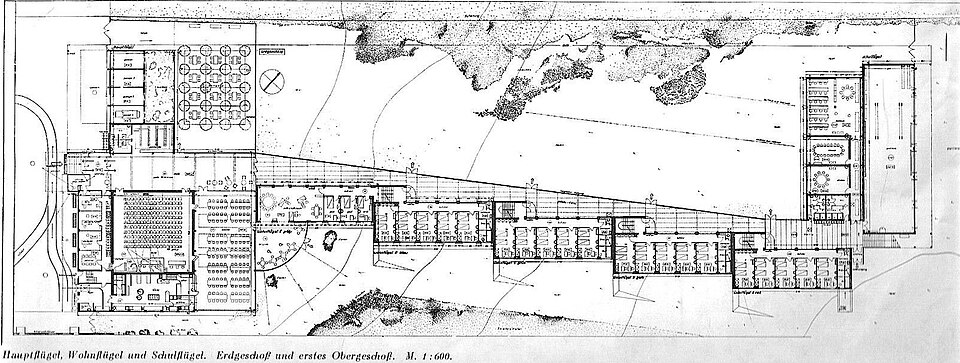
Yet his radical form of modernism always took nature into account. Rather than levelling inclined building sites, Meyer took advantage of them by establishing a hierarchy and centrality among a compound’s constructed elements. In the case of Freidorf, Bernau and Lomas de Becerra, he reserved the site’s highest location for the co-operative hall, auditorium, and ‘trade union civic centre’, respectively. These central buildings could be viewed by residents from any vantage point of the compound. In the case of the Bernau trade union centre, the architect constructed the main building in a stepping terraced fashion, placing facilities for individual activities (dormitories and study facilities) at the bottom and those of a collective nature (auditorium and cafeteria) at the top of the terrain, while connecting both parts with a sloped roofed walkway. The elevated centres of these complexes offered the best view of the surrounding landscape: in the case of Freidorf and Mümliswil, the Swiss Jura; Bernau, its pastures and deep forests; and Lomas de Becerra, the majestic volcanoes, Popocatépetl and Ixtacíhuatl. (Figures 13, 14)
Meyer also applied considerable attention to landscaping the non-constructed parts of the building site. In Freidorf, he planted a diverse ‘empire of perennial plants: […] Japanese astilbes and autumn anemones, Chinese peonies and rhubarb, the Caucasian scabious and skull-cap from Lake Baikal, Turkish poppies, American saw-wort and pampas grass,’ amongst others. Through their ‘captivating charm’, these ‘helpers’ were to ‘win back people, who through a life in the city tenements … have become strangers to the land’. The planting exposed alienated urban dwellers to ‘the botanical lore of their grandfathers’ (Meyer, 1921, p. 6). Such a use of landscaping drew upon the British Garden City movement (to which Meyer had been exposed during his travels to England as an apprentice).
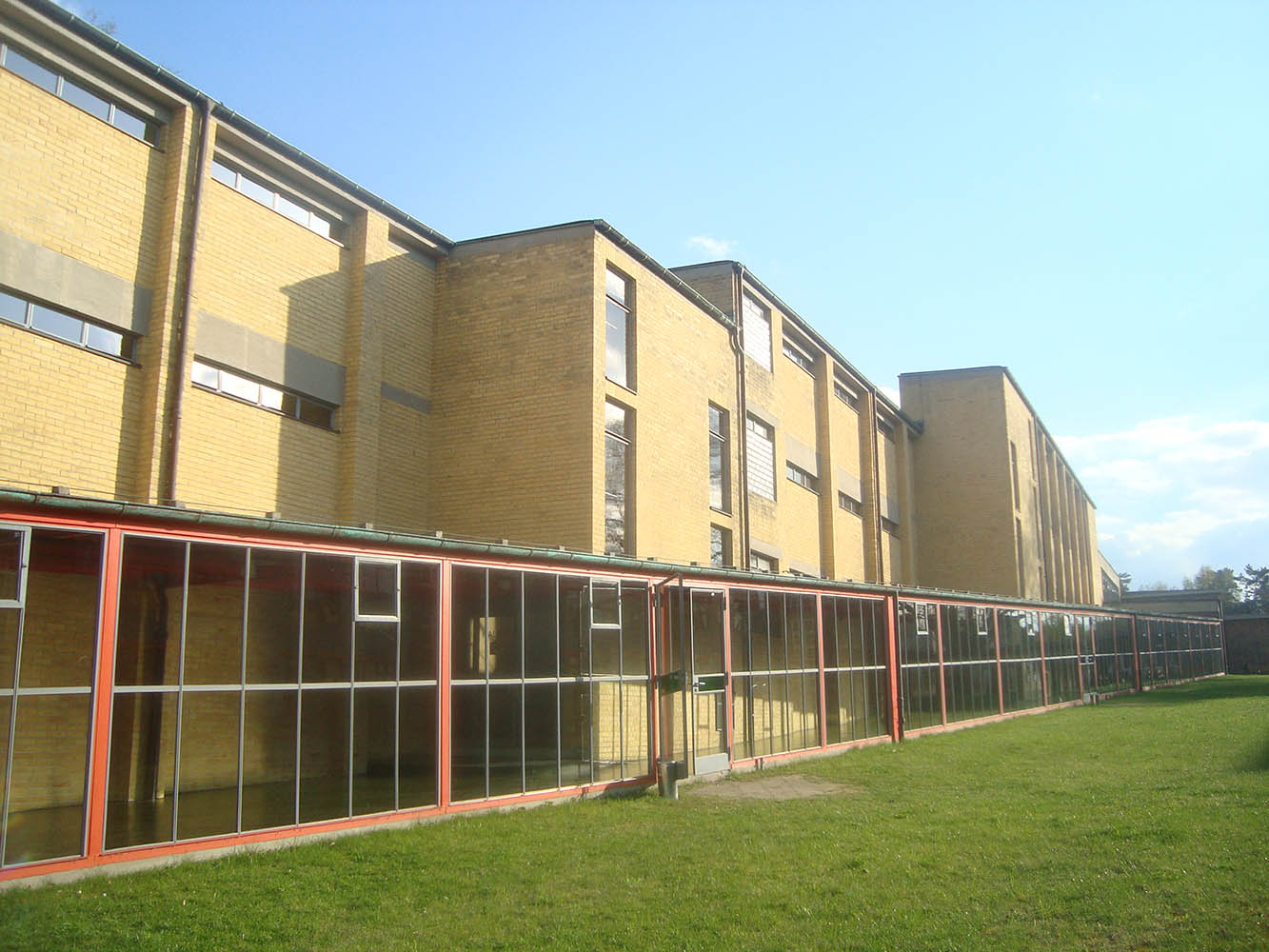
Even a project ostensibly oriented toward economy and accessibility entailed natural elements. Meyer and his students at the Bauhaus built two three-storey apartment buildings in 1930 to provide low-cost housing to the workers of the Dessau-based Junkers aeroplane plant. In order to lower construction costs, the four apartments located on each floor of the building were accessible by one single staircase rising up within a module attached to the main building; from there, on each floor horizontal external walkways led residents to their housing unit. By the time of its construction in 1930, this type of building access – reminiscent of U.S. motels – was entirely new and represented a key contribution to the minimal workers’ housing movement. But Meyer also assigned the walkways another function, that of inducing residents to a pleasant chat with their neighbours, something traditional indoor stairwells hardly facilitated. Meyer and his students called these buildings laubenganghäuser, German for ‘houses with walkways along arbours’. In an occult romantic fashion, Meyer evoked nature as part of a strictly modern, functionalist construction. In addition, the buildings also had ample yards and vegetable patches, and featured stalls for storing garden tools and bicycles on the ground level. (Figure 15)
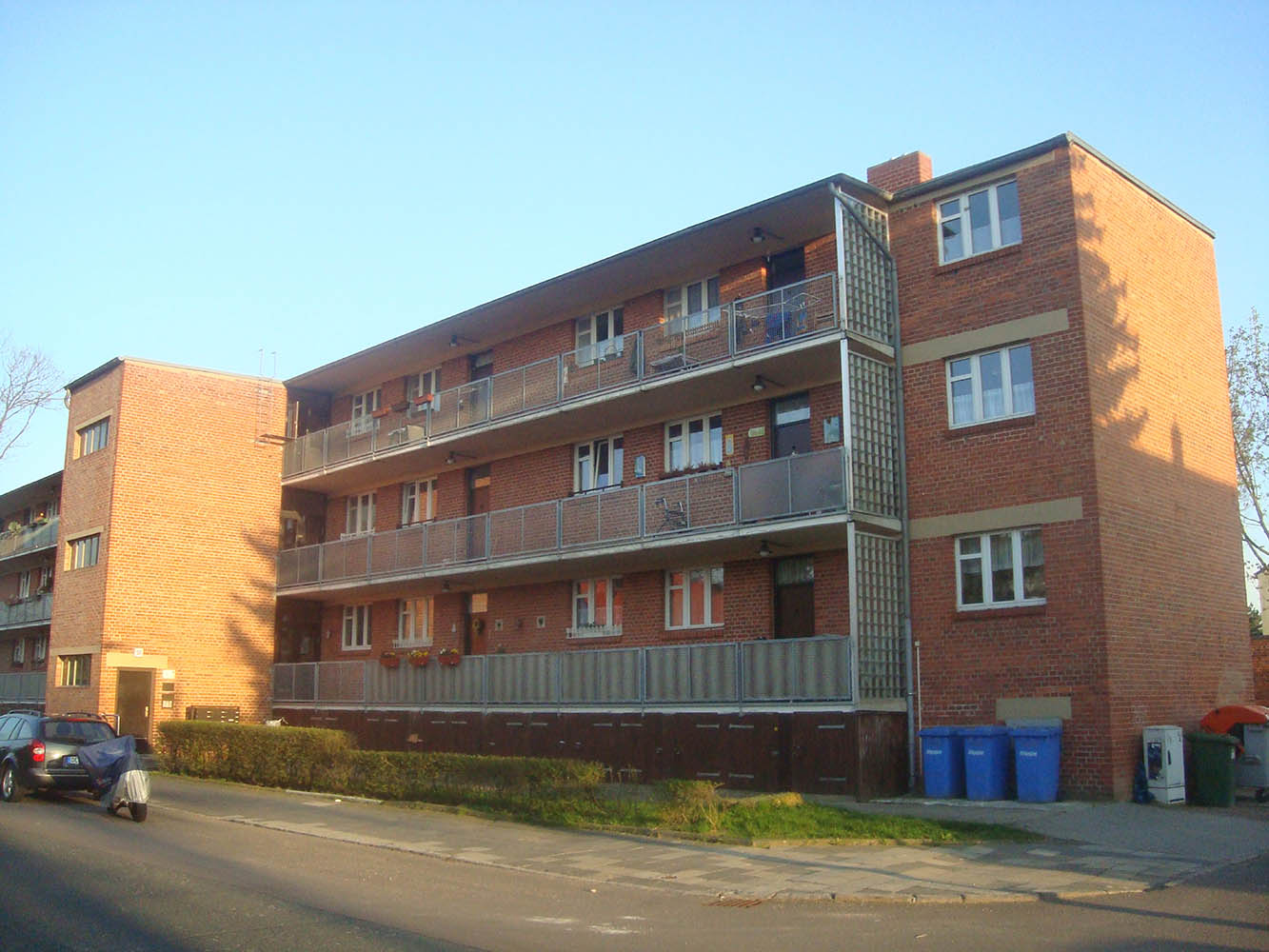
It is important to recognise that in all of these projects the architect did not ‘employ’ nature for the purpose of harmony or aesthetics, measures that contradicted his modernist convictions. Instead, he assigned any given relation between built and natural environment a certain purpose: be it that of fostering communal life, or returning alienated city dwellers to the land by simply providing pleasant lebensräume. Meyer’s mastery in integrating building into nature certainly evokes an enormous aesthetic satisfaction, at least for myself and other scholars, such as Sandra Westermeyer who described Meyer’s trade union school in Bernau as an expression of a 'poetic functionalism' – again, functionalism-widely-understood (Westermeyer, 2006, p. 72).
Communication
Like other architects of his generation, most notably Le Corbusier, Meyer became a master of communication. Slogans provided a key tool. His dictum ‘building = function x economy’ neatly summarised and propagated Meyer as a functionalist committed to low cost in order to make good building available to the masses, the latter emphasised by volksbedarf statt luxusbedarf. His main means of communication were publications: articles on Freidorf (1921 and 1925); his modernist-futurist manifesto ‘The New World’ (1926); as well as his Bauhaus-year essays ‘building’, (bauen, 1928) and ‘building and society’ (bauen und gesellschaft, 1929). All enjoyed an international readership and greatly contributed to his fame as a radical modernist architect.
His writings were not mere publicity tools, but constituted modernist expressions of their own. In my book on Meyer (Leidenberger, 2023), I argue that he developed a modernist form-language in his writings before he did so in construction. The 1919 Freidorf housing compound was clad in a regional and classicist style, yet his article on Freidorf employs a vocabulary, syntax and stylistic means, such as staccato-style enumerations and alliterations, that linguistically converted Freidorf into a truly modernist achievement. This is how Meyer described the residents of Freidorf:
[In Freidorf reign] all sorts of world views of dissidents, discordants, anthroposophists, athletes, altruists, footballists, egoists, communists, methodists, conservatives, Mazdaznanians, Grutians, vegetarians, non-smokers and the respective renegades of all these Currents. [Freidorf is full of] creatures, stench and noise [in German: ‘Getier, Gestank und Gelärm] (Meyer, 1925, p. 50)
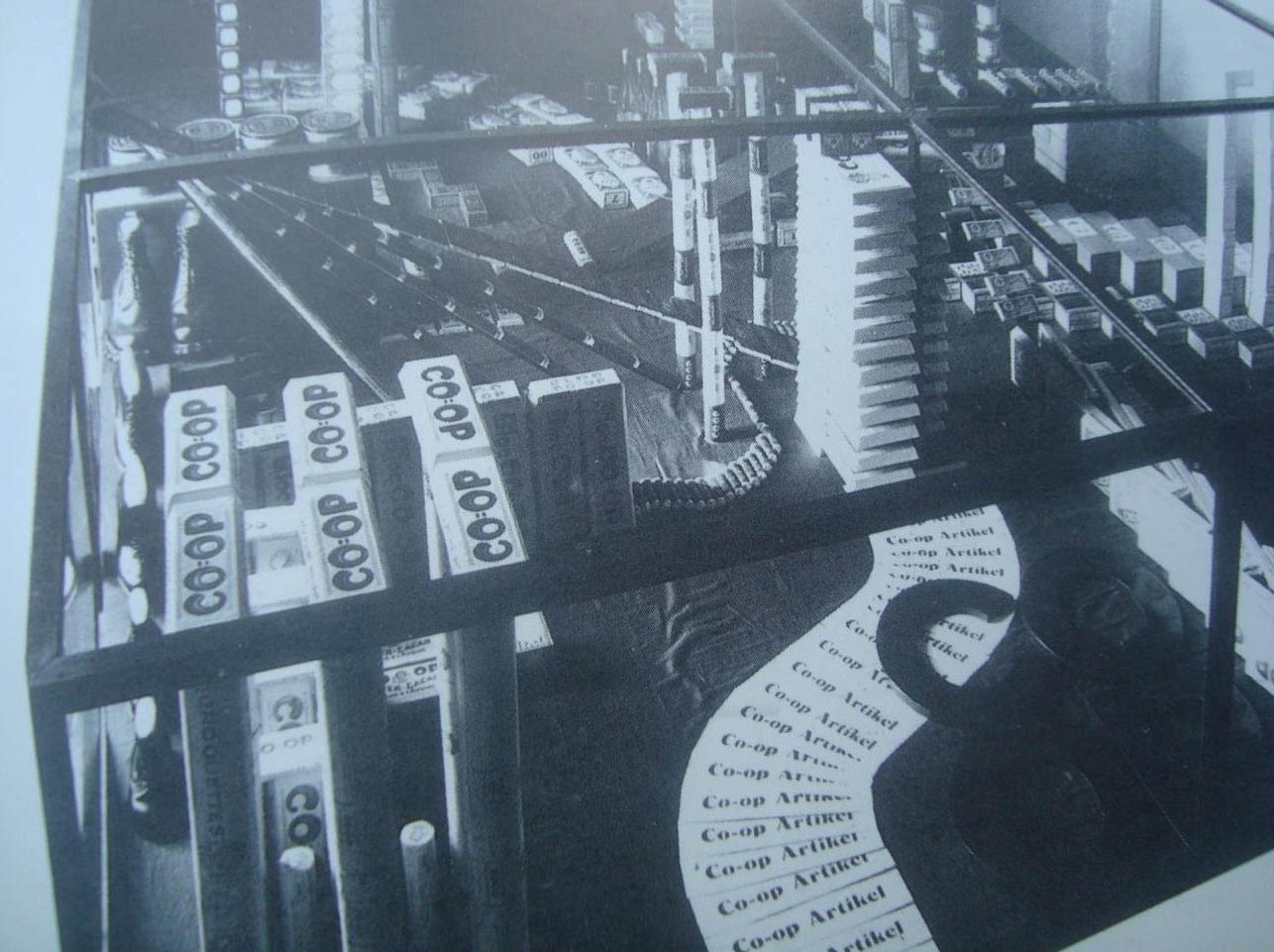
Only by the mid-1920s did Meyer actually build in a modern idiom. His writings stand out for their literary quality and, in fact, are the subject of a book in progress (Long, The Poetics of Place and Displacement). Exhibits were another field in which Meyer excelled as an innovative and modern communicator. For an exhibition stall at a trade fair in Ghent, Netherlands in 1924, he promoted the Swiss co-operative movement by way of Dada-like performances and glass vitrines that displayed consumer products on conveyor belts, thereby highlighting their industrial mass-produced origin. (Figure 16)
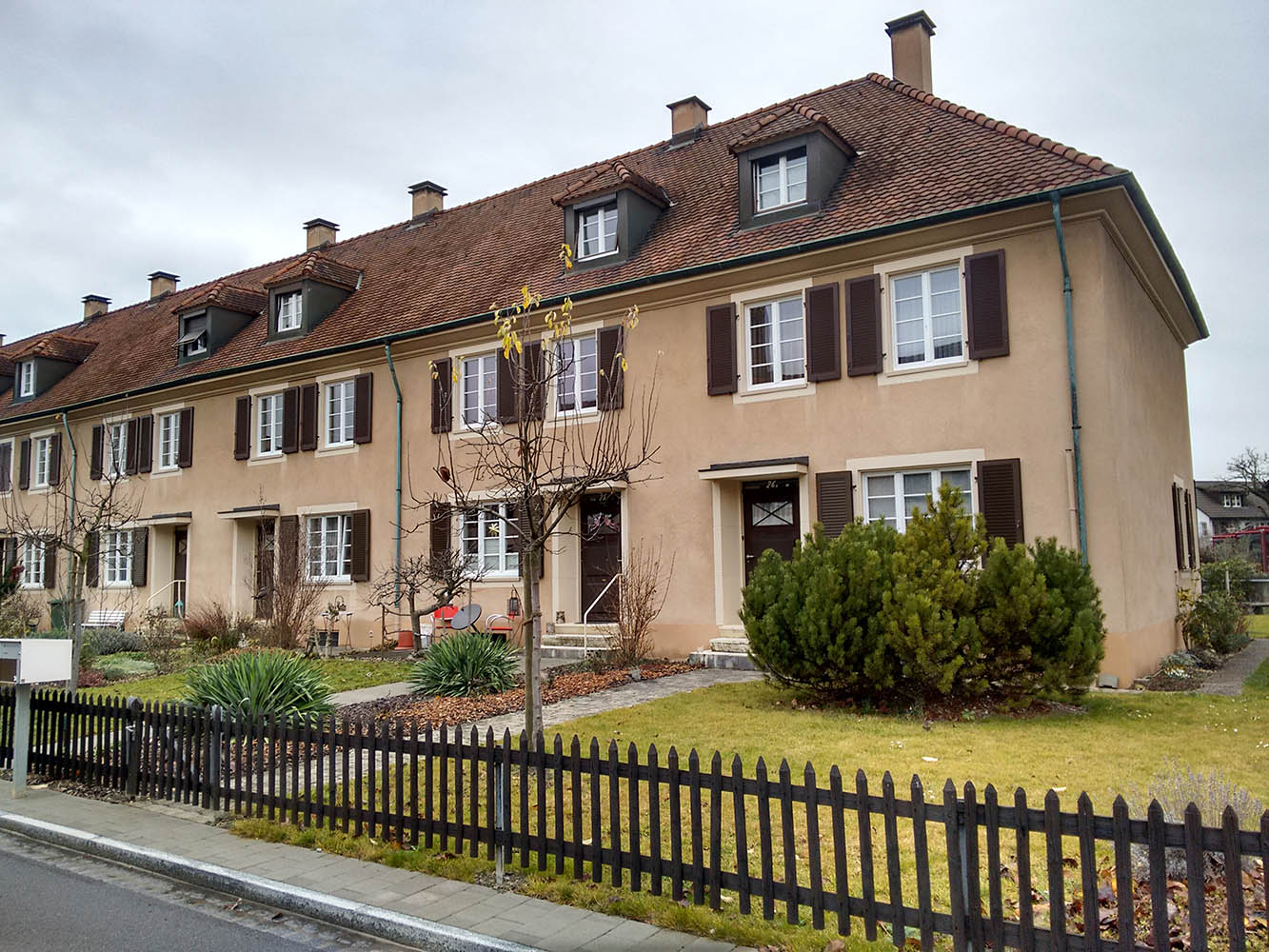
Years later, he curated an exhibition on Mexico’s school construction and displayed enormous posters featuring statistical graphs and figures that used the isotypes of Otto Neurath. Meyer recognised that the act of communication was invariably necessary for propagating the modern movement while also conceiving of it as its very essence. During the 1930s, he would extend his role as propagandist to political messages, specifically the promotion of the Soviet Union, when he undertook several lecture tours in Western Europe. (Figures 17, 18)
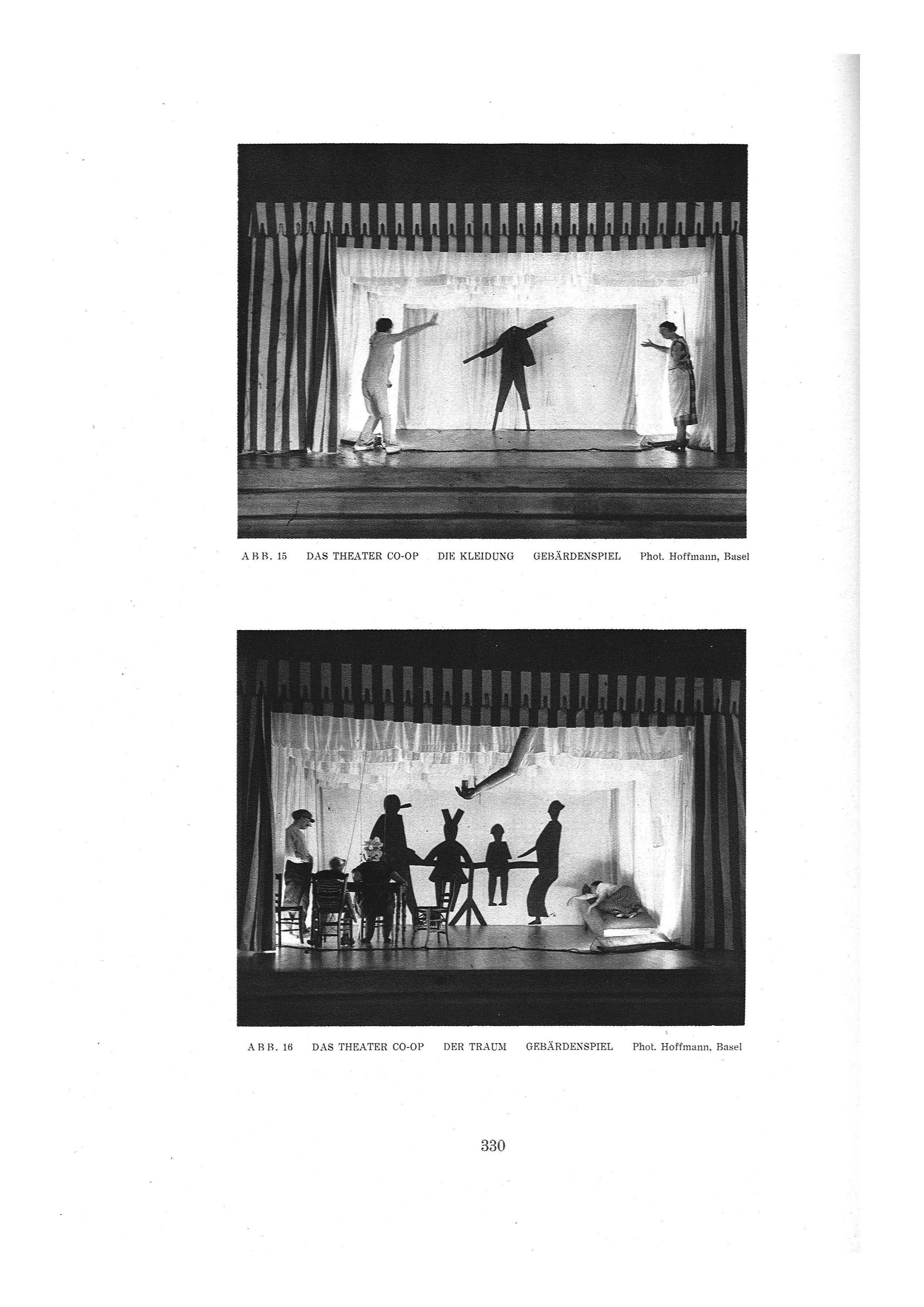
Conclusion
Who then was Hannes Meyer? He was a little of lots of things: a leading, if historiographically displaced, member of the first generation of modern architects, who held faith in the tabula rasa wiping out of history while celebrating the universality of the machine. As such he was a technocrat of sorts, an idealist and perfectionist who veered toward the fanatic in his modernist convictions (and in his intense work routines). He became deeply committed to working for the masses in the ‘age of the collective’, which began with the late nineteenth-century discovery of the ‘social question’ – that is, how to adjust liberal capitalism to assure basic living standards for impoverished workers. Responses and rebuttals to this question yielded totalitarianism and war by the 1930s and 1940s. Meyer critically responded to these historical developments, in his work, politics and life.
He was not – and, for the most part, did not want to be – a ‘Great Architect’, for that role was imbued with notions of inspiration and geniality he held in disdain, and in tension with his fervent empiricism and socialist politics. Still, his biography reveals some ambivalence, for he certainly enjoyed his reputation as a ‘Bauhaus architect’, even if it did little to nothing in landing him employment. After his dismissal from the Bauhaus in 1930, his trajectory to the USSR, then to Mexico and then back to Cold War Europe, seems to follow a pattern of such an architect ‘arriving at the wrong place at the wrong time’. Of course, I do consider him a great architect, in ways that lie beyond the canon, and which I have hoped to convey in this essay.
I would like to finish by pointing to Meyer’s humanism. I have already suggested that his functionalism-widely-understood placed people, as a collective and as individuals, at its centre. The architectural historian Michael Hays – in one of the few and early studies of Meyer in the English-speaking world – characterised him as a ‘posthumanist’. Hays pointed to Meyer’s recognition that, in the age of the machine, individual agency had become not only unfeasible but undesirable (Hays, 1994). Yet as Meyer’s biographer, I found him to be a person that never lost sight of human qualities. For one, he accepted that modernist convictions and practices could clash with people’s will. After completing Freidorf, Meyer along with his (first) wife and (first) two children, stayed on as its administrator. He lamented his neighbours’ ‘poor’, i.e. non-modern, tastes in home decoration as well as their gardening practices that violated his landscaping designs (Meyer, 1921, p. 6). But he took this with a good dose of humour, and did so again many years later as head planner of the Jewish colony of Birobidjan in the far east of the Soviet Union; there he had to negotiate his drafts with Jewish immigrants who had arrived from all over the world and had their own ideas on housing and street design. Perhaps due to his experience as an orphan, he proved quite empathetic toward children. This is revealed by his many photographs that depict them on eye-level, their captured gazes and postures suggesting a close connection to the photographer.
Another sense of humanness extended to his private life. He was a loving if certainly imperfect son to parents who died when he was eight and twenty-seven years old, respectively; a brother to three siblings, two of which died when he was young; a lover to (at least) two women; husband to two other women; and father to six children, two of which out of wedlock; and finally a life-long friend to men and women all across the globe. These and other private matters of what amounted to a fascinating life lie beyond the scope of this essay. Or do they? Meyer insisted that modernism must always relate to life – perhaps therein lies his most radical posture of all. (Figure 19)
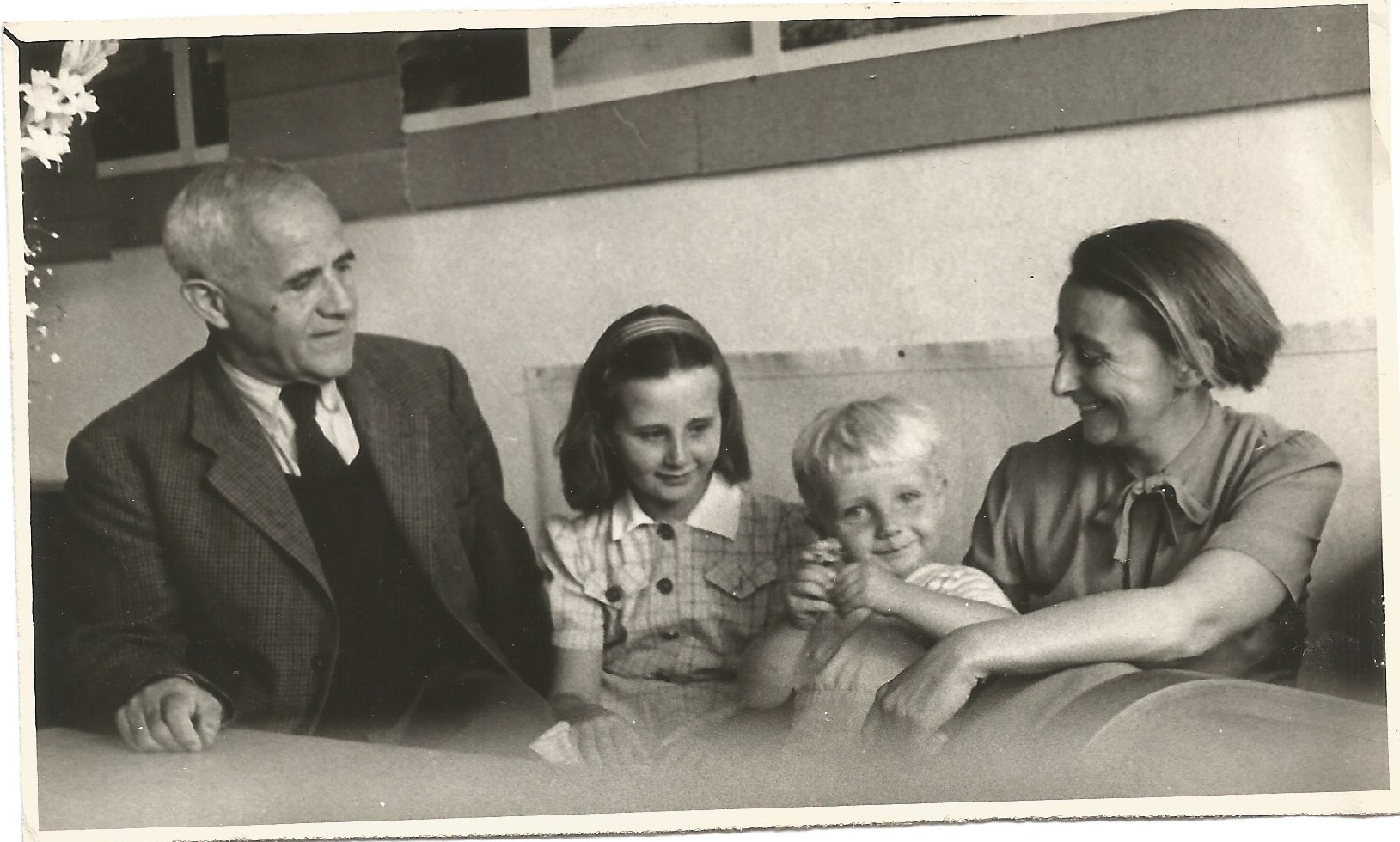
Georg Leidenberger explores Hannes Meyer's radical functionalism-widely-understood - which resulted in architecture that was not only economically accessible to the masses but that also generated built environments attending to all aspects of human life, and speaking to social and natural belonging.
Read
Hynes here too: account of the funeral probably. Thumping. Thump. This morning the remains of the late Mr Patrick Dignam. Machines. Smash a man to atoms if they got him caught. Rule the world today. His machineries are pegging away too. Like these, got out of hand: fermenting. Working away, tearing away. And that old grey rat tearing to get in.
James Joyce, Ulysses (p. 150).
The loyal son of modern civilization’s fear of departing from the facts, which even in their perception are turned into clichés by the prevailing usages in science, business, and politics, is exactly the same as the fear of social deviation. Those usages also define the concept of clarity in language and thought to which art, literature, and philosophy must conform today. By tabooing any thought which sets out negatively from the facts and from the prevailing modes of thought as obscure, convoluted, and preferably foreign, that concept holds mind captive in ever deeper blindness.
Max Horkheimer and Theodor W.Adorno, Dialectic of Enlightenment: Philosophical Fragments (pp. xvi-xvii).
The editors’ invitation to write about the positive legacies of modernism on an Irish digital platform suggested to me an article on James Joyce rather than architecture. I’ve long been interested in the relationship between literature and architecture, not in the old sense of ‘architecture-as-text’ but as a more straightforward site of investigation regarding how language shapes the way we understand the built environment. My doctorate developed a lexicon for the aesthetic criticism of Celtic Tiger neoliberal development - in which pre-industrial or traditional, modernist, and post-modernist material were all at play. Were anything to have been learnt from modernism in that thesis, the lesson likely would have been a negative one. For this reason, with this text, I’ve tried to approach the question of how we speak and write about contemporary Irish cities and architectures more affirmatively – to consider what Joyce can help us learn within today’s culture of solutionism. The glib sloganeering of corporate technologism which defines the language of contemporary development and architecture, and which still contains some of the worst nucleotides of oppressively utilitarian design-modernism, treats thinking itself as an obstacle to innovation, optimistation and action. At this point in time, one lesson might be to think more so than do, and to think especially about how what we say and write about cities, down to the level of words and sentences, inevitably affects the nature of what cities could be.
A familiar reading of Ulysses (1922) casts Joyce as an opponent of Irish parochialism and a proponent of the cosmopolitan European culture the author found in the Paris within which he wrote the novel. Another simple reading might suggest that Joyce and other Irish progressive modernists essentially 'got what they wanted' from the Ireland of, and after, the Celtic Tiger period of the mid-1990s until the late 2000s.1 The aftermath of this continued the logic of neoliberal financialisation through the 'Celtic Phoenix' of the 2010s. The most hopeful or utopian images of the Celtic Tiger – and of the gradual globalisation of Ireland initiated by Seán Lemass and T.K. Whitaker’s First Programme for Economic Expansion of the late 1950s and early 1960s – which served as the Tiger’s groundwork – did nonetheless appear to signal a more 'Joycean' potential for Ireland (or at least Dublin), compared to the more 'Yeatsian' dreams of Ireland’s preceding decades under the doctrines of Éamon de Valera.2 The Celtic Tiger of the late 1990s,3 especially, was one in which several tyrannies registered in Joyce appeared to fall: by the second half of the nineties, neither politically-enforced Catholic conformity, nor the birth pangs of Irish national sovereignty,4 appeared to define daily life in Dublin as they did in Joyce’s imagined city. This was the era of the general Western or Anglospheric 'End of History,' wherein for many, the stakes of what could go wrong in the new millennium were surely lessened compared to that of twentieth-century trauma.
The Irish experience of the end of the End of History has marked (as it did for the rest of the world for whom this concept could be felt),5 a sense of Jacques Lacan’s famous warning, 'What you aspire to as revolutionaries is a master. You will get one'.6 The 'poly-crises' of the neoliberal world order experienced acutely since the Global Financial Crisis, including through periods of so-called recovery, have revealed that the dominant Western political-economy developed since the 1970s was relying – in its arguments for de-industrialisation and financialisaton – on certain mythologies and fictions of longevity, just as the preceding industrial ideologies of Keynesianism, Stalinism, and Fascism for instance also relied on a certain level of religious faith in the ability of the state to weather political and economic storms. It is in this context of the decline of neoliberalism – in favour of what’s currently referred to as Trumpism, Putinism, Xi Jinping Thought, etc. – that what we might imagine as Joyce’s hopes for an existentially 'liberated' Ireland have been realised in bizarro or Frankenstein mode. The Olds Gods are dead, but the new one, Foreign Direct Investment, doesn’t seem any more conducive to the life of the mind or spirit of the artist. Furthermore, Joyce’s famous proclamation that (if he could) 'get to the heart of Dublin' he could 'get to the heart of all the cities of the world', because, as per Kantian untertailskraft, 'in the particular is contained the universal' (Ellman, 1982 p. 505), continues to allude to the tendency for the small nation and population of Ireland to function as a laboratory for global concerns and ideas; these days less for experiments in art, but more so those of political rhetoric, as per Steve Bannon’s talk of an Irish Trump, or the mediatised-political persecution of Irish rappers, Kneecap.
This all serves to complicate the essay’s prompt to learn from modernism: what does returning to the modernism of Joyce’s imagined Dublin imply for the modern Dublin that history gave us? What tensions lie between modernism and itself, between literature and the city, between modernism as a force of rationalisation and quantification, versus, in the case of Joyce, a modernism of intellectual-spiritual, individual epiphany? The breadth and gravity of these interlocked questions suggest a need for a careful scope; a microcosm through which to speak of Dublin and Ireland.
Here the Grand Canal Dock, or 'Silicon Docks' of Dublin have been chosen for a number of reasons. Firstly, in relation to the aforementioned question of how the particular and universal interrelate, the 'Silicon Docks', as they’ve come to be known, present an interesting example. Most of Dublin – let alone Ireland at large – look or feel little like this tiny portion of the capital, and yet this miniature corporate village seems to symbolise the entire low corporate tax-rate service economy of which all Irish governments have naturalised since the 1990s at least.7 The developers, marketers, and designers of the Silicon Docks are all well aware of this outsized symbolic power, which lends itself to an urban utopianism reminiscent somewhat of the Soviet Sotsgorod. With respect to modernism, the architectural and urban aesthetic of the Silicon Docks can be thought of as exemplary of corporate realism; a kind of corporate-modernist, late-neoliberal ideological inversion of socialist realism, coloured also by reference to Mark Fischer’s concept of 'capitalist realism'. The modernism or modernist tendencies of the Silicon Docks conform to certain negative qualities of the twentieth-century phenomenon. These tendencies draw upon positivist instrumentalisation, which in the specific case of the Silicon Docks, leads to a rationalisation of neoliberal-economics-as-science,8 and an ironically quasi-religious belief in technologism. James Joyce’s modernism conversely is one in which romanticism remains identifiable through a Hegelian synthesis; the mechanising logic of modernity is resisted without resort to a totalising or reductive fetishisation of the pre-modern in general. While this all points to the fact that modernism is such a broad and contradictory term that it can verge on the meaningless, it also suggests that modernism’s breadth, depth, weight and complexity allows also for the mining of certain rare-earth minerals; ideas we can return to while shedding whatever is unsavoury or defunct.
Unsurprisingly, a small yet useful amount of material has been written on the relevance of the urban – or the relevance of urbanism – in the work of James Joyce generally, but with obvious emphasis on Ulysses.9 Particularly useful is Liam Lanigan’s James Joyce, Urban Planning and Irish Modernism: Dublins of the Future (2014), which points towards what Joyce-on-Dublin might offer to thought on the city’s nature in the twentieth first century. Lanigan’s book starts by surveying various assumptions of Joyce’s Dublin versus Dublin-in-itself at the start of the twentieth century:
Wirth-Nesher’s assertion that Joyce’s characters are "in exile from a metropolitan life" deserves closer analysis … Similarly, her contention that the characters’ sense of being "outsiders" in their "native city" can be traced to "the absence of sufficient urbanism" carries within itself the assumption that the paralysis of the social world Joyce depicts can be attributed to the persistence of cultural and historical forces incommensurate with modern urban technologization. The problems the characters face are attributable not to the city, but specifically to the fact that Dublin "isn’t really a city at all". However, what her analysis elides is the extent to which the alienation and "paralysis" of the characters in Joyce’s early work is, in fact, produced by, rather than in spite of, the technological and cultural urbanization of the Dublin they occupy (pp. 2-3).
Here it’s argued that Joyce’s Dublin is obviously not a totally 'scientific', empirical model of Dublin in 1902 (were literature for, let alone capable of, such a model), but nor is it an overly speculative, fantasised modernist city divorced from the processes of modernisation. With respect to these processes, Lanigan speaks to one of modernism’s internal contradictions alluded to earlier in this essay – between modernism as a force of rationalisation and quantification, versus, in the case of Joyce, a modernism of intellectual-spiritual, individual epiphany – which could, perhaps, be an irreparable tear between modernism as architecture and urban planning versus modernism as literature. With respect to modernist and proto-modernist planning and design, Lanigan articulates a familiar critique:
Formalism and authoritarian determinism were bolstered by the tendency for planning to work panoramically: planners were fascinated by the possibility of organizing the city from above, imposing geometrical coherence on the chaos of the modern city from a superhuman perspective not bound by the limitations of the everyday, street-level view … The panoramic view, in other words, organizes and simplifies, occluding complexity and dissonance. The city, in urban planning of this era, becomes an abstract organizational system to which the inhabitant has no perceptual access, and in which her behavioural and emotional tendencies are determined externally (p. 10).
With further shade thrown at the arch-modernist:
Le Corbusier does not see any difficulty in regarding the city as an artwork to which human needs are subordinated and which finds its perfection in its removal from the "immediate grasp" of its inhabitants. Urban planning, in other words, regarded itself as an end, and found its expression in the streetscape, whose meaning and function were systematically abstracted from the experience of the citizen who encountered them (p. 10).
To Lanigan, Joyce’s anti-Corbusian visions 'do not so much re-envision a Dublin of the future, but recognize that such visions are necessarily plural, and conflicting, and indeed that ultimately the texture of urban life emerges out of precisely this set of tensions that are always particular to their time and place' (p. 41). At the book’s end, Le Corbusier returns as a reference, with Joyce’s Dublin understood by Bakhtin’s term of 'heteroglossia' (the presence of multiple 'voices' within one text; here via Finnegan’s Wake as opposed to Ulysses):
In its broadest terms, the novel establishes Dublin as a kind of heteroglossic space, both relentlessly particularized and yet almost infinitely inclusive of alternate spaces and meanings. Shaun occasionally becomes an authoritarian urban planner, promising to "circumcivicise all Dublin country" (FW 446.35). Like Baron Haussmann and Le Corbusier, his plan is both mechanistic and moralistic, seeking to "ignite in our prepurgatory grade as apostcals and be instrumental to utensilise, help our Jakeline sisters clean out the hogshole and generally ginger things up" (446.36–447.2). Shaun’s plan to "clean" Dublin, like that of Abercrombie, is based on geometrical order, centering on monuments to the state, and integrated and circumscribed by the tram and road systems: "where G.P.O. [General Post Office] is zentrum and D.U.T.C. [Dublin United Tramways Company] are radients write down by the frequency of the scores and crores of your refractions the valuations in the pice of ding-gyings on N.C.R. [North Circular Road] and S.C.R.[South Circular Road]’ (256.29–32) (p. 205).
In terms of the question of learning from modernism, it is easy to reflect that Joyce might prompt us towards the 'heteroglossic' or plural as an alternative to the 'formalist authoritarian determinism' conjured by architectural modernism’s worst stereotypes, but it needs to be realised that architectural and urban heteroglossia is also a legacy or experiment of the twentieth-century and the evolutions of modernism beyond its initial or 'high' period associated with the 1920s and 1930s. A reaction against a certain modernist urbanist dogmatism was defined by the famed 1950s schism between CIAM (The Congrès Internationaux d'Architecture Moderne or International Congresses of Modern Architecture) and Team X, whose critique of what’s often referred to as 'heroic modernism' foreshadowed the coming decades of architectural and urban experimentation that would ultimately fall (aptly or not) under the label of postmodernism. Beyond Team X, further experiments in the urban heteroglossic (relegated often to the realm of utopian speculation) across the mid-century West include other notable examples such as The Situationist International’s dérive and exploration of 'psychogeography', from which Constant Nieuwenhuys split to work on his New Babylon project. Other (arguably modernist in-themselves) reactions against stereotypical modernist urbanism include Henri Lefebvre’s The Critique of Everyday Life (1947-1981), Georges Perec’s heterogenous works parallel to Lefebvre’s period, and Colin Rowe’s Collage City (1978), to name just some of many reactions to modernism and the western city as developed in the first half of the twentieth century. Whether postmodernism represented a break from modernism or simply its continuation is an open-ended question which requires both historical and historiographic thinking and an engagement with the philosophy of art. In returning to Joyce, for instance, Jacques Derrida’s writings on the novelist are often understood as framing Ulysses as deconstruction (McArthur, 1995).
This might all point to an argument of modernism-as-pharmakon (both remedy and poison); we’ve already learned from modernism all the solutions to its own problems. The issue that seems to always arise with respect to learning from any particular historical phenomenon with the aim of 'applying' these lessons in the present, is never so much learning the wrong thing from history, or failing to find its positive examples; the fault seems to lie in an inadequate critique of the present. Adorno and Horkheimer diagnosed presentism manifesting as a lack of self-awareness as a trait in decayed twentieth-century Enlightenment thinking in general. It’s here that we return to the Silicon Docks for an illustration – even if particularly hyperbolic – of an ideological approach to urban Irish development which is pervasive both nationally and internationally and expresses a general tendency of early twenty-first century society towards technologism and positivism, matched with alienatingly superficial claims to the social and the environmental.
Though 'modernism' is a difficult category in philosophy, Adorno (and Horkheimer) can be invoked as the quintessential modernist philosopher against technocracy and its effects on culture and language. In a polemic against his long-term intellectual adversary, Georg Lukács, Adorno counted Joyce among those who,
by uncompromisingly embodying the horror and putting all the pleasure of contemplation into the purity of [their] expression, [created] works of art [that] serve freedom – something the average production betrays, simply because it does not bear witness to what has befallen the individual in the age of liberalism (Adorno, 1991 p. 58)
While elucidating a method by which we might appreciate art under what’s often referred to as 'late capitalism', this line is unlikely to be of much use to architects or urbanists, who can in any case refer to Eisenman’s experiments of the late-1960s-to-1980s in particular for an example of what an 'applied' Adorno-ism might look like. Where Adorno and Horkheimer might be of more use to the discipline is in their critique of 'instrumental rationality'; the tendency to emphasise the ‘how’ over the ‘why’ that is endemic within technocracies. In the preface to Dialectic of Enlightenment (1947) they suggested that:
What human beings seek to learn from nature is how to use it to dominate wholly both it and human beings. Nothing else counts. Ruthless toward itself, the Enlightenment has eradicated the last remnant of its own self-awareness. Only thought which does violence to itself is hard enough to shatter myths (p. 2).
Furthermore:
The instruments of power – language, weapons, and finally machines – which are intended to hold everyone in their grasp, must in their turn be grasped by everyone. In this way, the moment of rationality in domination also asserts itself as something different from it. The thing-like quality of the means, which makes the means universally available, its 'objective validity' for everyone, itself implies a criticism of the domination from which thought has arisen as its means. On the way from mythology to logistics, thought has lost the element of reflection on itself, and machinery mutilates people today, even if it also feeds them. In the form of machines, however, alienated reason is moving toward a society which reconciles thought, in its solidification as an apparatus both material and intellectual, with a liberated living element, and relates it to society itself as its true subject. The particularist origin and the universal perspective of thought have always been inseparable. Today, with the transformation of the world into industry, the perspective of the universal, the social realisation of thought, is so fully open to view that thought is repudiated by the rulers themselves as mere ideology (p. 30).
Developments such as ‘Coopers Cross’ of Dublin’s Silicon Docks demonstrate perfectly a culture and language which 'has eradicated the last remnant of its own self-awareness', in which language is clearly an 'instrument of power', in 'which thought is being turned inescapably into a commodity and language into celebration of the commodity' (Horkheimer and Adorno, 1947 p. 14). From a Coopers Cross (2023) advertisement:
What makes a place? Coopers Cross is an investment in user experience for your employees and beyond! The world is changing, and Coopers Cross is designed to meet that change head-on. Futureproofing and flexibility are a guiding principle of the Coopers Cross design philosophy. We will be at the heart of an emerging city quarter where exceptional architecture, active public realm, community, and culture are combined to create a world class destination. The vision for Coopers Cross is anchored by our desire to create an exciting user experience. We are delivering an exciting new space that makes strong connections between its built form and the outside world. Social space has a positive impact on people’s productivity – so enabling wellness at work has been fundamental in our designs. For example, we have used glazed stairwells to encourage physical movement and collaboration through the building. Watch above to see the future you could be a part of today. Don’t miss out on a collaborative, social future. Speak to our agents to book your viewing of Coopers Cross today.
This text, which is not particularly far from the general language of professionalised architecture and urbanism, is far from 'hard enough to shatter myths' (Adorno and Horkheimer, 1947 p. 2). In returning to these excerpts, I was reminded of an exchange, published by the Canadian Centre for Architecture, between myself and Christophe Van Gerreway in 2025. In Van Gerreway’s reply to my initial letter (McNamara, 2025) he wrote:
That many architects are tempted not only to speak, albeit partially, in numbers and statistics, but also to base their activities on these data, does at least show a rapprochement with the world of the exact sciences, and of engineering. Denying those "technical" aspects of architecture – by defining the architect strictly as a "(wo)man of letters” – has always been accompanied by self-deception and rhetoric. And yet, in the age of climate crisis, the architect is much less of an intellectual or a writer, and much more of an engineer and an activist. (Van Gerreway, 2025)
Van Gerreway’s argument might indicate that it is high time for a resurgence in the Frankfurt School’s critique of technocracy. Within built environment professions, the most common rhetoric and self-deception today is the belief that technical expertise alone can solve political problems. Artificial Intelligence is only going to make the technocratic tendencies of ruling classes more stupid, and there is plenty of bullishness among architecture school technologists who believe, with no lack of Evangelism, that the computers will save the trees. Van Gerreway should have noted that every capitalist developer, like today’s starchitect, is (in their own words) an 'engineer and environmental activist', that no contemporary development is likely to brand itself in terms of l'art pour l'art. Adorno and Horkheimer’s critique of scientism and technologism as instruments of capital might seem nervously close to critiques of liberal scientific policy on behalf of the political Right. After all, the Foucauldian-Biopolitical critique of Covid policy was made not just implicitly but directly by Giorgio Agamben (Lindholm, 2024), a critique not supported by Latour despite his work’s association with a critique of the idea that science sits above social construction (de Vrieze, 2017). But the point is obviously not, as per Van Gerreway, to deny those 'technical' aspects of architecture, but to realise that these technical aspects pass through language, and deal often and (or but) obliviously in myths and ideology to which an idiotic commoditised language has no hope of working beyond. The philosophy of architecture today is often Don’t Think, Just Act! There’s something wrong with a society that registers thinking as aristocratic and elite.
To return to the idea of modernism-as-pharmakon, Joyce and the Silicon Docks each illuminate distinct tendencies of broad tent modernism; the latter illustrative of everything Adorno and Horkheimer described as instrumental rationality, including the inscription of its capitalist logics into written and spoken language, the former using not just written language, but also the city itself, as evidenced by Lanigan, to resist the very nature of instrumental rationality. The Marxist architectural historian Manfredo Tafuri was famously depressive, or interpreted as such, in his reflections as to whether architecture and urbanism can do anything other than foot soldier for capital (until at least, assumedly, the time of revolution or of a post-revolutionary society). Though the Tafurian cul-de-sac is often ignored – perhaps especially by those who sympathise with it, chosen ignorance serving as coping mechanism – it is worth driving down it every so often, to remember that most dreams of green electric highways to 'the future' are AI-generated lies. But once the Tafurian acid bath is taken with respect to contemporary architecture and urbanism’s ideological function, the question as always is: what is to be done? The best answer I can give is that we should 'return' to language, to take it seriously, and to pursue the Frankfurtian-modernist credo that 'only thought which does violence to itself is hard enough to shatter myths'. In a design culture in which all problems are treated as needing to be answered through design, a better answer might be to spend more time writing and reading architectural criticism, and for architectural criticism to take itself seriously as literature; to develop a culture that doesn’t rely on a technocratic call to action without thinking. Modernism offers lessons on both the pitfalls of the technocratic, and on its critique. To understand this historical ambiguity is also to understand the ambiguities of the present and future, which will only be navigated for better ends with the aid of a language that does more than act as a 'celebration of the commodity' (Horkheimer and Adorno, 1947 p. 14).
Felix McNamara considers what James Joyce and Theodor Adorno might teach us about the glib sloganeering and corporate technologism of contemporary property development in the Silicon Docks.
Read
With the Pax Americana and the end of the Cold War, the significance of architectural modernism receded. The ambitions and disagreements that animated its creators and polemicists withdrew into memory and then history, diminishing their clarity. But in the wake of neoliberalism – amidst intensifying global and domestic conflict, competition for resources, a race for technological supremacy, burgeoning inequality, environmental crises, and faith in new machines – conditions like those underlying modernist ambitions and disagreements are acutely felt.
To inform our engagement with these conditions, the following essay differentiates two kinds of modernism, one driven by technological development, the other by principles of equality and cultural humility. It does so by reference to the work of the German-American architect Ludwig Hilberseimer (1885–1967). Though little known today, Hilberseimer was central to European modernism between the world wars. A prominent critic and designer in Germany in the 1920s, Hilberseimer introduced the formal study of architecture and urbanism to the Bauhaus. He was the longstanding collaborator of Ludwig Mies van der Rohe (1886–1969) in Berlin and in Chicago after the two men emigrated to the United States in the late 1930s. Like the Expressionist and Dada artists with whom he and Mies were associated in their early careers, Hilberseimer explicitly rejected colonialism, imperialism, and the dispiriting embrace of technological development. When discussed, albeit rarely today, Hilberseimer’s late European and American work is often identified as a precursor of contemporary ecological approaches to the city.1 But his theory of architecture and his approach to design have broader implications—not because Hilberseimer was free of modernist problematics, but because he squarely confronted them. History offers no remedies. Nevertheless, by recalling the values central to Hilberseimer’s work we might be in a better position to engage with issues central to architecture and urbanism today.
A Post-Liberal Future?
In 1995, the Dutch architect Rem Koolhaas, author of Delirious New York (1978), a book about the extraordinary development of Manhattan in the early twentieth century, published an essay on Singapore. At the very moment modernism was being discredited in the West, he argued, Singapore had launched a radical experiment in modernism. Formed only three decades earlier, the city-state had transformed itself from a colonised backwater into an 'ecology of the contemporary.' (Koolhaas, 1995, p. 1011). Koolhaas situated Singapore as the inheritor of the postwar Japanese 'miracle' (what he later called 'Project Japan') and the model for Deng Xiaoping’s 'Reform and Opening Up' of China (Koolhaas, 2011). 'The sparkle of its organisation, the glamour of its successful uprooting, the success of its human transformation, the laundering of its past, its manipulation of vernacular cultures present an irresistible model for those facing the task of imagining – and building – new urban conditions for the even more countless millions', he wrote, 'More and more, Singapore claims itself a laboratory for China' (Koolhaas, 1995, p. 1087). This statement, surely prompted by Deng’s pivotal visit to the island in 1978, is remarkable. Both diagnosis and prophesy, it anticipates and explains the last thirty years. Within the 'Singapore model', Koolhaas supposed, certain liberties are traded for prosperity. They are surrendered, one might say, for a particular understanding of the common good.

As I write, at the beginning of 2026, Europe is being flooded with cheap goods from China, some produced in so-called ‘dark factories’ (highly automated facilities with little need for light). Singapore is one of the wealthiest countries on earth, in which more than eighty percent of its population lives in public housing.2 (Figure 1) The state is holding back rivers and pushing back the ocean to create reservoirs for fresh-water collection, laying down cable to bring clean energy from solar farms thousands of kilometres away in northern Australia, and covering new buildings in vegetated habitats to protect them from the equatorial sun and replenish lost green space. China has a glut of housing, leads the world in the production of clean energy and electric vehicles, and holds a monopoly on many of the processed materials and components that have become critical to technological visions of the future. Neither Singapore nor China is what many in the West would consider liberal. But many western countries, having rejected the radical and often violent environmental transformations of the twentieth century, are struggling with liberalism themselves. They are facing an acute housing shortage, are struggling to build the energy infrastructure necessary to decarbonise their economies, and are recognising that their welfare states, their egalitarianism, their cohesion, and their production and defence capacities have diminished. At the same time, we are witnessing the emergence of a new, energy- and resource-intensive, arms race, built around AI, and are returning to the geopolitics of empire, in which powerful nations, sabres rattling, claim spheres of influence and threaten colonisation, to manufacture solidarity at home, to gain access to resources abroad, and to prevent far-flung territories from falling into the hands of adversaries. Within this emerging world system, many suppose we have no choice but to accept a post-liberal order.
One might read this narrative and suppose modernism is just the architecture of development. It is clearly, perhaps inexorably, associated with the expansion of industry, the pursuits of state capitalism, and the perpetuation of imperial or quasi-authoritarian colonisation, domestic and foreign. Many now see modernism just that way. But at a certain moment in time, for a certain group of people, that was not the case. Modernism, or at least a certain strain of it, was, in principle and in theory, an essential qualification of modernisation, an effort to realise the hitherto degraded potential of liberalism.3 That modernism was the effort to at least temper, if not control, the forces of modernisation for the benefit of society and, for some, to realise the equality of humanity.
By the 1960s, many supposed this ambition was futile, ineluctably bound to the exploitative modernisation it sought to overcome. By the 1990s, many saw it as nothing more than a mythic utopianism (against whom Koolhaas’ essay on Singapore reads like a targeted polemic). Today the distinction between modernism and modernisation seems all but lost, even as the erosion of the neoliberal order and the explicit return of civilizational confrontation, along with ideas of national and technological supremacy, give this aspect of modernism more credence (Gerstle, 2022).
Two Implicated Modernisms
One of the difficulties of wrestling with architectural modernism today is that even if you can, at least provisionally, distinguish it from modernisation, you are also faced with the fact that it had more and less egalitarian proponents. To clarify the more egalitarian conception, which is what I want to do here, some distillation is required.
In a first step, we might turn to the theory forwarded by the now obscure Italian architect and theorist, Giorgio Grassi (1935–), a close associate of his more famous compatriot, the neo-rationalist Aldo Rossi (1931–1997). In 1969, Grassi distinguished, in a book still untranslated into English, between two kinds of modernism, one represented by Le Corbusier (Charles-Édouard Jeanneret, 1887–1965) and the other by Ludwig Hilberseimer. Le Corbusier is well known today, but Hilberseimer far less so, despite his long and close collaboration with Mies. In making a distinction between Le Corbusier and Hilberseimer, Grassi no doubt understood himself to be clarifying the two most prominent strains of modernist architecture in the 1960s, those principally forwarded by Le Corbusier and Mies.

Le Corbusier’s extraordinary artistry, to the extent that it embraced modern industry as a model – the degree to which it looked to both the form and function of the machine, the ocean liner and the automobile in particular – constituted, for Grassi, an effort to re-found architecture on the basis of an idealised image, akin to Marc-Antoine Laugier’s inauguration of ‘neoclassicism’ based on the image of the 'primitive hut'. (Figure 2) (In Le Corbusier’s case, an image of technology; for Laugier, an image of nature.)4 By contrast, Hilberseimer was more primarily concerned, Grassi argued, with the relationships between architectural elements. For the sake of simplicity and historical resonance with Grassi’s commitments, we will call this approach rational, emphasising the ideas of ratio, reason, structure, logic, and coherence embodied in that term. Put in the language of structuralism, so central to the thinking of Grassi’s time, Hilberseimer was foremost concerned with the syntax of architectural and urban form and Le Corbusier with their functional and representational – their semantic – dimension (Grassi, 1967).

Though Grassi’s distinction was a theoretical abstraction – he well knew that all form has both a semantic and syntactic dimension – his identification of different emphases had a basis in Hilberseimer’s own critique of Le Corbusier’s work. Hilberseimer forwards a similar assessment in his 1927 book Grossstadtarchitektur (Metropolis-Architecture) which, only recently translated into English, has received far less attention in the Anglophone world than Le Corbusier’s Vers une Architecture (Towards an Architecture, 1924). Consequently, Hilberseimer’s influence, through Mies above all, remains under appreciated, and the Anglophone interpretation of modernism – centred on Le Corbusier – as quintessentially representational and industrial, has arguably skewed the contemporary conception of its ambitions.5

Evaluating Le Corbusier’s drawings and written descriptions of the Ville Contemporaine, a city for three million people the Swiss architect exhibited at the 1922 Salon d’Automne in Paris (Figures 3 and 4) Hilberseimer suggests, 'The chaos of New York seems to have been overcome. Disorder has become order, insecurity has become security, disquiet has become quiet. The air is pure. Life is simplified' (Hilberseimer, 1927, p. 118). Here both the quintessential foil of modernism – the uncontrolled growth, evident in the soaring skyline and dark cavernous streets, of the capitalist metropolis – and its reformist ambitions are clear. (Figure 5)

Nevertheless, Hilberseimer contends that Le Corbusier had, in fact, failed to address the fundamental issues of the industrial city. His proposals, with their dramatic increase in density, did not provide sufficient space for pedestrian and vehicular circulation. Nor did he provide enough space for dwelling. To calculate the number of housing units in his scheme, Le Corbusier had mistakenly used the per capita area required for office space. At the housing densities specified, Le Corbusier could not provide anywhere near the open space he promised. Moreover, the functional arrangement of his scheme, separating dwelling and work, provided little relief from daily commuting. In Hilberseimer’s view, the central issue of the metropolis – an impoverished quality of life due to uncontrolled urban growth – had not been addressed. In Le Corbusier’s scheme, he concluded, 'an economic problem had been turned into a problem of pure aesthetics' (Hilberseimer, 1927, p. 121). Although he found Le Corbusier’s visual and literary representations compelling, Hilberseimer’s analysis of the spatial quantities and formal relationships in Le Corbusier’s design exposed them as a fiction. Le Corbusier seemed to be offering merely an image of abundant space, light, air, and quietude. 'The contemporary city is not dying because it is not geometric, as Le Corbusier believes, but because it is not organic', Hilberseimer wrote, 'Geometric order is indeed an essential means for designing the city, but it is only ever a means, never an end unto itself' (Hilberseimer, 1927, p. 122).
By 'organic' Hilberseimer did not mean curvilinear, as opposed to rectilinear, form. He had no preconception of what shape an organic form might be. He simply meant an arrangement in which the various elements of the city work logically together, rather than against each other. In his analysis of Le Corbusier’s Ville Contemporaine, both Hilberseimer’s critique of and comportment toward the industrial city were clear. Industry, like geometry, is but a technical means. The only way to address contemporary architectural and urban problems is through an analytical and creative study of the formal and spatial interrelationships of buildings and cities that constantly evaluates their effects and implications. Industry – sheer production – absent the judicious planning, the logical proportions and relationships, brought by design, might improve, but cannot realise the potential of modern urban life.
Le Corbusier shared this ambition of improvement too, even if, in Hilberseimer’s opinion, his proposal fell short. But Hilberseimer’s diagnosis of why Le Corbusier erred has a deeper significance. Paradoxically today, when architectural modernism is explicitly associated with a political project, it is often still the socialist ideal of equality and not some authoritarian idea of modernisation or capitalist notion of social mobility that comes to mind. But when modernism is understood as a commitment to modernisation this valence is annulled. After neoliberalism, decades on from the Cold War, those two political projects – socialism and capitalism – now seem to have either no relationship with each other (if you think socialism was a tragically misguided error) or were never very different from each other (if you think socialism was just a different political form of violent modernisation). Yet, in the most famous statement of modernist architectural rhetoric – 'Architecture or revolution. / Revolution can be avoided.' – Le Corbusier does his very best to distinguish them, because the distinction was of fundamental importance in the 1920s (Le Corbusier, 1924, p. 307). Le Corbusier is advocating modernist architecture to avoid socialism, not realise it. The notion of equality – equality for some people, usually working- or middle-class white men, in certain wealthy countries, say – was, for some modernist voices, a means to quash socialism and for others the path to a socialist utopia. Le Corbusier wanted a rationality that would improve the urban condition and avoid a revolution but was not at all interested in an equality that transcended predetermined classes. Le Corbusier wanted to manifest (the image of) a rational technological utopia, not facilitate an assumption of power by the masses.
Technological and Rational Modernism
In one sense, then, modernism is indifferent to politics. The betterment of the environment and living conditions can occur within any system of political economy. This is the sense in which modernism is connected to technology and modernisation. The concern with formal interrelationships, with the syntax of architecture and the city, still requires some content to rationalise, and this content can be updated. The newness born of technological progress, even the equality offered by rationalisation, can be deployed to maintain the political status quo. Moreover, rationalisation can be used to construct or exacerbate social hierarchies and divisions too.
Yet, at the same time, the distinction between the technological and rational dimensions of modernism remains crucial, because general improvement is not the same as equalisation of living standards. Modernisation may be justified by reference to some new state of technological achievement, but modernism conceived as equality requires a consideration of inherent relationships and has no essential concern with technology or modernisation. Understood as a science of environmental interrelationships, rationalisation is applicable to any state of development. Technological modernism is diachronic and fundamentally historical, but a modernism focused on interrelationships – a rational modernism – is synchronic and, at least in theory, ahistorical. Without the rational dimension of modernism, we place false hope in the egalitarian prospects of technological modernisation.
While technological innovation may improve contemporary environmental conditions (clean energy technology being one example), only a rational modernism can consider its reasonable application and fair distribution. Without the prudence of proportionality and limit (on the insatiable appetites clean energy will bring, for example), technological modernism inevitably exhausts, even as it extends, environmental capacities and thereby intensifies the geopolitical conquests and struggles that threaten humanity’s long-term survival. That is because rational modernism, when employed to advance equality, must necessarily factor the spatial and material limits of development, and this conception of the whole (to be apportioned) inherently supposes a principled commitment to what we might call environmental concision.
The term ‘concision’, when used beyond literature, is a metaphor, but nevertheless conveys a concept that helpfully elides the aesthetic prejudice of ‘minimalism’, the technical prejudice of ‘efficiency’, and the negative moralism and evolutionary determinism of ‘parsimony’. If we are committed to sharing the planet, rather than trying to own or control it, we need to disabuse ourselves of the ideological illusion that our earthly sphere contains endless space and infinite resources. Moreover, if we also commit to sharing the planet with other species, we will commit ourselves to using less space and material than we do now. While we can further concision through rational apportionment and limit, the degree of spatial and material reduction necessary to planetary survival and health may also benefit from technological innovation, certainly. But, from the perspective of environmental and social justice, technological modernism is counter-productive when pursued alone, and, indeed, no different than unfettered modernisation. Without a cultural commitment to concision, no abundance, natural or technological, will ever be sufficient.
The contemporary association of modernism with technological modernisation has led to the false choice between an unqualified celebration or rejection of modernism. But this is an eclipse, not just of the rationalism that has the potential to give technology more structure and value, but also of the principles of equality and concision that are ultimately necessary to neutralise technological modernism’s perpetually terrifying and naively hopeful compulsions. To the extent that it survives in contemporary democracies, rational modernism and its principles have been diluted into the formulas of planning codes and approval processes, distorted beyond recognition by interest groups, and siloed into a few poorly financed ivory towers. To the extent that it thrives in post-liberal states, rational modernism is primarily an image of order and a tool of social control for economic productivity, as Le Corbusier envisioned. From these technocratic, cynical, and academic remnants, it is difficult to grasp modernism’s egalitarian valence. Another way, perhaps, is to follow Grassi’s direction and sketch out Hilberseimer’s approach.6

Culture and Technology
Central to Hilberseimer’s work was a distinction between technology and art. Unlike Le Corbusier, who was compelled by the Platonic forms of modern machinery, Hilberseimer accepted but did not celebrate (the image of) modern technology.7 Postmodern architects would later critique his and Mies’ work as uncommunicative, seeing their approach as antithetical to aesthetic speculation.8 It is true that Hilberseimer, like Mies, rejected aesthetic speculation. But neither Hilberseimer nor Mies understood their work as a retreat from expression. Rather than drawing a medium into an idealised or determined form, Hilberseimer was concerned, like his Dada colleagues in Berlin, with exploring its potential range. He sought to grasp the technologies of modern environmental production as an artistic medium for collective exploration. In that way, he hoped the city might become, through mutual commitment, a collective work of art.

In his first published essay in early 1919, Hilberseimer distinguishes between the colonising possessiveness of technology – a 'civilizing striving for beauty' – and the cultural ambition of art (Hilberseimer, 1919, p. 4). Art, he writes, is born of 'unity of conviction, desire, and action' and is conceived 'for oneself as well as for the whole, for humanity' (Hilberseimer, 1919, p. 5). Understanding culture, rather than technology, as critical, Hilberseimer sought exemplars beyond the technological vanity of modern Europe. 'The building art is the monumental expression of metaphysical concepts', he writes, in the opening of his 1922 essay, 'The Mexican Art of Building', 'Against this formative metaphysics material functionality appears insignificant' (Hilberseimer, 1922, p. 163). In the architecture of Abya Yala (pre-Columbian America), Hilberseimer celebrates not the technology of construction, but the communal deployment of these means in the service of collective belief. Noting the 'cubic form of appearance' of ancient American architecture, he writes, 'Ancient Americans knew neither arch nor vault, contented themselves with the simplest means of building: layering' (Hilberseimer, 1922, p. 163). (Figure 6) Yet, in his discussion of Mayan architecture, Hilberseimer explains, this horizontal layering attains a vertical expression. Moreover, again emphasising 'the clarity of their cubic appearance', he describes the 'variability of expressive possibilities' in the structures of Mayan cities, referring to both the formal range of Mayan buildings and the ornament juxtaposed with these forms (Hilberseimer, 1922, p. 169; 170). In Hilberseimer’s view, artistic expression, being independent of material means, becomes more salient – its range of possibilities more striking – with material-constructive concision. Hilberseimer sought to transform modern technologies of architectural and urban production into collective, lapidary mediums, in which both individual and communal values would become more clearly apparent. Undertaken this way, artistic exploration serves not aesthetic but cultural ambitions.

Advancing these ideas in the early 1920s, Hilberseimer, with his friend, the art critic and lawyer Udo Rukser (1892–1971), develops a theory of the modern city that portends the cubic and gridded architecture of Mies’ American years.9 In the new buildings of the industrial city, especially the large factories, office buildings, department stores, hotels, and tenements of metropolises like Chicago, New York, and Berlin, Hilberseimer and Rukser identified the grid as a common denominator, the potential basis of an architectural language that would transcend individual building types. (Figure 7) For example, in the architecture of the early 1920s, they noted, a new department store and a new office building differed only in the degree to which their skeletal frames were internally partitioned and their facades were glazed. (Figure 8) In the steel and reinforced-concrete frames of modern construction and the cubic masses that had arisen to exploit the rectangular blocks of the gridded street systems of the large industrial cities, Hilberseimer and Rukser saw a latent, specifically metropolitan, architectural medium. Within this medium, differences of function would be primarily expressed through proportional variation and patterns of opacity and transparency in gridded facades and in the degree of openness or walled division of column-gridded floorplates. (Figure 9)

Hilberseimer and Rukser conceptualised the modern city as a ‘substance’ or ‘mass’ – a continuous space-form – that, towered or spread, could be sculpted, scored, voided, and patterned to produce expressive potentials that transcended its constituent elements. Made visible, the consistency of metropolis building would allow individual variations (in proportion, rhythm, and form; projections and indentations; colour and material, etc.) to gain salience and significance. The coherence of the modern means of environmental production could offer a degree of concision and power to individual architectural expression hitherto unseen in the industrial metropolis. The indifference of the individual architectural elements of the city – their lack of difference – would enhance the salience of any unique features. At the same time, individual buildings, their substance visibly consistent with that of the other buildings of the city, would contribute to the city as a collective work of art.
This possibility, which would require the elimination of extraneous, often historicist, architectural details and forms and a commitment to expressing the cubic masses and gridded frameworks of industrial construction, would constitute a fundamental transformation of the modern city. The metropolis would no longer be a place in which each building vies for attention, seeking to outdo the others. It would embody a collective ambition for the city, in which individual buildings both contribute to and gain value from the whole. Rather than forecasting a grotesque future, the industrial city would regain the coherence of exemplary historic cities. But unlike accidental determinations, such as the given means of construction or the local availability of natural materials, such as stone, this possibility of coherence required a conscious and collective act of will.
For this reason, Hilberseimer, an anarcho-socialist, believed the realisation of such an urbanism out of the conditions of international capitalism, would reflect a fundamental political transformation. It would require a shift in faith, from competition toward cooperation. A consistent but varied fabric of cubic masses and gridded surfaces would depart from the doctrinal repetitions of the gothic, the antique conformity of the Renaissance, and the hierarchical, centralised and authoritarian, subordination of the Baroque. In its underlying equality, each building, a singular, voluntary contribution, would contribute to the constitution of the whole. Hilberseimer dubbed this collective of individual buildings 'metropolis-architecture', to emphasise the interrelationship of the city and its constituent elements, contrasting it with the histrionic individualism of the existing metropolis. Rather than a chaotic coincidence of individual, mechanically repeated elements, metropolis-architecture is a singular environmental system, an organism, constituted from interrelated elements that obtain value by virtue of their position and quality within the whole.
The basic substance of the existing capitalist metropolis and of Hilberseimer’s anarcho-socialist vision of the metropolis was the same. They differed only in spirit. But that is not to suggest Hilberseimer thought his vision could be easily materialised. He was acutely aware that cities realised as a work of art were historically the product of despots and empires. The cooperative, uncoerced realisation of such a work could only come with political liberation. Between the capitalist and anarcho-socialist cities, Hilberseimer saw a difference of will and not of technology. Unlike many others of his generation and those before and since, he saw no reason to escape from technology as it was. It was not the means but the significance of cultural work that was fundamental. Explicitly rejecting the prejudice of technological progress, Hilberseimer saw an equivalence between cultures, each a collective effort to invest existence with coherence and significance, each the fabrication of a particular artistic-scientific conception of the universe. Hilberseimer’s radical belief in cultural equivalence neutralised the power dynamics of global geopolitics. He imagined the possibility of a world in which distinct cultural spheres would not compete but coexist and cooperate.

Observation and Rationalisation
Hilberseimer was not committed to advancing technology and modernisation, nor bound to the imperial extraction of resources and appropriation of knowledge. He was committed to advancing the artistic practice of architecture and urbanism, by grasping the contemporary means of production, investigating those means to provide a medium for the broadest possible expression, and placing those means in the service of a culture comprised of individuals with a fundamental respect for their mutual interdependence.
For Hilberseimer, this was a spiritual commitment. The employment of rationality to understand the inherent relationships between things is, like all cultural work, a metaphysical investment. In this regard, Hilberseimer was guided by the philosopher Salomo Friedlaender (1871–1946), who had exercised a significant influence on his close friends and associates in the Dada movement in Berlin.10 Central to Friedlaender’s philosophy was a recognition of our essential ‘indifference’—our intrinsic lack of difference – from each other and the world. Following Friedlaender, Hilberseimer believed that if we don't recognise what is indifferent among us – our inherent equality – our self-creation has no collective dimension and therefore no significance or integrity.

Hilberseimer drew on Friedlaender’s work in developing his strategies for rationalising the potential range of metropolis-architecture. In formulating his central philosophical concept of 'creative indifference' Friedlaender advocated studied empirical observation and the freedom to create and recreate our conceptions of the world. Importantly, however, Friedlaender tempered this self-creation with a practice of polarisation, an empirical identification and rational neutralisation of extremes that seeks to grasp and centre our relationship with the universe.11 Employing this practice, Hilberseimer and Rukser surveyed and theorised the breadth of modern American architecture, identifying its range with the polar intensities of two exemplars: the vertical self-contained cubic volume of Burnham and Root’s Monadnock Block (1891–1893) in the Chicago Loop and the horizontal integration of Frank Lloyd Wright’s (1867–1959) domestic architecture with the landscape (Hilberseimer and Rukser, 1920). (Figures 10 and 11)

Two Visions of Environmental Concision
Equipped with a conception of the ‘substance' and formal range of modern building, Hilberseimer set out to theorise the potentials of metropolis-architecture. In the two phases of this work – best represented by Hilberseimer’s Hochhausstadt (High-Rise City) of 1924 and the 1951 plan for the reformation of Chicago he developed with his students and colleagues at the Illinois Institute of Technology – Hilberseimer pushed his theory of metropolis-architecture to concise vertical and horizontal extremes (Hilberseimer, 1951). The landscape and the city were starkly separated in the Berlin phase and precisely interleaved in the Chicago work. (Figures 12 and 13) Importantly, in both, Hilberseimer supposed the medium of metropolis-architecture would take a different form under different political economic conditions. Both were theoretical schemes rather than prescriptive propositions. While the prevailing means and potential of urban creation can be theorised, the form of the city is, ultimately, a contingent and situated cultural determination.

The organisation of the text and drawings in Hilberseimer’s Grossstadtbauten (Metropolis-Buildings, 1925) exemplifies this approach. The suite of interrelated designs presented in the pamphlet, conjoined in the text by a complex system of cross-referencing, describes the medium of metropolis-architecture and its range of possibilities.12 (Figure 14) The work includes variations of architectural plans and individual architectural works (buildings) alongside block- and city-scaled urban complexes (metropolis-buildings) that incorporated elements of these same ideas. Though the presentation gains its weight through housing, the primary substance of the metropolis, the work also included plans and designs for commercial, industrial, and public buildings. Hilberseimer explores formal variations in this cubic and gridded language to demonstrate the plasticity of the medium of metropolis-architecture.

Nevertheless, the interrelated elements and schemes in Metropolis-Buildings implied a path from contingent response to revolutionary transformation. Hilberseimer’s text describes the potential of his ideas to be applied to existing Berlin; to the satellite cities then being proposed to relieve the large metropolises of their congestion and facilitate further urban growth (Figure 15); and to a new kind of city, a vision of which Hilberseimer provided. This latter exploration, for a High-Rise City, radically condenses the metropolis, liberating the surrounding landscape for agriculture and recreation. Unlike the satellite city idea, a bedroom community, the buildings of Hilberseimer’s High-Rise City stacked working and dwelling to eliminate commuting and maximize density. (Figure 16) In its architectural, urban, and political-economic features, the High-Rise City is at once a futurist projection and an idealising echo of the (medieval) commune: a self-contained industrial-agricultural community.

Hilberseimer presented the High-Rise City as a radical alternative to the existing metropolis, both its sprawl and concentration. Like many at the time, he was concerned with the urban implications of the skyscraper. While this revolutionary mode of construction could potentially counteract the expansion of the metropolis, Hilberseimer saw the soaring, solipsistic skyline and congestion of Manhattan as a warning (Anderson, 2016). Both the horizontal and vertical growth of the city needed shaping if the city was to become an “apprehensible entity.” (Hilberseimer, 1925, p. 11) This meant comprehending (the) urban mass as a whole. 'In contrast to the hitherto horizontal urban complex, which increasingly proves the impossibility of its continued existence as a metropolis, the city of the future must be vertical', Hilberseimer writes in Metropolis-Buildings, 'Instead of spreading still further in a plane, further concentration, further balling-together [zusammenballung, i.e., agglomeration]' (Hilberseimer, 1925, p. 13: emphases added).

Hilberseimer supposed the possibility of realising such a city required the neutralisation of international capitalism and the geopolitical competition it authorised. He presents the High-Rise City as the theoretical form of metropolis-architecture within a pan-European socialist community. This was one possible form of the city, ordered by a commitment to equality and spatial and material concision, but it did not, thereby, preclude rational organisations of metropolis-architecture within other political economies. (Figure 17) Though rational modernism gained theoretical impetus from political-economic speculations, it constituted a cultural practice distinct from such determinations. Nevertheless, the evident possibility of a progressive transformation from the existing chaotic and overcrowded metropolis towards a more rational and egalitarian organisation, carried a polemical valence. The notion is consistent with the revisionist socialism forwarded by Eduard Bernstein (1850–1932), which supposed a socialist state could emerge from within the democratic parliamentary system without need of wholesale revolution. During the 1920s and early 1930s, Hilberseimer published a large portion of his writing in regular columns for the Sozialistische Monatshefte (Socialist Monthly), a journal supported by Bernstein and widely understood as the unofficial organ of the revisionist wing of the Social Democratic Party.
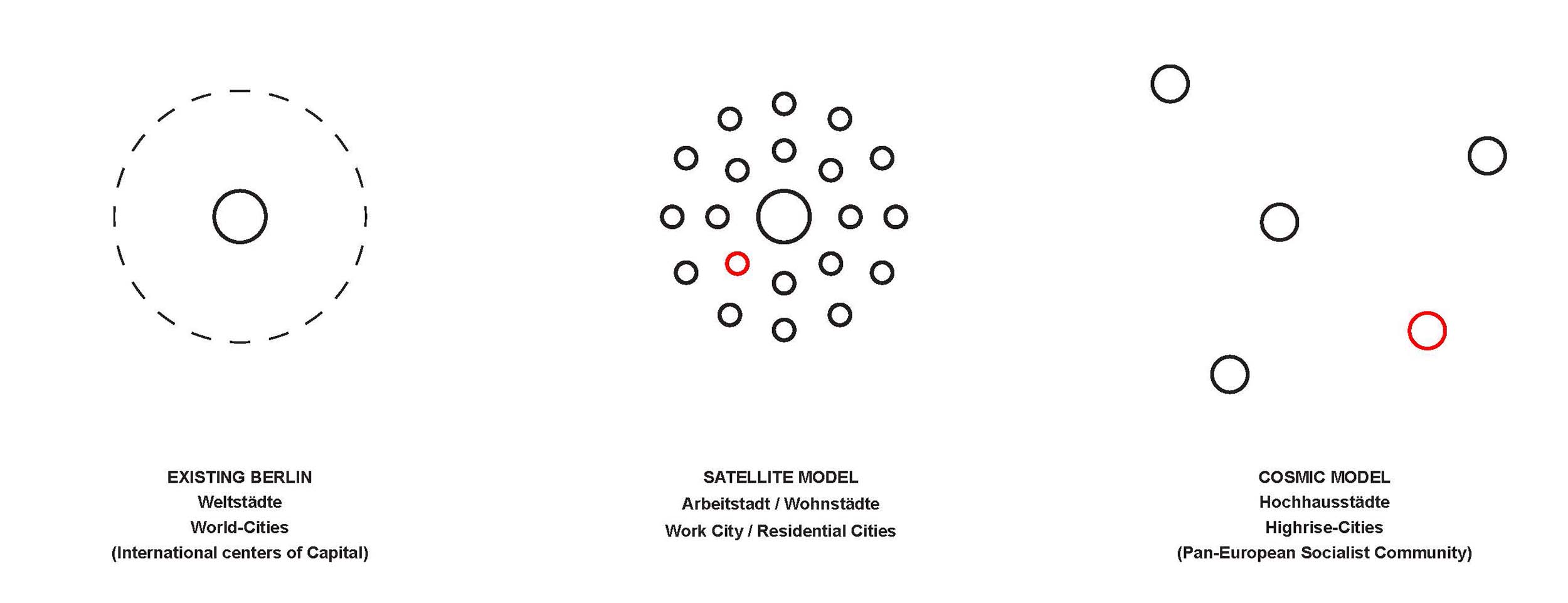
In his American publications, however, Hilberseimer refrained from political discussion, even as he retained, indeed elaborated and emphasised, the notion that his rationalisation of the contemporary means of urban production could materialise a range of potential futures. His 1951 Plan of Chicago, the most developed of his American schemes, envisioned the gradual erosion of the Chicago grid and the integration of the city with the landscape. As Chicago transformed and expanded, concisely formed settlement units, incorporating both working and dwelling to minimise commuting, would grow into the Midwestern prairie, like grapevines in a vineyard, following long-distance transportation lines contoured with the topography and distanced to preserve green space and isolate polluting industry. (Figures 13 and 18) The plan was comprised of loosely interconnected and malleable elements—unit designs, buildings, site plans, street patterns, neighbourhood and regional organisations—that could expand and contract as desired, their specific form and interrelationship open to determination, selective combination, and adjustment over time.

Hilberseimer’s earliest depictions of cities interspersed with landscape, with buildings of varying heights and towers appearing above the forest canopy, recall the aerial views (1895) of Uxmal, Chichen Itza, and Palenque by US archaeologist William Henry Holmes (1846–1933), that Hilberseimer published with his essay on Mexican architecture. (Figure 6) Understood this way, a project such as the partly completed Lafayette Park in Detroit (1956–63), designed by Hilberseimer, Mies, and their former student, Alfred Caldwell (1903–1998), (Figures 19 and 20) influential for contemporary ideas of landscape urbanism, conveyed a centuries-old promise, undermined in the Mayan case by the interaction of environmental hubris and inequality.35

Essential to the 1951 plan, as it was for Hilberseimer’s thinking in the 1920s, was the recognition that the concise and egalitarian rationalisation of the built environment requires a fair apportionment of interior and exterior space, equalisation of density across the city, efficient and easily accessible transportation, and public control, if not ownership, of land. These principles allowed Hilberseimer to incorporate a wide variety of both low- and high-rise housing types in his schemes. Whether they wanted to live in a high-rise, a row house, or a single-family home, every individual would get the same amount of interior space. Each type of development would be equivalent in its occupation of space, no lifestyle demanding more resources than any other. In this conception, high-rise and low-rise dwelling is interchangeable, and Hilberseimer proposed what he called 'mixed developments' that combined the two in proportion with prevailing desires. (Figure 21) 'This equivalence with respect to urban space', Hilberseimer writes in 1931, “frees everyone to choose their form of dwelling, and allows the quantity of individual dwellings to be balanced according to the composition of the population. Low-rise dwellings with gardens are the most suitable form of living for families with children, while for the childless and singles, the multi-level house or high-rise, with community facilities where possible, is the most practical way of living” (Hilberseimer, 1931, p. 475).

Concision and Equality
These principles – fair apportionment of interior and exterior space, equalisation of density across the city, efficient and easily accessible transportation, and the public control of development – were the basis of Hilberseimer’s theoretical experiments in urban concision. They are the basis of Singapore’s urbanism and public housing system today, a city that cannot be understood according to restrictive disciplinary lenses of planning, housing, architecture, landscape, or engineering. In Singapore, a small and densely populated island state, concision is an existential necessity. In many places in the West, committing to these principles would upend expectations, vested interests, and property markets. Moreover, many will suppose – perhaps based on the Singapore example – that environmental equality and concision necessitate restrictions on political liberty. But environmental justice and political liberty are not antithetical. Yes, rational modernism has been used to ramify and create social classes. But rational modernism can also be used to raise living standards and, when democratised, to overcome inequality. An egalitarian society demands equity in housing and transportation no less than in education and healthcare. As cities sprawl, commutes lengthen, infrastructure crumbles, budgets falter, ecologies collapse, housing and transportation costs rise, and generations are denied access to the city, its opportunities, services, and cultural goods, refutation of the values of concision and equality become more difficult to sustain.

Too many have dismissed Hilberseimer’s drawings as literal images rather than diagrams of relationships. That, to some degree, was Hilberseimer’s fate. For Hilberseimer knew, as Grassi’s distinction implied, that technological modernism produces explicit images, rational modernism implicit relationships that require cultivation.
Maybe more and faster fabrication of existing models is the answer. Maybe AI or some other invention will offer Ariadne’s thread. Maybe, to compete, we will turn our cities into more efficient machines. But the city is not just an aggregation of 'machines for living in' (Le Corbusier), living with, and moving in. More and cheaper machines will not fundamentally improve our society and our environment without a spatial system of material relations – a cultural form – that embodies widely-held egalitarian and sustainable values.
In our present moment, on the cusp of technological revolutions and faced with the spectre of environmental collapse, we are suspended – as Ezra Klein and Derek Thompson have argued (2025) – between visions of abundance and scarcity, drawn by the prospects of a dawning civilization and the fears of a disintegrating world, striding toward an horizon of plenty and scrambling to not lose what we have. The persistent, imminent sense that things are about to change, that technical revolutions lie just beyond the horizon, leaves us paralysed between haste and hesitation. Yet the fundamental realities of building and transportation, not least the centrality of housing, for any consideration of the space-form of the city, remain relatively stable and demographic demands reasonably predictable. We might take a rational look at what we have, consider how it and what we need might be rationally distributed and interrelated, understand the spatial, formal, and material implications and limitations of our current technologies, and, with faith in our humanity, guided by principles of concision and equality, recognise that the world we create is not just the product of the knowledge – the technology – we possess; it is also shaped by the culture we really believe in and actually commit to.
If discussed at all today, Ludwig Hilberseimer's late European and American work is identified as a precursor of contemporary ecological approaches to the city. Scott Colman suggests that his theory of architecture and his approach to design have broader implications – not because Hilberseimer was free of modernist problematics, but because he squarely confronted them.
Read

Website by Good as Gold.