
Membership of Type allows unlimited access to our online library. Join to support new research and writing on the design of the built environment.
You can read more about membership here.
Already a member? Login to your account to avail of unlimited downloads.

Membership of Type allows unlimited access to our online library.
Join to support new research and writing on the design of the built environment.
You can read more about membership here.
Individual Membership Fees
Individual membership is available on a monthly or annual basis.
The fee is €10/month or €99/year.

In the spring of 2024, a housing justice advocacy group known as Shelter released a transformative new media campaign called Made in Social Housing. The campaign’s launch included a slickly produced short-form video featuring a diverse range of celebrities, each of whom was raised in a British social housing estate. As the camera pans across brick courtyards, playgrounds, and tower blocks, actors like Eddie Marsan tell of the ways in which social housing helped to shape generations past, offering security, stability, and comfort to the British working class. ‘We had these social homes’, we are told, ‘Now millions don’t. We’re building less and we need to be building more … so a new generation can be proud to say, “We are made in social housing”.’ With a nostalgia rarely deployed in social housing’s description, the short asks us to put our faith in a new and more hopeful reappraisal of modern social housing. As the predominant architecture of many working-class communities in Britain, social homes raised a nation full of people to be proud of (Figure 1). With a fresh investment, it seems to say, it could do so again.

The necessity of such a poignant narrative shift points to the brutalisation of modern social housing’s reputation in both British and American architectural and political discourses, a process which ultimately helped to liberalise the housing market, reduce social housing stock, and exacerbate the affordability crisis across both nations today. In 1977, historian and theorist Charles Jencks famously declared modernism ‘dead’, citing photography of the demolition of an American social housing project known as the Pruitt Igoe as evidence of a failed architectural experiment gone irredeemably wrong (1977, p. 9).
Though not the first, Jencks was chief among an influential coterie of postmodern theorists whose exploitation of photography helped contribute to the so-called ‘death of modernism’ myth.
Others, including architectural elites like Oscar Newman (1976), Peter Blake (1977), and Alice Coleman (1985), decried modern mass social housing in ways which recast the modern architectural style as inherently dystopian and despotic, transforming the master status of social housing from home to slum in the process. Many of these analyses, however, relied upon overstated behavioural pseudo-science and unproven theories of architectural determinism. Critical structural issues, such as disinvestment, community isolation, racism, bureaucratic mismanagement, and rising poverty, were often downplayed or even ignored.
Consequently, in their failure to engage with the complexity of circumstances surrounding modern social housing’s failings, many theorists incorrectly conflated estate dysfunction with architectural style, an error which continues to distort how many understand modernism today. However, it was not just their rhetoric but their use and abuse of photography that irrevocably injured the discourse. Wrenched from their contexts, photographs of struggling social housing estates were made uniquely amenable to hyperbole and ideological argument, particularly in the media (Churchill, 2024). Terry Eagleton has described this ‘haemorrhaging of meaning’ as characteristic of late-stage capitalist societies in which media consumption deliberately engages subjects subliminally rather than at consciously reflective levels (1991, pp. 37–38) . In this scenario, form, ‘overwhelms content’, inviting a passive consumption which results in a false or shallow consciousness. In other words, while seeing might be believing, it is certainly not knowing. Photography, as Susan Sontag has noted, can only ever provide a ‘semblance of knowledge’, though it’s long been mistaken for contributing something more substantial to the discourse (1977, p. 24).
In her landmark criticism of the medium, Sontag argued, by way of a comparison, that photographs were no better at interpreting the world than the metaphorical shadows in Plato’s cave (1977). Like shadows, photography is polysemic and as liable to distort, flatten, or abstract as to faithfully represent what it appropriates. In the hands of postmodern critics, photography of modern social housing was made to naturalise architectural death because that was the narrative that was desired, though that was not what was there. In fact, what was depicted were not causes of estate failure at all but the consequences of many political choices which ultimately facilitated social housing decay – causes which remained stubbornly beyond the camera’s acquisitive gaze. Recklessly exploited as both evidence and rhetorical device, photographs thus redefined estates as dystopian slums, teaching the British public to feel poorly about the entire endeavor. What’s more, these critical documentary photographs, which often traded in nineteenth-century stereotypes about the ‘deserving’ and ‘undeserving’ poor, also permanently stained social housing’s largely working-class inhabitants. Consequently, in its re-inscription of a paternalistic economic hierarchy, critical photography helped condemn and erode the social housing system by tarring both the architecture and the recipients of state welfarism as abject failures.
Consequently, it seems nearly impossible now to understand modern architecture as revolutionary – a venture which many architects believed could go further, accomplish more, than even the most insurgent of political movements (Jameson, 1985, p. 71). As Le Corbusier famously observed, the early twentieth-century slum crisis animated much of modernism’s early anarchic impulse. ‘It is a question of building which is at the root of the social unrest of to-day’, he argued, ‘architecture or revolution’ (1974, pp. 13–14). Whether in the raising of basic living standards, stabilisation of economic security, or attention to questions of civic health, social housing was a powerful democratic answer to an emerging social crisis (Hughes, 1991, p. 165). Despite its shortcomings, it was often revolutionary, both functionally and stylistically, as many of the best examples of social housing in Britain and elsewhere can attest.
Yet, in their adjudication of modern architecture’s utopianism, postmodern critics targeted social housing specifically, evaluating it against an impossibly high standard and without appropriate context, depriving modernism of its moral significance and rendering it appreciable in purely aesthetic terms.
As Frederic Jameson has argued such attacks were more ideologically motivated than was commonly appreciated at the time (1984). While disguised as a kind of populism, the movement’s embrace of a post-industrial consumer society was, by necessity, predicated upon the displacement of class struggle central to late-stage capitalist interests (Jameson, 1984, p. 55). What photography helped to declare dead then, was not so much modernist style, which has regained an appreciable following in recent years. Instead, what critics seemed to want to bury was the vein of social consciousness which coursed through the movement.
With the rise of housing insecurity now approaching a global scale, architecture’s relevance to social equity has urgently resurfaced; ‘revolution’ is back on the menu. But to ignore the ways in which class interests were first stripped away from the modernist project is to risk repeating the same social violence that followed its reproach. As Owen Hatherley has explained, ‘There is a general conviction that the working class were slotted into a world of concrete walkways and towers when all we ever wanted were the old back-to-backs … What can’t be imagined is a context in which we might have welcomed Modernism … as part of a specific collective project’ (2008, p. 9). However, as Jameson’s argument makes plain, the attempted rupture of social concern from architectural modernism was, at least implicitly, an attack against the working class, which in its inability to practice the unrestrained consumerism required of the new social order, revealed the inequalities inherent to the entire economic system. From this perspective, we might consider the critique of modern social housing as an attempt to banish ‘the less acceptable face of capitalism’ from the built environment (Paul Trevor cited in King 2023, p. 19).
Thus, any attempt to reform housing opportunity and achieve spatial justice must first reconcile architecture’s relationship to class. While photography may have helped to facilitate this estrangement, it may yet reconcile a reunion, as the Made in Social Housing campaign suggests. Nonetheless, it must be acknowledged that this process is both awkward and fraught on account of the weaponisation of class in housing history. According to the Marxist architectural critic, Manfredo Tafuri, the radical potentiality of housing was compromised long before postmodernism’s conservative attacks undermined modernist ethics; it was implicated particularly in capitalism’s appropriation of housing as a biopolitical instrument and weapon of social reform. As Tafuri famously argued, there can be no class architecture, only a class criticism of architectural aesthetics (1979). Likewise, Florian Urban has noted the ways in which housing reform movements have tended to strengthen dominant social groups while restricting the agency of those served, meting out judgement and discipline even as it grants indispensable assistance (2011). The radical openness of first- and even second-generation modernism belied a hidden ideological agenda of condescending social engineering, which could be characterized as an ‘attack on traditional working-class and lower middle-class domestic customs’, as Paul Overy has argued (2008, p. 95). This harmful class hegemony legitimised later campaigns against modern social housing, which tended to unfold in ways that ultimately undermined provisioning even as critics sought to ‘rescue’ social housing’s inhabitants from the movement’s supposed excesses.
Consequently, attempts to reunite class and modern social housing must navigate the weaponisation of working-class identity that has undercut the last several decades of critiques. As scholars across disciplines have observed, post-war social housing was frequently exploited as the explicit architecture of a feral ‘underclass’ in print and television media (Hatherley 2008; Jones, 2011; Tyler, 2013). This toxic trope stigmatised the architecture and lay the groundwork for benefits cuts that ultimately fuelled housing’s re-appropriation by free market forces. As Owen Jones has noted, the caricature of the poor and unruly ‘council dweller’, known commonly by the derogative ‘chav’, was a deliberate by-product of Thatcher’s attacks on the Welfare State and working-class life (2011, pp. 9–10; also Hatherley, 2008, p. 10). More recently, a resurgent ethno-nationalism has also left the social housing system vulnerable to bigoted, bad-faith attacks (Thoburn, 2022a; Jones, 2011). Together, attempts to whiten and alienate the British working class have renewed historical discourses about the ‘deserving’ and ‘undeserving’ poor and factionalised the working class against itself.
Nonetheless, any erasure of class from architectural analysis overlooks the ways in which the built environment has historically manifested hegemonic class interests, perpetuating inequality in questions of housing, spatial justice, and the environment, (Margalit, 2023; Campkin, 2013). In Britain, the destruction of social housing stock, which has dwindled precipitously since its height in the early 1980s, has followed directly from ‘class-blind‘ assaults on social housing’s effectiveness and perceived dystopianism. For example, policies like the ‘Right to Buy’ scheme, a piece of conservative legislation which encouraged the discounted privatisation of individual social homes, has removed some two million flats from the public inventory (Bloomer, 2024). By one estimate, four in ten of those homes are now privately rented, compromising their affordability and stability (New Economics Foundation, 2024). Estate refurbishment, likewise, often results in gentrification and working-class displacement, as Paul Watt has written (2021). For example, iconic estates, such as the Grade II listed Park Hill in Sheffield, have lately been appropriated by private property developers who have displaced the original tenants and exploited the estate’s renown in a bid to attract enthusiasts of Brutalist style.
Consequently, any attempt to stem the tide of elite appropriation must engage directly with the rhetorical theft of modernism’s workingclassness. In this, there are few better examples than the demolition and museification of East London’s Robin Hood Gardens (1972). Designed by Brutalist architects Alison and Peter Smithson (1923–2003 and 1928–1993), Robin Hood was emblematic of Britain’s post-war social housing experiment — the most expansive and innovative architectural project of its kind at that time. Realised two full decades from its conceptual genesis in the unrealised Golden Lane plan (1952), Robin Hood was a remarkable illustration of the Smithsons’ famed ‘streets-in-the-sky’ approach to urban sociability and one of only a few examples of their meagre architectural output. As housing, however, Robin Hood was deeply polarising and like many of its peers, struggled against the weight of disinvestment, crime, and vandalism. After a long and bitter campaign to rehabilitate it, as well as two failed attempts to list it, Robin Hood Gardens was finally marked for death less than fifty years on from its completion. Today, the estate survives as a relic in residence at the newly opened Victoria & Albert East Storehouse (V & A East), mutely testifying to both the success and failure of the modernist movement. Like a trophy mounted in a hunting lodge, its façade exists in the liminal space between life and death, celebrated and yet lamented as a curious specimen suspended in architectural limbo.
A promotional photograph produced for a recent Guardian review of the V & A East illustrates the jarring museification of the Robin Hood Gardens Estate (Wainwright, 2025). The colour photograph, taken by Guy Bell, depicts the unmistakable two-storey, cast concrete façade in situ, which has been removed from urban Poplar, meticulously cleaned, and seamlessly integrated into the yawning 275-metre-long hangar with surgical precision. As a means of evidencing the complex’s vast scale, a young couple stands in the image’s centre, gazing contemplatively at the treasury of global goods that surrounds them from the estate’s balcony. For a moment, they appear to cosplay as two of Robin Hood’s contented former tenants. But the effect is fleeting. The estate’s façade, wrenched from its civic context, has been plunked between crates of objects filled with everything from poison darts to Frank Lloyd Wright furniture. The effect defeats the social purpose of Robin Hood Gardens as a home, sentencing the shell of what remains to perpetual confinement within a modern-day cabinet of curiosities. While conserving and preserving the legacy of British Brutalism as an architectural masterwork, the installation explicitly excises the building’s historical function as housing, thus consigning the social housing system to anthropological ‘pastness’.
Consequently, the acquisition of Brutalism within the museal system functions as the latest in a long line of attempts to evidence the failure of modern architecture’s utopianism as a well-intended though nonetheless improbable social project. In its representational strategy of awe, the display inadvertently exploits Robin Hood’s innovative design as a means of distracting from the ethical consideration of its appropriation and destruction (Thoburn, 2018a, p. 620; Price, 2021). But to what ends? As Christoph Lindner and Miriam Meissner have observed, ‘What brutalism, ruins, and slums all have in common today is that they have been appropriated by the urban imaginaries of gentrification and neoliberal renewal with the express aim of financially exploiting the social and spatial challenges they contain’ (2018: 285). One might argue then that the abstraction and objectification of Robin Hood Gardens from home to ethnographic object helps ‘normalise’ a visual imaginary of gentrification, reframing the museification of modern social housing as a sign of economic progress (Lindner and Meissner, 2018, p. 280). In this way, the V & A appears to cosign East London’s social cleansing, particularly as the institution did little to help stop Robin Hood’s destruction (Thoburn, 2022b). Such exhibitions are, therefore, hotly contested as providing aesthetic cover for the Neoliberal appropriation of modern architectural style.
Given Robin Hood Garden’s diverse ethnic composition at the time of its destruction, which consisted predominantly of Bengali immigrants, this is a charge that should not be dismissed lightly (Thoburn, 2022a). To that end, there exists several documentary projects which refute the narrative of failure within which Robin Hood Gardens was condemned and testify instead to its living, breathing presence as home to a diverse community of citizens. One such notable series, conceived of collaboratively by the sociologist Nicholas Thoburn and photographer Kois Miah between 2014–17, depicts a sense of strong social cohesion fostered, in no small part, by the design of the architecture. Through sensitive color portraits of both the buildings and their inhabitants, Miah’s photography enlivens the characteristically cold concrete of Robin Hood Gardens. Though his depiction of the architecture is uncharacteristically warm, even romantic, Miah’s most affecting photographs are his human subjects, whom he portrays as largely quiet and unassuming — in direct contravention to the unruly portrayal of ‘council dwellers’ and ‘chavs’ in the media.
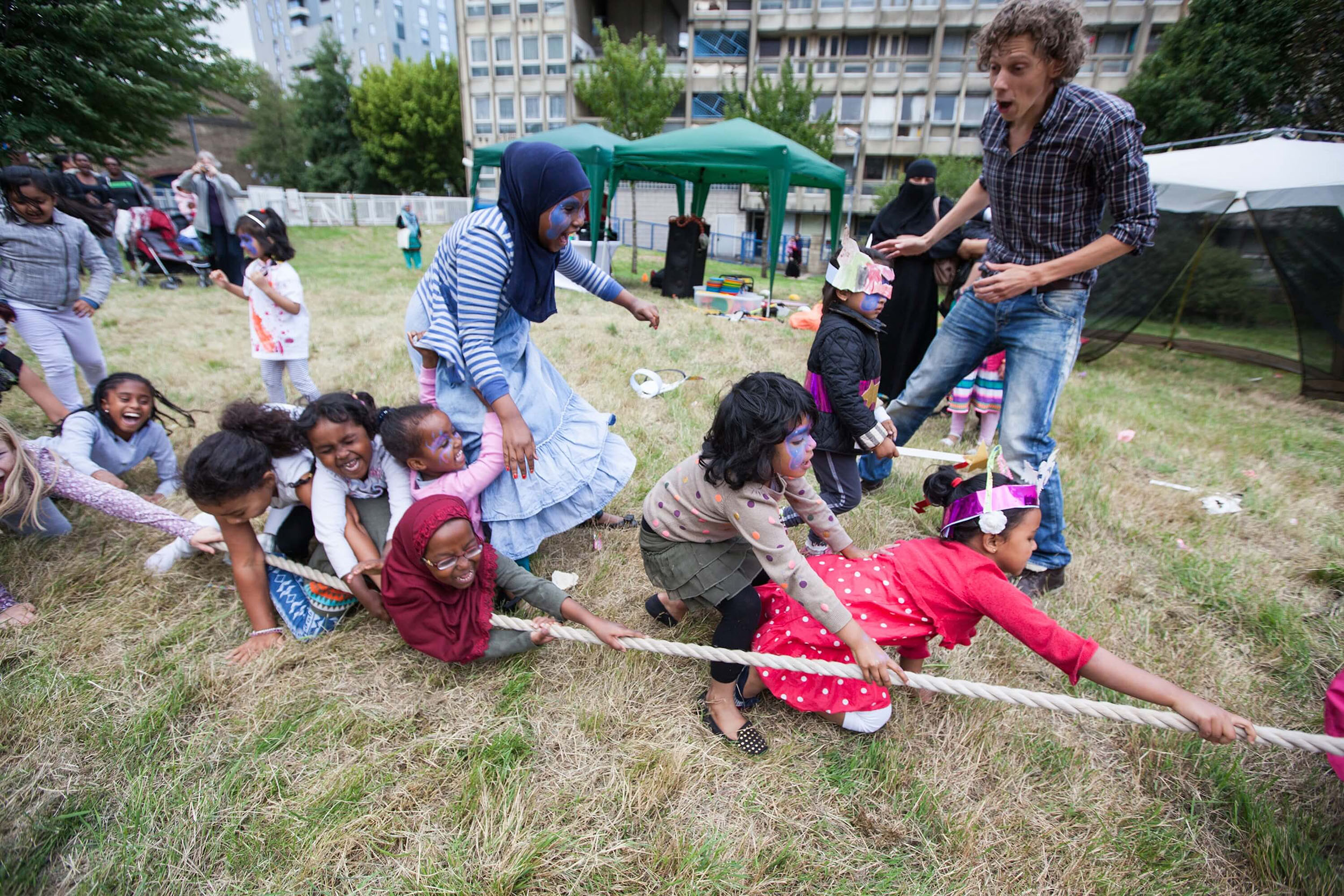
In one particularly poignant photograph, we see a modest but tastefully decorated living room interior within which its elderly occupant has settled into a bold red armchair, her hands resting neatly upon her knees. With gentle eyes and a toughness that belies her silvery hair and delicate frame, she proudly confronts the camera’s penetrating gaze. Another example depicts a ‘summer fun day’, in which a group of young children has just lost a game of tug of war while their adult neighbors look on in amusement. (Figure 2) Collapsing into a heap of giggles, the children don face paint and colorful paper crowns, symbols which testify to a day filled with joyful play. A final example features a posed portrait of three generations of the Fakamus family. Freshly dressed and readied for a morning at church, the family stands in a small living room surrounded by a wall dense with framed family snapshots. Upon a corner shelf, a small, decorative knick-knack appears to summarize the scene. In bold red letters, it spells the word ‘Love’ (Figure 3).

What is perhaps most successful about Thoburn and Miah’s documentary project is its ability to materialize perspectives that were largely absent in the broader public debates about Robin Hood’s future (Thoburn, 2018b). Throughout the process, Miah and Thoburn extensively interviewed residents about their personal histories at the estate, conducting interviews in both Bengali and English often immediately preceding the photographic event. Thus, in their archive of photographs, representation is mediated by the residents’ quiet but insistent voices testifying to homes they’d long enjoyed. We see residents gardening, hanging laundry, playing, and embracing. Most importantly, perhaps, we see them smiling. The residents here are not beleaguered, dangerous, or strange. They are happy. They are proud. They are just like us. By emphasizing their humanity, Miah’s photography negates the tokenistic and stigmatising portrayal of estate residents as abject citizens and invalidates the loud and largely superficial critique of their home in word and image.
Rather, the photographs suggest that the design of modern social housing, when appropriately considered, can foster social cohesion and feelings of belonging. More specifically, they illustrate how the Smithsons’ famed ‘streets-in-the-sky’ successfully integrated home and the city, mitigating the estrangement that sometimes accompanies urban life. For the Smithsons, the idea of the street was essential to society. ‘In the suburbs and slums’, they argued, ‘the vital relationship between the house and the street survives, children run about … people stop and talk … you are outside your house in your street’ (Smithson and Smithson, 1970, p. 43). Their principal innovation in British social housing was to preserve this street, elevating its inhabitants to the safety of the skies. Even in times of trouble, and amidst chronic disinvestment, the ‘streets-in-the-sky’ helped Robin Hood feel more like home, as residents like William and Laetitia Fakamus have explained. The street decks, they argued, fostered friendships, and even provided opportunities to survey the city and contemplate ‘the wonder of God’s global embrace’ (Fakamus cited in Thoburn, 2018b). As Miah has also noted, ‘Contrary to the oft-repeated story that the aerial “streets in the sky” failed as social spaces, most of the residents interviewed spoke of them with enthusiasm’ (Kois cited in Rowan, 2016).
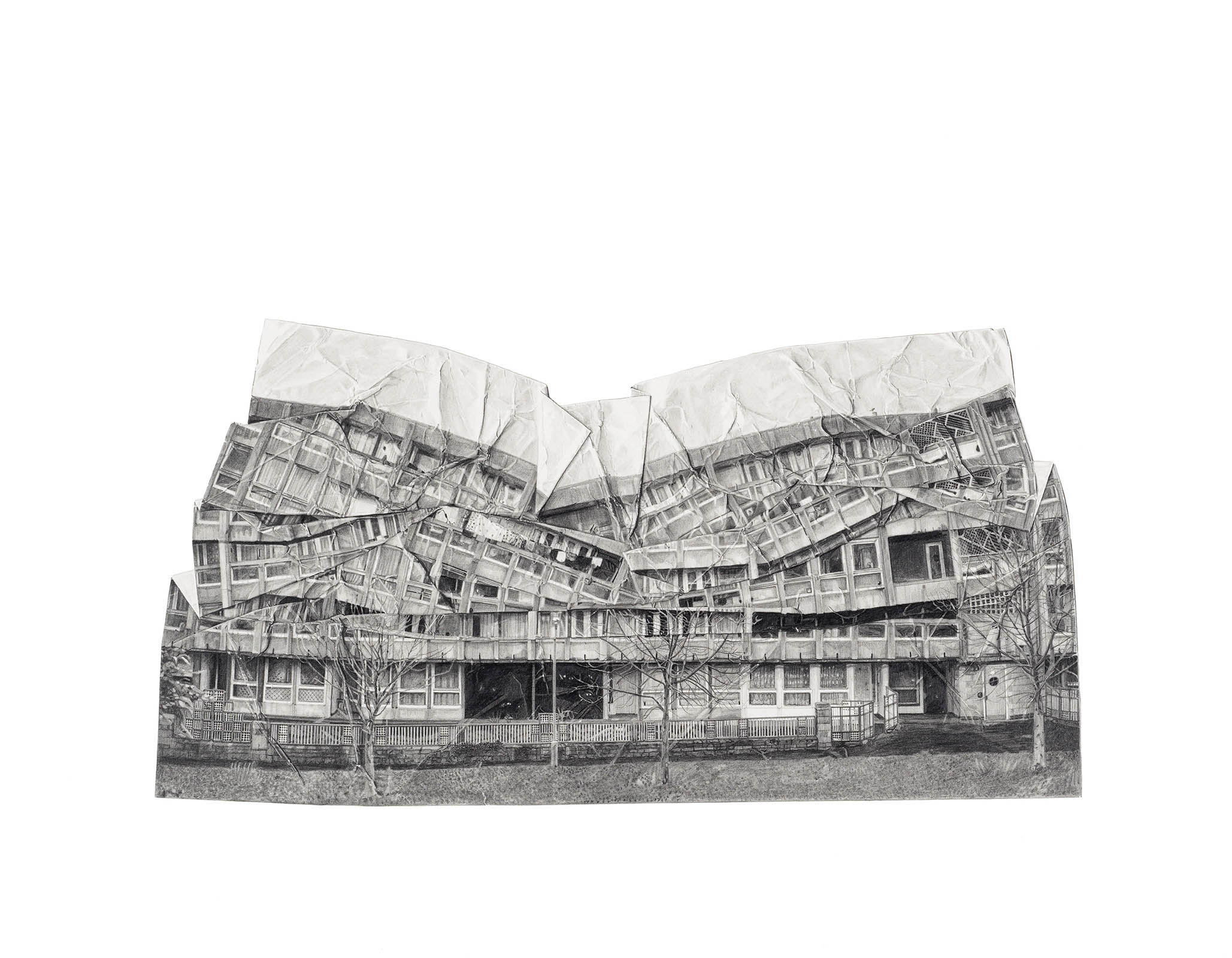
Against this more nuanced portrayal of Robin Hood’s efficacy, we might reconsider the image of modernism’s failure and death as it appears in artist Jesse Brennan’s (b. 1982) four-part series collectively entitled A Fall of Ordinariness and Light (2014). Produced as part of a broader community art project, Brennan’s graphite drawings depict a photograph of the seven-storey façade of Robin Hood’s west block as it endures a parody of its impending demolition in astonishing trompe-l'œil (Figure 4). In successive stages, the estate’s west block, realized in rich photo-realistic chiaroscuro, transforms from slightly rumpled to folded inward upon itself like an accordion. The title, Ordinariness and Light, refers to a key text of the same name, a book of post-war urban theory and aesthetics published by the Smithsons in 1970. Brennan’s process evokes the physical and metaphorical fall of the Smithsons’ ideas in Robin Hood’s demolition. However, her drawings also recall photographs of the spectacular trial demolition of the infamous Pruitt-Igoe, which transpired just as the last of Robin Hood Gardens was going up (Figure 5). Thus, Brennan’s drawings comment on the weaponisation of the demolition spectacle as another example of gentrification’s visual imaginary.
As Richard Martin has observed, ‘By crashing down to earth, housing estates that were ignored … became prime images of historical failure and, simultaneously, markers of today’s less naïve approach to social progress’ (Martin cited in Brennan 2015: 38).
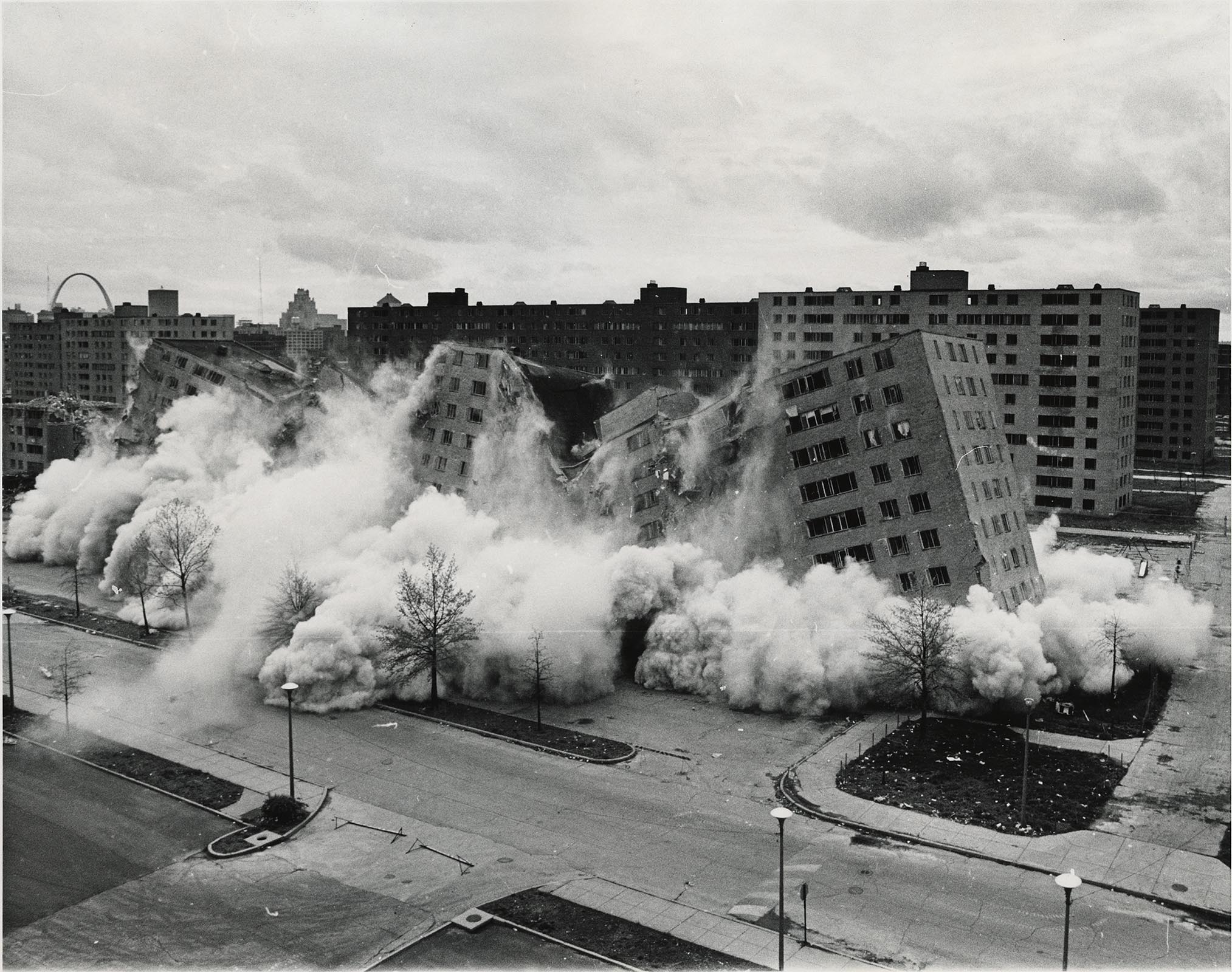
As a photographic event, social housing demolition thus signifies a means of easy escape from the naïve and illiberal utopianism of architectural modernism and its deference to class struggle. However, the instrumentalisation of this trope, much like modernism’s museification, diminishes social housing’s performance, obscures the system’s ‘managed decline’, and colludes in the harm that ‘regeneration‘ schemes visit upon the working class. Demolition, as Thoburn has observed, is driven not by a concern for community welfare but by a convergence of interests between the city’s need for social services savings and capitalism’s relentless pursuit of profit (2023). While advertised as an opportunity to increase density, improve building quality, or reduce social stigmatisation, regeneration frequently uproots and atomises local communities, reducing social housing supply and contributing to working-class insecurity. Perhaps, as Ben Campkin argues, regeneration is not about alleviating poverty at all but an attempt to remove its negative aesthetics to the periphery of our sight (Campkin, 2023, p. 103).
Seen from this perspective, what the instrumentalisation of abject aesthetics in critical documentary photography helped to accomplish was not merely destructive. Rather, it was also generative. In his discussion of the oft-circulated images of the smoking World Trade Center towers, W.J.T. Mitchell identified a ‘new and more virulent form of iconoclasm … an image of horror that has imprinted itself in the memory of the entire world’ (2010: 14). Yet such iconoclasm was less a destructive than a ‘creative’ act, producing a secondary image that satisfied an urgent desire for a new and prescient icon in the United States’ ensuing ‘War on Terror’. Likewise, depictions of graffiti, crumbling concrete, and rough, aimless youths reinforced class anxieties regarding dirt and disorder, making of social housing an architectural icon of uncanny terror, the consequences of which helped to erode confidence in and support for its provisioning (Campkin, 2023, p. 10). But in its failure, modernism’s supposed death occasioned something new – an emergency which only the free market seemed poised to solve. Thus, the immortalisation of social housing’s domicide in and through photography obscures the violence of dispossession and reframes demolition as a prescient spectacle of creative destruction and renewal inherent to the capitalist system (Byles, 2006, p. 17).
In the short film The Black Tower (1987), however, the brutality of social housing’s erasure is flipped on its head and represented as a fatal haunting. Narrated by the film’s director, the artist John Smith (b. 1952), the short film begins with a black screen and birdsong, during which Smith details a startling first encounter with a shadowy, tectonic spectre through a first-person narration. In a moment, we see the object of the narrator’s fascination, a small black peak sitting benignly behind the roofline of a line of low rowhouses – the black tower of the film’s title. The building, visible only across its roofline, is a flat, dimensionless void, but is otherwise non-threatening. Nonetheless, the tenor of the narration becomes increasingly urgent as Smith dreams of imprisonment within the tower, his body paralyzed by some unexplained terror. In confusion, he searches for the tower, only to discover that it was recently demolished. A tower block blinks into view, now in full colour, and collapses spectacularly. Confronted with the tower’s demolition in his morning paper, Smith confronts the possibility that the tower may be tormenting him. Hereafter, the hauntings increase, the tower’s featureless silhouette swelling until it swallows the screen in darkness (Figure 6). Terrified, the narrator retreats to the safety of his apartment until an ambulance transports him to a nearby hospital, where he finds the now ominous tower still waiting. An attempt to recover in the countryside is thwarted when the tower reappears and finally seduces the narrator inside to his death.

Premised on one of the most elementary forms of cinematic illusionism, Smith’s film is commonly understood as a humorous meditation on the instability of filmic fact (Rees, 1987 cited in Smith, no date; Beckett, 2011). As Colin Beckett has argued, ‘You could understand its story as a parable of narrative film viewing, the fantasies that cinematic representation engender being, like the eponymous tower, so seductive that they continue to do psychic harm even after we know better’ (2011). To his point, the man eventually succumbs to his deadly delusions even after acknowledging the tower is imagined. However, Smith’s choice of antagonist, the ‘ghost’ of a now demolished tower block, is deserving of greater scrutiny, particularly given the animosity unleashed upon social housing during the period. In gothic literature, hauntings are variously interpreted as symbolising unresolved issues, moral transgressions, fears, and anxieties, often those brought on by a feared decline of ruling class power (see, for example, Rena Harris, 2024). From within this framework, we might also see the tower’s haunting as a stubborn act of defiance. In its refusal to succumb to its own erasure, the tower block boldly reclaims its civic space – psychically if necessary.
In an exaggerated parody of middle-class fears, the tower block is transformed from a quiet, unassuming shadow into a figure of horror and revulsion, all in the narrator’s mind. But, like Frankenstein’s monster, the tower does not suffer its master’s rejection lightly. Instead, it unleashes the full weight of its fury upon the man, ultimately killing him. Your life for mine, it seems to say. From this perspective, The Black Tower also stands as a condemnation of our own facile media habits, in which we consumed the spectacle of social housing’s death too superficially. According to Guy Debord, the power of spectacle lies, at least partly, in its manipulation of its subjects into passive spectatorship (1970). Spectacle monopolises the argument, eliminating all opportunities to respond (Debord, 1970, p. 11). Photography, however, is never fully beholden to institutional inscription – relations between the photograph and its audience remain very malleable (Crimp, 1993). Thus, when a second narrator emerges in the film’s final moments to declare that she too has seen a dreadful black tower, Smith introduces a kernel of doubt. We have seen, but do we truly know? The Black Tower reminds us that we don’t.
This is not to suggest that photography does not merit a place in the social housing discourse. As the examples above have illustrated, photography is not just a weapon to be feared but a tool which we too can wield against the same mythologies and systems of power the medium has historically upheld (Berger, 2013, p. 27). But photography is beautifully, problematically, polysemous, as Roland Barthes has famously argued (1980: 274). Consequently, it cannot be consumed uncritically, and it should never be taken as a given. In her landmark study of social documentary photography’s subjectivity, Abigail Solomon-Godeau called for a critical awareness of who was really ‘speaking’ in such images (1991). The photograph’s ‘reality effect’, she observes, tends to obscure the photographer’s subject position embedded within its making (1991, p. 180). The image presumes to speak for, not with, its subject. Consequently, we would be well served to remember that an ideology is always at play in photography’s perceived neutrality. Though it works tirelessly to disguise itself, ‘naturalising’ the cultural and the political, ideological effects impose not reality but meaning (Solomon-Godeau, 1991, p. 182).
Critical social housing photography has, historically, communicated an elite subject position, resulting in analyses of its failures that have reinforced narratives of class exclusion and obscured the state’s role in the system’s deterioration.
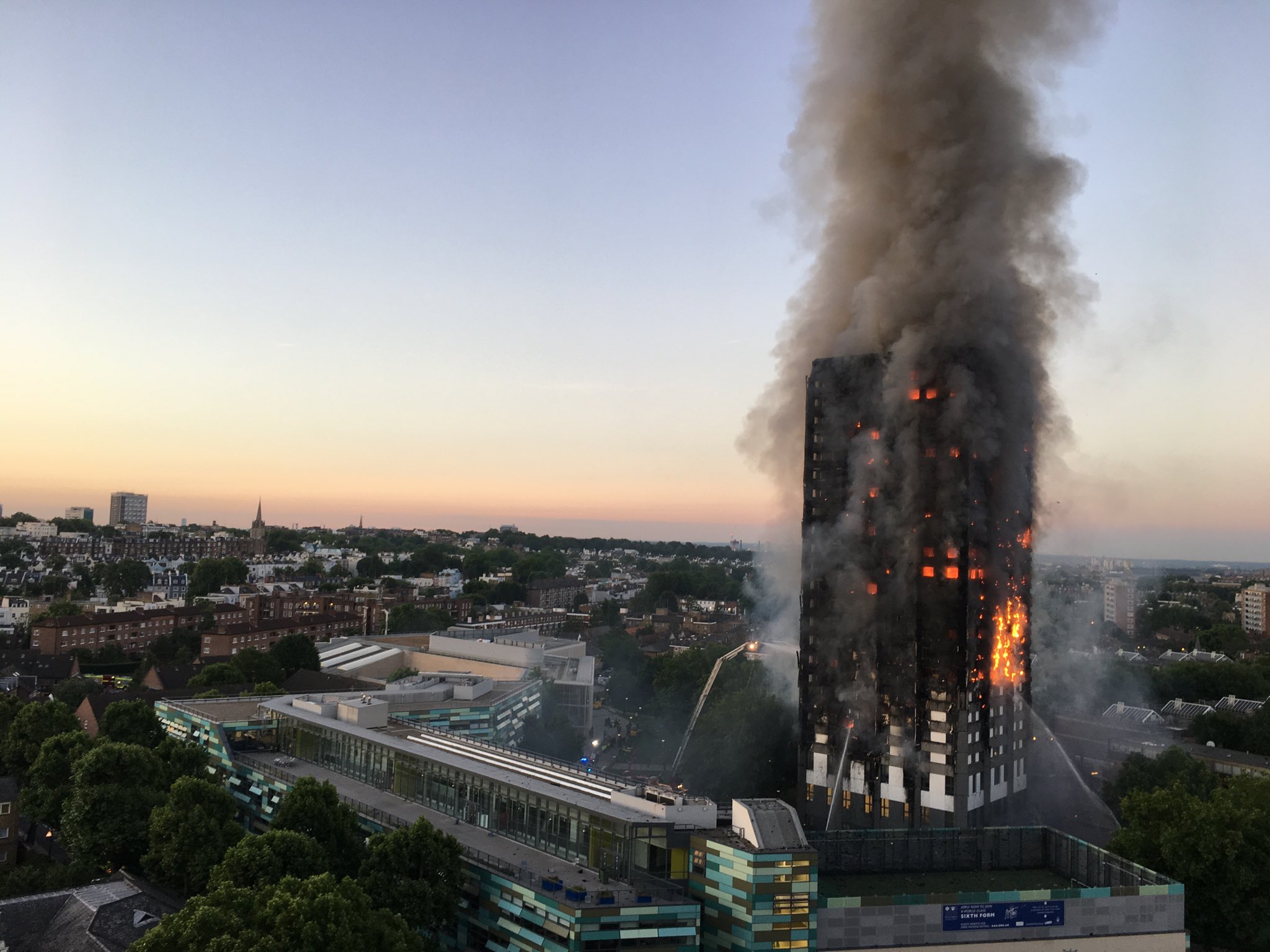
Through photography, the working class can be given opportunities to contest the record. Among the most effective examples is Grenfell (2017), a single-channel, documentary film which neatly turns the abject image of modern social housing against itself. Directed by artist and filmmaker Sir Steve McQueen CBE (b. 1969), the film’s simple title refers to what is undoubtedly among the most horrific episodes in recent British history, the Grenfell Tower fire (Figure 7). Occurring just after midnight on the evening of 14 June 2017, what began as a small kitchen fire tore through the West London tower block, killing seventy-two and injuring scores more. The ensuing government inquiry attributed the fire’s furious and deadly spread to the installation of a criminally flammable cladding produced by American metal engineering firm Arconic, which had been recently affixed as part of a broader ‘revitalisation’ scheme. However, given the state’s erosion of its social housing infrastructure, its weakening of building regulations, and overall disregard for social housing safety, there’s plenty of blame to go around.
Much like Smith’s Black Tower, the first thing that hits you in McQueen’s Grenfell is not vision at all but sound. From a black screen, the ceaseless rush of the highway slowly washes over you, a banal symphony of tires upon asphalt. Suddenly, an image blinks into view as the camera creeps towards the horizon. Below, a rural landscape of tiny trees and neighbourhoods slowly unfold. Next, birdsong penetrates the droning din, accompanied by the whine of a passing engine, a faint but insistent horn blast, and, eventually, a wailing siren. We have some rough coordinates now; our destination is urban though sound does not yet match vision. Instead, we glide as our bird’s-eye view turns gently towards a distant cityscape. (Figure 8) The rushing air gets louder now, more urgent. We fly into the atmospheric refraction, descending gently as the city beneath begins to grow. At last, we see the source of the sound, a highway, and beyond, our destination, a tower so black it blights the skyline. Finding its target, the camera inches closer to this towering ruin, now a shadow of its former self, and begins to circle its hideously blistered façade. Sound dies away. Silence accompanies the awful spectacle, a memento of those who can no longer cry out. What was once a home is now a dreadful icon of architectural death.
Though criminal responsibility remains blurry (and still years away from resolution), Grenfell constitutes a vital record through which justice may yet be served, as McQueen has explained (McQueen, cited in Serpentine South Gallery pamphlet, 2019, p. 10). Produced at the start of the seven-year government inquiry and filmed just a few short months following the deadly fire, the film stages an intervention in the historical record of modern architectural ruin. By returning to the scene of the crime and engrossing us in Grenfell’s ghastly corpse, he prevents the evidence from fading from memory and defends against attempts to hide abjection from our sight behind pristine white hoarding. Shot simply from the respectful distance of a hovering helicopter, his aerial footage speaks to the kind of slow social violence to which it is all too easy to become inured. Covering twenty-four floors in twenty-four minutes, McQueen spares no detail in his forensic documentation. His unmitigated attention honours each life destroyed by corporate greed and bureaucratic indifference.
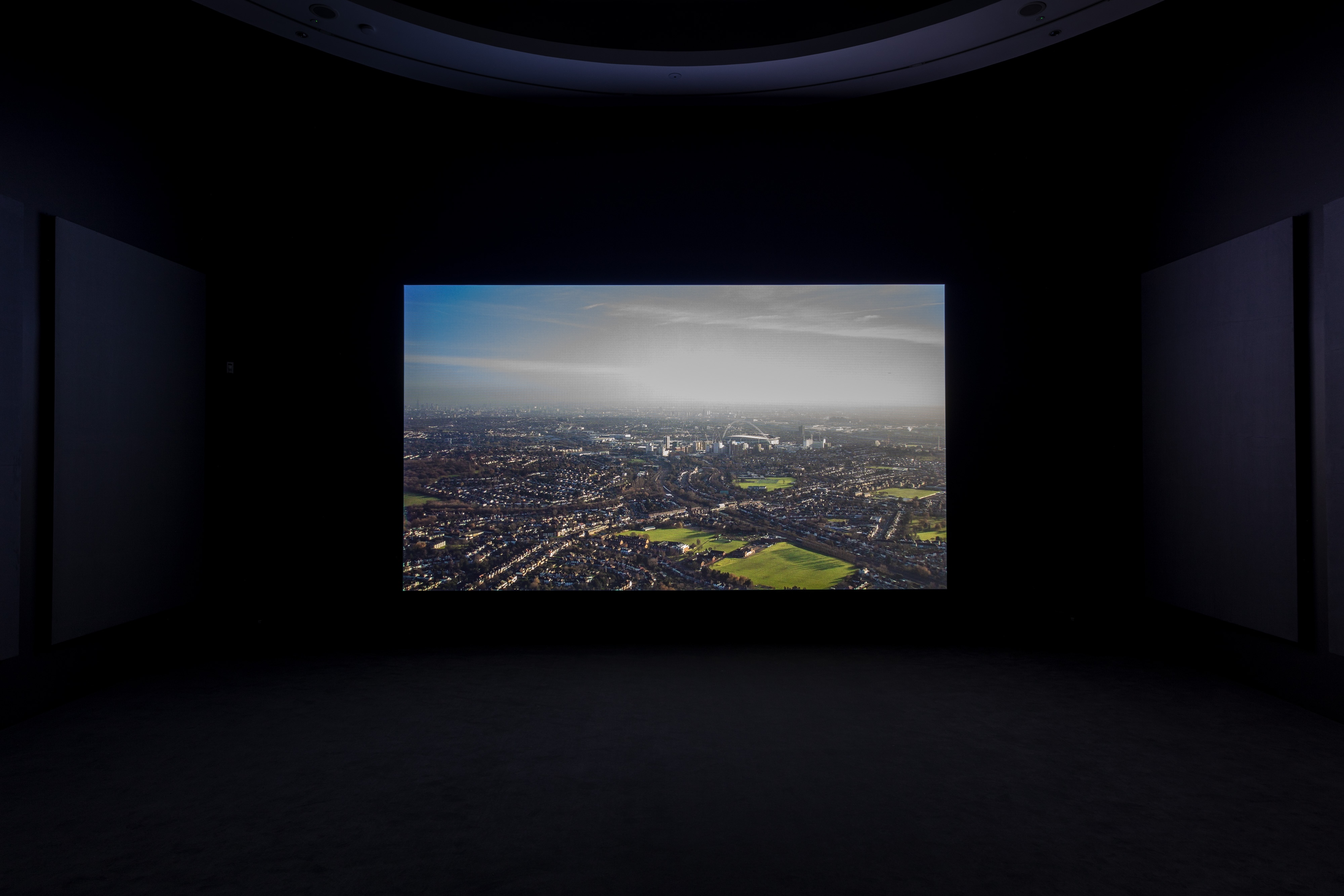
According to Paul Gilroy, the Grenfell disaster demands a contemplation of which lives matter and just who can behave with impunity (Gilroy cited in Serpentine South Gallery pamphlet, 2019, p. 12). The power of McQueen’s memorialisation of the fire, however, implies we already know how to answer these questions. Haunting in its simplicity, Grenfell explicitly refutes the death of modernism's myth as inevitable. Instead, it insists we more closely examine and attend to its causes and human consequences. Perhaps the ultimate power of Grenfell, however, lies in its ability to replace the most consequential icon of architectural death that preceded it – the Pruitt-Igoe demolition photograph. What unites the deaths of both estates is an indifference to those communities social housing serves. As the Grenfell inquiry revealed, some eighty-five per cent of tenants who died in the fire were people of colour. Nearly all were working-class. In this, Grenfell Tower and the Pruitt-Igoe share an affinity beyond their own untimely ends. Part of broader investments in post-war housing construction and slum clearance in St. Louis, the Pruitt-Igoe was also home to a majority Black, working-class population. And like those at Grenfell, its residents were exiled to a place where concern could not reach, marked as failed citizens, and deemed unworthy of dignity or respect. As Susan Sontag famously argued, ‘Let the atrocious images haunt us,’ remind us of what our fellow human beings ‘are capable of doing…Don’t forget’ (2017, pp. 147–48). McQueen’s Grenfell guarantees we won’t.
Every history, as Mitchell has argued, is really two histories – ‘what actually happened’ and ‘the history of the perception of what happened’ (2010, p. xi). In our own time, both events and their perceptions are heavily mediated by mass media representation, our national narratives litigated in the gaps that exist between image and interpretation and debated endlessly across various social media channels. The housing discourse, particularly, remains woefully surface level, particularly for those most alienated from its problems – the middle and upper classes. Consequently, even such a slick and stirring media campaign as that proffered by Shelter risks becoming but one more shadow in ‘Plato’s Cave’. Because the campaign fails to reckon with the mythology of failure that compromised modernism’s moral concern for working-class life, it remains circumscribed by the false belief that the problem is buildings at all.
Perhaps what efforts to change the official narrative of modern social housing most require then are not less images but more.
When brought into dialogue with a broader canon of imagery, we might understand Shelter’s campaign as but one part of a new, class-conscious visual politics of modern social housing that includes works like those by Miah, Brennan, Smith, and McQueen. Taken together, these films, drawings, and photographs constitute an indispensable counter-archive, which turns the abject spectacle of modern social housing’s demise against itself to reveal a painful truth about who regeneration is and isn’t for. As Alice Compton has argued, photography was both complicit in and yet also revolted against the kind of ‘aesthetics of social abjection’ that eventually killed social housing’s workingclassness (2016). The aestheticisation of poverty and social dysfunction, as Tyler also notes, cuts both ways, dehumanising subjects by participating in the right’s weaponisation of ‘revolting aesthetics’, and yet also functioning as an instrument of political resistance (Tyler, 2013, pp. 4–10). The counter-archive, which includes both fine art and community-focused documentary photography, effectively seizes authority from modernism’s critics. In so doing, the works explicitly materialise the various subject positions of those directly harmed by modern social housing’s abjection. Much like the second narrator of Smith’s Tower, such works invite scepticism about those stories we’ve been told and those we continue to tell about those most unlike us.
Through the marriage of critical photography and the rhetoric of death, social housing became a cypher for social deterioration and political failure in Britain’s broader economic downturn. Its weaponisation helped to drastically curtail the Welfare State and consign the modernist project to history’s dustbin. However, photography may yet play a role in working-class modernism’s recovery, reminding us that we have not only the right but the responsibility to bear witness, particularly when the question of accountability remains unresolved (Azoulay 2012). ‘The right to look,’ Nicholas Mirzoeff argues, ‘confronts the police who say to us, “Move on, there's nothing to see here”’ (2011, p. 474). However, the new visual culture of working-class architecture must not shy away from the image of death with which modern social housing has formerly been associated. Rather, we must linger there, meditating on modernism’s untimely demise as a critical means towards understanding better who (or what) was served by its attempted execution. On the relationship between death and photography, Barthes has observed that the medium’s propensity to emote while nonetheless providing eidetic testimony renders photography an ideal means by which to face and thus ‘resolve’ death’s presence in our lives (Barthes, 2010). Through photography, we can reframe social housing’s death as a preventable social violence and begin to dismantle the myths that may yet threaten working-class security in the future. Then, and only then, can we escape the illusions shaping modernism’s perception in Plato’s Cave.
The author gratefully acknowledges the Paul Mellon Centre for Studies in British Art for their support of this research and wishes to thank Shelter, Kois Miah, Nicholas Thoburn, Jessie Brennan, John Smith, Steve McQueen, and the Thomas Dane Gallery for the use of their art and images.
Commissioning architects, historians and theorists, Modernism is Almost All Right seeks to offer new knowledge and methods to reappraise the movement’s canonical and, critically, non-canonical forms. It examines how its modes of theory and practice might be expanded to address the complexities of designing the future. The series is edited by Gary A. Boyd, Sarah Lappin and Brian Ward.
Churchill, S. (2024) Slums in the Sky: How Photography Killed the Desire for Mid-Century, Mass Social Housing in Britain. PhD Dissertation. Drew University.
Coleman, A. (1990) Utopia on Trial: Vision and Reality in Planned Housing. 2nd edition. London: Hilary Shipman Ltd.
Azoulay, A. (2012) The Civil Contract of Photography. Translated by R. Mazali and R. Danieli. New York: Cambridge, Mass: Zone Books.
Barthes, R. (1980) ‘The Rhetoric of the Image’, in A. Trachtenberg (ed.) Classic Essays on Photography. New Haven: Leete’s Island Books, pp. 272–85.
Barthes, R. (2010) Camera Lucida: Reflections on Photography. Paperback Edition. New York: Hill and Wang.
Beckett, J. (2011) ‘Pragmatic Illusionism: John Smith on DVD’, in Idiom. Available at: http://idiommag.com/2011/10/pragmatic-illusionism-john-smith-on-dvd/ (Accessed: November 17, 2025).
Berger, J. (2013) John Berger: Understanding a Photograph. Illustrated edition. Edited by G. Dyer. New York: Aperture.
Blake, P. (1977) Form Follows Fiasco: Why Modern Architecture Hasn’t Worked. Boston: Atlantic Monthly Press.
Bloomer, S. (2024) ‘It’s Time to Say “Bye” to Right to Buy, Shelter England’. Available at: https://england.shelter.org.uk/what_we_do/updates_insights_and_impact/bye_to_right_to_buy (Accessed: November 22, 2025).
Brennan, J. (ed.) (2015) Regeneration! Conversations, Drawings, Archives & Photographs from Robin Hood Gardens. London: Silent Grid.
Byles, J. (2006) Rubble: Unearthing the History of Demolition. Reprint edition. Broadway Books.
Campkin, B. (2013) Remaking London: Decline and Regeneration in Urban Culture. London; New York: I.B. Tauris.
Compton, A. (2016) Waste of a Nation: Photography, Abjection and Crisis in Thatcher’s Britain. Ph.D. University of Sussex. Available at: http://sro.sussex.ac.uk/id/eprint/65974/ (Accessed: August 6, 2023).
Crimp, D. (1995) On The Museum’s Ruins. New edition. Cambridge: The MIT Press.
Debord, G. (1970) Society Of The Spectacle. Detroit: Black & Red.
Eagleton, T. (2007) Ideology: An Introduction. London; New York: Verso.
Harris, J.R. (2024) ‘The Return of the Repressed: The Subprime Haunted House’, in Humanities, 13(5), p. 124. Available at: https://doi.org/10.3390/h13050124.
Hatherley, O. (2008) Militant Modernism. Winchester; Washington: O Books, John Hunt Publishing.
Hughes, R. (1991) The Shock of the New: The Hundred-Year History of Modern Art—Its Rise, Its Dazzling Achievement, Its Fall. Revised, Subsequent edition. New York: Knopf.
Jameson, F. (1984) ‘Postmodernism, or The Cultural Logic of Late Capitalism’, in New German Critique, 32, pp. 53–92.
Jameson, F. (no date) ‘Architecture and the Critique of Ideology’, in Architecture Criticism Ideology. 1985: Princeton Architectural Press.
Jencks, C. (1977) The Language of Post-Modern Architecture. New York: Rizzoli.
Jones, O. (2016) Chavs: The Demonization of the Working Class. London; New York: Verso.
Le Corbusier. (1974) Towards a New Architecture. New York; Washington: Praeger Publishers.
Lindner, C. and Meissner, M. (2018) ‘Brutalism, Ruins and the Urban Imaginary’, in The Routledge Companion to Urban Imaginaries. London: Routledge.
Margalit, H. (2023) ‘We Need to Talk about Class in Architecture’, in The Visibility of Modernization in Architecture. London: Routledge, pp. 141–52.
Mirzoeff, N. (2011) ‘The Right to Look’, in Critical Inquiry, 37(3), pp. 473–496.
Mitchell, W.J.T. (2010) Cloning Terror: The War of Images, 9/11 to the Present. Chicago: University of Chicago Press.
‘More than 4 in 10 council homes sold under right to buy now owned by private landlords’ (2024) New Economics Foundation. Available at: https://neweconomics.org/2024/05/more-than-4-in-10-council-homes-sold-under-right-to-buy-now-owned-by-private-landlords (Accessed: November 22, 2025).
Newman, O. (1976) Defensible Space-Crime and Prevention Through Urban Design. Second Printing edition. Collier Books.
Overy, P. (2008) Light, Air & Openness: Modern Architecture Between the Wars. London; New York: Thames & Hudson.
Price, Z. (2021) ‘Social Housing in Ruins: Heritage, Identity and the Spectral Remains of the Housing Crisis’, in Radical Housing Journal, 3(2), pp. 65–80. Available at: https://doi.org/10.54825/WHHS5204 (Accessed: November 18, 2025).
Smithson, A. and Smithson, P. (1970) Ordinariness and Light: Urban Theories 1952–60 and Their Application in a Building Project 1963–70. London: Faber & Faber.
Solomon-Godeau, A. (1991) Photography at the Dock. Minneapolis: University of Minnesota Press (Media & Society 4).
Sontag, S. (1977) On Photography. New York: Farrar, Straus and Giroux.
Sontag, S. (2017) Regarding the Pain of Others. New York: Picador.
Tafuri, M. (1979) Architecture and Utopia: Design and Capitalist Development. Translated by B.L.L. Penta. Cambridge, Mass.: MIT Press.
Thoburn, N. (2018a) ‘Concrete and council housing’, City, 22(5–6), pp. 612–632. Available at: https://doi.org/10.1080/13604813.2018.1549203.
Thoburn, N. (2022a) Brutalism as Found: Housing, Form, and Crisis at Robin Hood Gardens. London: Goldsmiths Press.
Thoburn, N. (2022b) ‘Salvage Brutalism: Class, Culture and Dispossession in the Victoria and Albert Museum’s Fragment of Robin Hood Gardens’, Oxford Art Journal, 45(2), pp. 223–51.
Thoburn, N. (2023) ‘The Social Destruction of Demolition’. Inside Housing. Available at: https://www.insidehousing.co.uk/comment/the-social-destruction-of-demolition-81755 (Accessed: November 15, 2025).
Thoburn, N. and Miah, K. (2018b) Brutalism As Found: Housing, Form and Crisis at Robin Hood Gardens, Brutalism As Found. Available at: https://brutalismasfound.co.uk/ (Accessed: August 15, 2023).
Serpentine South Gallery (2019) Steve McQueen, Grenfell, 2019 (Pamphlet). Serpentine Galleries.
Tyler, I. (2013) Revolting Subjects: Social Abjection and Resistance in Neoliberal Britain. London: Zed Books.
Urban, F. (2011) Tower and Slab: Histories of Global Mass Housing. 1st edition. Abingdon, Oxon England ; New York: Routledge.
Wainwright, O. (2025) ‘The National Museum of Absolutely Everything: New V&A Outpost is an Architectural Delight,’ The Guardian, 27 May. Available at: https://www.theguardian.com/artanddesign/2025/may/28/v-and-a-east-storehouse-architectural-delight (Accessed: November 22, 2025).
Watt, P. (2021) Estate Regeneration and Its Discontents: Public Housing, Place and Inequality in London. Bristol: Policy Press.
'A great era has just begun.
There exists a new spirit.
Industry, invading like a river that rolls to its destiny, brings us new tools adapted to this new era animated by a new spirit.’
(Le Corbusier, 1923/2007, p. 254).
The Modernist architectural treatises, theoretical writing, and manifestos that populated the discussions and publications in the 1910s through the 1930s encourage revolution, innovation, and utopian planning in design approach. During this time, a Modernist outlook gradually emerged through the pages of L’Esprit Nouveau, in the studios at the Bauhaus, and around the tables at the CIAM conferences. In this emerging literature, the history of industrial manufacturing was heavily drawn upon. Insisting on “a new spirit” (as characterised by Le Corbusier), Modernism’s proponents leaned on a language of standardisation (Muthesius), industrialisation (Mies van der Rohe), rationalisation, and efficiency (CIAM). Applied to architecture specifically, Modernists encouraged a rejection of the dominant Beaux Arts academic classicism in favour of championing the new (Conrads, 1987). As Le Corbusier would characterise the moment, if Modernists were picking up tools from the flooding river of an industrial invasion, then this new spirit would embrace new methods of production that had been evolving over the course of the previous century or more. Architecturally, European architects were looking to the United States’ industrial structures in particular: in the U.S. a combination of large-scale agricultural infrastructure and a tradition of strait-laced pragmatism appealed to those promoting functionalist programs over a Beaux Arts emphasis on ‘style.’
More recently, in the wake of increasingly globalised production over the course of the last half of the twentieth century (and the resultant decline of many Western European and American historic industrial centres), we can look with a new critical eye at the continuities between pre-Modern industrial architecture, Modern contributions to industrial typologies, and current adaptations of these buildings in a postindustrial landscape.
Industrial architecture in France can provide a consistent throughline for considering these transitions between eras. The United States, England and Germany were the pioneers of large-scale industrial production in the late eighteenth and early nineteenth centuries. France, however, can claim a pivotal role in the later nineteenth and early twentieth centuries, where industrial architecture and early Modern discourse flourished. Sigfried Giedion recognised this in his appraisal of mid-nineteenth century French engineering and warned his contemporaries not to overlook the historical importance of French innovations. ‘Even in France the new [reinforced concrete] architecture is being reproached: it is international! Hopefully it is that! Likewise we cannot overlook that in its entire method, in how the tradition of iron and ferroconcrete was founded and amazingly developed, the threads lead backward: Gothic’ (Giedion, 1928/1995, p. 152). By illustrating a series of significant examples of historic manufacturing sites in France, this article posits that — at least within industrial manufacturing typologies — adherents of the Modern Movement synthesised more than they may have admitted and abandoned less than they claimed. In other words, Modernism, especially as it was applied to industrial buildings, fell solidly within an already-established tradition that is, at its core, both rational and experimental. The degree to which many of these buildings have been successfully retrofitted to new uses, considered in the final section of this article, is a testament to these industrial principles of flexibility and resilience.
‘In the present waiting state (for modern urbanism is not yet born) the most beautiful quarters of our cities should be the factory quarters, where the cause of grandeur and style — geometry — results from the problem itself. … An admirable order indeed reigns within the halls and workshops, has dictated the structure of the machines and guides their movements, conditions every gesture of their crews’. (Le Corbusier, 1923/2007, p. 122).
Taken as a whole, industrial manufacturing buildings in the second half of the nineteenth century were designed to be economical and adaptable. New advances in fireproof construction, steel and concrete frames, and large-span trusses allowed configurations that were robust, quickly assembled, and easily modified. The modular, daylit, and flexible arrangements not only caught the attention of Modern architects looking to shake up the academic Beaux Arts traditions, but they have also often proven to be durable models for adaptive reuse since the late twentieth century.
It is worth noting that the introduction of electrical power into factory design in the early twentieth century significantly changed spatial design requirements. Factories no longer relied upon proximity to waterways or fuel sources to operate, although factories continued to be developed along waterways for cooling and waste removal. Rather than arrays of machinery connected by drives and belts to centralised turbines, power feeds to individual machines allowed deeper, irregular, and more flexible equipment layouts. Electric lighting also obviated the need for daylighting within these floor plates. What electrification improved in increased efficiency and production scales, it also diminished in human environmental conditions: natural light and ventilation were no longer integral to laying out a machine floor. The rise of Modernism coincided with growing electrification of buildings, and by the 1930s Modern architects were able to promote their social concerns for human wellbeing within this technological shift.
The following series of case studies is presented chronologically, (except for the adaptive reuse examples), to capture significant characteristics that both fed into and endured through the Modernist project. They are divided into three sections: innovative French industrial buildings that pre-date and perhaps inspired the Modern Movement; several Modernist examples of industrial facilities; and later industrial adaptive reuse successes.
France matured in its industrial development in the second half of the nineteenth century. From the Second Republic, Napoléon III declared himself Emperor (of the Second Empire) and directed the transformation of Paris. This included his commissioning of two Expositions Universelles to showcase France’s freshly expansive attitudes towards its colonial territories, new technologies, and economic and industrial superiority. Chief among these architecturally was the promotion of new reinforced concrete, cast iron, and glass technologies allowing light-filled, long-span structures that produced some of the most enduring and significant examples of French industrial architecture. Even after Napoleon III’s abdication after the Franco-Prussian War (1870), the importance of France’s showcases for technology and innovation continued, notably with the Exposition of 1889.
During this period, the designers for rapidly expanding manufacturing facilities prioritised accommodation of evolving technologies and growth in both workforce and output. Around the turn of the Twentieth Century, industrial machine suppliers were supplying recommended factory layouts and plans designed around their equipment. Except for the varying architectural expressions of their exterior envelopes, specific qualities and arrangements of interior space tend to illustrate elements that would become central to Modernist tenets.
Interestingly, with perhaps the exception of Tony Garnier’s more streamlined work, these French proto-Modern examples are not held up by the early Modern theorists in the same manner as their contemporaneous American examples, which eschewed decoration in favor of blunt functionalism. The sidelining by the Modernists of these French antecedents is likely due to the lingering Romantic — even Eclectic — language of the envelopes that contained these otherwise innovative facilities. The École des Beaux-Arts was also still the dominant pedagogy among architecture students, and its neoclassical principles were deeply ingrained in French practice. The Modern theorists were more interested in the work coming out of the École Polytechnique during this same period. Sigfried Giedion wrote that ‘the role of France is well established in the painting and literature of the nineteenth century. This is not at all as clear with architecture. The academic incrustations bear the blame. They dazzled all formally educated souls’ (Giedion, 1928/1995, p. 100). There may also have been lingering historic rivalries (technological, political) that caused German and English writers to prioritise their own examples or look to the United States. The sequence of the three French examples in this section do show a gradual paring down of a language of form, however, that begins to approach a Modern exterior language of expression.
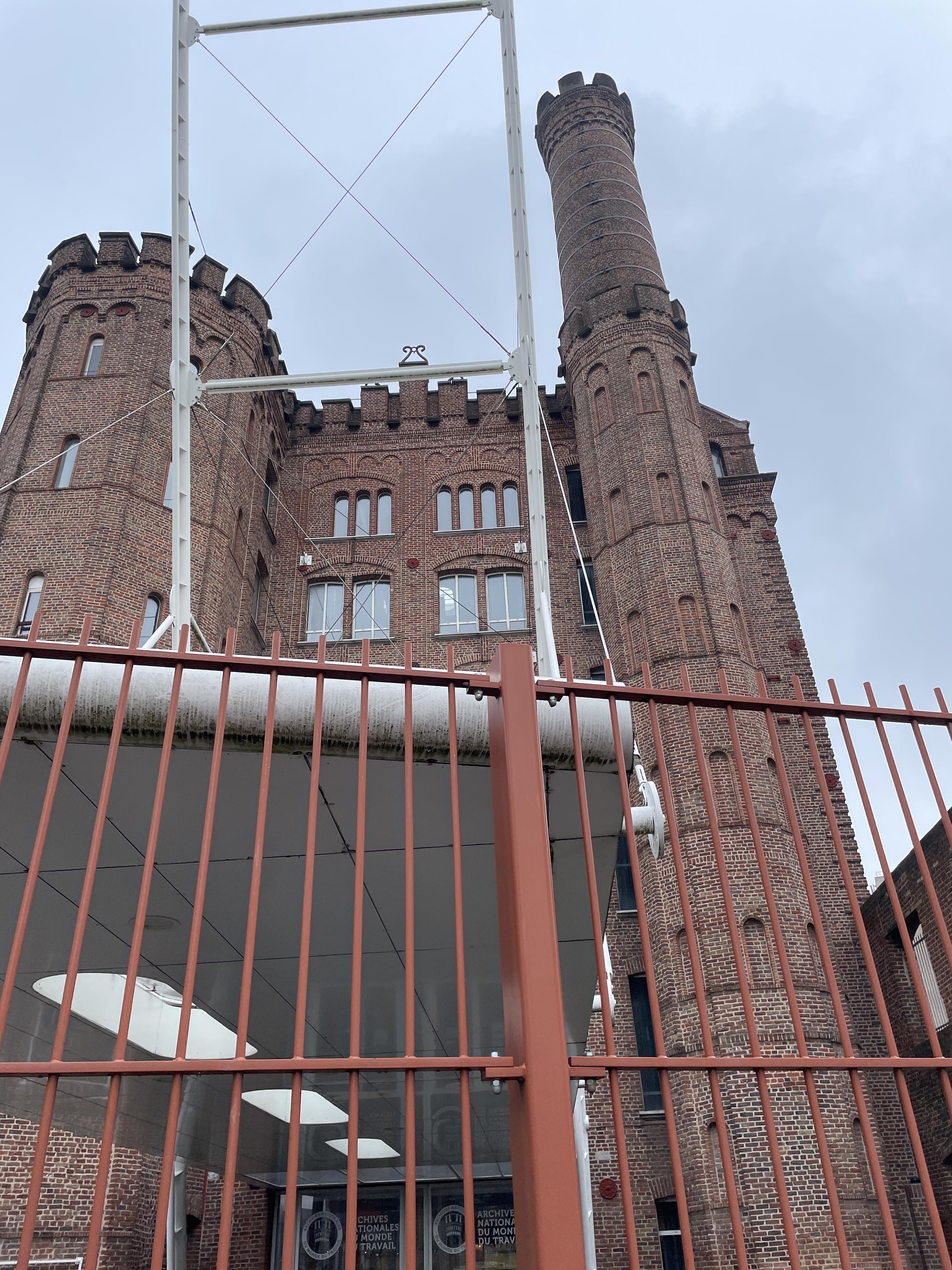
Usine Motte-Bossut (now: Archives National du Monde du Travail) Roubaix (1853)
Lille, Roubaix and Tourcoing were at the centre of a vast network of cotton and wool milling operations in the north of France near the Belgian border. In the early twentieth century this urbanised region, which includes the regional capital, Lille, produced more textile material than anywhere else in the world except for Manchester in the UK.
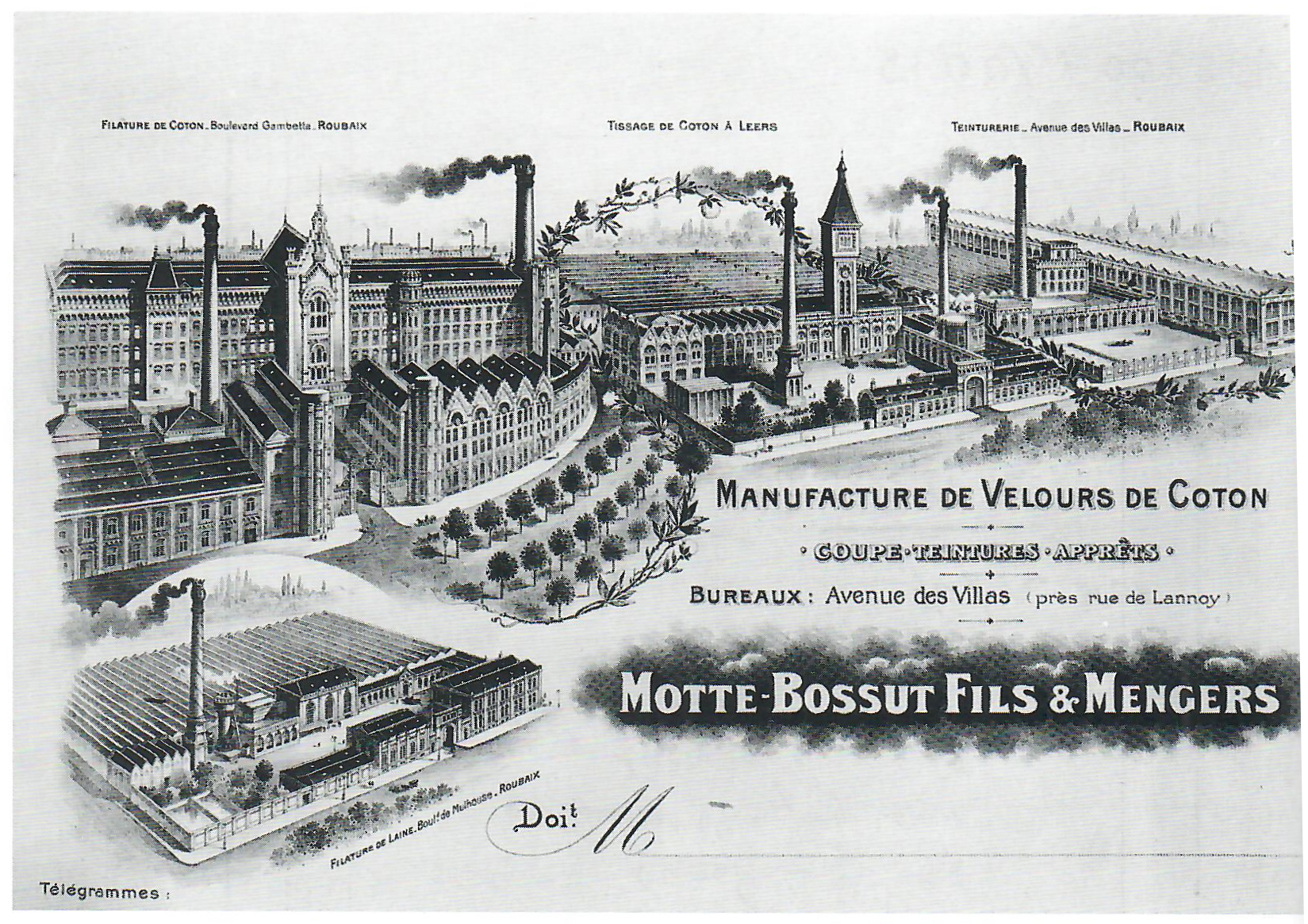
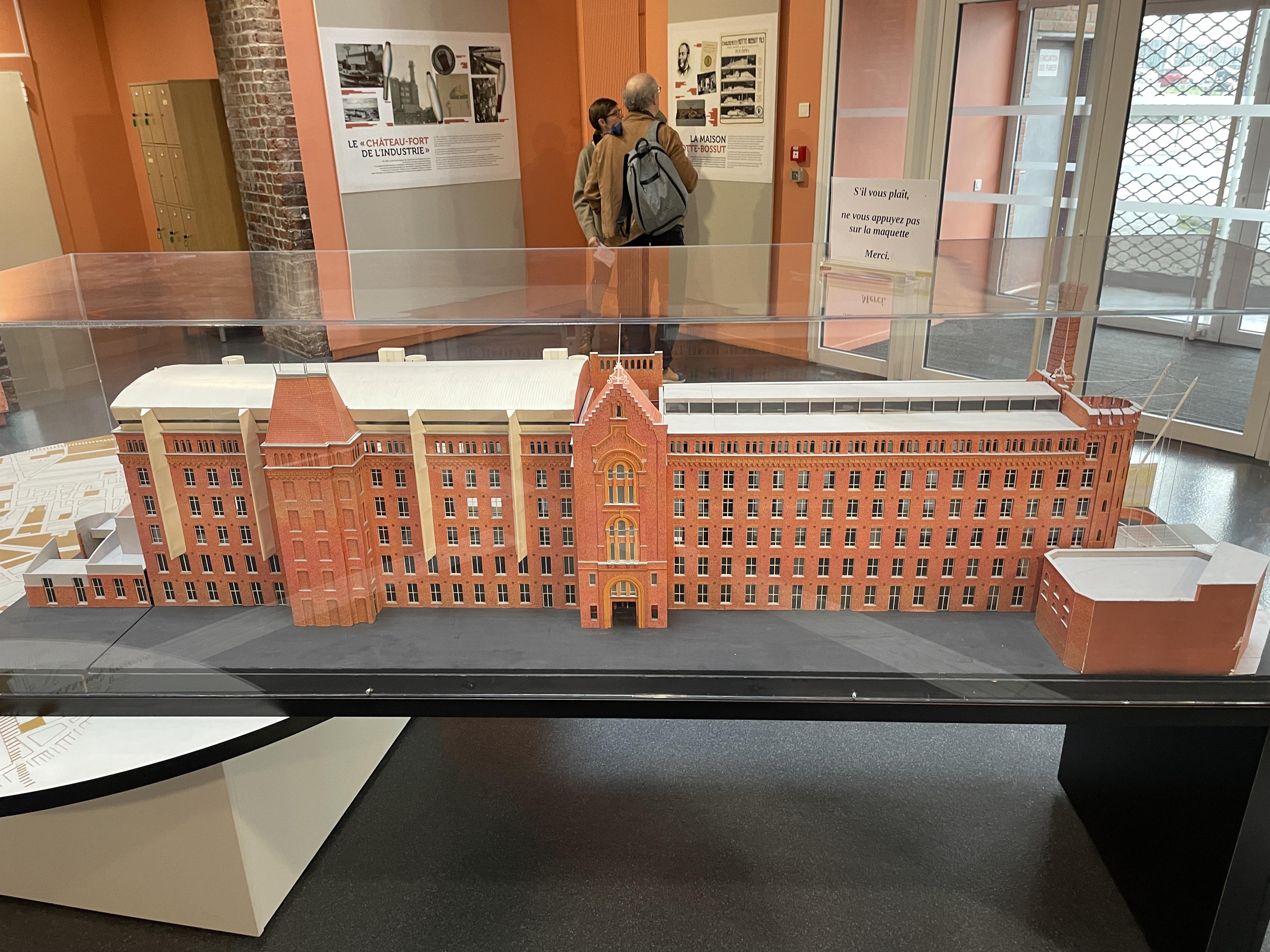
The first industrial building in France to be classified as a Monument Historique was the 1853 (and later) Motte-Bossut cotton mill, in Roubaix. The massive central building that remains was part of an even larger complex, which was built across the canal from the original 1843 ‘l’usine monstre,’ which burned down twice before the current fire-proof mill was constructed with an iron frame, brick vaulted floors, and a heavy masonry shell (Fontana et al, 2005, p. 30. Figure 4). The principal six-storey cotton-spinning building is a prominent example of English-inspired fortress-like architecture, complete with crenelated towers (Figure 1). Louis Motte brought both cotton spinning technology and architectural inspiration from England; his new factory was nicknamed ‘the Manchester of the North.’ This construction and design approach, where the factory’s traditional wrapper — though bold and imposing — belies the newer technology behind it, can be seen in other transitional buildings of this era, such as Labrouste’s 1851 Bibliothèque Sainte-Geneviève, in Paris.
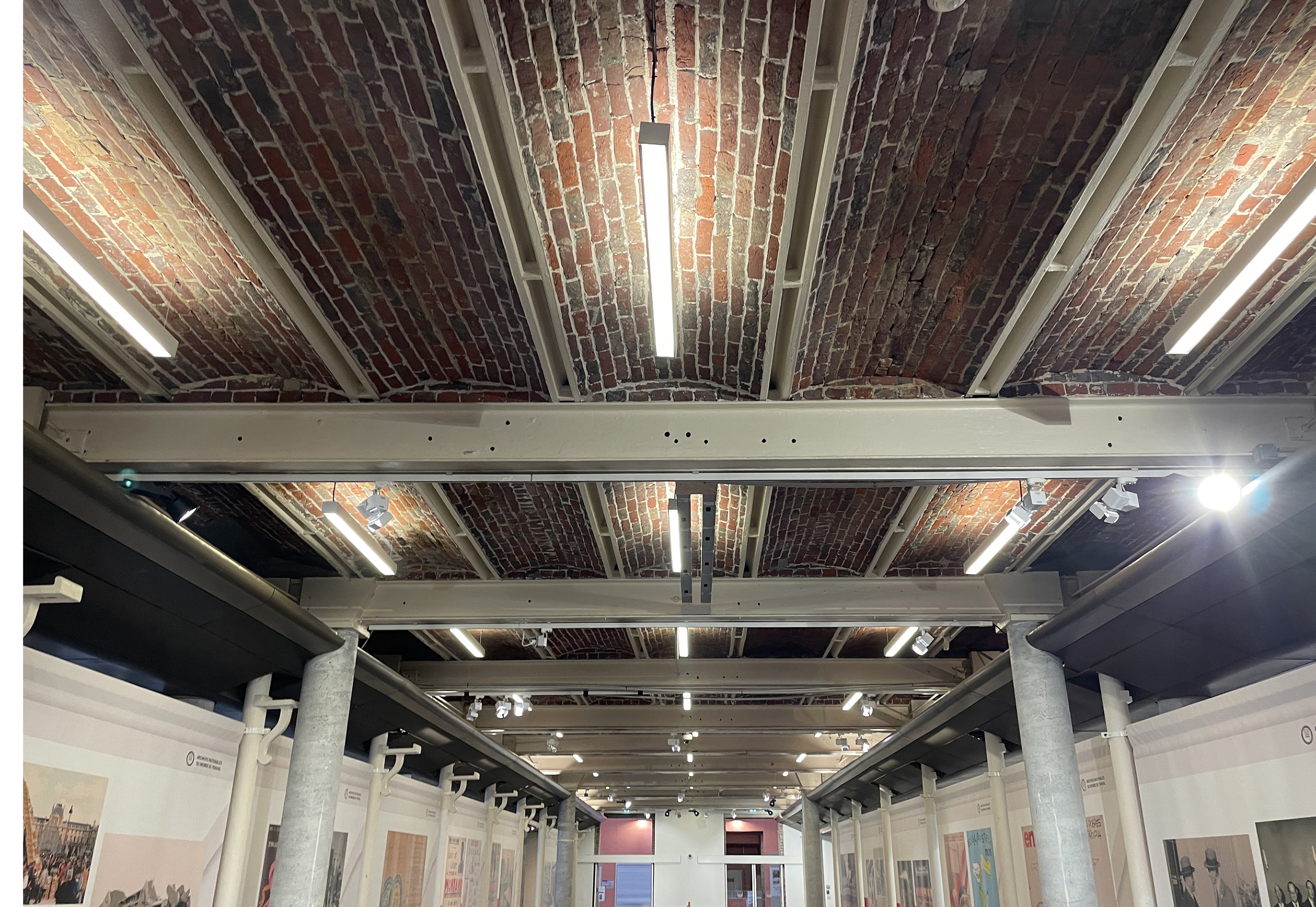
The mill, which was written into the historic register in 1978, closed in 1981. It was reopened in 1993 as the Archives National du Monde du Travail (ANMT), with extensive renovations designed by SAREA (Alain Sarfati). It now keeps historic records from France’s businesses and industries in a climate-controlled archive, as well as research and office space, and a large public exhibition gallery.
Chocolaterie Menier, Noisiel (1872)
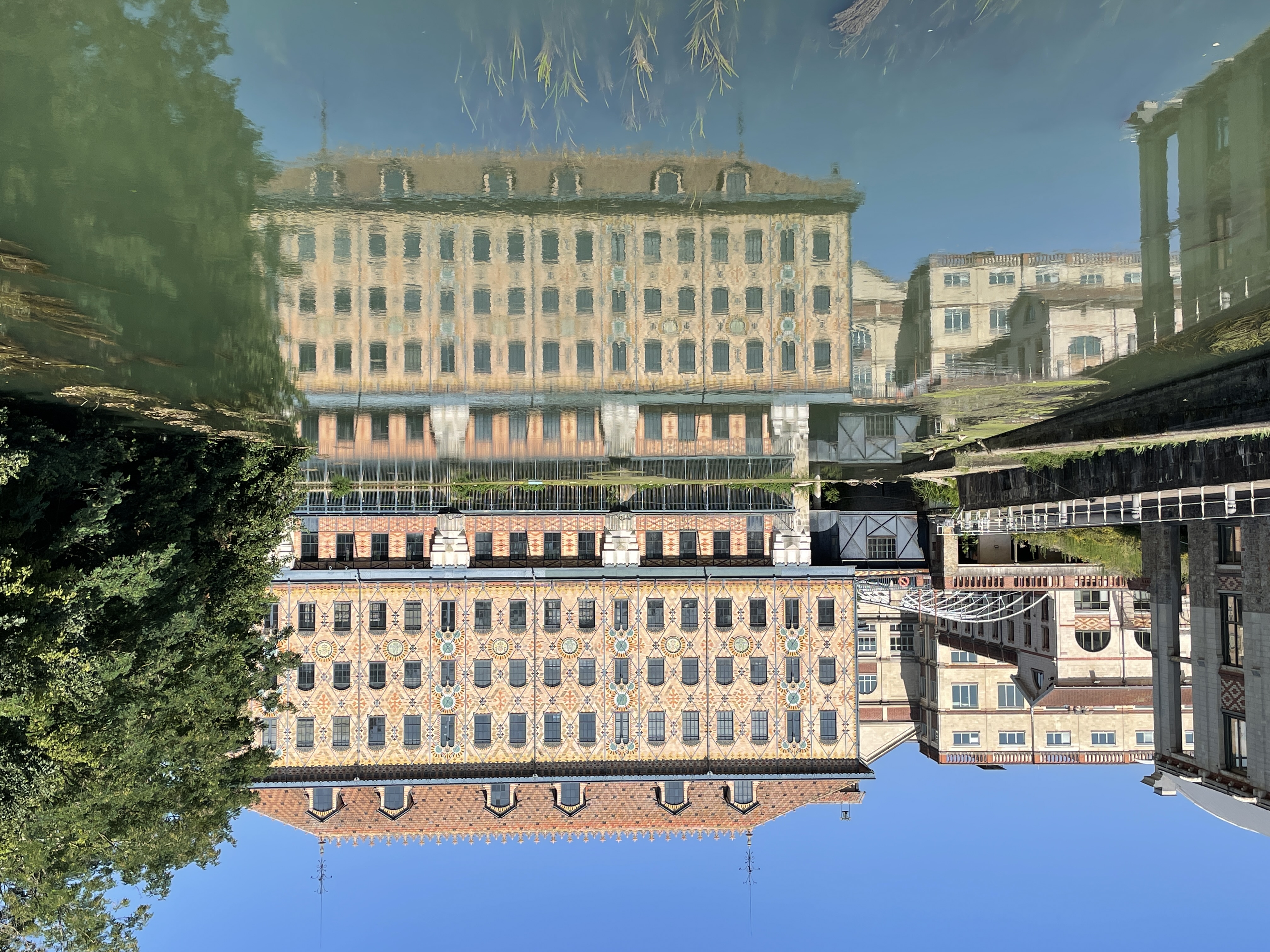
The Chocolaterie Menier, along the Marne River in Noisiel east of Paris, was once the world’s largest chocolate manufacturer. The facility is a French industrial icon (it graced the cover of an edition of the Guide Vert Michelin: Les Plus Beaux Lieux du Patrimoine Industriel), and several of its buildings are also classified as Monuments Historiques.
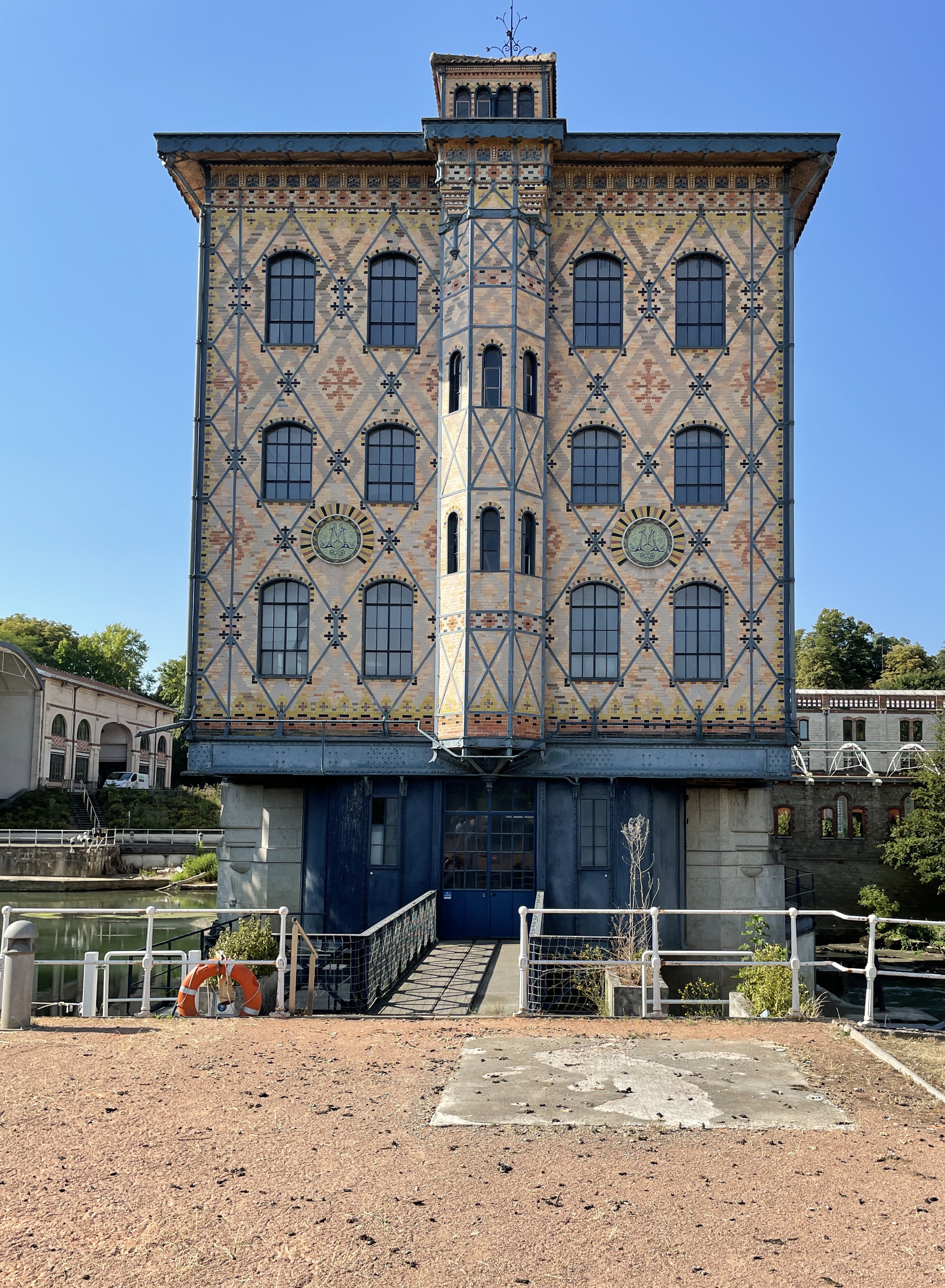
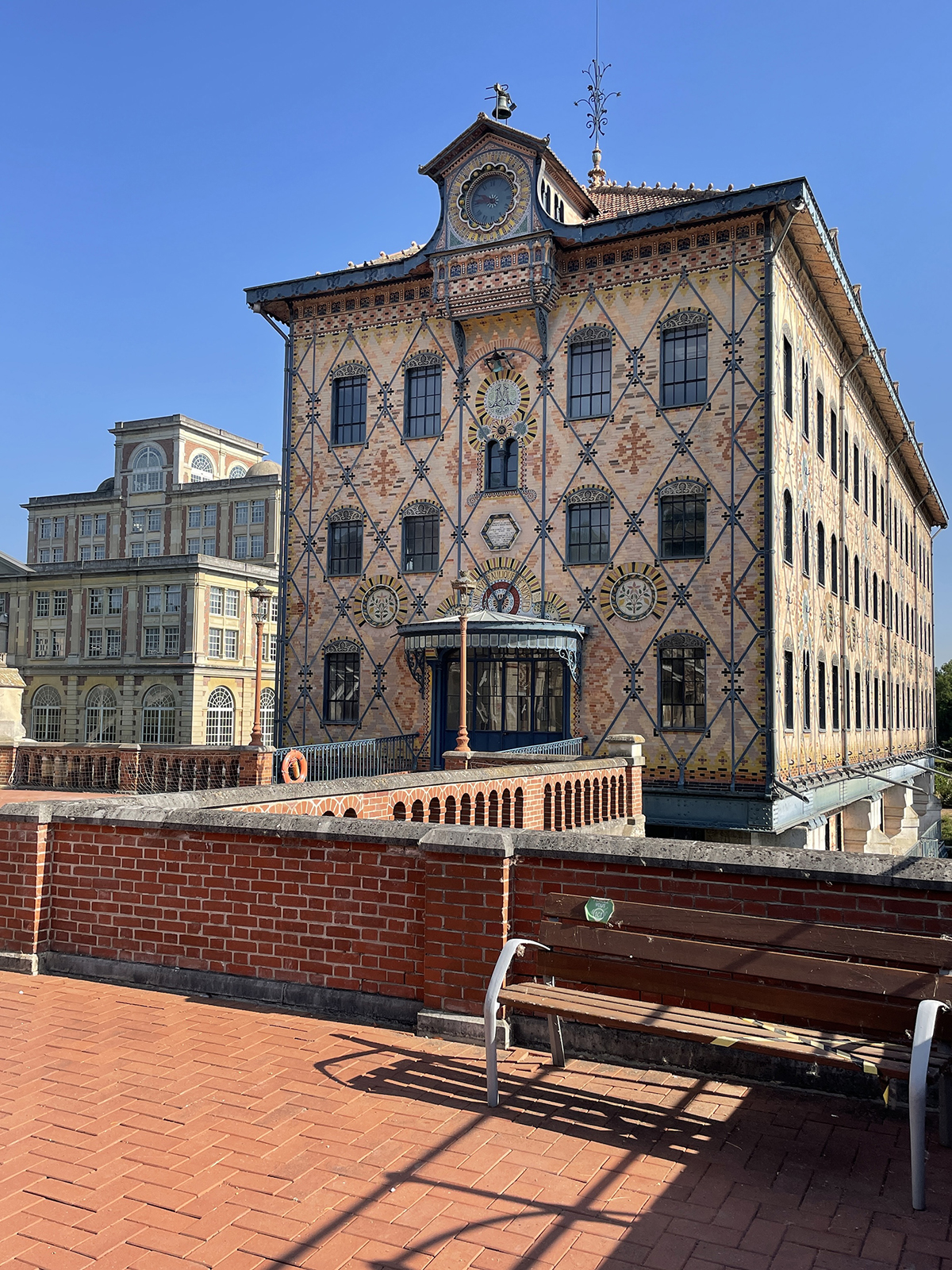
The pioneering exposed metal and polychrome brick on the 1872 Moulin Saulnier building was designed by Jules Saulnier. This building spans the Marne, and was water-powered (Figure 5). The building lays claim to be one of the world’s first all-metal skeleton structures, with a flexible puddled iron (though not yet carbon steel) frame able to bear the production machines’ weights and vibrations. With the building sitting on piers over the river, this is a clear precursor to the free facade and elevated ground plane of Corbusian Modernism.
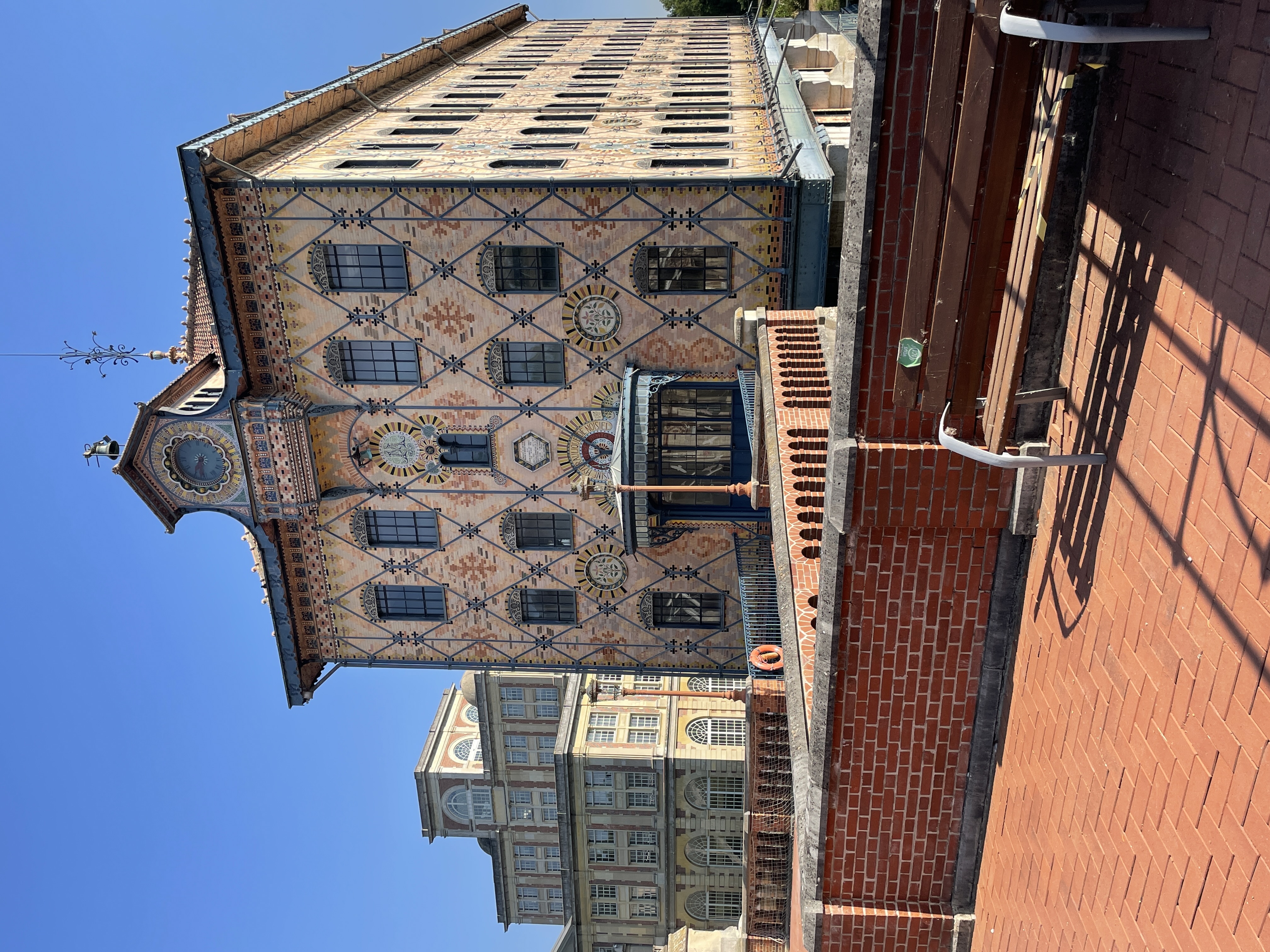
The exterior expression of the iron frame was also novel. The polychrome brick enclosure is simply infill, with the structural distribution carried by the exposed metal framework. The decorative skin takes its cues from the structural pattern: the extraordinary detail in the brick infill responds directly to the diagonal iron structural grid and creates a dynamic balance between traditional decorative French masonry work and the mill’s novel structural expression. Figures 6 and 7) While the material dialogue embodies literal forces of tension and compression, it also embodies tensions between purely functional and decorative elements that would soon dominate Modern architectural manifestos. Nestlé, which took over the Menier brand in the late 1980s, abandoned the factory in 2020, but there are currently redevelopment plans for the campus for mixed use. (LinkCity, 2024)
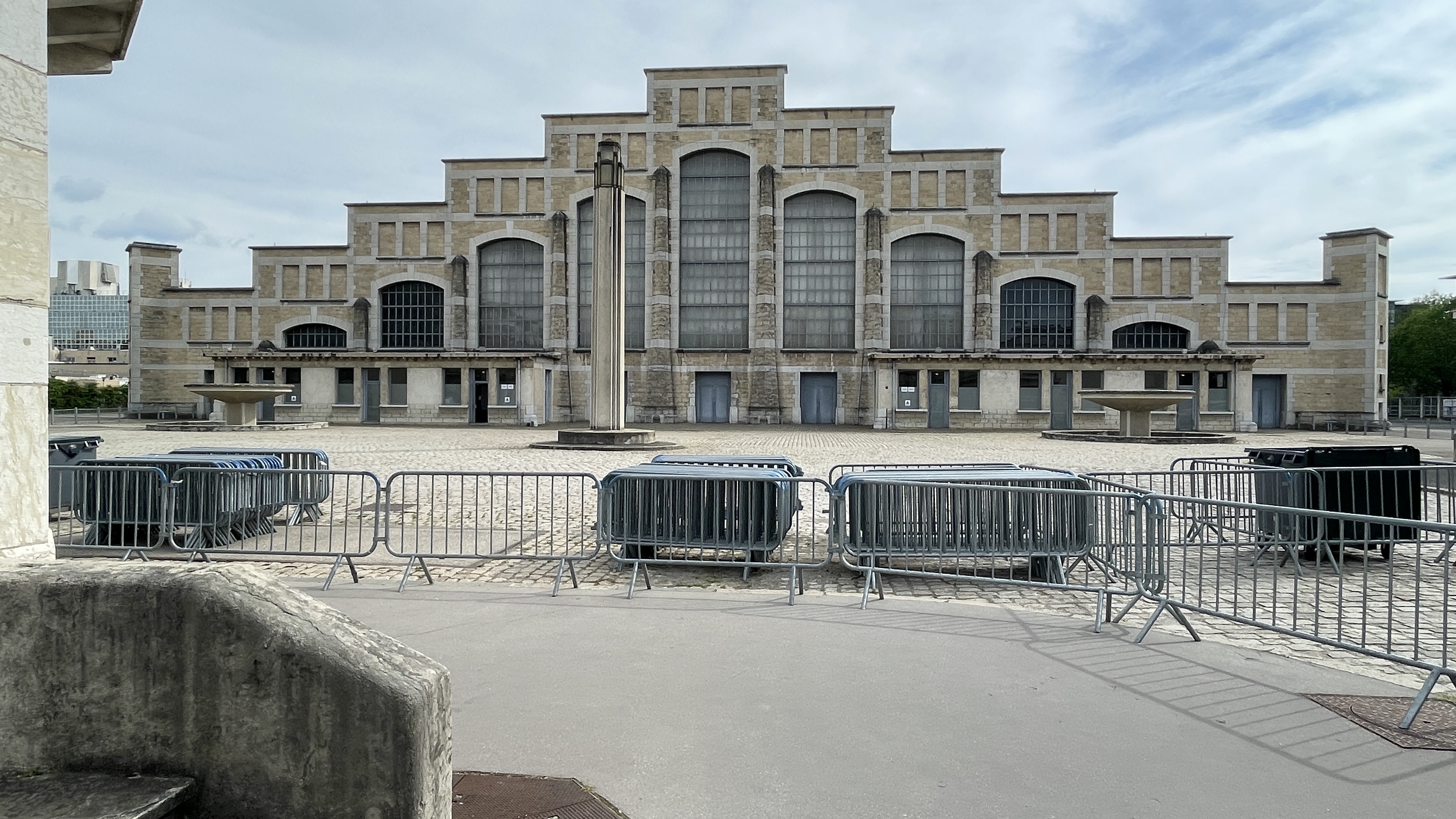
Abattoirs de la Mouche (now: Halle Tony Garnier), Lyon (1914)
The architect Tony Garnier was an important transitional figure reshaping Lyon and its industrial infrastructure. Part utopian thinker, all Lyonnaise, Garnier experimented with rational, streamlined typologies, and designed many varied buildings in Lyon’s developing twentieth century urban center, east of the Rhône. Part of his designs for massive stock-trading and slaughterhouse yards, the Abattoirs de la Mouche cattle auction hall, opened in 1914 to coincide with an international public health exposition. This enormous hall is pure industrial function: natural daylighting comes through a stepped roof over a massive steel truss structure; the 210 metre by 80 metre open floor plan still enables multiple uses for concerts and other public events. (Figure 8)
Unlike the ornate Beaux-Arts stone cladding of the iron and glass Grand Palais in Paris (from 1897), the Halle Garnier is much sparer in detail, a transitional modern landmark more aligned with the temporary Palais des Machines, built for Paris’ 1889 exposition. In fact, the steel trusses for the Palais des Machines were built by the same Lille ironworks that later built Garnier’s hall.
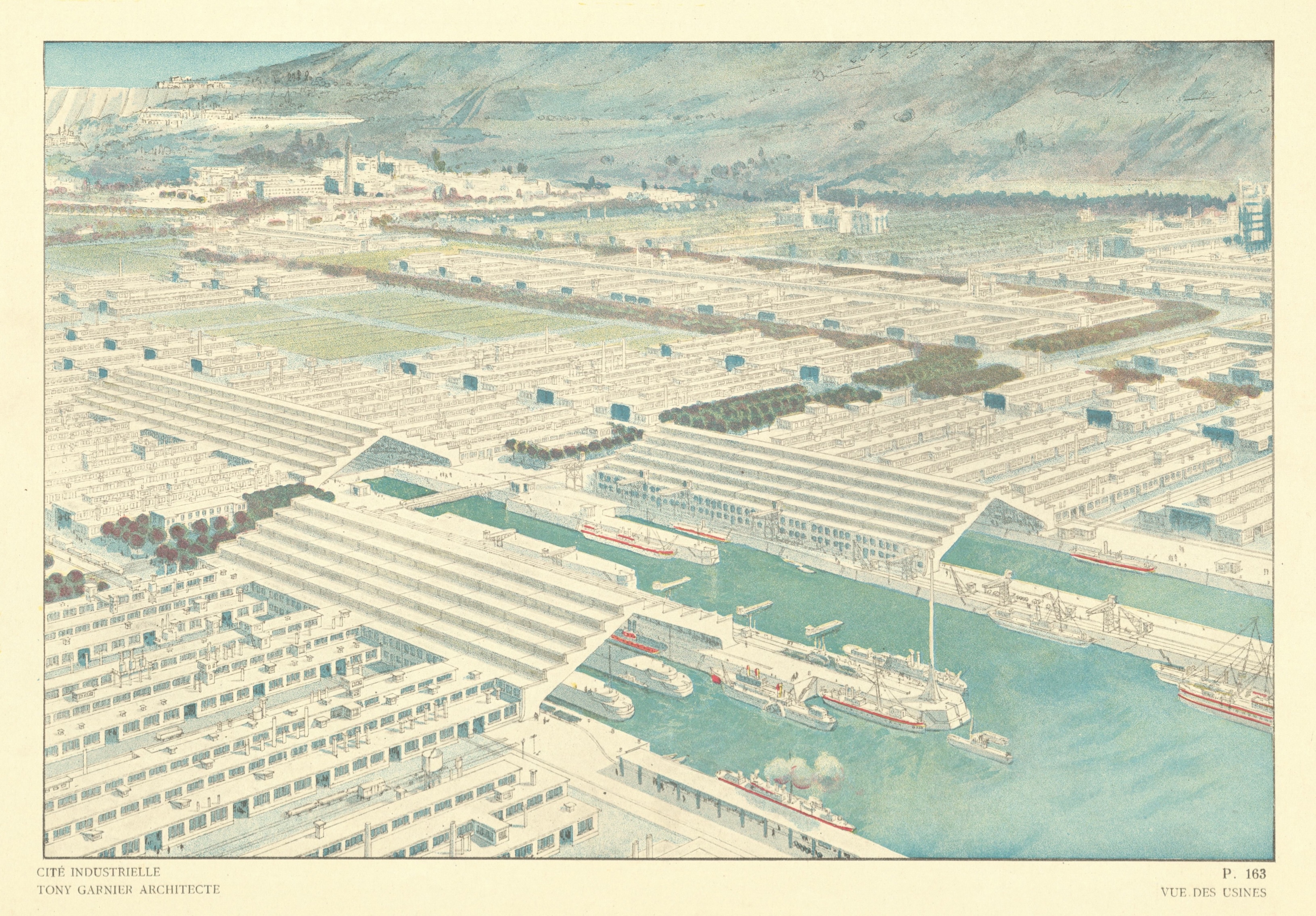
Garnier’s strongest legacy outside of Lyon, though, is probably the publication of his Une Cité Industrielle unbuilt urban scheme, which was exhibited as early as 1904 and first published in 1917 (Wiebenson, 1969, p. 11). This rational, zoned, utopian factory town plan with communal facilities and plentiful open space was admired by Le Corbusier and served as an inspiration for the later Modernist city plans of the Athens Charter and CIAM.
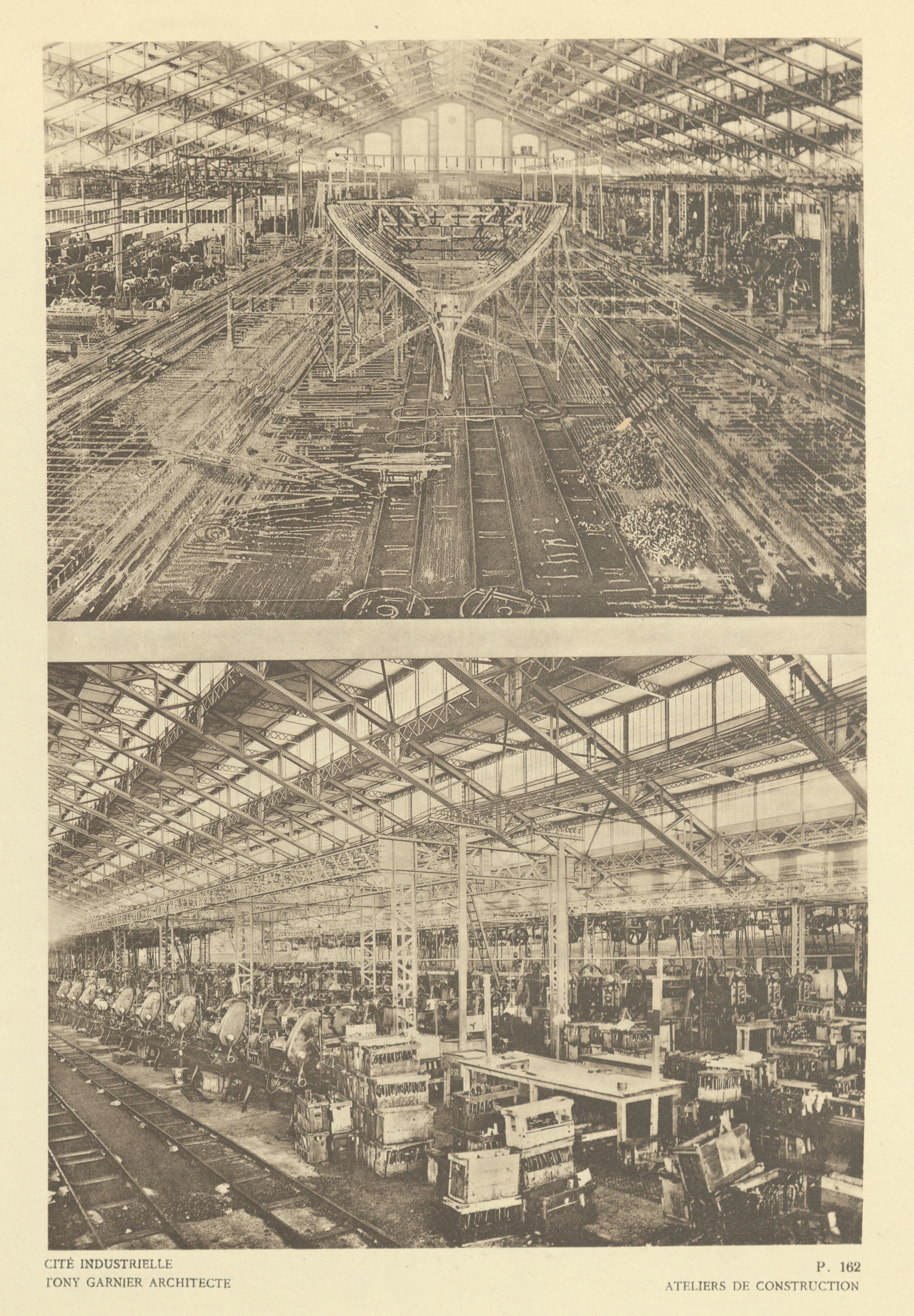
In the Abattoirs de la Mouche auction hall, we have probably the most tangible link between Garnier’s influential theoretical output and his built legacy. Garnier first began work on Une Cité Industrielle while on his Grand Prix de Rome after finishing at the École des Beaux-Arts. When he returned to Lyon in 1905, he was eventually commissioned for his first public works and began a long collaboration as the City Architect with Lyon’s socialist mayor Edouard Herriot (Tatke, 2019). In an earlier plan iteration of his Une Cité Industrielle, exhibited in 1904, a basic layout appears for three shipbuilding hangars (Figure 9) which predated the construction of the Lyon cattle auction hall, completed in 1914. In Lyon, he had a chance to work through the shipbuilding hangar design, now repurposed for the city as a cattle auction hall and exposition floor. Several years later, he incorporated further details taken from the Lyon hall into the publication. In plates included in 1917 (Figure 10), the bays, windows, structure, proportion and details for the shipbuilding hangars are all almost identical to the built auction hall. An interior photocomposite and structural drawings show construction details and the interior of the auction hall standing in for the shipbuilding facility (Garnier, 1917).
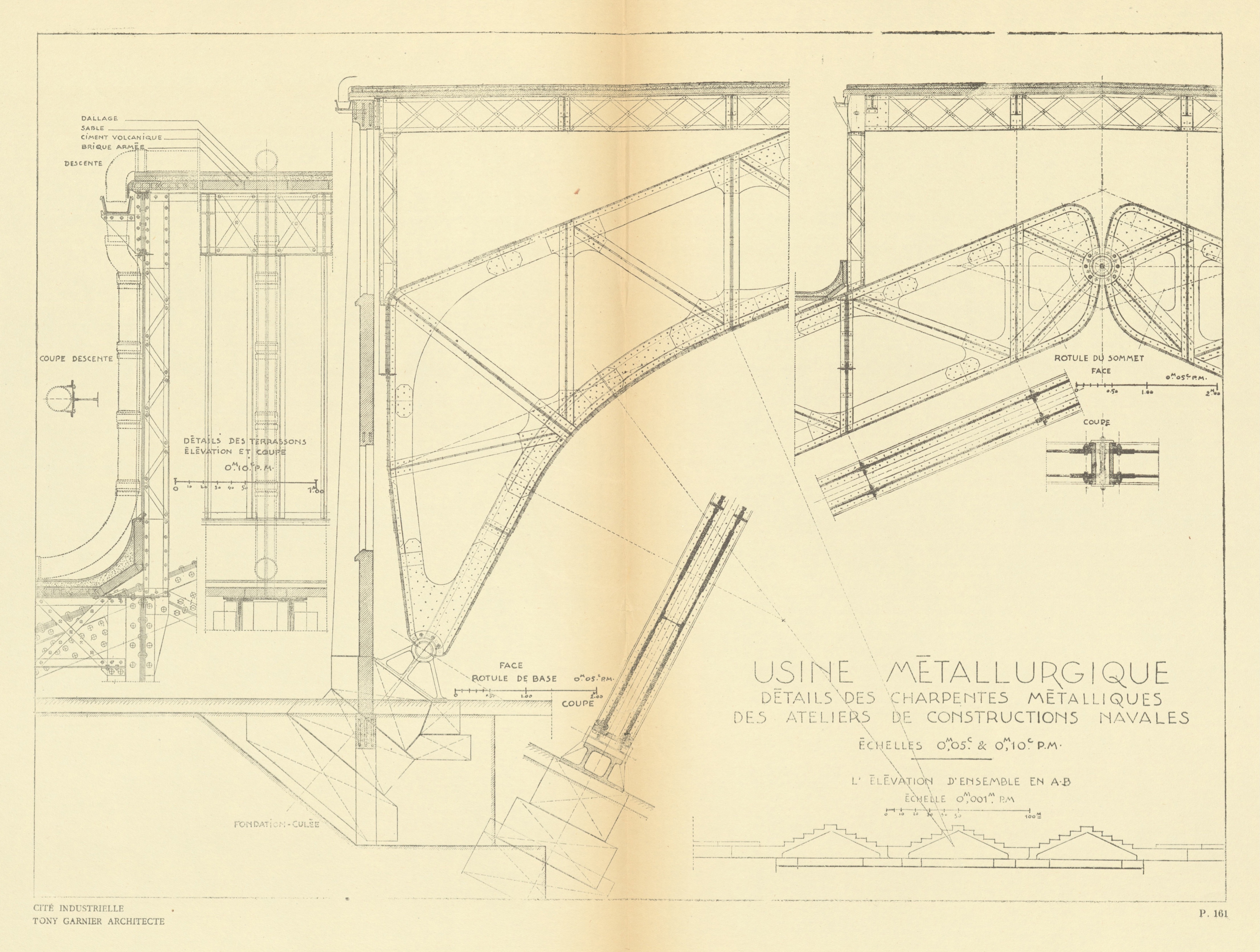
As a utopian roadmap, Une Cité Industrielle is remarkably forward thinking and comprehensive, such that it inspired Le Corbusier to write a letter to Garnier in 1919, proclaiming it ‘a milestone …opening up all possible hopes’ (Tatke, 2019). Perhaps to convince his readers of the viability of his schemes, a number of Garnier’s plates in the publication include steel and reinforced concrete construction details, and photographs pulled from Garnier’s Lyon practice (Figure 11). The Abattoirs de la Mouche auction hall, though a small built component of this radical proposal, still stands intact as an event space that can accommodate up to 17,000 people. It is now called Halle Tony Garnier.
Modernism owes much to the manufacturing processes and innovations of the first industrial era. These technologies (cast iron and steel frames, fire retardant construction, tactical and abundant use of glass, adaptable floor plans, and mass-produced building components) were enablers for the Modern agenda. The Modernists wanted to apply this rational efficiency — and machine æsthetic — towards promoting healthy working conditions and interior environments. This socially-minded reform of physical environments was not often a priority in earlier factory designs, but after the massive human, environmental, and architectural destruction of the First World War, it was these social aspects embedded within the insistent calls for a new architecture that helped propel Modernism into the mainstream.
This adaptation of industrial methodology was specifically and methodically laid out by Modernism’s contemporaneous historian Sigfried Giedion, who was putting the Modern Movement into historical context even while it was busy unfolding. In Building in France, Building in Iron, Building in Ferroconcrete (1928), and later in Space, Time, and Architecture (1941) and Mechanization Takes Command (1948), Giedion assigns clear and direct lines from the emergence of industrialised production in the late 18th century, the development of a rational and utilitarian architecture to house mechanised production, and how Modernism itself owes much to the machine-dominated fabrication economy of the industrial era.
Adoption of the emerging Modernist language into new French factory architecture was slow. In the North of France — where the First World War had decimated its population, cities, and landscape — reconstruction tended to be along the same lines as what had previously been built. Even as concrete was being increasingly used and carbon steel was replacing cast iron, the utilitarian and massive rebuilding of factories tended to develop along a more traditional and entrenched Beaux-Arts stylistic path, rather than the Modern breaks from tradition being experimented with elsewhere. (Auguste Perret did notable work in Amiens and Le Havre, but not until after the Second World War). Where Modernist architecture tended to appear in the North was by the commission of factory owners for their personal use, and not for the workers or the factories (a prime example is Robert Mallet-Stevens’ Villa Cavrois in Croix, completed in 1932, commissioned by the textile factory owner Paul Cavrois). This is not to imply that significant and architecturally important Modern factory building stock is lacking in this region during this period — such as the Bataville Garden City and Shoe Factory in the Moselle Department — but the local and urgent postwar circumstances may have delayed the Modernist project in the North until later.
After the Second World War, the resulting international infusion of economic investment gave France a chance to rebuild towns and sites lost to the war at a pace unseen since Napoléon Bonaparte’s era. At an urban and infrastructural scale, the language of Modernism — with its functional, replicable lineage and idealistic forward-looking social promises — now became both the civic and industrial mandate. The rebuilding project also accelerated a rapid demographic shift towards cities and an urbanised France: the banlieues and grands ensembles of this era represented not only the concentration of the population towards urban centers, but also the beginnings of France’s decolonisation, particularly in North Africa and the Middle East, which brought a rapid influx of people from the French diaspora.
At the same time that this urbanisation was being facilitated through massive housing campaigns, the industrial economic bases of these communities were beginning to disperse. Perhaps ironically, the same ingenuity that developed the technologies for massive industrial production and distribution that had globalised trade, also began to diminish the market for French labour and localised, centralised production. The combination of this globalisation of industry and the oil crisis of the 1970s saw the increasing slowdown of this period of industrial re-growth. The major automobile manufacturers in and around Paris had dispersed, while textile manufacturing had shifted eastward or overseas. The examples discussed in this section (two from the early Modern period; one from later) each characterise this pattern of industrial development in different ways.
Station F, Paris (1927-29)
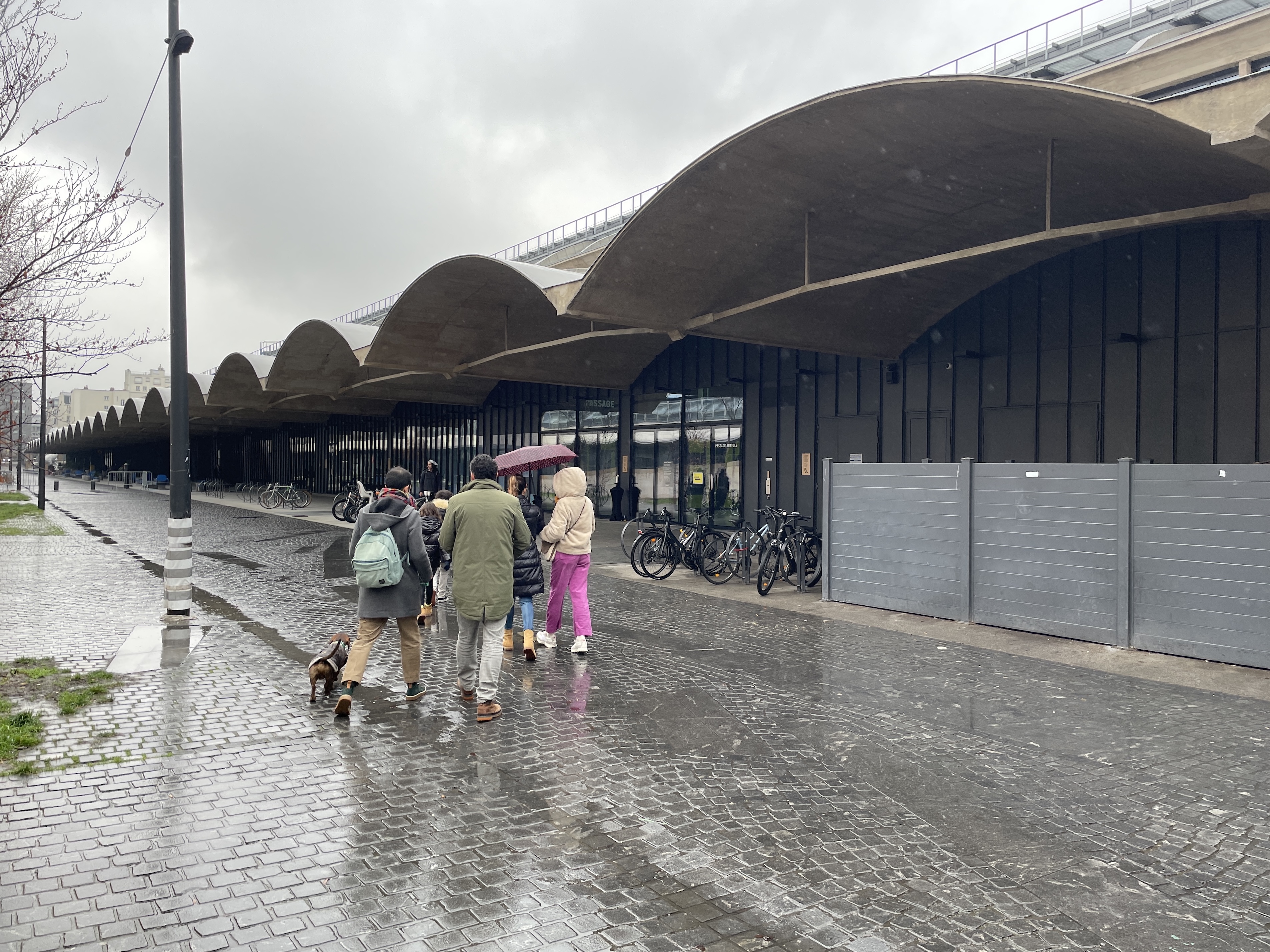
Eugène Freyssinet was a leading innovator in pre-stressed, thin-shell poured-in-place concrete. As a civil engineer, much of his work was public-sector infrastructure, including many bridges and an early airport hangar for Orly airport. Some of his architectural experiments survive, including what is now known as Station F (named for Freyssinet). Built as a distribution transfer station between trains arriving at the Gare Austerlitz and trucks feeding out into the Paris streets, Station F has enormous thin-shell prestressed concrete ‘naves’ (Figure 12).
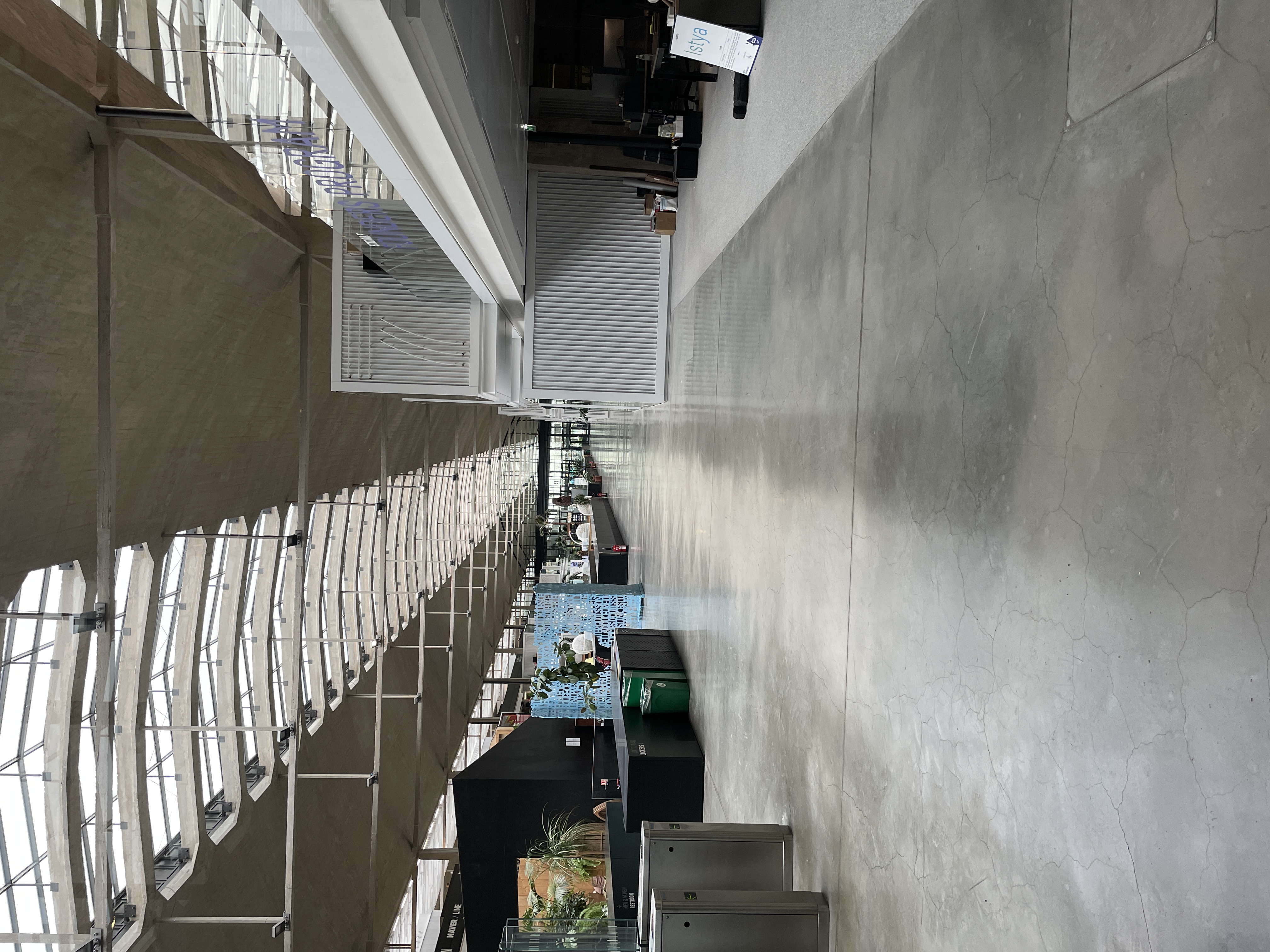
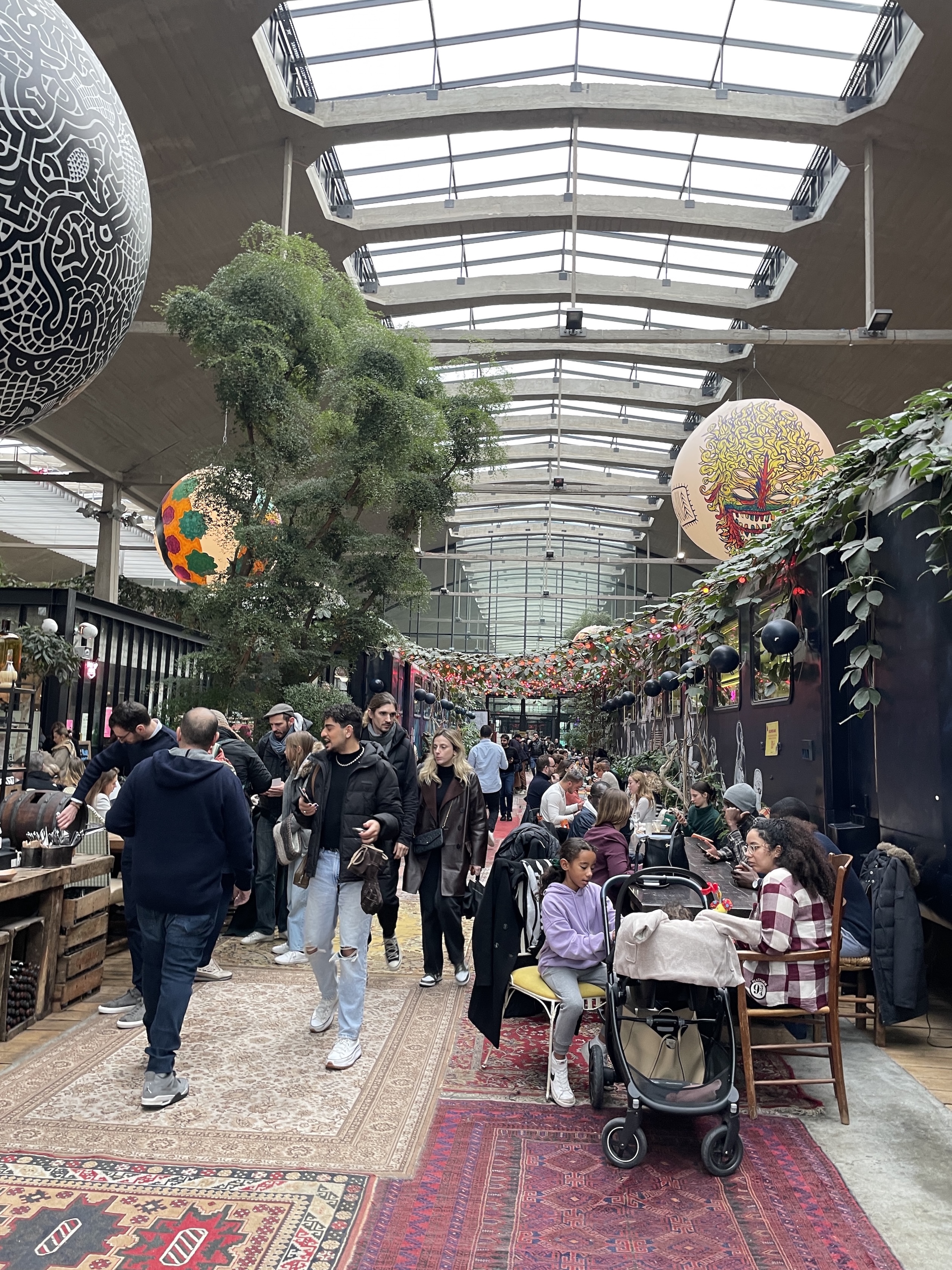
Abandoned in 2006, its future was secured by a historic monument designation in 2012. Then, after being purchased by the city, it was privately redeveloped as a business startup hub and reopened in 2018. Besides office, meeting and program spaces for the startup community, there is also a public food court at the southern end of the building. The architects for the renovation, Wilmotte & Associés, worked within the landmarked building using lightweight insertions — including shipping containers for meeting rooms, a nod to the building’s past use — underneath the restored curved shells of the roof. Indeed, modifying this roof would have probably proved impossible, even if desirable (Wilmotte & Associés, 2018).
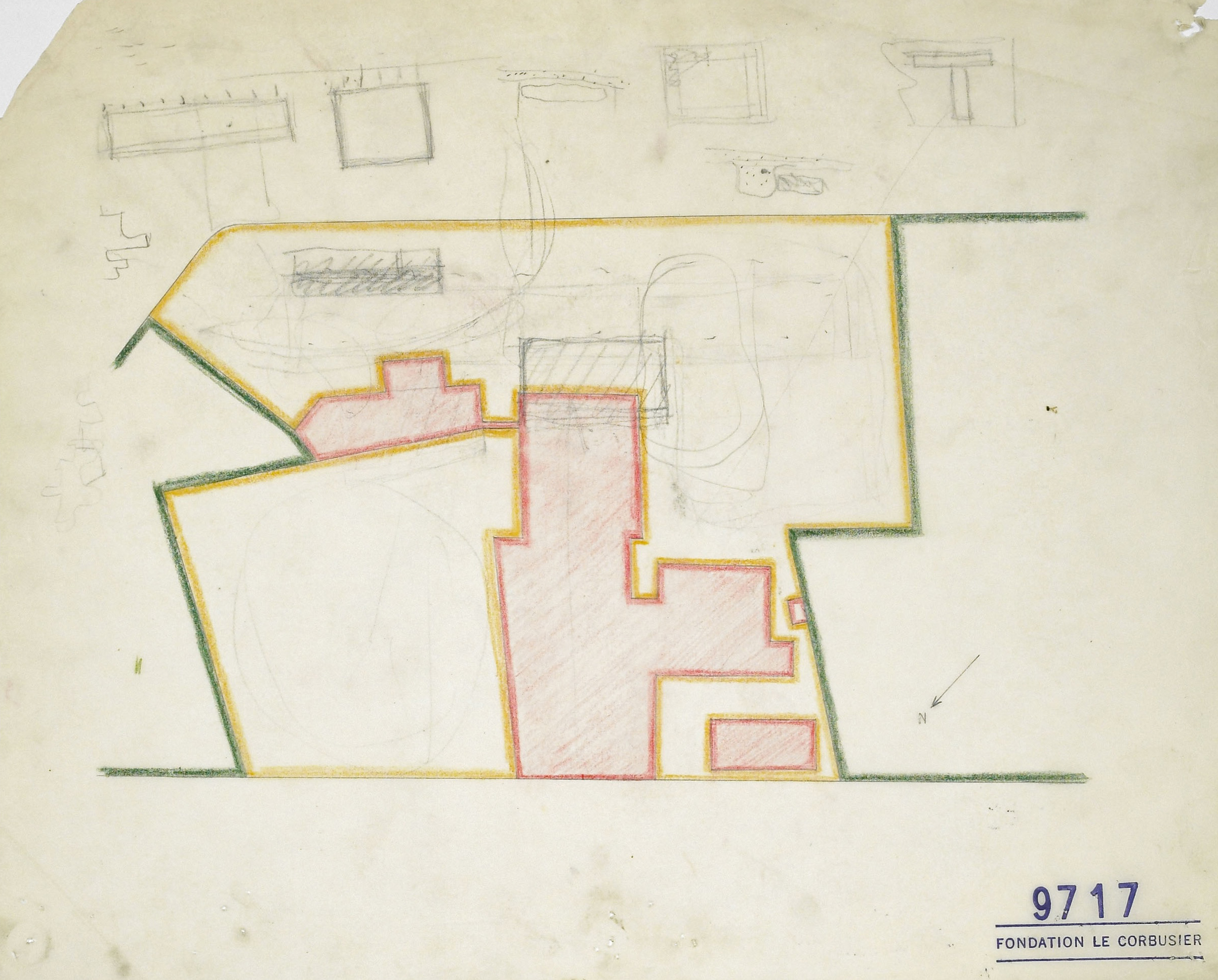
Usine Claude et Duval, Saint-Dié-des-Vosges (1946-1950)
Le Corbusier did more than almost any other architect at the time to celebrate and promote industrial principles of utility, efficiency, and order, notably in his Vers Une Architecture treatise of 1923. Interestingly, Le Corbusier only contributed one factory building to France’s industrial construction programme late in his career, and one that has been largely missing from architectural histories of the period.
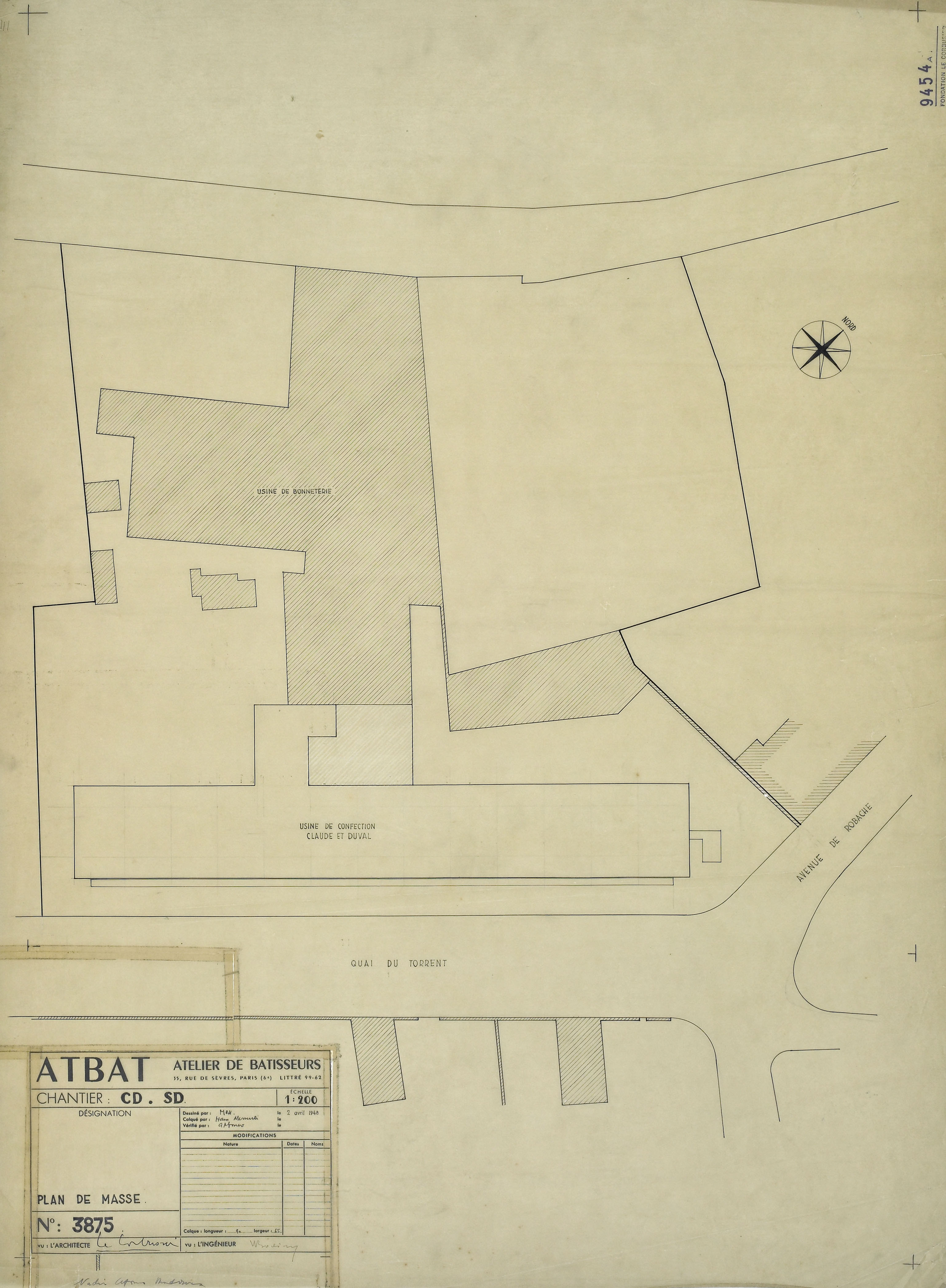
The Usine Claude et Duval, in Saint-Dié in the East of France, makes luxury knitwear for some of the best-known French, American, and Belgian couture brands. It is a unique example of Le Corbusier engaging with an existing building. The original factory was opened in 1908 but heavily damaged in 1944, and Le Corbusier was hired to design a new streetfront building connected to the older buildings further back on the site. Drawings held at the Fondation Le Corbusier hint at Le Corbusier’s strategy towards repair and adaptation; in general, Le Corbusier hid mention of the fact that he was working with existing buildings, in favour of showcasing the new streetfront building and its image of post-war rebirth. At the factory, connections between old and new are minimal, but efficient. An early sketch shows the area of overlap, where the new stair and elevator core intersects with one of the existing sawtooth skylight bays (Figure 15). Several drawings show different treatments of the old windows and roofline (Figures 17, 18, 19); it appears as if the affected bay was reconstructed with a symmetrical gable (as opposed to a sawtooth ‘shed’), but the majority of his office’s drawings barely acknowledge that there is an entire existing factory complex attached to — and part of — Le Corbusier’s new addition. Interestingly (as he later did at the Ronchamp chapel), Le Corbusier expressively integrated rubble from the damaged factory building into the new endwalls of his extension (Figure 20).
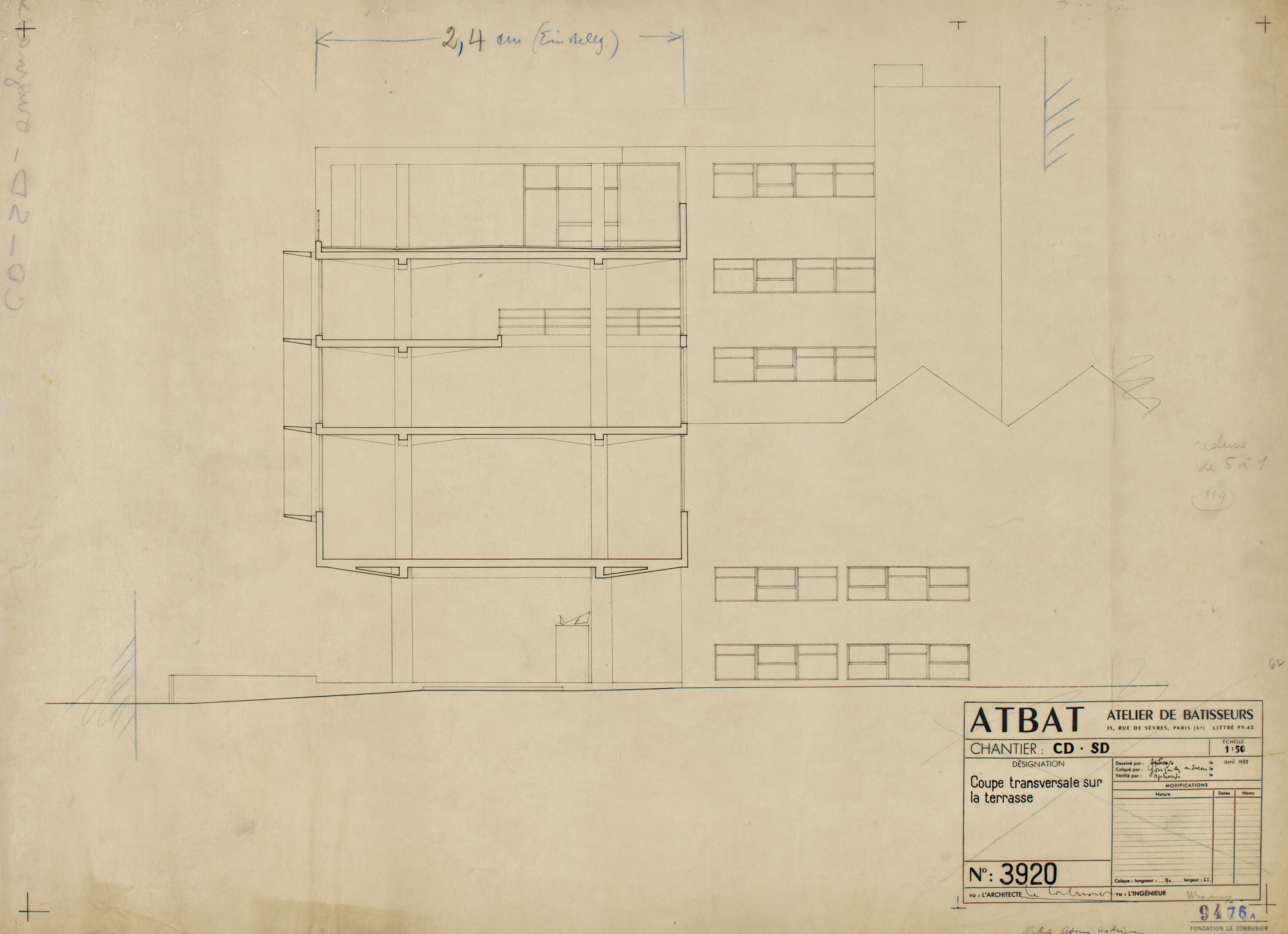
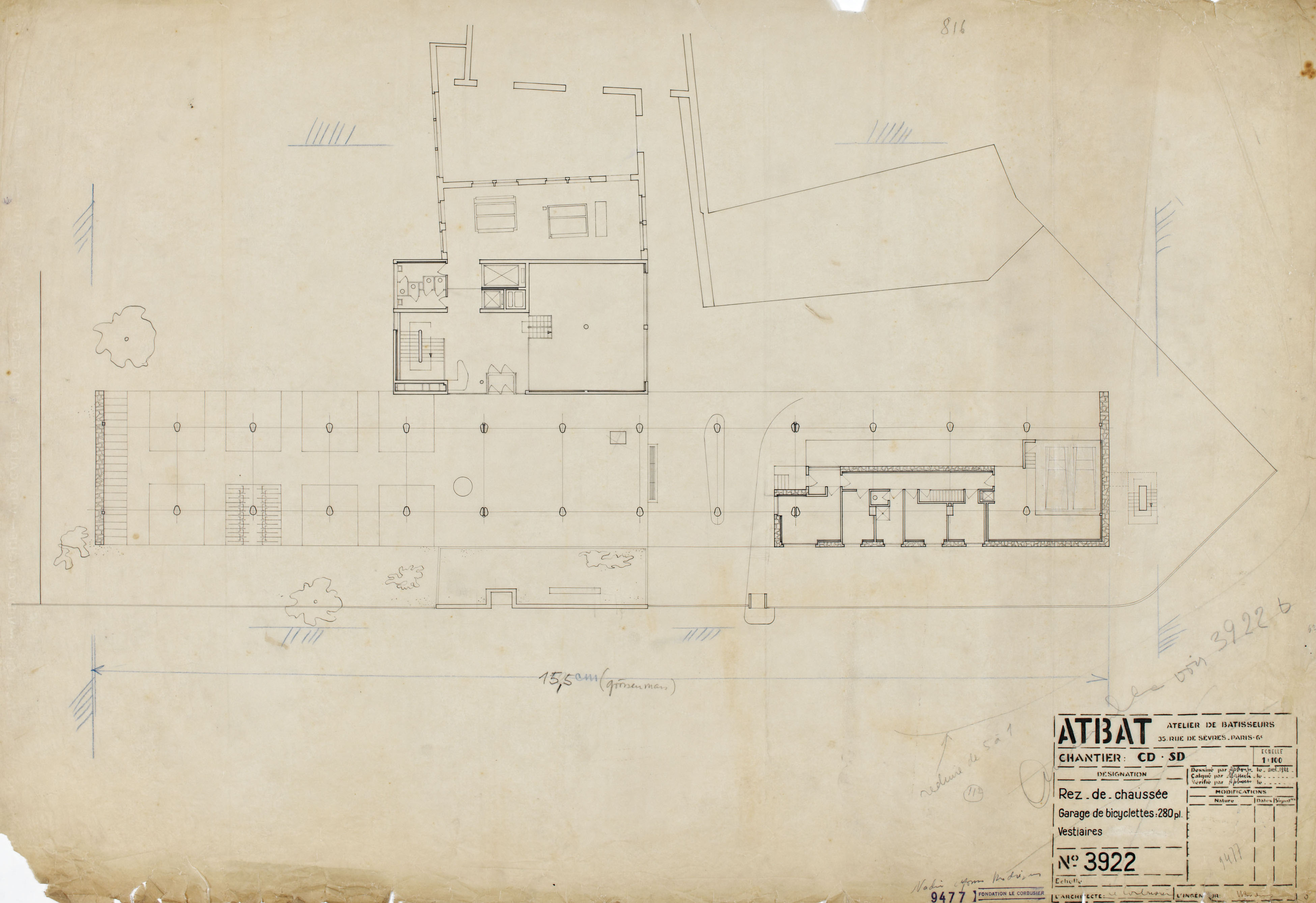
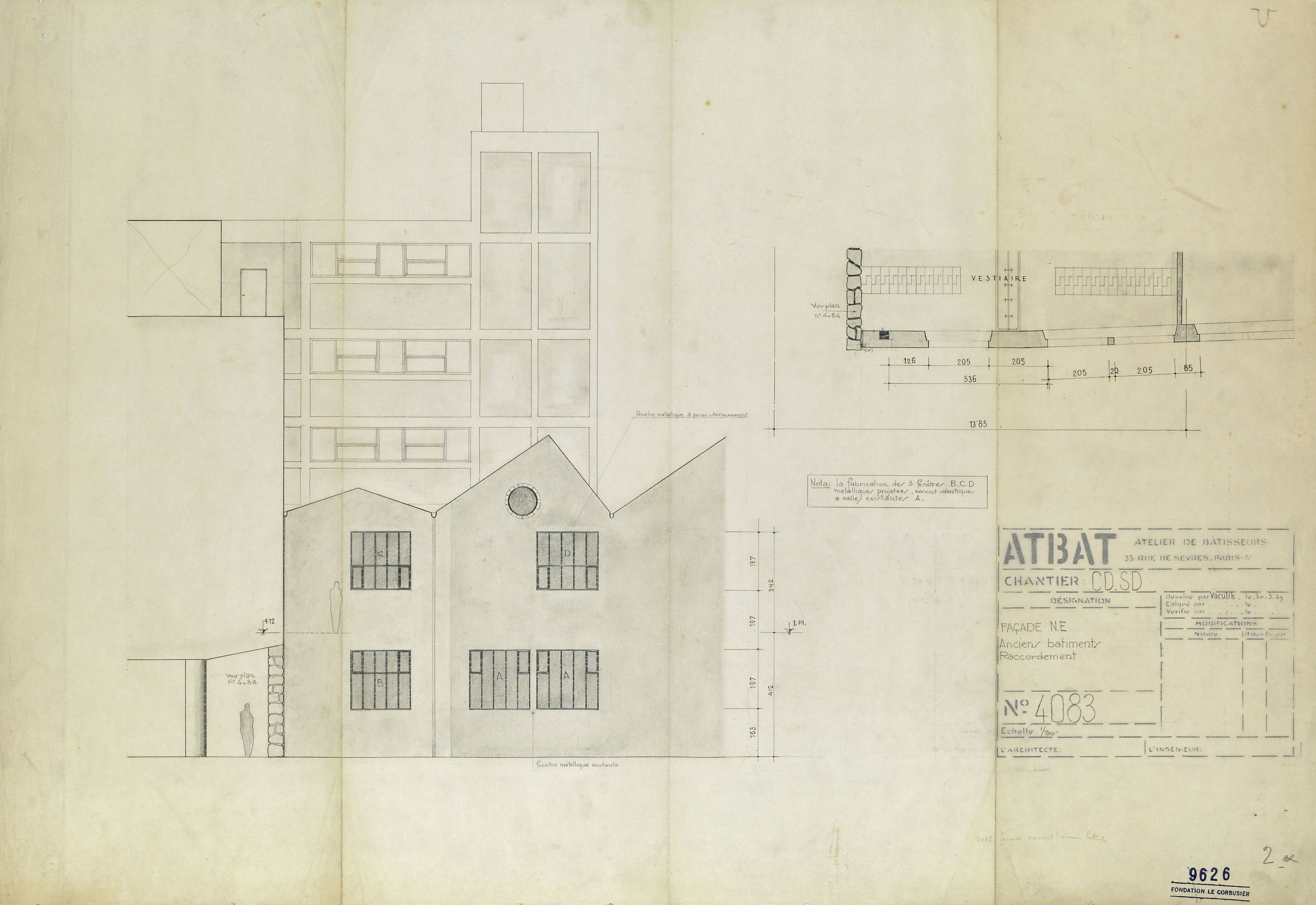
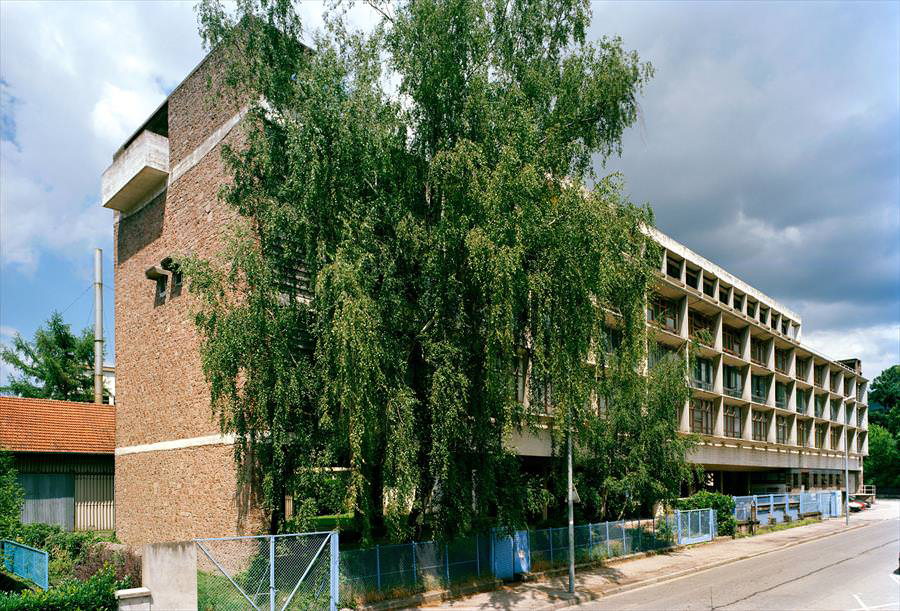
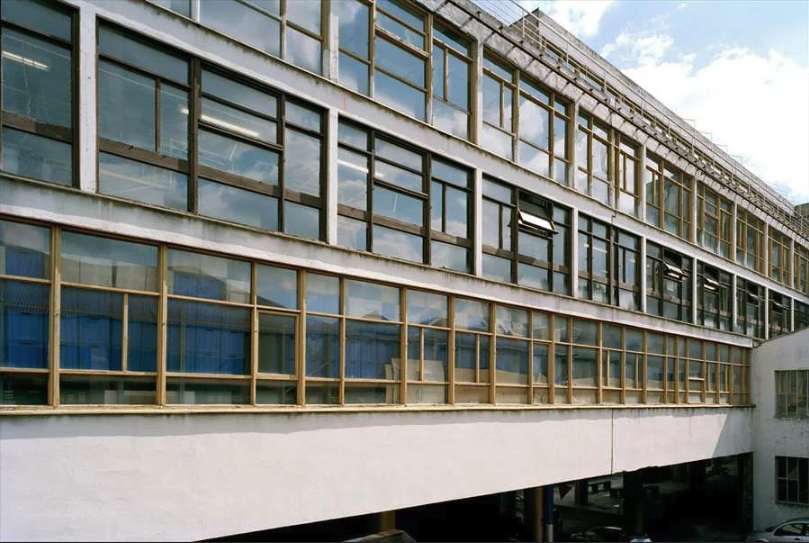
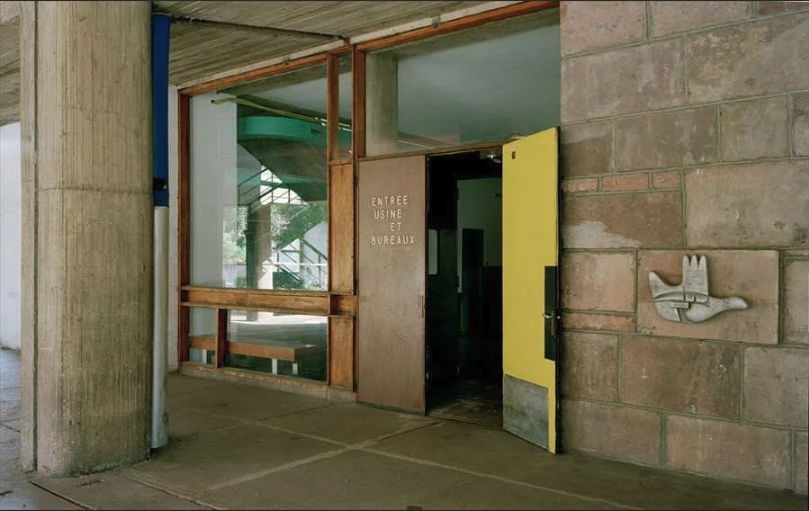
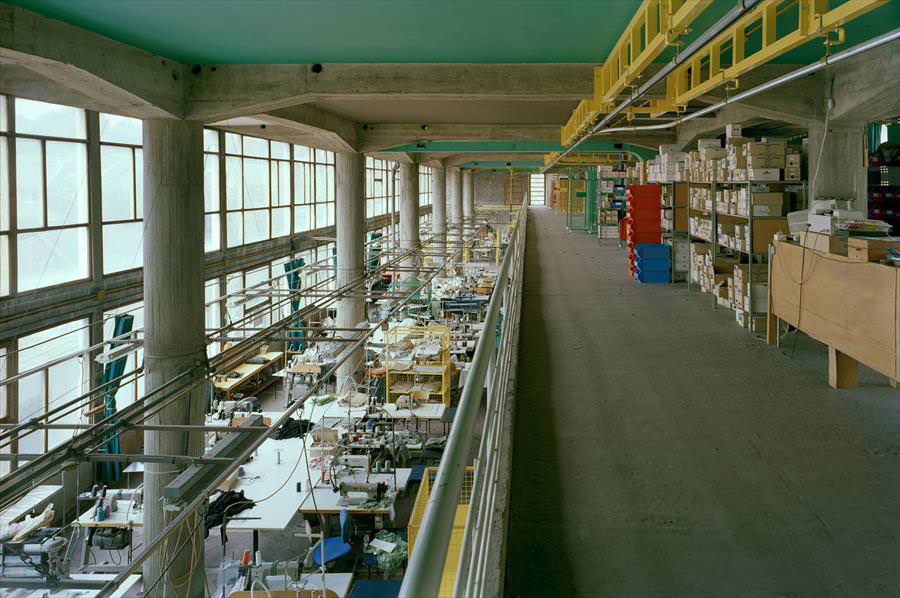
The entry for Le Corbusier’s works on UNESCO’s Modern World Heritage list recognises the older buildings at l’Usine Claude et Duval only in passing, as a springboard for testing his Modulor and Ville Radieuse concepts (UNESCO, 2016). His light-filled architectural intervention, however, augmented a manufacturing facility that is now over a century old. Were it not for the architect’s suppression of this historic condition, Le Corbusier’s project is interpretable as a remarkably rich and direct juxtaposition of a Modernist’s embrace of industrial typology.
MOZINOR, Montreuil (1975)
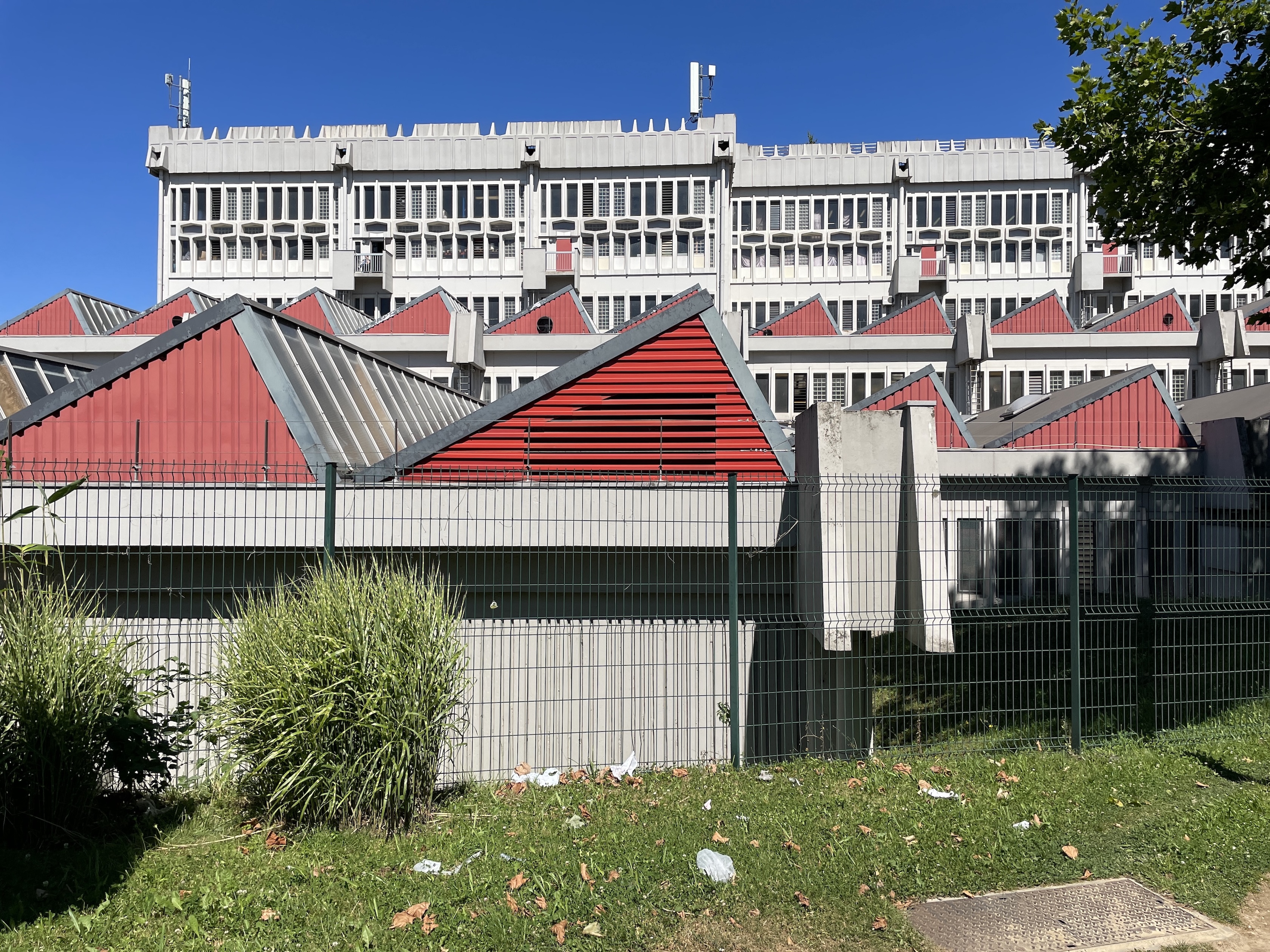
An interesting counterpart to the trend of industrial dispersion over the second half of the twentieth century is MOZINOR (MOntreuil Zone Industrielle NORd), completed in 1975, in Montreuil – outside of Paris.
MOZINOR is a late-Modern utopian statement insisting on the value of local industry (Bardavid, 2021). As part of a deliberate venture to revive local production jobs and create a modern, flexible facility for various small industries, the architects Claude le Goas, (who was also Montreuil’s town planner), and Gilbert-Paul Bertrand designed a 43,000 square metre vertically-arranged high-rise urban factory. Interior double-helical truck loading ramps, inspired by the staircases at Chambord, allow multiple small businesses to drive up directly to their own loading docks (Figure 26). The modular interior system allows companies to move into or out of adjacent bays as necessary; the ramp system allows trucks to unload goods all the way up to the landscaped rooftop.
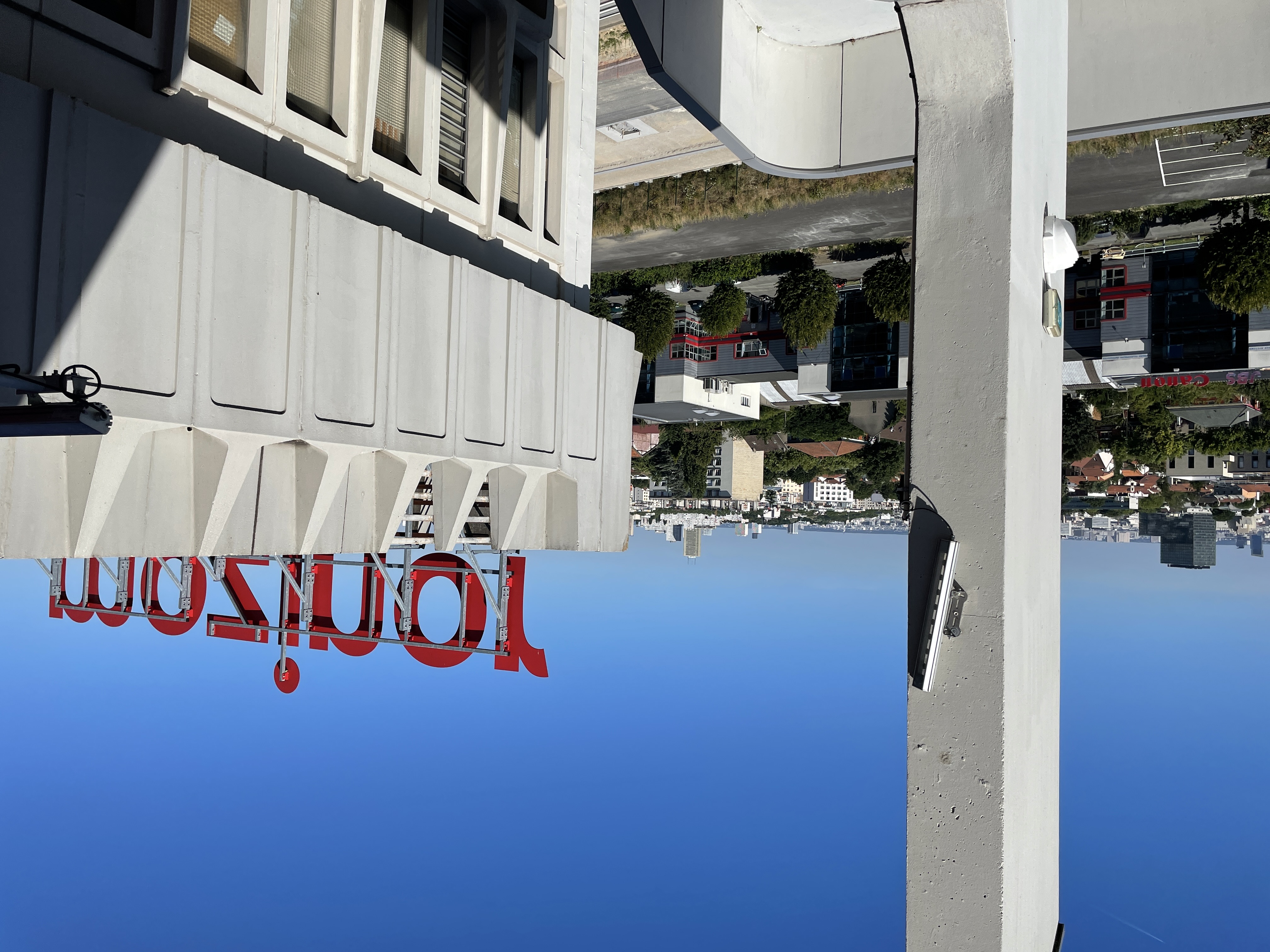
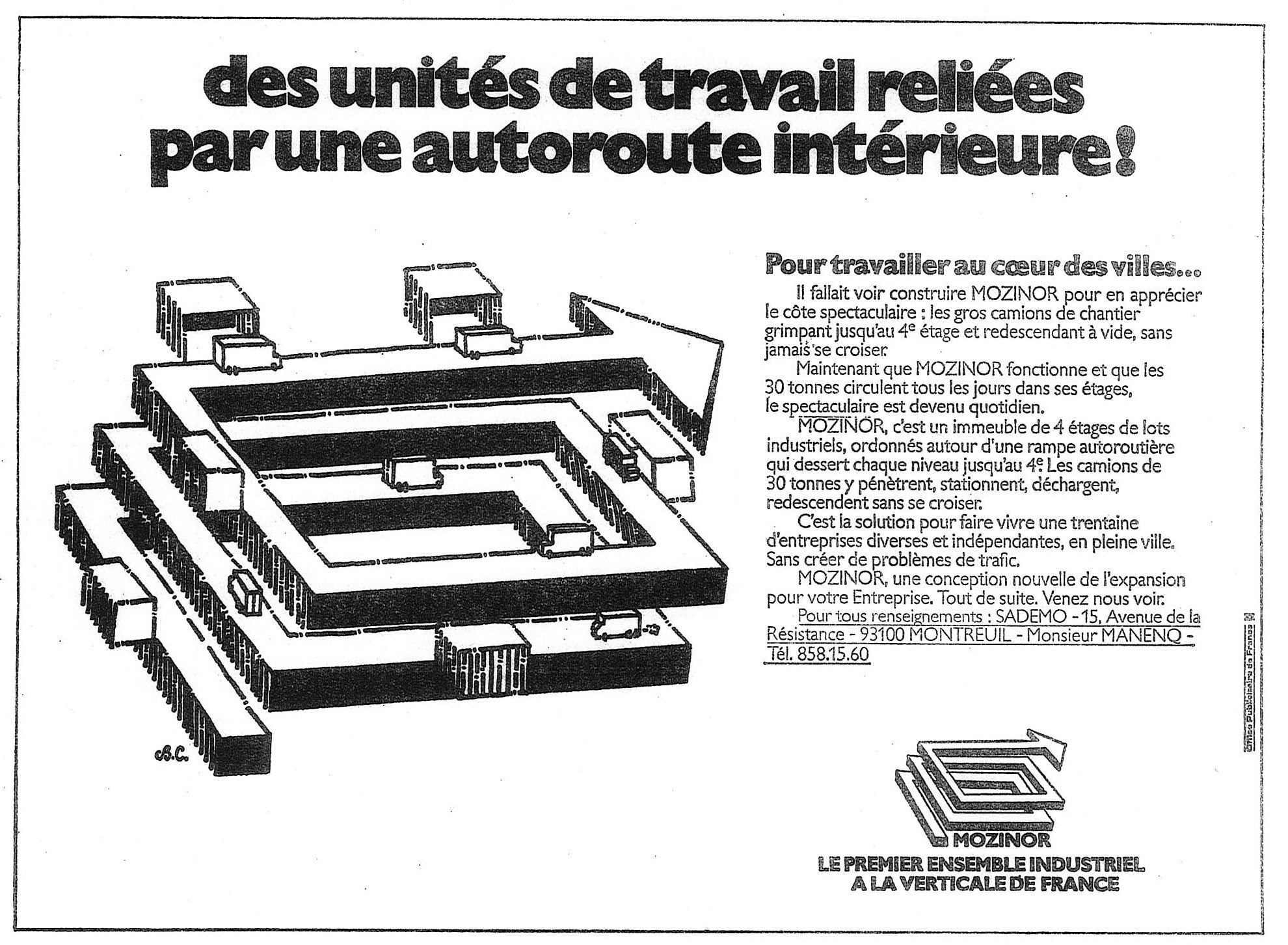
The building originally housed printing presses, a ‘baby-foot’ (Table Football) company, and other small manufacturing operations. In the early 1990s, MOZINOR hosted France’s first techno and house music parties. Because MOZINOR’s planning coincided with the 1970s oil crisis, only the first of three planned phases was built, comprising what exists today. Half a century later, the complex is still occupied by set-builders, breweries and canneries, sculptors, model-makers, and almost fifty other small enterprises.
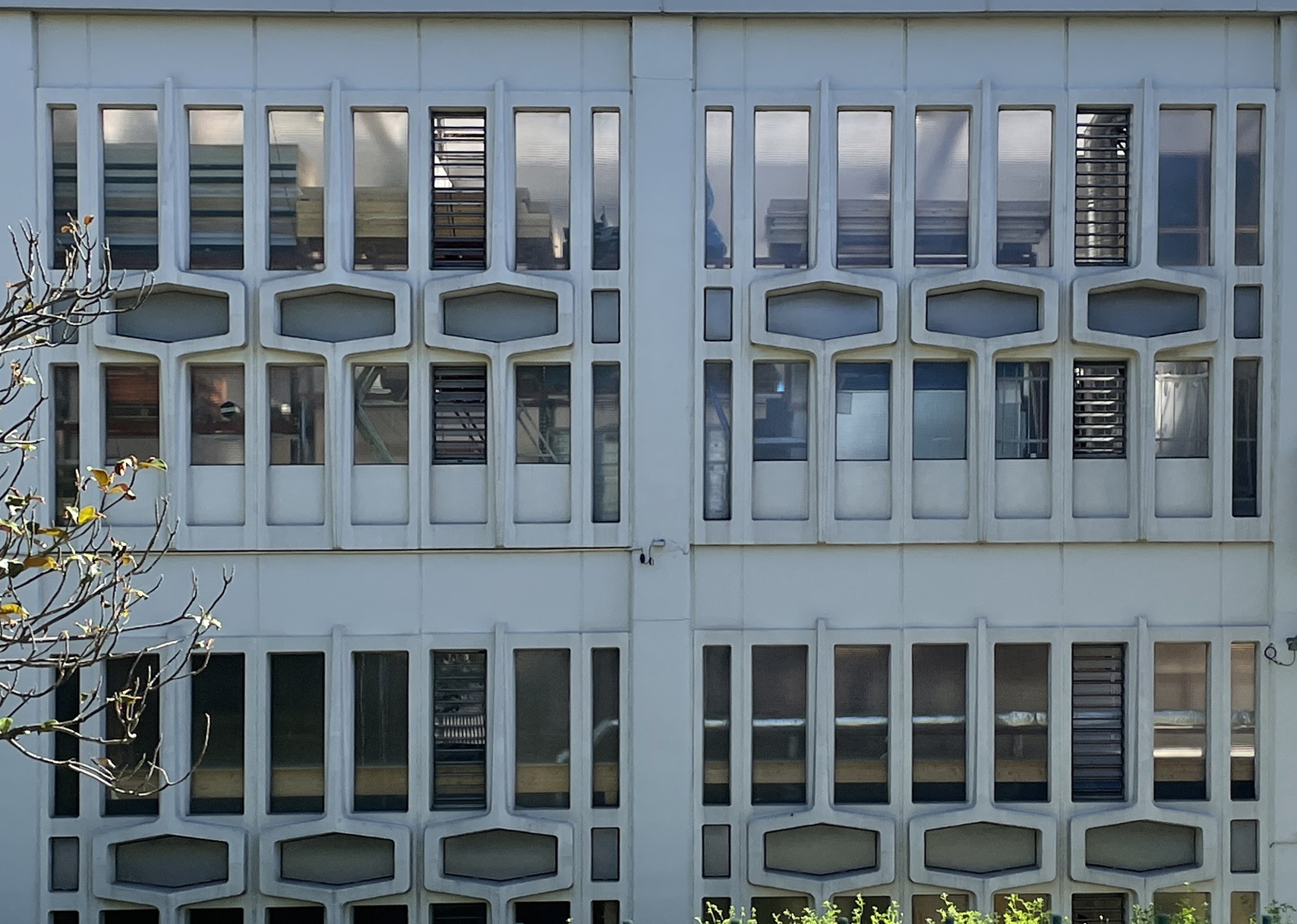
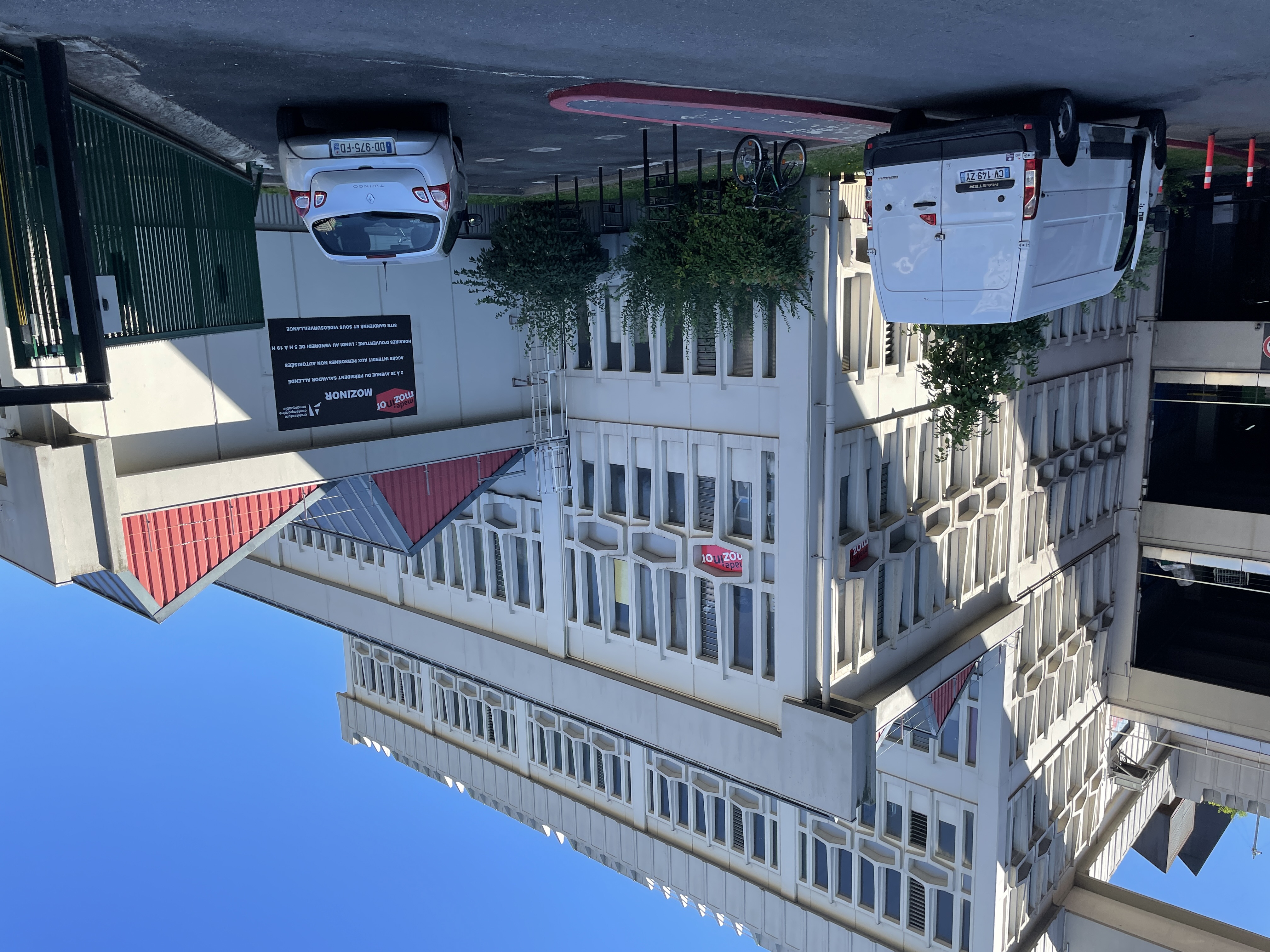
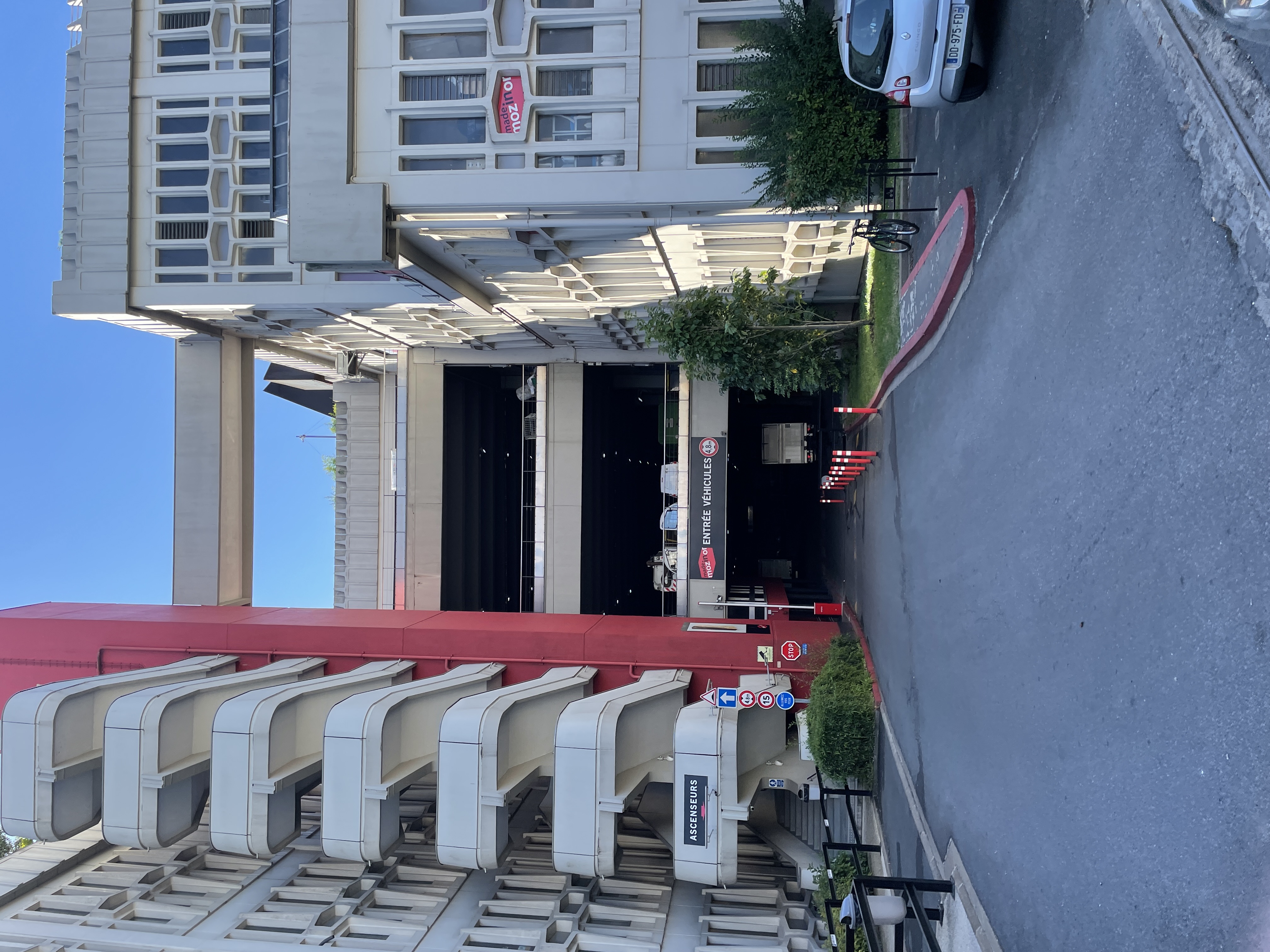
The complex has been designated an ‘architecture contemporaine rémarquable’ for its late-Modern/Brutalist form, its rooftop garden, and its vertical organization. MOZINOR was also exhibited at the 2012 Venice Biennale in a show, curated by OMA, featuring prominent public works. This exposure attracted renewed attention to this future landmark. As an icon of the late Modern period, MOZINOR’s flexibility in its design has ensured its survival as much as its heroic concrete hilltop presence.
In the twenty-first century, the concentration of manufacturing has now shifted to globally scattered regions. In France, many redundant factory buildings have been demolished. Some have become museums to the industries they accommodated, while others have been reused in multiple ways. Following are three examples where redeveloped industrial sites have taken on new life in their communities. These significant buildings continue to serve as local landmarks with reimagined interior uses.
La Condition Publique, Roubaix (1901/2004)
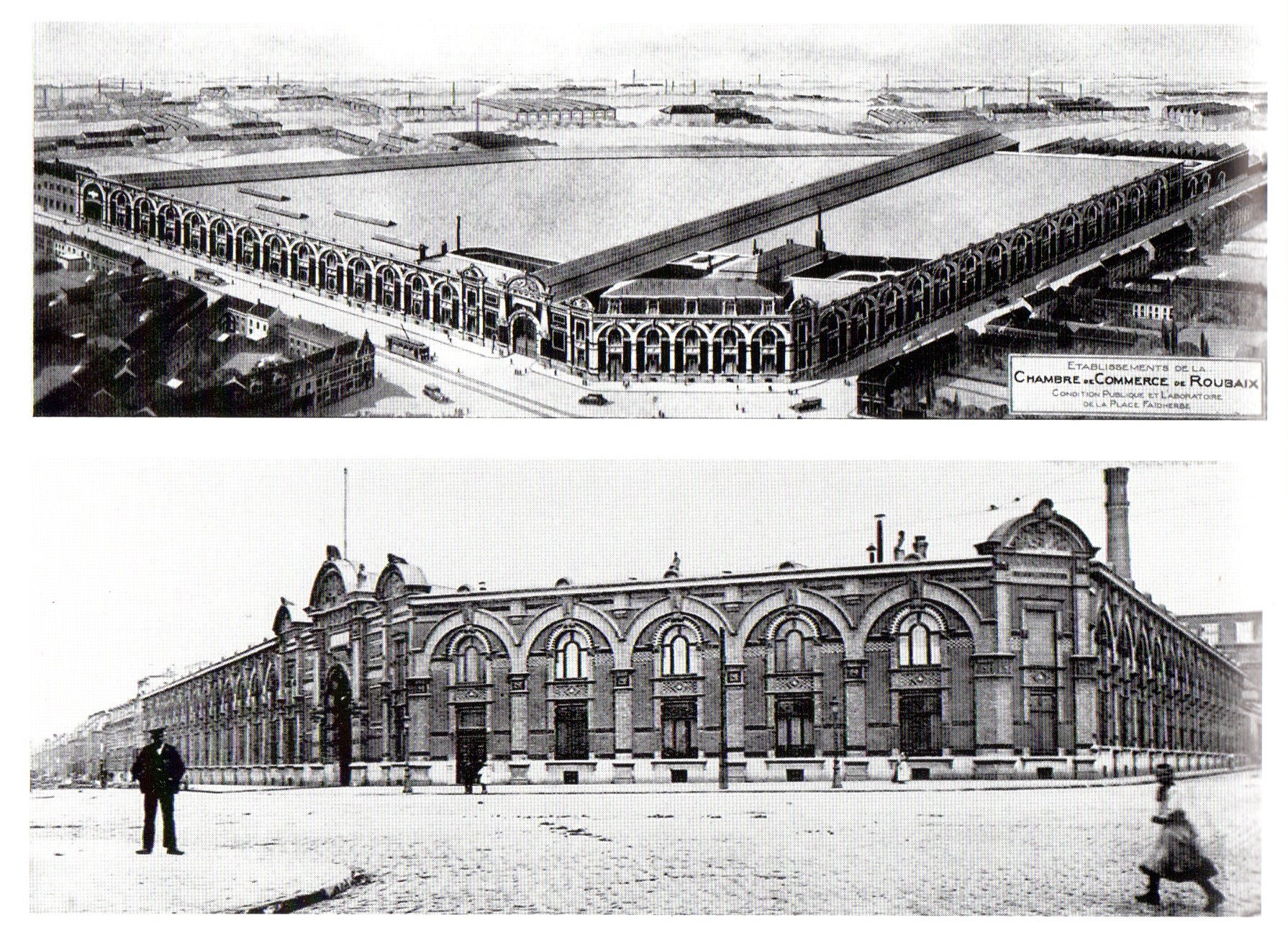
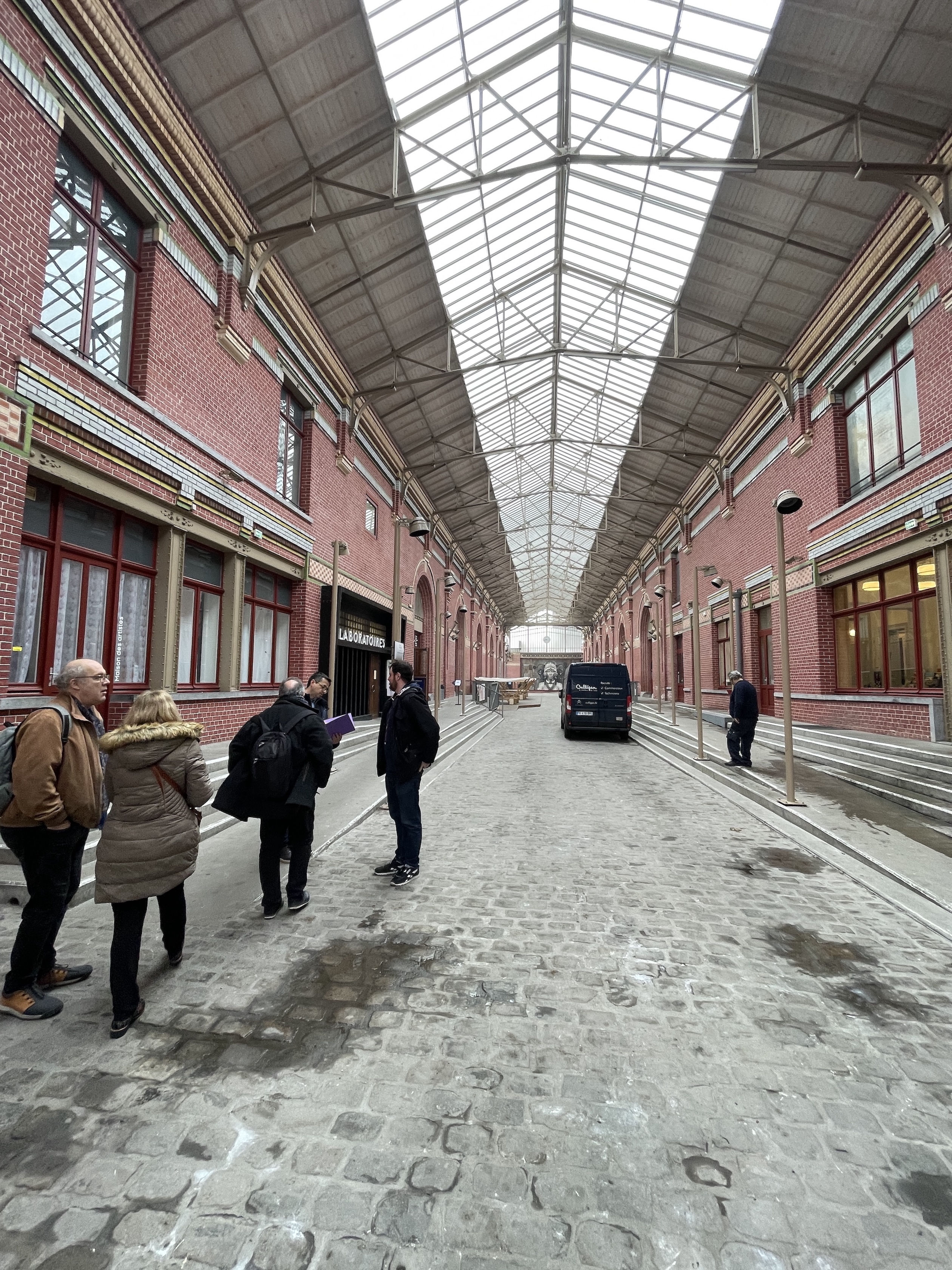
Originally built starting in 1901 and designed by Albert Bouvy, La Condition Publique in Roubaix was a public authority where raw wool was brought in and sorted, weighed, taxed, stored, packaged, and distributed to textile mills. A unique interior covered street connects two former massive warehouses (Figures 30, 33, and 34).
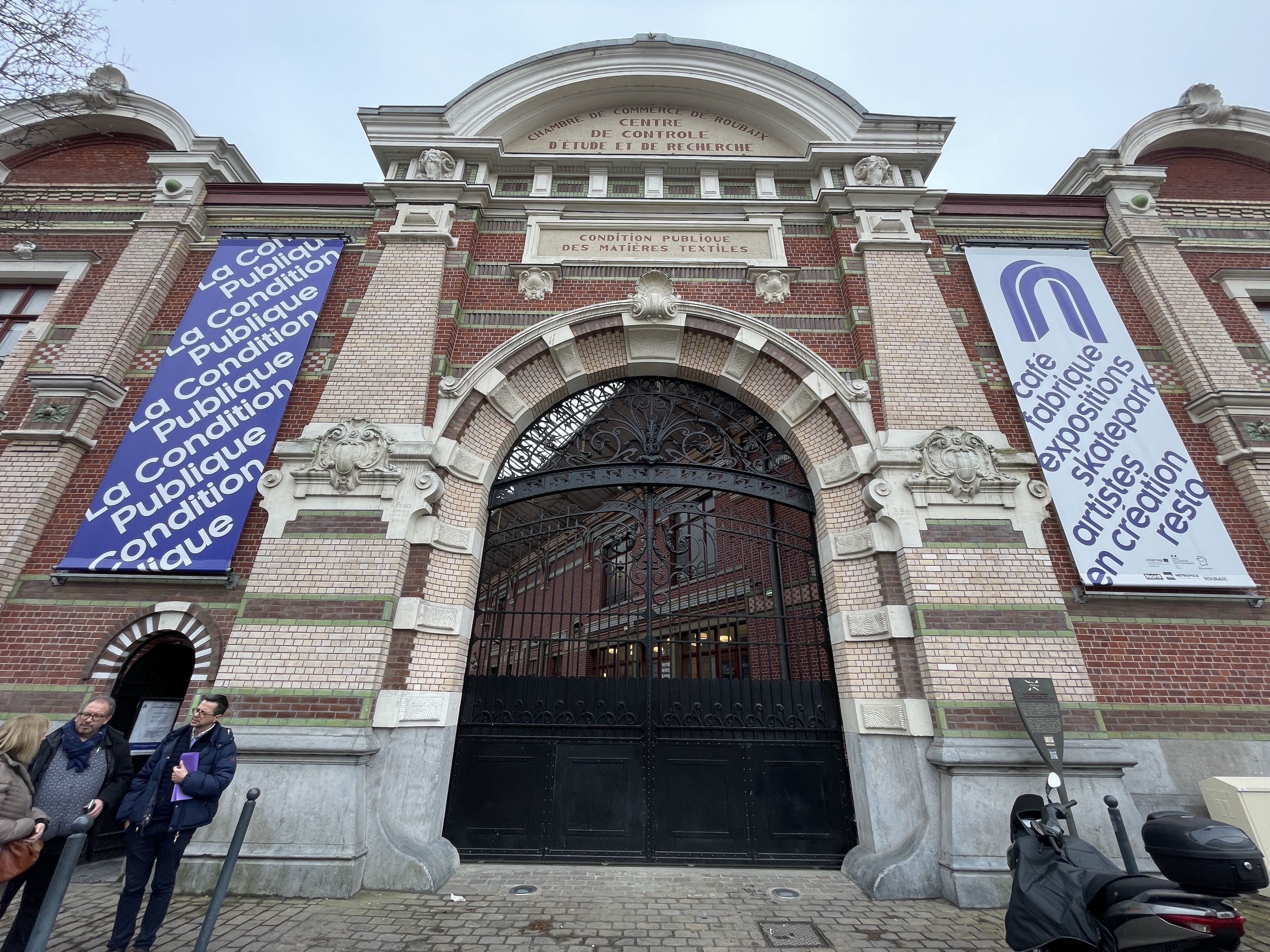
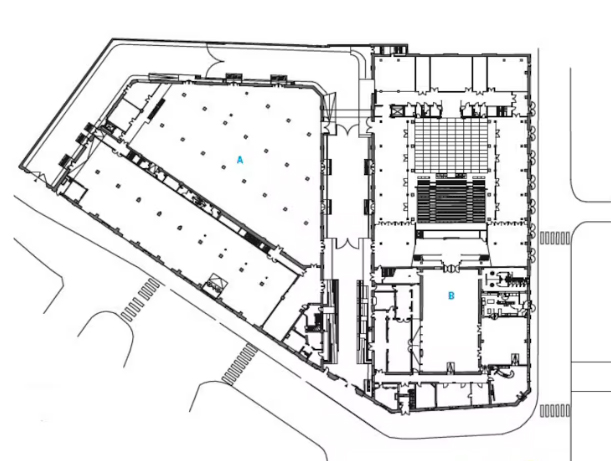
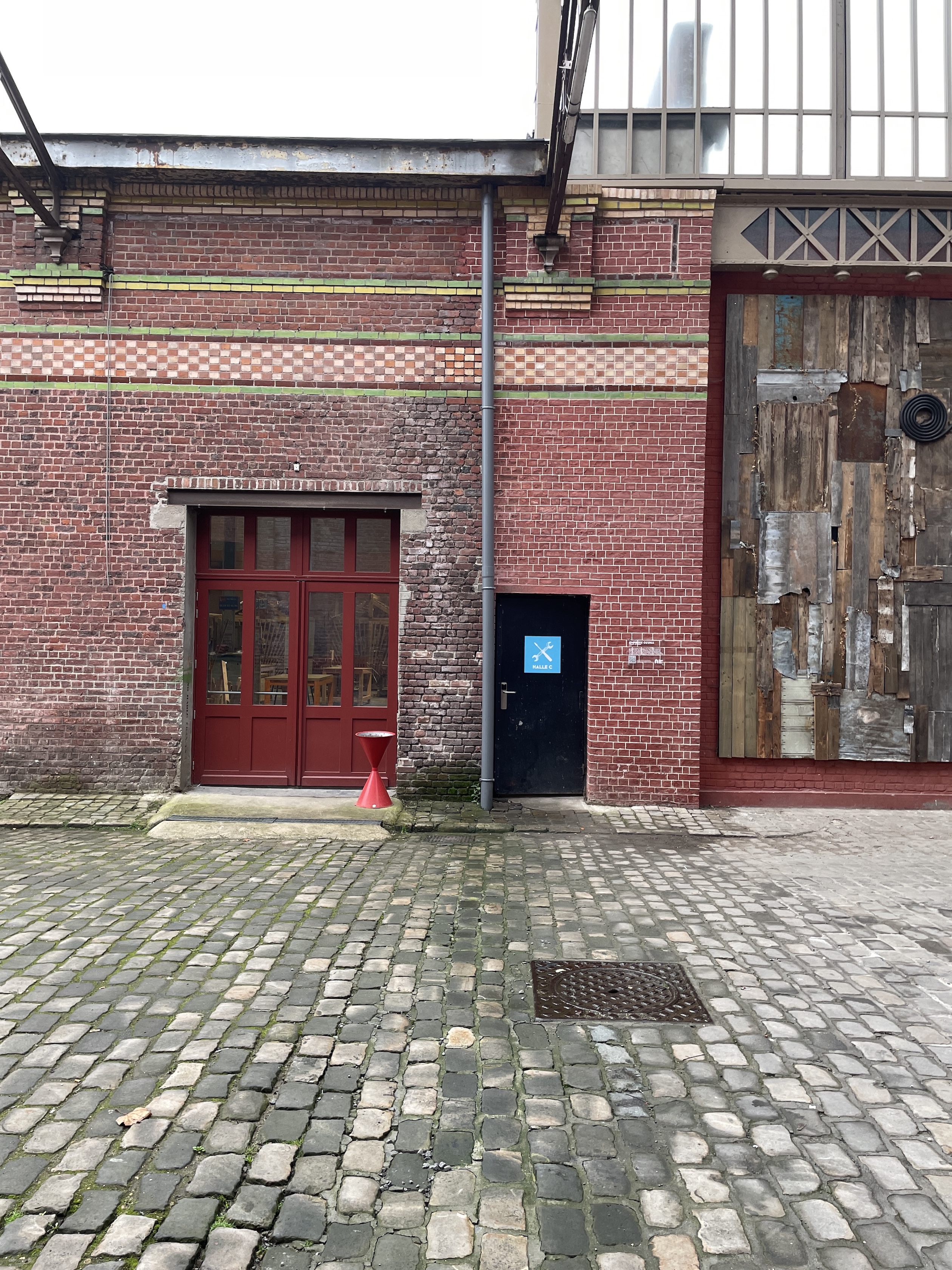
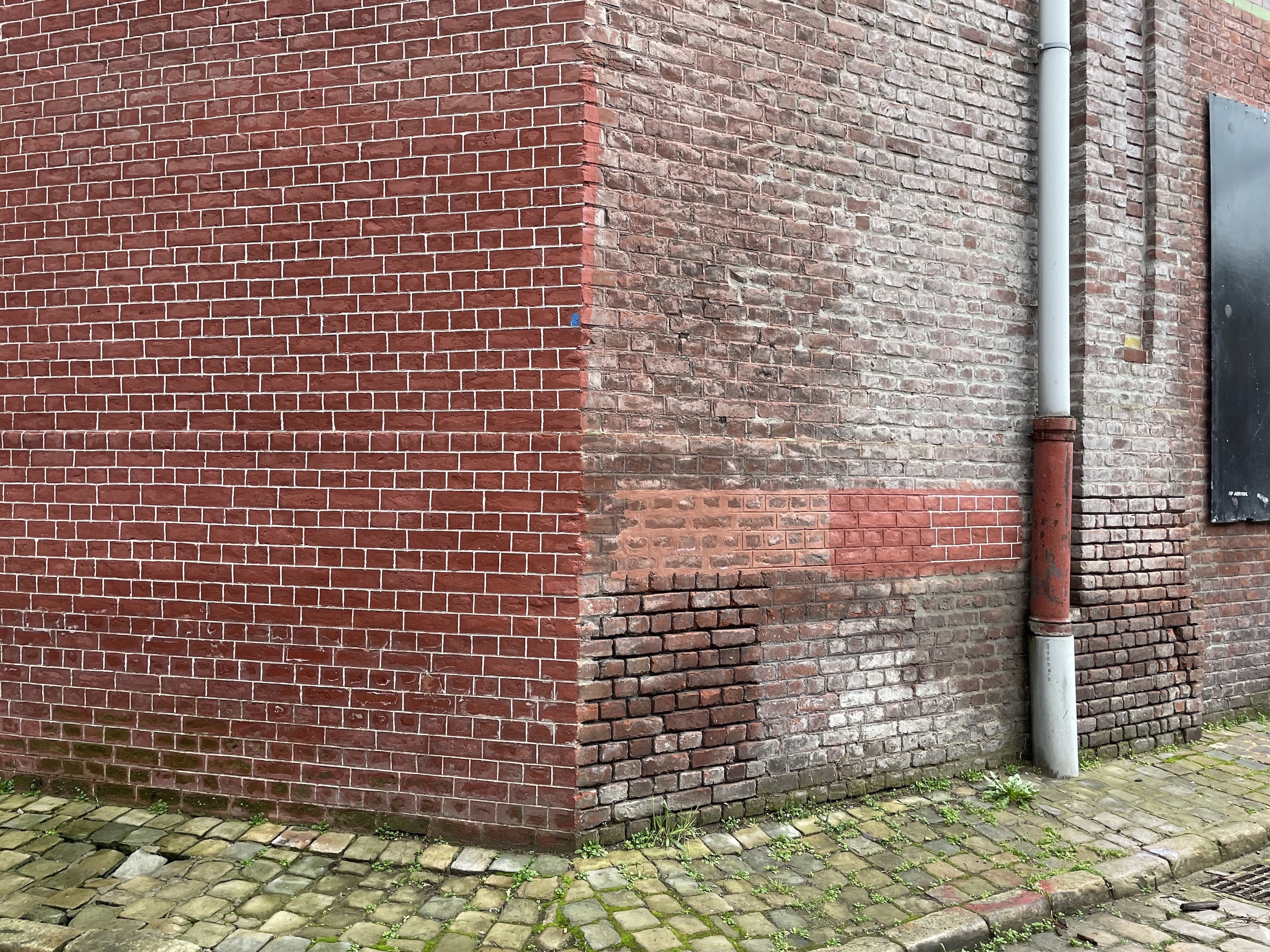
In 2004, Patrick Bouchain’s office oversaw the renovation of this packaging facility into a youth-oriented art and culture center. At over 10,000 square metres, La Condition Publique includes a theatre; performance and exhibition spaces; community woodshops; an indoor skate park; fabrication laboratory with laser cutters and 3D printers; and a bar and café. In an interesting approach to landmarking the site, the Beaux Arts Classical facade and steel and glass indoor covered street are under protection as a Monument Historique, but the rest of the building is not. This results in a moment of spatial and material tension in which the restoration work abruptly stops as one turns the corner at the end of the indoor street (Figures 35 and 36).
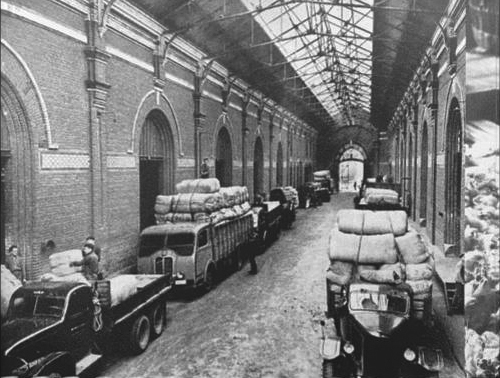
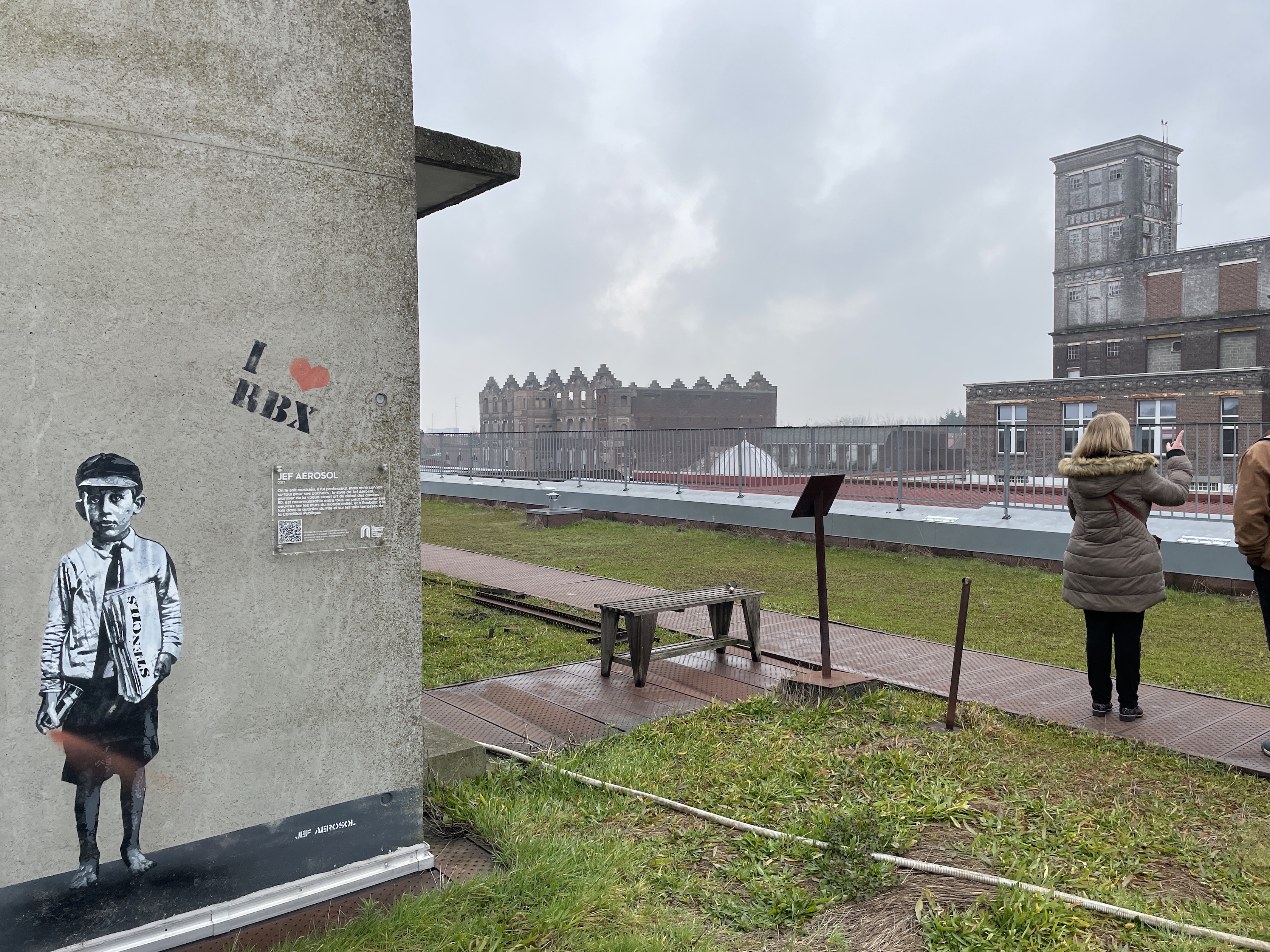
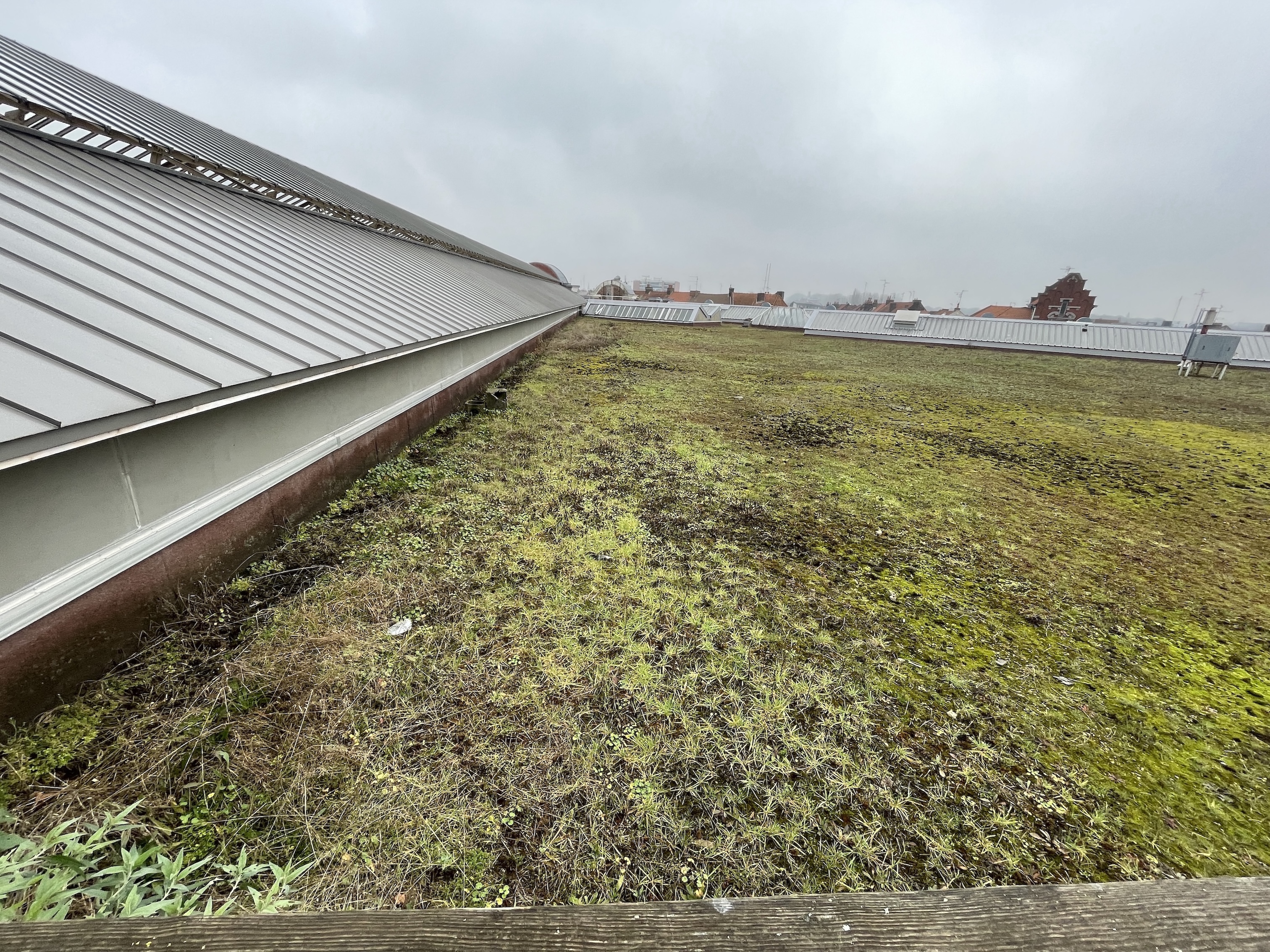
This landmarking makes preservation incentives available to restore and maintain the building’s significant historic elements. It also enables stories to be uncovered as the work progresses. The largest warehouse volume at La Condition Publique was designed in 1901 with a vegetated rooftop garden. This served as insulation and humidification for the baled wool below, a functional choice that would regain currency both as one of Le Corbusier’s five points of architecture, and later with the re-emergence of environmentally sensitive practices in the late twentieth century. The roof garden here was not replanted or redesigned during Bouchain’s team’s renovations. During the course of work, a horticultural survey was commissioned for the roof which uncovered a remarkable history worthy of preservation. The three hundred species of volunteer plants included local specimens, but also plants originating from New Zealand, Australia, and Eastern Europe. Seeds carried within the bales of wool and the immigrant workers’ clothes took root at the site (Figures 37 and 38). The story of life on the roof mirrors the creative and globally diverse Roubaix youth who now use the space below.
Patrick Bouchain’s unique approach to design, programming, and social commitment has led him to work outside of the normal architectural contract model and, to that end, he founded an independent development company to be able to identify, define, finance, and realise these projects. Calling them Bouchain’s projects is perhaps misleading, because his approach to design is inclusive, using a phased approach to seek ideas, define programs and shape projects from within the communities that the site will serve. alled ‘participatory design’ within project frameworks, this is what Bouchain labels le pouvoir de faire. Bouchain’s team acts as a convener and navigator to help convert squats, factories, and mill housing into community assets. This work is almost always in collaboration with artists, performers, labourers, tradespeople, and other creators not normally commissioned for this type of work, and who may not be familiar with regulatory and design protocols (Bouchain and Chaise, 2009). In this kind of regenerative work, Bouchain and others are, through adaptive reuse and preservation of industrial heritage, fulfilling again the Modernist directive to restore the ‘soul-giving nature’ (Gropius, in Conrads, 1987, p. 46) that architecture can enable.
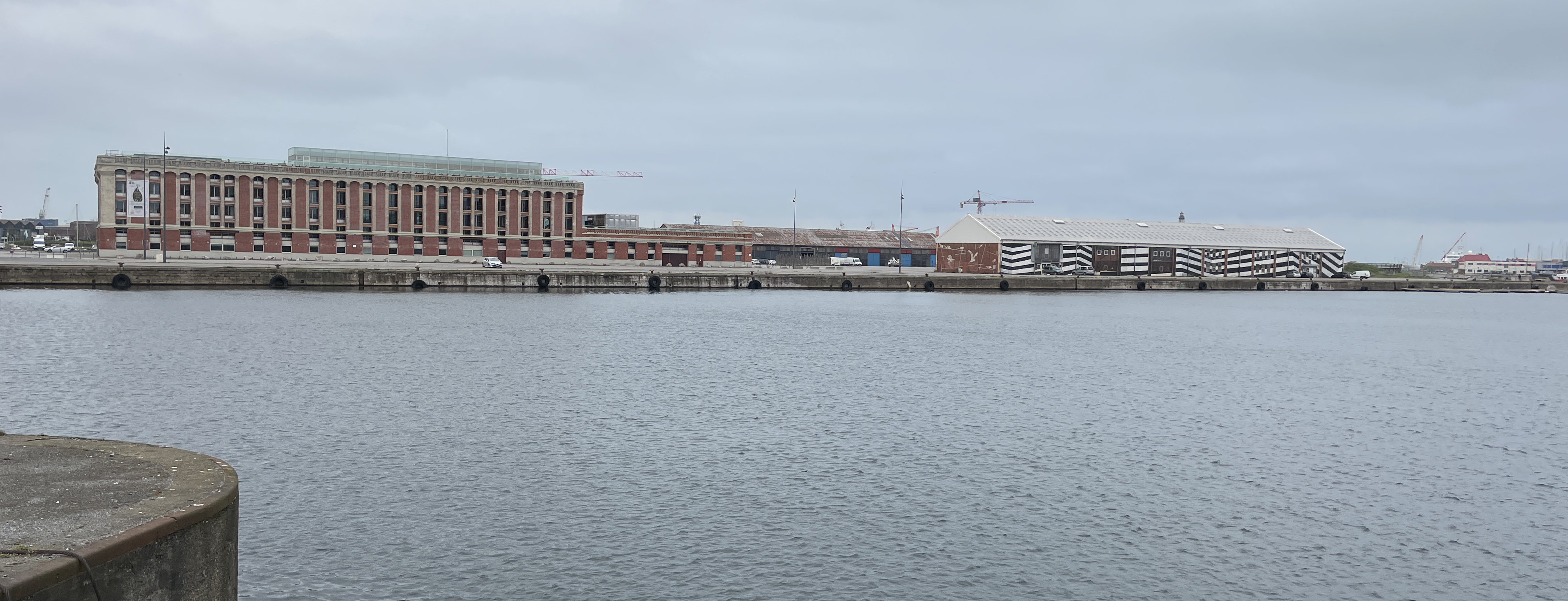
Hall Aux Sucres, Dunkerque (1898/2011, Figures 39-43)
Pierre-Louis Faloci’s renovations to the Halle aux Sucres, in Dunkerque, is a bold intervention into an 1898 sugar depot which was heavily damaged during the World Wars. In 2011, Faloci resuscitated the significant yet utilitarian waterfront facility by introducing a new program: daylight, offices and community spaces now inhabit the shell of the former storage building (Figure 39). Poetically referencing the damage of the site, Faloci simultaneously stabilised the masonry shell whilst carving a new (subtractive) gesture through the building. A “slice” opens directly along one of the depot’s bays, creating a narrative entry sequence along a ramp that ascends through the length of the building and leads out to views of the harbour (Figures 41, 42, and 43). On the outer walls, the syncopation of layered window bays lets the original building’s regularity hold its exterior shell composition, while the new building envelope behind it serves its own needs (Figure 40). The newly-opened interior is expressed with a minimalist structurally-glazed curtain wall (Figure 43).
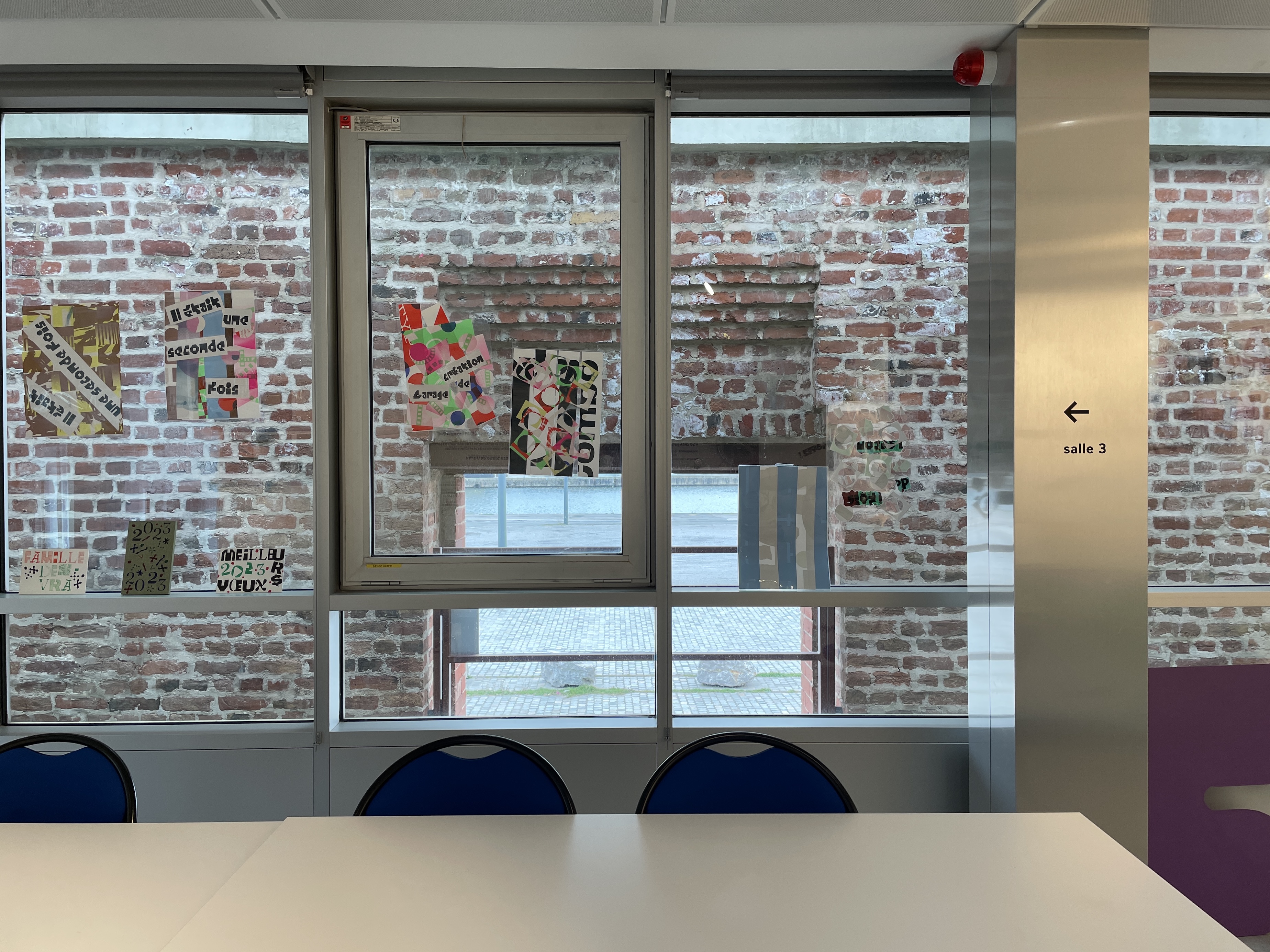
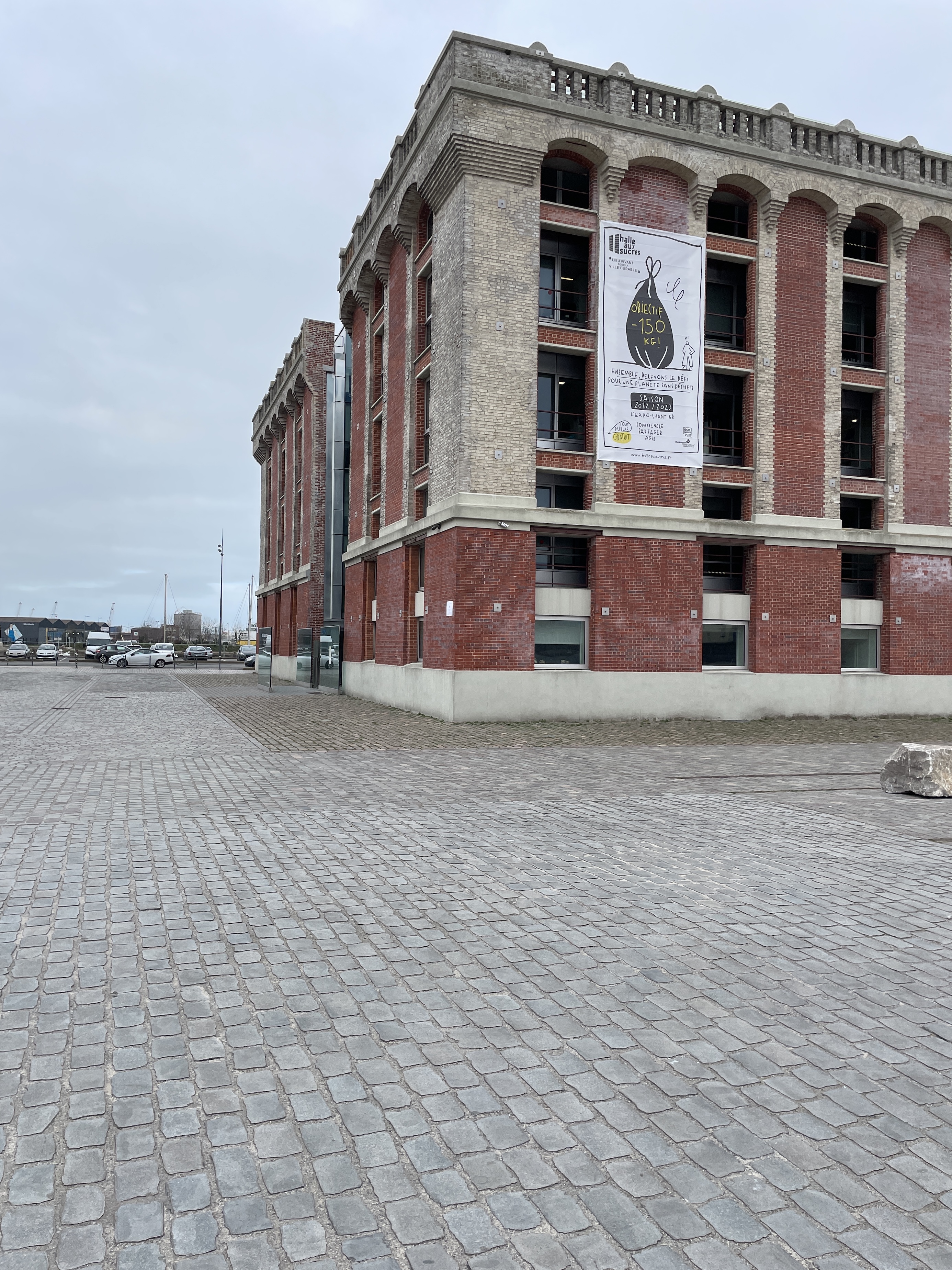
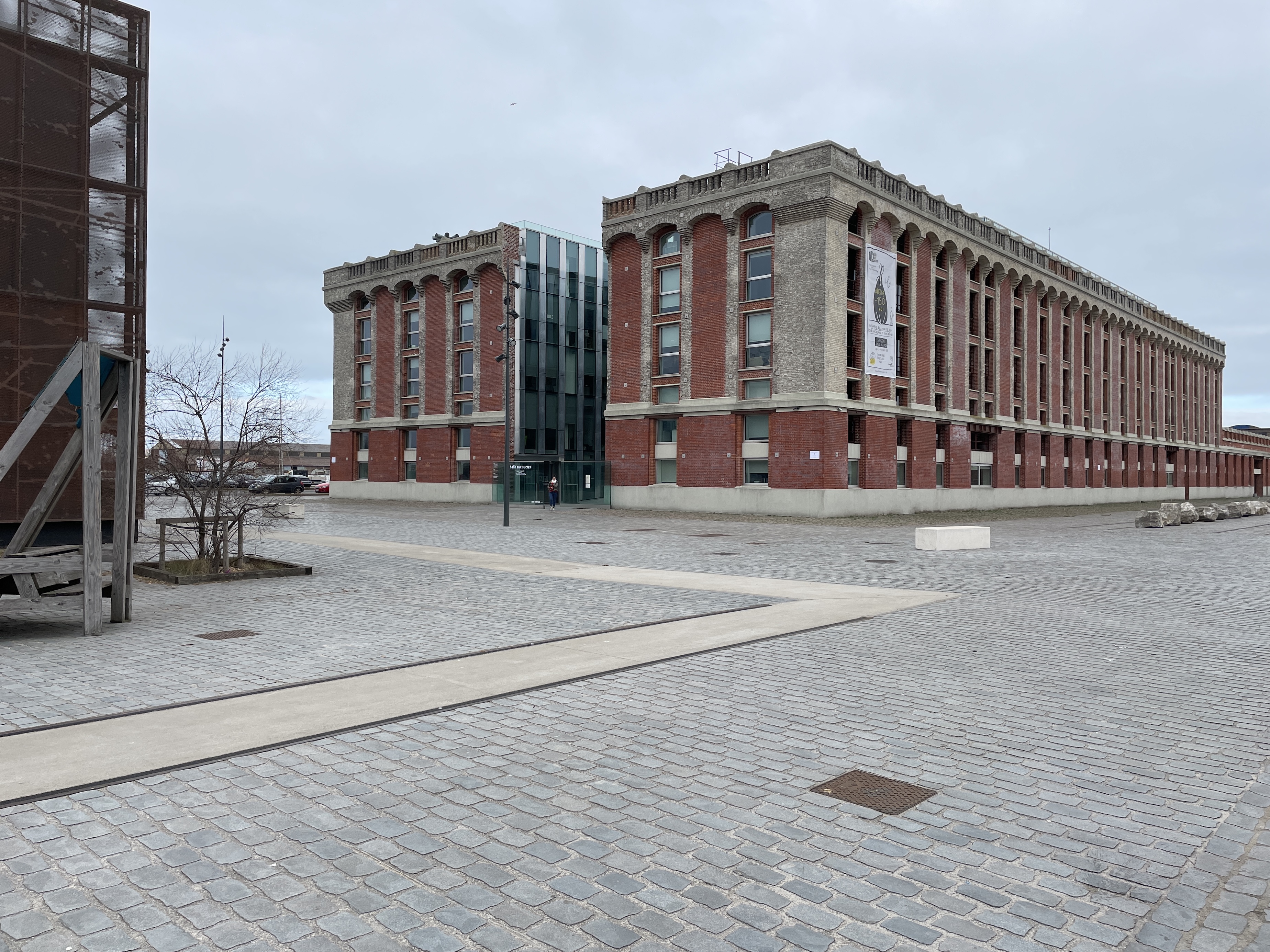
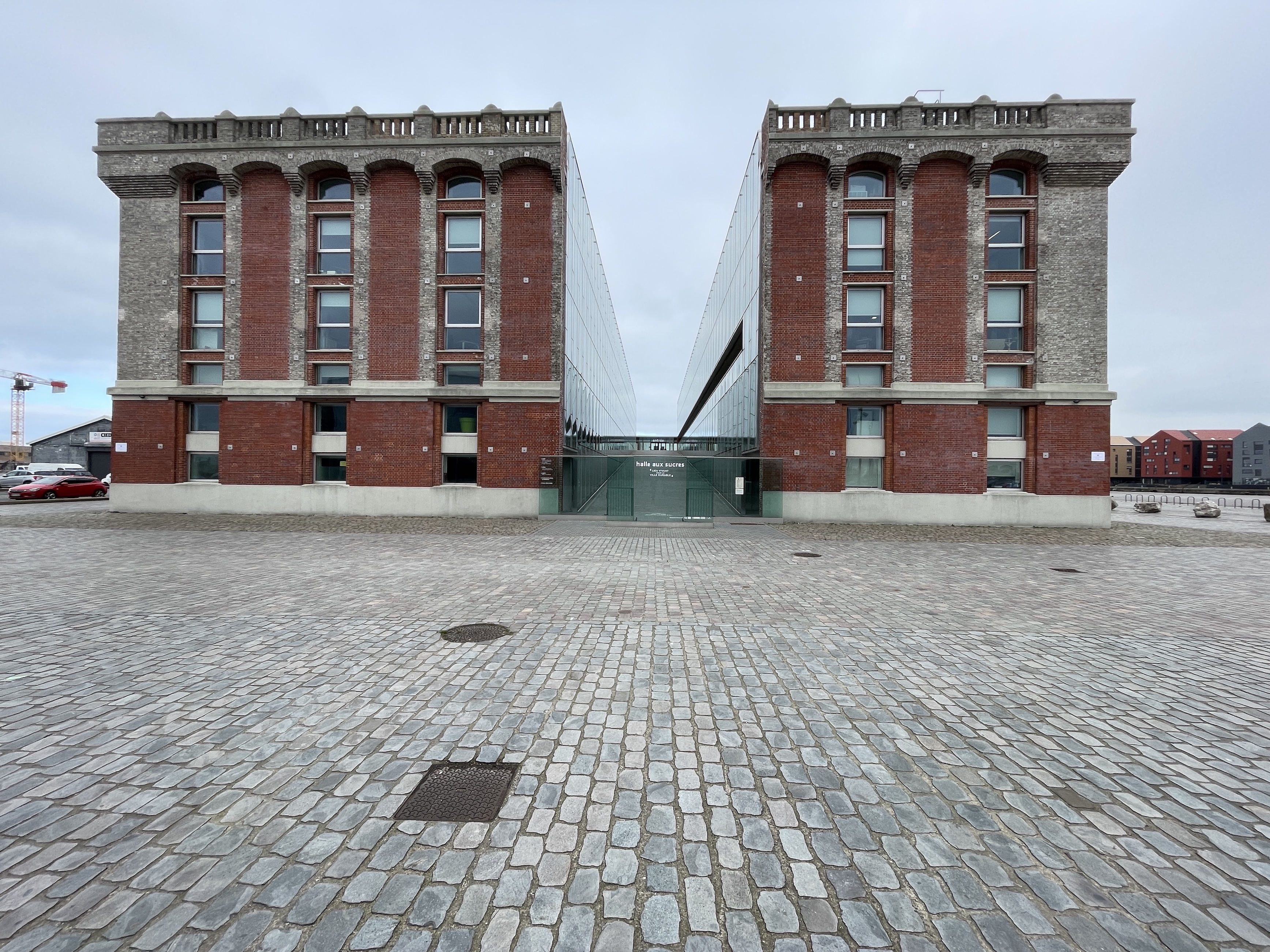
Halle aux Sucres is a case of the retention of historic fabric, the adaptation of a difficult warehouse typology into a new use, and a bold intervention that speaks to the war damage inflicted upon the building.
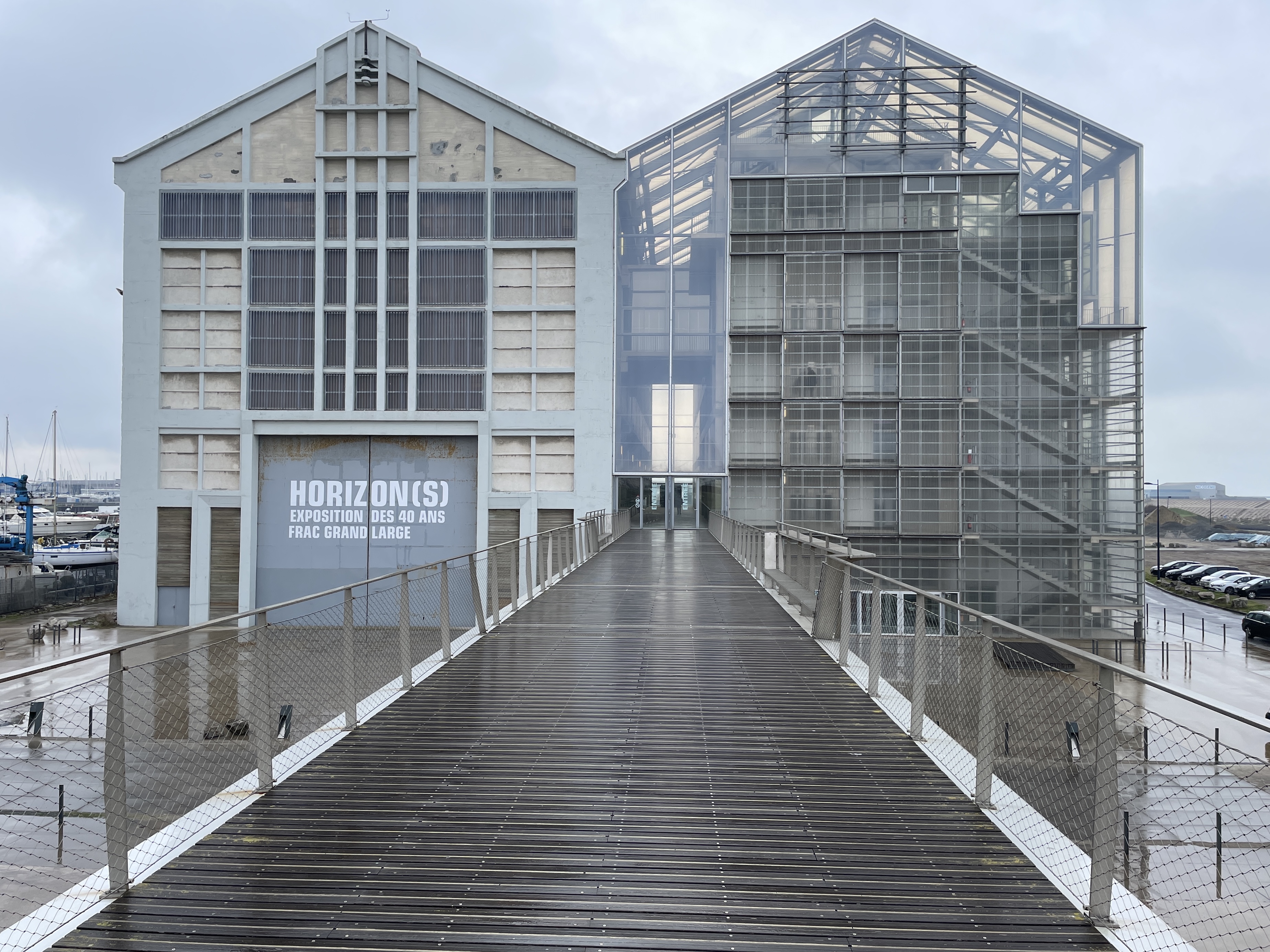
FRAC Grand- Large, Dunkerque (1947-49/2013)
Just across the port channel from the Halle aux Sucres in Dunkerque, another waterfront facility was treated in a very different manner. Lacaton and Vassal reconfigured a post-World War Two concrete shipbuilding hangar into a branch of France’s regional contemporary art exhibition galleries (FRAC). Their interventions left the 1940s hangar fundamentally untouched, but they attached a “twin” next to it (Figure 44). The new building duplicates the volume of the original concrete hangar but counterbalances its massive frame with a lightweight, diaphanous envelope. The climate-controlled addition now houses the principal gallery spaces. The original hangar is left as a giant exhibition volume, a space to contemplate the sublime scale of its former industry, as well as a new platform for inspiration (Figure 45). FRAC Grand-Large is an example of allowing the original shipbuilding hangar to remain an intact industrial monument (the gantry crane is still operational), while simultaneously refreshing its program and modernising its use.
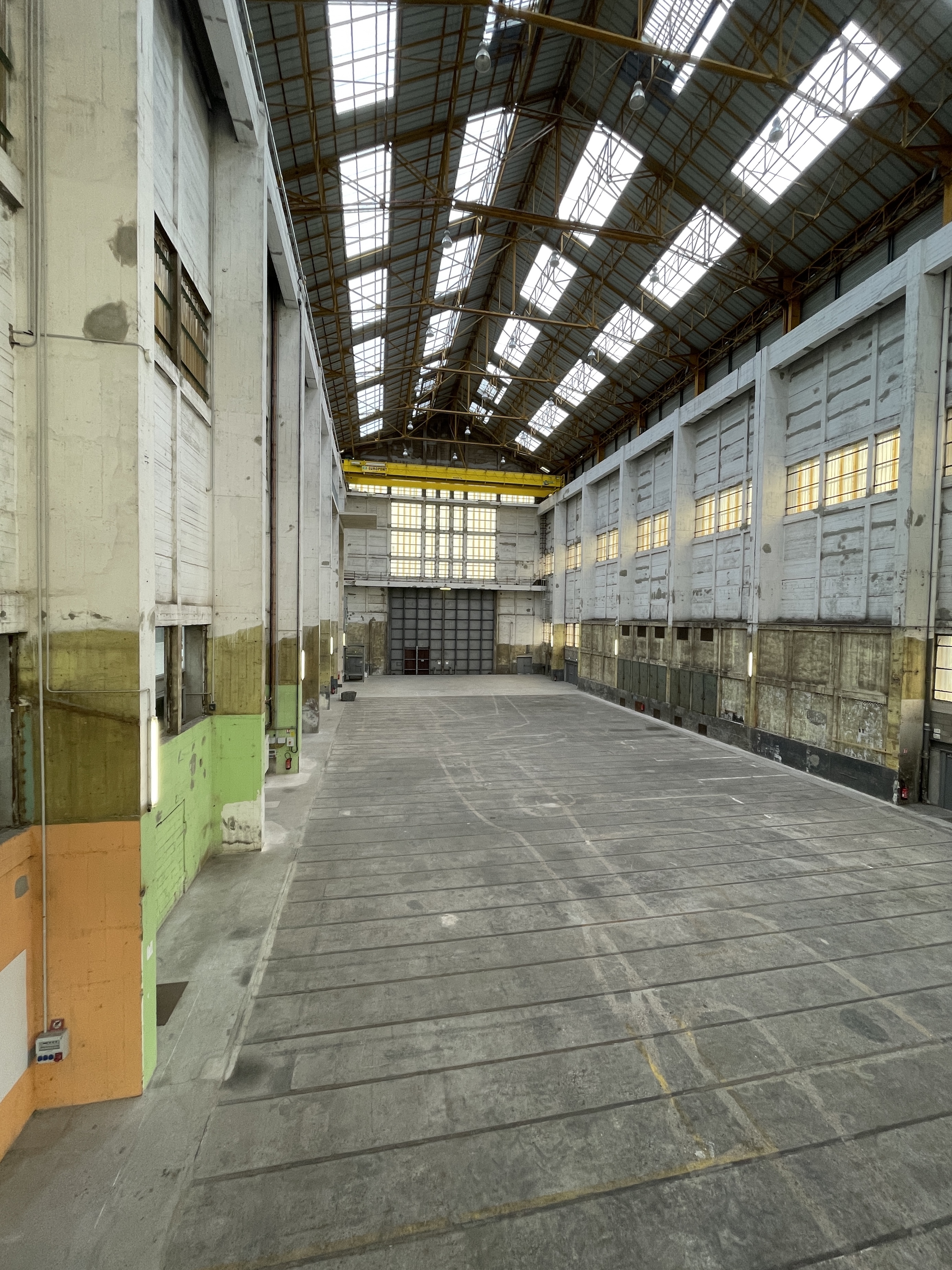
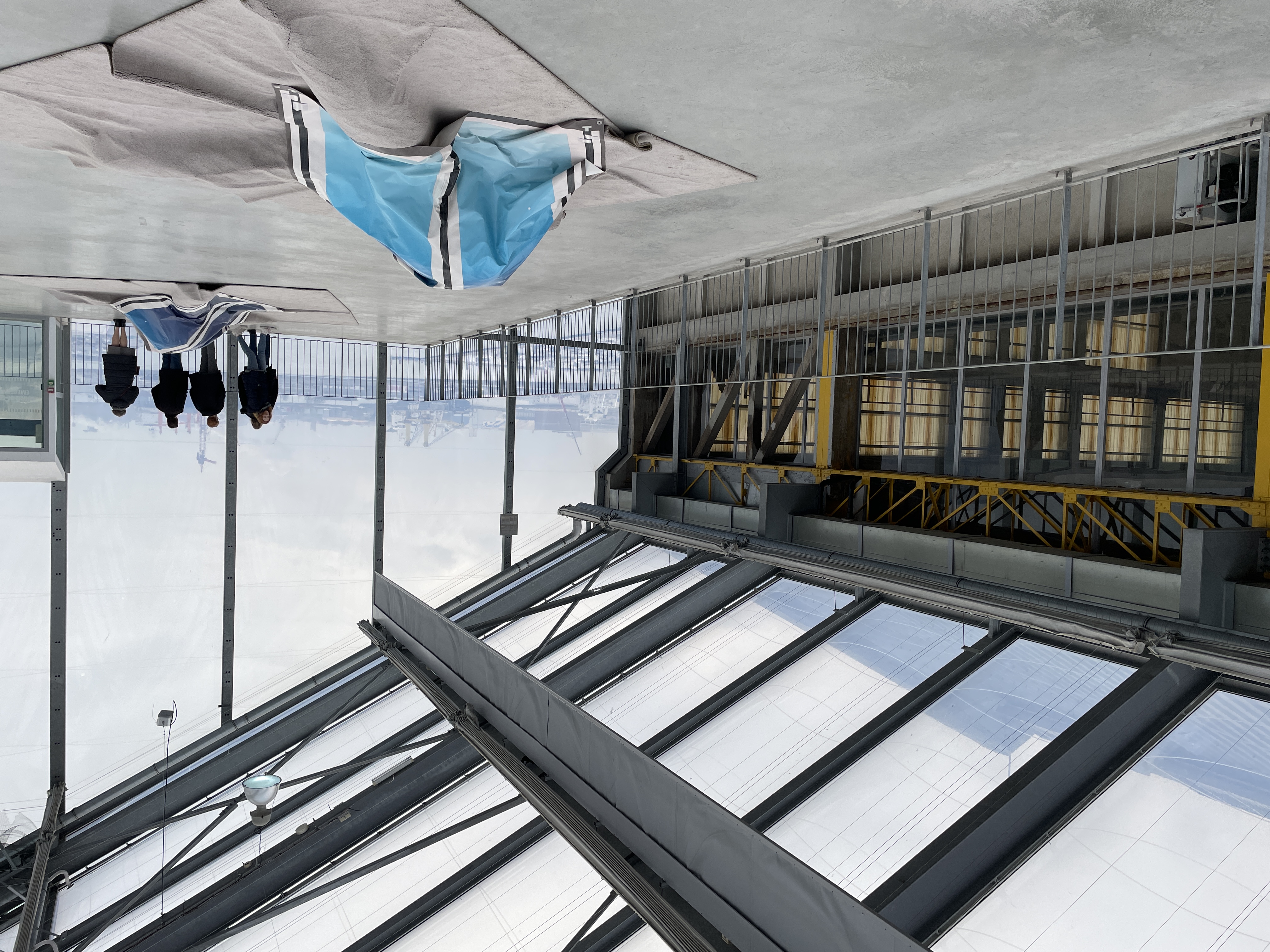
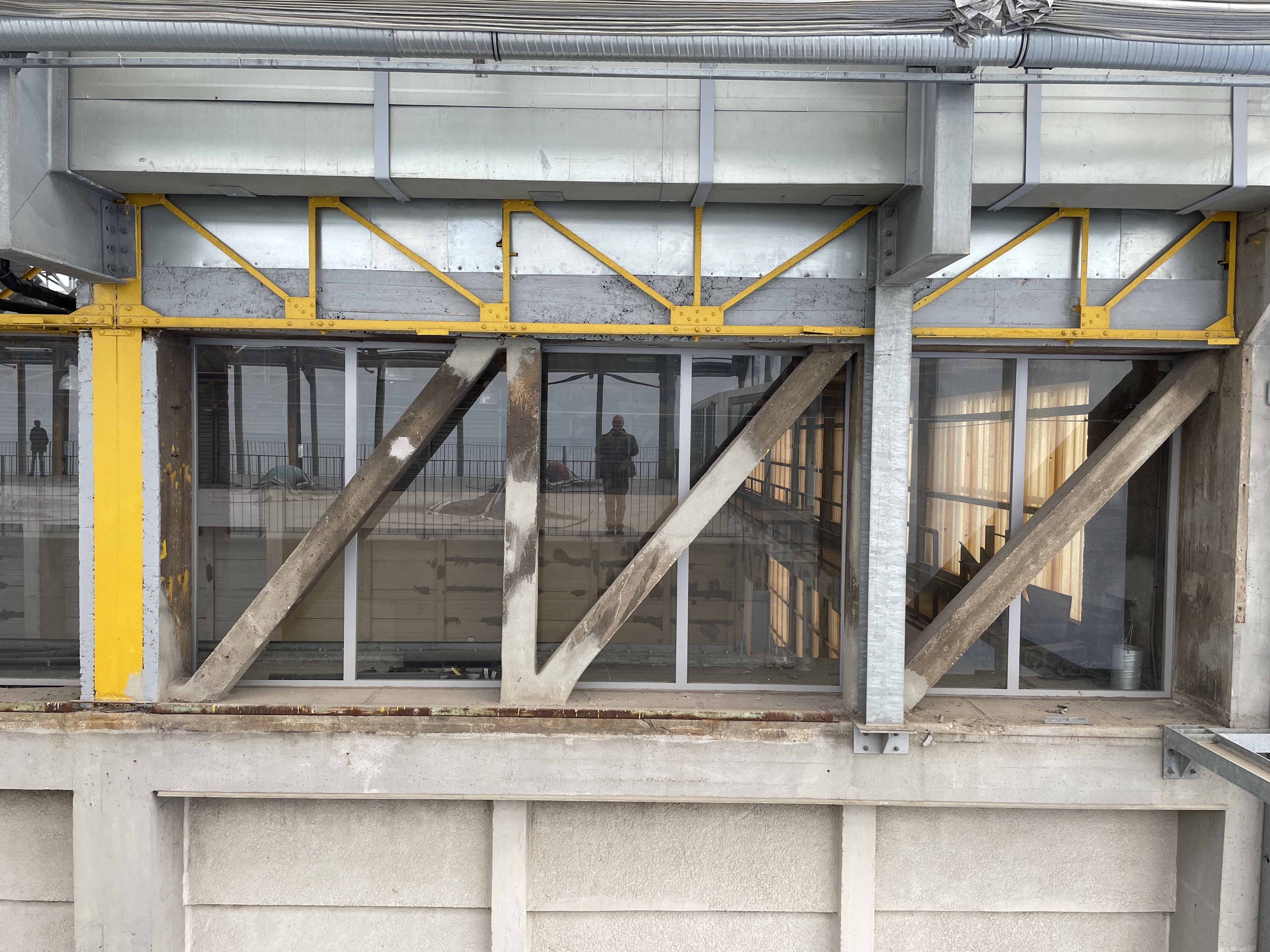
Besides the stylistic rejection of the neoclassicism of the nineteenth century, perhaps the most significant divergence of the Modernist ethos from its manufacturing antecedents was in its social mission. While Modernist practitioners took inspiration from the technical and architectural innovations enabled by the industrial era, their work expanded into housing in particular and at least proposed to address the physical and social crises that the First World War had created.
By contrast, the shift over the course of the nineteenth century from agricultural to industrial economies — notably, in the United Kingdom, Germany, France, and the United States — transformed both the architectural and the labour landscape, often to the detriment of public health. Until the rise of labour-rights movements in the early twentieth century, factory conditions were often abysmal, and factory designs were driven more by the requirements of machines than workers. Inhumane working conditions and toxic emissions into the environment have never entirely gone away, but we can perhaps thank the earliest Modern declarations for insisting on a human-centred approach to interior environments, in which ‘mechanization can have only one object: to abolish the individual’s physical toil of providing himself with the necessities of existence in order that hand and brain may be set free for some higher order of activity’ (Gropius, 1936, p.25).
Later, the Modern language of form expanded into other typologies and became synonymous with post-Second World War commercial and corporate development. In a twist, this transfer of Modern architectural expression from the social to the capital realm was driven — especially in the United States — by many of the same architects (Gropius, Mies van der Rohe, Neutra, Breuer, Saarinen, etc.) whose work on the European social project was disrupted by the Second World War. To the contemporary critical eye, Modern corporate office architecture led to many of the dilemmas facing heritage Modernist architecture now: inoperable windows, poorly insulated glazing, high demand for cooling and deep floor plates impenetrable to sunlight are difficult candidates for adaptive reuse. Conversely, the best pre-Modern industrial manufacturing facilities — although often needing significant remediation of contaminants — were designed with daylight and fresh air in mind, particularly in the pre-electrification era. That this architecture be repurposed is economically, environmentally, historically, and humanistically sensible.
All of the examples presented here continue to serve both as markers of their histories and as useful facilities. These were iconic presences in their cities, and their distinctive exterior forms are local landmarks that embody the heritage of the original industries. Crucially, all are still extant, and some still serve in their original capacity. The factories that have been adapted for new use are generally absent their machines, however. Although the architectural forms were generally developed around the mechanical technologies that they were housing, the legacy of the industrial era that Modernism helped keep alive must now be repurposed for our century's requirements. Bringing these less-considered French buildings into new historical consideration through the lens of Modernist principles can hopefully spark a dialogue about the strengths and liabilities of the Modern project, and their expressions through built heritage.
Jonathan F. Bell examines the continuities between pre-Modern industrial architecture, Modern contributions to industrial typologies, and current adaptations of these buildings in a postindustrial landscape.
Read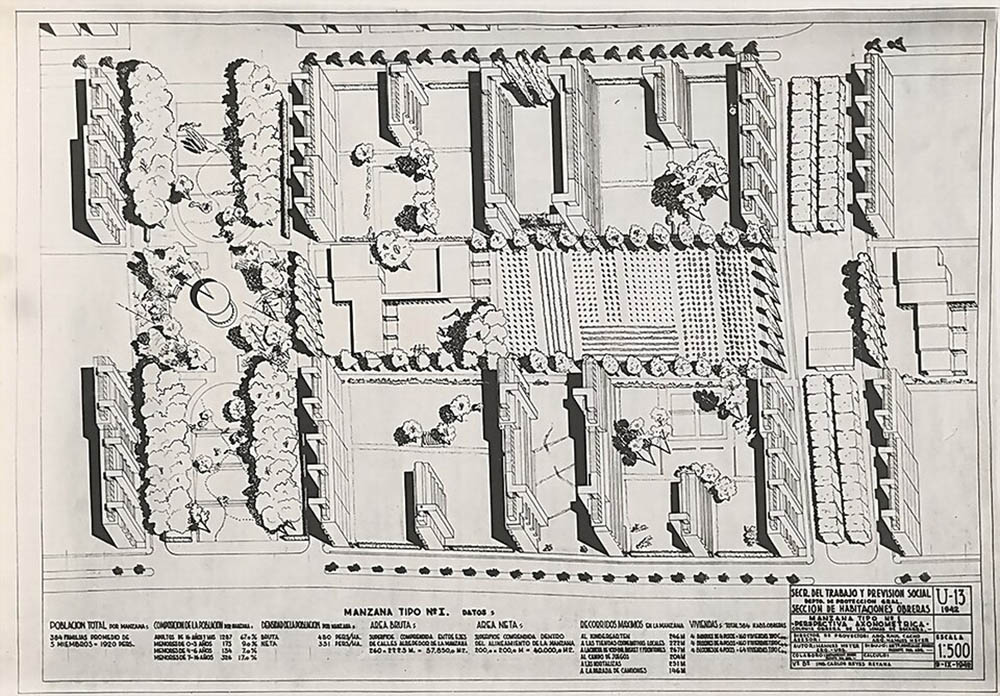
A Radical Functionalism
In 1967, Die Zeit published a review of a new book on the Swiss architect with the title ‘Who is afraid of Hannes Meyer?’ (24 February, 1967). At the time, Meyer was as obscure in West Germany as his surname was common. Those who did recognise him likely were afraid; they saw him primarily as the ‘red’, politicised architect– the former Bauhaus director turned defender of Stalinist Russia. In the heat of the Cold War, these associations were enough to justify either fear or total historical erasure.
The book reviewed by the German weekly was by another Swiss architect, Claude Schnaidt, who was the first to document Meyer’s expansive output in architecture and design, alongside his seminal texts. It brought to light early works like the Freidorf housing colony (1919) near Basel, as well as the projects that catapulted him to avant-garde fame: the Petersschule (a competition entry for a school in his native Basel) and the Palace of the League of Nations in Geneva (both in 1926). Schnaidt also presented two built works: workers’ housing buildings in Dessau (1930) and the Trade Union School in Bernau (1930), two projects Meyer undertook while directing the Bauhaus, and which today, fully restored, are UNESCO sites. Alongside these projects, during his career Meyer also published numerous manifestos and essays, which circulated widely across Europe and the Soviet Union. (Figure 1)
In this essay, I argue for Hannes Meyer’s profound legacy and relevance for architecture and design today. Meyer was deeply committed to a socially relevant architecture and design or, as he proclaimed volksbedarf statt luxusbedarf: popular needs over luxury goods. He pursued this through an approach that prioritised functional requirements over any aesthetic pretensions, a radical functionalism which resulted in architecture and design that were not only economically accessible to the masses but that also generated built environments and objects attending to all aspects of human life. In fact, the architect promoted what I term a ‘functionalism-widely-understood’, which delved into the realms of the human psyche and spoke to communal and social belonging. Nature was another key element in Meyer’s functionalist approach. Building compounds had to relate to the natural site, to highlight certain constructed elements over others or to relate users to the surroundings.
Meyer pushed methods of architecture and design to new limits. Any given project demanded a rigorous empirical assessment of its users’ needs by means of a host of scientific disciplines ranging from biology to psychology and sociology. This multi-disciplinary methodology called for a new conception of the architect as, in Meyer’s terms, ‘a specialist in organisation’. Gone was the figure of the ‘Grand Architect’ whose ambitions revolved around signing off on spectacular monumental buildings. (Figure 2)
Meyer innovated continuously in the field of communication, be it through the written word, stage and exhibition designs, or photography. Promotion and propaganda formed an integral part of a radical modernism in his practice as publicist, cultural administrator and architect. Similar to his Swiss compatriot, Le Corbusier, Meyer coined a series of slogans that are still being evoked today: ‘building = function x economy’, ‘the architect, a specialist in organisation’ or ‘popular needs over luxury goods’.
Meyer practiced and promoted his forms of radical modernism from the vantage point of multiple locations across the world – he resided in Europe, Asia and Latin America – and from a global periphery, from the Far East of the Soviet Union and from Mexico. His global trajectory reaffirmed certain features of his work, such as the need for examining these vastly different and often peripheral geographical settings by means of a rigorous empiricism. His peripateticism also led him to become one of the first practitioners and spokespersons of what later became known as regionalism, which for Meyer – and his radical ‘functionalism-widely-understood’ – meant taking into account everything from climate, soil, and building materials to demographic and social conditions, as well as cultural practices.
Yet Meyer’s legacy received significant public exposure only some forty to fifty years after Schnaidt’s pioneering study. My own work on Meyer was motivated precisely by his long obfuscation in architectural historiography. I had been teaching the modern history of art and design, including the Bauhaus, in Mexico since 1998, and had never come across Hannes Meyer, until years later when I learned that this former director of the Bauhaus had also worked in Mexico for some ten years during the 1940s.
Reputation and Re-emergence
Then in 2018, a group of some ten German students of design along with the artist Knut Klaßen appeared at my door step. Sitting in my living room and having coffee, they passed around my copy of Schnaidt’s book, which had gone out of print, as if it were the Bible. The purpose of their visit to Mexico, they told me, was to find material for a project they were undertaking back home: the erection of a ‘Meyer-Pavilion’ in the centre of Weimar, as part of the commemoration of the opening of the Bauhaus in that city one hundred years earlier. Astounded by these students’ interest and knowledge of Meyer, I was thrilled to learn that this centennial pavilion was to recreate one Meyer and his wife, Lena Meyer-Bergner, had designed for Mexico City’s central square in 1943, and in which they exhibited the crimes of fascism in Europe. The designers-to-be explained to me that the pavilion was to highlight Meyer’s innovative work in the field of communication in which, in the context of the digital age, they found continuing relevance and inspiration. Within the pavilion Meyer was returning to the centre twice-fold: firstly, because he finally occupied a significant place in the historiography of the Bauhaus and, secondly, because a work he had undertaken in a global periphery, Mexico, was now being recreated in the supposed ‘centre’ of modern architecture. (Figures 3, 4, 5)
The Bauhaus Centennial featured Meyer in other ways. Exhibitions on the school, including one held in Mexico City, highlighted for the first time Meyer’s years as director. It displayed stools, desks and other furniture, whose design - unlike the iconic Breuer lounge chair or Wagenknecht lamp - was such that it could be cheaply, industrially-produced, and thus accessible to the masses. The gift store at the Dessau Bauhaus Museum sold sturdy (though not so low-cost) burlap bags with the already referred to Meyer slogan volksbedarf statt luxusbedarf. Other events highlighted his promotional engagements: exhibitions re-created the show cases he had designed to promote consumer products of the Swiss co-operative movement of the early 1920s; photographs depicted the Bauhaus exhibitions he had organised across Europe later that decade; and, inspired by the latter, a ‘Bauhaus bus’ ran from city to city in commemoration of the centennial. In 1983 the architectural historian Andrew Saint described Meyer as: ‘the most potent symbol of an alternate modernism that might have been’ (Saint, 1983, p. 135). The Centennial honoured him as such.

Yet from 1930 to at least the 1990s, he existed on the margins. In 1930, amidst the polarised political climate of the late Weimar Republic, Meyer was charged with facilitating the infiltration of Communist political cells into the Bauhaus and was summarily fired as its director. Meyer and some ten of his students at the Bauhaus moved to the Soviet Union, which seemed to offer the possibility of contributing to a grand socialist experiment. The timing proved all wrong, however; when the so-called ‘Meyer brigade’ set foot in Moscow, the Bauhaus was falling out of favour, its rationalism and austerity clashing with the incipient doctrine of socialist realism. During his years in the Soviet Union, Meyer proved busy enough – he planned one industrial city after another in its far eastern regions and taught in higher schools of learning. However, he received no chance to build.
The same held true after World War II, when Meyer, by then in Mexico, wrote one letter after another offering his services for the rebuilding of Communist East Germany. Yet, notwithstanding his socialist convictions, and his six-year stint in the USSR, the apparatchiks of the German Democratic Republic associated Meyer with the ‘cold’ aesthetics of the (former) Bauhaus. They also equated the institution’s legacy – and thus Meyer – with capitalism, and with the forms of a new International Style in the United States associated with the Dessau school and Bauhaus immigrants, such as Gropius, Mies van der Rohe and Breuer.
Meyer lived in Mexico from 1938 to 1949. Forced to escape from Stalinist xenophobic purges in 1936, he and his second wife, Bauhaus textile designer Lena Meyer-Bergner, had first moved to Geneva. When his communist legacy prevented Meyer from establishing a professional foothold, the couple moved to post-revolutionary Mexico. The timing was off once again. Shortly after his arrival and a promising assignment as director of the country’s first institute of planning, the socialist-inclined government of Lázaro Cárdenas (which had nationalised the foreign oil companies) gave way to a more conservative administration. Nevertheless, Meyer contributed greatly to the field of public-sector planning, developing prototypes for housing units, hospitals and public baths. But, while he kept true to a socially-relevant engagement, not only in planning but also in public administration and education, he did not actually build many building and thus remained in the shadows of prominent Mexican modern architects, such as Obregón Santacilia, Mario Pani and the young Luis Barragán. The Meyer family, by then with two children, returned to live in Switzerland in 1949 and Meyer – ostracised by both the capitalist West and the communist East – was offered little professional engagements. He died five years later, in 1954, at age 65.
Meyer’s legacy did not fare well at first – (Western) historiography of architecture and, in particular, the Bauhaus largely ignored this ‘communist functionalist’ (Johnson, 1932, p. 113). Gropius, by then employed at Harvard University, continued to feud with Meyer’s ghost. When he learned of the publication of Schnaidt’s monograph, he insisted with the editor (successfully!) to include an afterword, in which he depicted the subject matter of the book as a ‘radical petit bourgeois’ whose ‘[Marxist] materialism’ almost ruined the Bauhaus (Gropius, undated, p. 123). Still, Schnaidt’s publication, as well as another by the East German scholar Hans J. Winkler during the 1960s, did allow a new generation of architects and designers, from both East and West, to discover and engage with Meyer’s commitment to socially-applied architecture, planning and design. His legacy also rebounded in Latin America. In 1972, students of architecture at Mexico’s National University founded a ‘Hannes Meyer workshop’ which still exists today. Meanwhile in Chile, the Hungarian emigré and professor of architecture at the Universidad of Chile, Tibor Weiner, who had been a student at the Bauhaus under Meyer, put his teacher’s pedagogy into practice. Likewise in Argentina, Tomás Maldonado (who later became director of the Technical University in Ulm and wrote the foreword to Schnaidt’s book) based his neo-positivist approach to architecture and design on Meyer’s writings. However, during these decades, Meyer remained an underground figure until the end of the Cold War and its bipolar ideological split that had wreaked havoc on his life and legacy.
Functionalism-widely-understood
I now wish to examine the characteristics of Hannes Meyer’s modernism, especially with regard to the meaning of functionalism-widely-understood. Meyer was both a typical modernist and one who stretched its limits. He was typical in his rejection of historicism, his universalism (at least in his early career), and his didactical approach grounded in all modernists’ faith that through the built environment the world could be improved. He was radical in his rejection of any aesthetic pretensions in architecture and design; his constant commitment to the social; and his singular integral empiricism, meaning the need to relate design and architecture to all of life’s elements, at least those that could be objectified and measured. More than any one feature, perhaps it is that multi-valence in Meyer’s work (and life) that renders him such an important figure today.
Meyer was a functionalist. He wished to ground building not in history and past styles, but in the exigencies of the present, in general, and the building project, in particular. The purpose or idea behind the latter defined its form. During the beginning of his career, in the early twentieth century, this meant the introduction and deployment of standardisation into building. His housing compound in Freidorf, Basel - while still clad in a regional Swiss style and classicism - was based on modular units. The sizes of its bedrooms, for example, were determined and unified by the size of beds. Likewise, Meyer standardised many of the compound's building parts, such as framing timbers, mouldings, balusters, windows, doors, stairs and porches – pioneering what he called ‘Freidorf-norms’ at a time when no national system of normative sizing existed. (Figure 6)
Meyer conveyed his version of modernism and functionalism by a formula, for which he is still known today: ‘building = function x economy’. Four words, twenty-five characters that comprise, perhaps, the most reductionist conception of ‘radical functionalism’: a process of designing buildings entirely based on identifying and satisfying the purposes and needs of all its users. The Swiss architect’s employment of a formula rather than a statement underlined the scientific basis of the dictum. Functions were entirely objective and could only be determined by an empirical set of data: gone and rejected were elements such as inspiration or subjectivity. Yet Meyer’s functionalism moved beyond technical elements. A dwelling was not a mere ‘piece of machinery’ -a clear reference to Le Corbusier's concept– ‘but also a biological apparatus serving the needs of body and mind’. Thus a wide array of bodily functions had to be considered: ‘1. sex life / 2. sleeping habits / 3. pets / 4. gardening / 5. personal hygiene’, etc. (Meyer, 1928, p. 12). In attending to the psyche, colour was Meyer’s favourite design element – especially rust red, as it evoked warmness and marked a contrast between the constructed and the natural environment. Furthermore, rust red was the colour of the sandstone common in his native Basel – though Meyer, at least during his universalist period, would not have liked to admit such a regionally-anchored preference. Red, of course, also stood for Meyer’s socialist politics, which he had fully embraced since the 1930s. At heart, his functionalism-widely-understood sought to create built environments in which people felt at ease. It was no surprise then that he received praise such as this: ‘[U]pon passing through the [Bernau trade union] school, probably everybody shared in the following desire: “I would have liked to have had such a school”’ (quoted in Leidenberger, 2023, p. 113). (Figure 7)
Like any modernist, Meyer was convinced that the built (cum natural) environment shaped and could improve human affairs, both with regard to the individual and the social. His designs thus entailed a didactical purpose: that of fostering social bonds and collective identity amongst people, while respecting the (spatial) needs of the individual. He described the layout of the Freidorf estate as ‘simply the outward expression of … an embodiment of its co-operative deed’ (Meyer, 1921, p. 6). The same was to hold true for later buildings, only that by then ‘co-operative’ gave way to ‘collective’ (Bernau trade union school) ‘socialist’ (Soviet cities) or ‘solidaristic’ (Mexican workers’ housing compound).
What is distinctive is the specificity with which Meyer charged his constructed spaces with didactical purposes. The layout of his first major work, Freidorf, was inspired by Johann Pestalozzi’s theory of human development which unfolded through a movement across concentric circles, the innermost one representing the intimate self and the following circles, family, community and nature. In Freidorf’s architecture these translated into four elements: single-family residences, housing rows, walkways, and finally, the main square and hall. The space of the house, or primary ‘cell’, was dedicated to private life, which then yielded to communal co-existence – forming what Meyer described as ‘a clan unrelated by blood’ (Meyer, 1925, p. 49). The architect would design similar schemes later on. For his socialist cities (sotsgorod) in the Soviet Union and a workers’ housing complex in Mexico, he included enormously wide boulevards that facilitated political marches and that led the masses towards high-lying central squares and communal buildings.
Meyer inscribed movement and timing into his built environments, or what he termed lebensräume – ‘spaces of/for life’. He had specific scripts in mind, and explained in his writings how these ought to function. With regard to a children's home in the Swiss mountains (Mümliswil, 1939), Meyer offered ‘a sequence of experiences in space that are framed by the landscape’ (Efrussi). Upon entering the playgrounds located in front of the building, the visitor could catch a glance of the mountains that lay behind; then upon entering the hall, s/he saw the village at the horizon, and finally upon stepping into the central Round Hall, he or she was to ‘be surprised by a complete view [of the mountain range] toward East, South and West’ (Meyer, 1953, p. 213). Similarly, different usages of communal space depended on a given purpose. In the Round Hall, during mealtimes, the children were to sit facing a semi-circular row of large windows, thus enjoying a ‘democratic’ view of the Jura mountains; for other activities, however, they were to sit in a circle, thus being able to visualise each other. (Figures 8, 9)
Yet notwithstanding Meyer’s modernist urge for control and the collective, he also developed a profound respect for the needs of the individual person, and especially the child. For Mümliswil, each child was assigned a closet with an adjacent bench that allowed it ‘to withdraw to its own self’ (Meyer, 1953, p. 216). Meyer himself had lived several years in an orphanage and thus knew all too well about children’s need for intimate and private spaces. The same held true for his recognition that design required taking into account existing cultural practices. For his conception of communal spaces in his Mexico City workers’ housing estate (Lomas de Becerra, 1942), he studied inner-city working-class neighbourhoods, in particular the so-called vecindades. These were (and still are) narrow and elongated lots with two parallel housing rows and inner patios that included washing facilities and other activities. Meyer studied and published photographs of neighbourhood life in these patios, at a time when most Mexican architects denounced the vecindades as places of vice and disease (Meyer,1943). He then designed similar areas for Lomas de Becerra’s housing rows. These included space for vegetable patches, for Meyer knew that most workers in Mexico City were migrants with a peasant background. (Figures 10, 11, 12)
His sensibility to local cultural practices in housing – or what today we call habitat – was one aspect of his emerging regionalism, a term he openly advocated by the mid-1930s, long before Kenneth Frampton reiterated it with the prefix of critical. Given the multi-layered complexity of Meyer’s approach to design, it comes as no surprise that he conceived of the architect as a ‘specialist in organisation’, for any given building project required a collection of experts from a wide range of fields. Of course, that collective notion of architectural practice also reflected his socialist convictions.
Nature
One key element in all his projects was nature. Upon being assigned a project, Meyer first examined the site, and then turned to the drawing board only to return again to the site. He stated a practical reason for this: ‘I never leave a construction site without a botanical querschnitt [cross section] in my pocket. For plants are clear indicators of the subsoil and the living conditions on each piece of the earth’s crust’ (Quoted in Westermeyer, 2006, p. 54). Yet his careful attention to the setting went beyond technical matters, and, in fact, represents an outstanding feature of his architecture: his deep respect for natural systems. For example, when in 1919, Meyer was asked to build the Freidorf housing compound, Meyer described the terrain, of some nine hectares, as follows:
On the day of its purchase, corn and oats, turnips and charlock wove a green carpet that stretched across the plane and the undulating terrain, with its few nut and cherry trees. From the surroundings the native outliers of the Jura [mountains] peer down onto the piece of land: Wattenberg and Winterhalde, Rüdihardt and Bruderholz. Beyond, the Schweizerblauen [blau, German for blue] loom blue, and toward the Northeast the limestone cliffs of the Black Forest, in ochre yellow, packed with grape vines, smile upon the Swiss Hardt, which keeps guard of the Rhine. (Meyer, 1921, p. 2)
This description could stem from a botanist or from a romantic painter who converts nature into an active agent that ‘looms’, ‘smiles’ and ‘keeps guard’. In this case it came from an architect who held detailed knowledge and deep sentiments for his native land. It was followed by Meyer’s recognition of his obligatory, almost unfortunate task: ‘with sharpened pencil, the little architect had to put an end to this unspoiled stretch of land!’
Many years later, in 1932, and far removed from his native land, in the Soviet Union, Meyer was charged to revise the plans for a socialist sotsgorod surrounding a chemical plant at Nizhne-Kur’insk, located in the Perm region, to the east of the Ural mountains. Upon his arrival, he was stunned by the poor planning of the site, but above all by the irresponsible destruction it faced:
the Chemical Plant … partly based on a project that had already been abandoned, felled whole sections of the most beautiful forest … designed by nature itself [as a] Park for Culture and Leisure. [The] Kamkhimstroi [Chemical Plant] is laying a highway 150 meters from the shore of the Kama River … On the side of the Shipyard, the forest is being cut down naked without any plan (Quoted in Efrussi, 2025, p. 160).
Meyer’s attachment to nature might seem unusual for a ‘high modernist’ who in his famous essay ‘The New World’ (1926) had exalted the machine in all its varieties and even a technified nature when he spoke of a ‘landscape of standardised electrical towers’ (Meyer, 1926, p. 221).
Yet his radical form of modernism always took nature into account. Rather than levelling inclined building sites, Meyer took advantage of them by establishing a hierarchy and centrality among a compound’s constructed elements. In the case of Freidorf, Bernau and Lomas de Becerra, he reserved the site’s highest location for the co-operative hall, auditorium, and ‘trade union civic centre’, respectively. These central buildings could be viewed by residents from any vantage point of the compound. In the case of the Bernau trade union centre, the architect constructed the main building in a stepping terraced fashion, placing facilities for individual activities (dormitories and study facilities) at the bottom and those of a collective nature (auditorium and cafeteria) at the top of the terrain, while connecting both parts with a sloped roofed walkway. The elevated centres of these complexes offered the best view of the surrounding landscape: in the case of Freidorf and Mümliswil, the Swiss Jura; Bernau, its pastures and deep forests; and Lomas de Becerra, the majestic volcanoes, Popocatépetl and Ixtacíhuatl. (Figures 13, 14)
Meyer also applied considerable attention to landscaping the non-constructed parts of the building site. In Freidorf, he planted a diverse ‘empire of perennial plants: […] Japanese astilbes and autumn anemones, Chinese peonies and rhubarb, the Caucasian scabious and skull-cap from Lake Baikal, Turkish poppies, American saw-wort and pampas grass,’ amongst others. Through their ‘captivating charm’, these ‘helpers’ were to ‘win back people, who through a life in the city tenements … have become strangers to the land’. The planting exposed alienated urban dwellers to ‘the botanical lore of their grandfathers’ (Meyer, 1921, p. 6). Such a use of landscaping drew upon the British Garden City movement (to which Meyer had been exposed during his travels to England as an apprentice).
Even a project ostensibly oriented toward economy and accessibility entailed natural elements. Meyer and his students at the Bauhaus built two three-storey apartment buildings in 1930 to provide low-cost housing to the workers of the Dessau-based Junkers aeroplane plant. In order to lower construction costs, the four apartments located on each floor of the building were accessible by one single staircase rising up within a module attached to the main building; from there, on each floor horizontal external walkways led residents to their housing unit. By the time of its construction in 1930, this type of building access – reminiscent of U.S. motels – was entirely new and represented a key contribution to the minimal workers’ housing movement. But Meyer also assigned the walkways another function, that of inducing residents to a pleasant chat with their neighbours, something traditional indoor stairwells hardly facilitated. Meyer and his students called these buildings laubenganghäuser, German for ‘houses with walkways along arbours’. In an occult romantic fashion, Meyer evoked nature as part of a strictly modern, functionalist construction. In addition, the buildings also had ample yards and vegetable patches, and featured stalls for storing garden tools and bicycles on the ground level. (Figure 15)
It is important to recognise that in all of these projects the architect did not ‘employ’ nature for the purpose of harmony or aesthetics, measures that contradicted his modernist convictions. Instead, he assigned any given relation between built and natural environment a certain purpose: be it that of fostering communal life, or returning alienated city dwellers to the land by simply providing pleasant lebensräume. Meyer’s mastery in integrating building into nature certainly evokes an enormous aesthetic satisfaction, at least for myself and other scholars, such as Sandra Westermeyer who described Meyer’s trade union school in Bernau as an expression of a 'poetic functionalism' – again, functionalism-widely-understood (Westermeyer, 2006, p. 72).
Communication
Like other architects of his generation, most notably Le Corbusier, Meyer became a master of communication. Slogans provided a key tool. His dictum ‘building = function x economy’ neatly summarised and propagated Meyer as a functionalist committed to low cost in order to make good building available to the masses, the latter emphasised by volksbedarf statt luxusbedarf. His main means of communication were publications: articles on Freidorf (1921 and 1925); his modernist-futurist manifesto ‘The New World’ (1926); as well as his Bauhaus-year essays ‘building’, (bauen, 1928) and ‘building and society’ (bauen und gesellschaft, 1929). All enjoyed an international readership and greatly contributed to his fame as a radical modernist architect.
His writings were not mere publicity tools, but constituted modernist expressions of their own. In my book on Meyer (Leidenberger, 2023), I argue that he developed a modernist form-language in his writings before he did so in construction. The 1919 Freidorf housing compound was clad in a regional and classicist style, yet his article on Freidorf employs a vocabulary, syntax and stylistic means, such as staccato-style enumerations and alliterations, that linguistically converted Freidorf into a truly modernist achievement. This is how Meyer described the residents of Freidorf:
[In Freidorf reign] all sorts of world views of dissidents, discordants, anthroposophists, athletes, altruists, footballists, egoists, communists, methodists, conservatives, Mazdaznanians, Grutians, vegetarians, non-smokers and the respective renegades of all these Currents. [Freidorf is full of] creatures, stench and noise [in German: ‘Getier, Gestank und Gelärm] (Meyer, 1925, p. 50)
Only by the mid-1920s did Meyer actually build in a modern idiom. His writings stand out for their literary quality and, in fact, are the subject of a book in progress (Long, The Poetics of Place and Displacement). Exhibits were another field in which Meyer excelled as an innovative and modern communicator. For an exhibition stall at a trade fair in Ghent, Netherlands in 1924, he promoted the Swiss co-operative movement by way of Dada-like performances and glass vitrines that displayed consumer products on conveyor belts, thereby highlighting their industrial mass-produced origin. (Figure 16)
Years later, he curated an exhibition on Mexico’s school construction and displayed enormous posters featuring statistical graphs and figures that used the isotypes of Otto Neurath. Meyer recognised that the act of communication was invariably necessary for propagating the modern movement while also conceiving of it as its very essence. During the 1930s, he would extend his role as propagandist to political messages, specifically the promotion of the Soviet Union, when he undertook several lecture tours in Western Europe. (Figures 17, 18)
Conclusion
Who then was Hannes Meyer? He was a little of lots of things: a leading, if historiographically displaced, member of the first generation of modern architects, who held faith in the tabula rasa wiping out of history while celebrating the universality of the machine. As such he was a technocrat of sorts, an idealist and perfectionist who veered toward the fanatic in his modernist convictions (and in his intense work routines). He became deeply committed to working for the masses in the ‘age of the collective’, which began with the late nineteenth-century discovery of the ‘social question’ – that is, how to adjust liberal capitalism to assure basic living standards for impoverished workers. Responses and rebuttals to this question yielded totalitarianism and war by the 1930s and 1940s. Meyer critically responded to these historical developments, in his work, politics and life.
He was not – and, for the most part, did not want to be – a ‘Great Architect’, for that role was imbued with notions of inspiration and geniality he held in disdain, and in tension with his fervent empiricism and socialist politics. Still, his biography reveals some ambivalence, for he certainly enjoyed his reputation as a ‘Bauhaus architect’, even if it did little to nothing in landing him employment. After his dismissal from the Bauhaus in 1930, his trajectory to the USSR, then to Mexico and then back to Cold War Europe, seems to follow a pattern of such an architect ‘arriving at the wrong place at the wrong time’. Of course, I do consider him a great architect, in ways that lie beyond the canon, and which I have hoped to convey in this essay.
I would like to finish by pointing to Meyer’s humanism. I have already suggested that his functionalism-widely-understood placed people, as a collective and as individuals, at its centre. The architectural historian Michael Hays – in one of the few and early studies of Meyer in the English-speaking world – characterised him as a ‘posthumanist’. Hays pointed to Meyer’s recognition that, in the age of the machine, individual agency had become not only unfeasible but undesirable (Hays, 1994). Yet as Meyer’s biographer, I found him to be a person that never lost sight of human qualities. For one, he accepted that modernist convictions and practices could clash with people’s will. After completing Freidorf, Meyer along with his (first) wife and (first) two children, stayed on as its administrator. He lamented his neighbours’ ‘poor’, i.e. non-modern, tastes in home decoration as well as their gardening practices that violated his landscaping designs (Meyer, 1921, p. 6). But he took this with a good dose of humour, and did so again many years later as head planner of the Jewish colony of Birobidjan in the far east of the Soviet Union; there he had to negotiate his drafts with Jewish immigrants who had arrived from all over the world and had their own ideas on housing and street design. Perhaps due to his experience as an orphan, he proved quite empathetic toward children. This is revealed by his many photographs that depict them on eye-level, their captured gazes and postures suggesting a close connection to the photographer.
Another sense of humanness extended to his private life. He was a loving if certainly imperfect son to parents who died when he was eight and twenty-seven years old, respectively; a brother to three siblings, two of which died when he was young; a lover to (at least) two women; husband to two other women; and father to six children, two of which out of wedlock; and finally a life-long friend to men and women all across the globe. These and other private matters of what amounted to a fascinating life lie beyond the scope of this essay. Or do they? Meyer insisted that modernism must always relate to life – perhaps therein lies his most radical posture of all. (Figure 19)
Georg Leidenberger explores Hannes Meyer's radical functionalism-widely-understood - which resulted in architecture that was not only economically accessible to the masses but that also generated built environments attending to all aspects of human life, and speaking to social and natural belonging.
Read
Hynes here too: account of the funeral probably. Thumping. Thump. This morning the remains of the late Mr Patrick Dignam. Machines. Smash a man to atoms if they got him caught. Rule the world today. His machineries are pegging away too. Like these, got out of hand: fermenting. Working away, tearing away. And that old grey rat tearing to get in.
James Joyce, Ulysses (p. 150).
The loyal son of modern civilization’s fear of departing from the facts, which even in their perception are turned into clichés by the prevailing usages in science, business, and politics, is exactly the same as the fear of social deviation. Those usages also define the concept of clarity in language and thought to which art, literature, and philosophy must conform today. By tabooing any thought which sets out negatively from the facts and from the prevailing modes of thought as obscure, convoluted, and preferably foreign, that concept holds mind captive in ever deeper blindness.
Max Horkheimer and Theodor W.Adorno, Dialectic of Enlightenment: Philosophical Fragments (pp. xvi-xvii).
The editors’ invitation to write about the positive legacies of modernism on an Irish digital platform suggested to me an article on James Joyce rather than architecture. I’ve long been interested in the relationship between literature and architecture, not in the old sense of ‘architecture-as-text’ but as a more straightforward site of investigation regarding how language shapes the way we understand the built environment. My doctorate developed a lexicon for the aesthetic criticism of Celtic Tiger neoliberal development - in which pre-industrial or traditional, modernist, and post-modernist material were all at play. Were anything to have been learnt from modernism in that thesis, the lesson likely would have been a negative one. For this reason, with this text, I’ve tried to approach the question of how we speak and write about contemporary Irish cities and architectures more affirmatively – to consider what Joyce can help us learn within today’s culture of solutionism. The glib sloganeering of corporate technologism which defines the language of contemporary development and architecture, and which still contains some of the worst nucleotides of oppressively utilitarian design-modernism, treats thinking itself as an obstacle to innovation, optimistation and action. At this point in time, one lesson might be to think more so than do, and to think especially about how what we say and write about cities, down to the level of words and sentences, inevitably affects the nature of what cities could be.
A familiar reading of Ulysses (1922) casts Joyce as an opponent of Irish parochialism and a proponent of the cosmopolitan European culture the author found in the Paris within which he wrote the novel. Another simple reading might suggest that Joyce and other Irish progressive modernists essentially 'got what they wanted' from the Ireland of, and after, the Celtic Tiger period of the mid-1990s until the late 2000s.1 The aftermath of this continued the logic of neoliberal financialisation through the 'Celtic Phoenix' of the 2010s. The most hopeful or utopian images of the Celtic Tiger – and of the gradual globalisation of Ireland initiated by Seán Lemass and T.K. Whitaker’s First Programme for Economic Expansion of the late 1950s and early 1960s – which served as the Tiger’s groundwork – did nonetheless appear to signal a more 'Joycean' potential for Ireland (or at least Dublin), compared to the more 'Yeatsian' dreams of Ireland’s preceding decades under the doctrines of Éamon de Valera.2 The Celtic Tiger of the late 1990s,3 especially, was one in which several tyrannies registered in Joyce appeared to fall: by the second half of the nineties, neither politically-enforced Catholic conformity, nor the birth pangs of Irish national sovereignty,4 appeared to define daily life in Dublin as they did in Joyce’s imagined city. This was the era of the general Western or Anglospheric 'End of History,' wherein for many, the stakes of what could go wrong in the new millennium were surely lessened compared to that of twentieth-century trauma.
The Irish experience of the end of the End of History has marked (as it did for the rest of the world for whom this concept could be felt),5 a sense of Jacques Lacan’s famous warning, 'What you aspire to as revolutionaries is a master. You will get one'.6 The 'poly-crises' of the neoliberal world order experienced acutely since the Global Financial Crisis, including through periods of so-called recovery, have revealed that the dominant Western political-economy developed since the 1970s was relying – in its arguments for de-industrialisation and financialisaton – on certain mythologies and fictions of longevity, just as the preceding industrial ideologies of Keynesianism, Stalinism, and Fascism for instance also relied on a certain level of religious faith in the ability of the state to weather political and economic storms. It is in this context of the decline of neoliberalism – in favour of what’s currently referred to as Trumpism, Putinism, Xi Jinping Thought, etc. – that what we might imagine as Joyce’s hopes for an existentially 'liberated' Ireland have been realised in bizarro or Frankenstein mode. The Olds Gods are dead, but the new one, Foreign Direct Investment, doesn’t seem any more conducive to the life of the mind or spirit of the artist. Furthermore, Joyce’s famous proclamation that (if he could) 'get to the heart of Dublin' he could 'get to the heart of all the cities of the world', because, as per Kantian untertailskraft, 'in the particular is contained the universal' (Ellman, 1982 p. 505), continues to allude to the tendency for the small nation and population of Ireland to function as a laboratory for global concerns and ideas; these days less for experiments in art, but more so those of political rhetoric, as per Steve Bannon’s talk of an Irish Trump, or the mediatised-political persecution of Irish rappers, Kneecap.
This all serves to complicate the essay’s prompt to learn from modernism: what does returning to the modernism of Joyce’s imagined Dublin imply for the modern Dublin that history gave us? What tensions lie between modernism and itself, between literature and the city, between modernism as a force of rationalisation and quantification, versus, in the case of Joyce, a modernism of intellectual-spiritual, individual epiphany? The breadth and gravity of these interlocked questions suggest a need for a careful scope; a microcosm through which to speak of Dublin and Ireland.
Here the Grand Canal Dock, or 'Silicon Docks' of Dublin have been chosen for a number of reasons. Firstly, in relation to the aforementioned question of how the particular and universal interrelate, the 'Silicon Docks', as they’ve come to be known, present an interesting example. Most of Dublin – let alone Ireland at large – look or feel little like this tiny portion of the capital, and yet this miniature corporate village seems to symbolise the entire low corporate tax-rate service economy of which all Irish governments have naturalised since the 1990s at least.7 The developers, marketers, and designers of the Silicon Docks are all well aware of this outsized symbolic power, which lends itself to an urban utopianism reminiscent somewhat of the Soviet Sotsgorod. With respect to modernism, the architectural and urban aesthetic of the Silicon Docks can be thought of as exemplary of corporate realism; a kind of corporate-modernist, late-neoliberal ideological inversion of socialist realism, coloured also by reference to Mark Fischer’s concept of 'capitalist realism'. The modernism or modernist tendencies of the Silicon Docks conform to certain negative qualities of the twentieth-century phenomenon. These tendencies draw upon positivist instrumentalisation, which in the specific case of the Silicon Docks, leads to a rationalisation of neoliberal-economics-as-science,8 and an ironically quasi-religious belief in technologism. James Joyce’s modernism conversely is one in which romanticism remains identifiable through a Hegelian synthesis; the mechanising logic of modernity is resisted without resort to a totalising or reductive fetishisation of the pre-modern in general. While this all points to the fact that modernism is such a broad and contradictory term that it can verge on the meaningless, it also suggests that modernism’s breadth, depth, weight and complexity allows also for the mining of certain rare-earth minerals; ideas we can return to while shedding whatever is unsavoury or defunct.
Unsurprisingly, a small yet useful amount of material has been written on the relevance of the urban – or the relevance of urbanism – in the work of James Joyce generally, but with obvious emphasis on Ulysses.9 Particularly useful is Liam Lanigan’s James Joyce, Urban Planning and Irish Modernism: Dublins of the Future (2014), which points towards what Joyce-on-Dublin might offer to thought on the city’s nature in the twentieth first century. Lanigan’s book starts by surveying various assumptions of Joyce’s Dublin versus Dublin-in-itself at the start of the twentieth century:
Wirth-Nesher’s assertion that Joyce’s characters are "in exile from a metropolitan life" deserves closer analysis … Similarly, her contention that the characters’ sense of being "outsiders" in their "native city" can be traced to "the absence of sufficient urbanism" carries within itself the assumption that the paralysis of the social world Joyce depicts can be attributed to the persistence of cultural and historical forces incommensurate with modern urban technologization. The problems the characters face are attributable not to the city, but specifically to the fact that Dublin "isn’t really a city at all". However, what her analysis elides is the extent to which the alienation and "paralysis" of the characters in Joyce’s early work is, in fact, produced by, rather than in spite of, the technological and cultural urbanization of the Dublin they occupy (pp. 2-3).
Here it’s argued that Joyce’s Dublin is obviously not a totally 'scientific', empirical model of Dublin in 1902 (were literature for, let alone capable of, such a model), but nor is it an overly speculative, fantasised modernist city divorced from the processes of modernisation. With respect to these processes, Lanigan speaks to one of modernism’s internal contradictions alluded to earlier in this essay – between modernism as a force of rationalisation and quantification, versus, in the case of Joyce, a modernism of intellectual-spiritual, individual epiphany – which could, perhaps, be an irreparable tear between modernism as architecture and urban planning versus modernism as literature. With respect to modernist and proto-modernist planning and design, Lanigan articulates a familiar critique:
Formalism and authoritarian determinism were bolstered by the tendency for planning to work panoramically: planners were fascinated by the possibility of organizing the city from above, imposing geometrical coherence on the chaos of the modern city from a superhuman perspective not bound by the limitations of the everyday, street-level view … The panoramic view, in other words, organizes and simplifies, occluding complexity and dissonance. The city, in urban planning of this era, becomes an abstract organizational system to which the inhabitant has no perceptual access, and in which her behavioural and emotional tendencies are determined externally (p. 10).
With further shade thrown at the arch-modernist:
Le Corbusier does not see any difficulty in regarding the city as an artwork to which human needs are subordinated and which finds its perfection in its removal from the "immediate grasp" of its inhabitants. Urban planning, in other words, regarded itself as an end, and found its expression in the streetscape, whose meaning and function were systematically abstracted from the experience of the citizen who encountered them (p. 10).
To Lanigan, Joyce’s anti-Corbusian visions 'do not so much re-envision a Dublin of the future, but recognize that such visions are necessarily plural, and conflicting, and indeed that ultimately the texture of urban life emerges out of precisely this set of tensions that are always particular to their time and place' (p. 41). At the book’s end, Le Corbusier returns as a reference, with Joyce’s Dublin understood by Bakhtin’s term of 'heteroglossia' (the presence of multiple 'voices' within one text; here via Finnegan’s Wake as opposed to Ulysses):
In its broadest terms, the novel establishes Dublin as a kind of heteroglossic space, both relentlessly particularized and yet almost infinitely inclusive of alternate spaces and meanings. Shaun occasionally becomes an authoritarian urban planner, promising to "circumcivicise all Dublin country" (FW 446.35). Like Baron Haussmann and Le Corbusier, his plan is both mechanistic and moralistic, seeking to "ignite in our prepurgatory grade as apostcals and be instrumental to utensilise, help our Jakeline sisters clean out the hogshole and generally ginger things up" (446.36–447.2). Shaun’s plan to "clean" Dublin, like that of Abercrombie, is based on geometrical order, centering on monuments to the state, and integrated and circumscribed by the tram and road systems: "where G.P.O. [General Post Office] is zentrum and D.U.T.C. [Dublin United Tramways Company] are radients write down by the frequency of the scores and crores of your refractions the valuations in the pice of ding-gyings on N.C.R. [North Circular Road] and S.C.R.[South Circular Road]’ (256.29–32) (p. 205).
In terms of the question of learning from modernism, it is easy to reflect that Joyce might prompt us towards the 'heteroglossic' or plural as an alternative to the 'formalist authoritarian determinism' conjured by architectural modernism’s worst stereotypes, but it needs to be realised that architectural and urban heteroglossia is also a legacy or experiment of the twentieth-century and the evolutions of modernism beyond its initial or 'high' period associated with the 1920s and 1930s. A reaction against a certain modernist urbanist dogmatism was defined by the famed 1950s schism between CIAM (The Congrès Internationaux d'Architecture Moderne or International Congresses of Modern Architecture) and Team X, whose critique of what’s often referred to as 'heroic modernism' foreshadowed the coming decades of architectural and urban experimentation that would ultimately fall (aptly or not) under the label of postmodernism. Beyond Team X, further experiments in the urban heteroglossic (relegated often to the realm of utopian speculation) across the mid-century West include other notable examples such as The Situationist International’s dérive and exploration of 'psychogeography', from which Constant Nieuwenhuys split to work on his New Babylon project. Other (arguably modernist in-themselves) reactions against stereotypical modernist urbanism include Henri Lefebvre’s The Critique of Everyday Life (1947-1981), Georges Perec’s heterogenous works parallel to Lefebvre’s period, and Colin Rowe’s Collage City (1978), to name just some of many reactions to modernism and the western city as developed in the first half of the twentieth century. Whether postmodernism represented a break from modernism or simply its continuation is an open-ended question which requires both historical and historiographic thinking and an engagement with the philosophy of art. In returning to Joyce, for instance, Jacques Derrida’s writings on the novelist are often understood as framing Ulysses as deconstruction (McArthur, 1995).
This might all point to an argument of modernism-as-pharmakon (both remedy and poison); we’ve already learned from modernism all the solutions to its own problems. The issue that seems to always arise with respect to learning from any particular historical phenomenon with the aim of 'applying' these lessons in the present, is never so much learning the wrong thing from history, or failing to find its positive examples; the fault seems to lie in an inadequate critique of the present. Adorno and Horkheimer diagnosed presentism manifesting as a lack of self-awareness as a trait in decayed twentieth-century Enlightenment thinking in general. It’s here that we return to the Silicon Docks for an illustration – even if particularly hyperbolic – of an ideological approach to urban Irish development which is pervasive both nationally and internationally and expresses a general tendency of early twenty-first century society towards technologism and positivism, matched with alienatingly superficial claims to the social and the environmental.
Though 'modernism' is a difficult category in philosophy, Adorno (and Horkheimer) can be invoked as the quintessential modernist philosopher against technocracy and its effects on culture and language. In a polemic against his long-term intellectual adversary, Georg Lukács, Adorno counted Joyce among those who,
by uncompromisingly embodying the horror and putting all the pleasure of contemplation into the purity of [their] expression, [created] works of art [that] serve freedom – something the average production betrays, simply because it does not bear witness to what has befallen the individual in the age of liberalism (Adorno, 1991 p. 58)
While elucidating a method by which we might appreciate art under what’s often referred to as 'late capitalism', this line is unlikely to be of much use to architects or urbanists, who can in any case refer to Eisenman’s experiments of the late-1960s-to-1980s in particular for an example of what an 'applied' Adorno-ism might look like. Where Adorno and Horkheimer might be of more use to the discipline is in their critique of 'instrumental rationality'; the tendency to emphasise the ‘how’ over the ‘why’ that is endemic within technocracies. In the preface to Dialectic of Enlightenment (1947) they suggested that:
What human beings seek to learn from nature is how to use it to dominate wholly both it and human beings. Nothing else counts. Ruthless toward itself, the Enlightenment has eradicated the last remnant of its own self-awareness. Only thought which does violence to itself is hard enough to shatter myths (p. 2).
Furthermore:
The instruments of power – language, weapons, and finally machines – which are intended to hold everyone in their grasp, must in their turn be grasped by everyone. In this way, the moment of rationality in domination also asserts itself as something different from it. The thing-like quality of the means, which makes the means universally available, its 'objective validity' for everyone, itself implies a criticism of the domination from which thought has arisen as its means. On the way from mythology to logistics, thought has lost the element of reflection on itself, and machinery mutilates people today, even if it also feeds them. In the form of machines, however, alienated reason is moving toward a society which reconciles thought, in its solidification as an apparatus both material and intellectual, with a liberated living element, and relates it to society itself as its true subject. The particularist origin and the universal perspective of thought have always been inseparable. Today, with the transformation of the world into industry, the perspective of the universal, the social realisation of thought, is so fully open to view that thought is repudiated by the rulers themselves as mere ideology (p. 30).
Developments such as ‘Coopers Cross’ of Dublin’s Silicon Docks demonstrate perfectly a culture and language which 'has eradicated the last remnant of its own self-awareness', in which language is clearly an 'instrument of power', in 'which thought is being turned inescapably into a commodity and language into celebration of the commodity' (Horkheimer and Adorno, 1947 p. 14). From a Coopers Cross (2023) advertisement:
What makes a place? Coopers Cross is an investment in user experience for your employees and beyond! The world is changing, and Coopers Cross is designed to meet that change head-on. Futureproofing and flexibility are a guiding principle of the Coopers Cross design philosophy. We will be at the heart of an emerging city quarter where exceptional architecture, active public realm, community, and culture are combined to create a world class destination. The vision for Coopers Cross is anchored by our desire to create an exciting user experience. We are delivering an exciting new space that makes strong connections between its built form and the outside world. Social space has a positive impact on people’s productivity – so enabling wellness at work has been fundamental in our designs. For example, we have used glazed stairwells to encourage physical movement and collaboration through the building. Watch above to see the future you could be a part of today. Don’t miss out on a collaborative, social future. Speak to our agents to book your viewing of Coopers Cross today.
This text, which is not particularly far from the general language of professionalised architecture and urbanism, is far from 'hard enough to shatter myths' (Adorno and Horkheimer, 1947 p. 2). In returning to these excerpts, I was reminded of an exchange, published by the Canadian Centre for Architecture, between myself and Christophe Van Gerreway in 2025. In Van Gerreway’s reply to my initial letter (McNamara, 2025) he wrote:
That many architects are tempted not only to speak, albeit partially, in numbers and statistics, but also to base their activities on these data, does at least show a rapprochement with the world of the exact sciences, and of engineering. Denying those "technical" aspects of architecture – by defining the architect strictly as a "(wo)man of letters” – has always been accompanied by self-deception and rhetoric. And yet, in the age of climate crisis, the architect is much less of an intellectual or a writer, and much more of an engineer and an activist. (Van Gerreway, 2025)
Van Gerreway’s argument might indicate that it is high time for a resurgence in the Frankfurt School’s critique of technocracy. Within built environment professions, the most common rhetoric and self-deception today is the belief that technical expertise alone can solve political problems. Artificial Intelligence is only going to make the technocratic tendencies of ruling classes more stupid, and there is plenty of bullishness among architecture school technologists who believe, with no lack of Evangelism, that the computers will save the trees. Van Gerreway should have noted that every capitalist developer, like today’s starchitect, is (in their own words) an 'engineer and environmental activist', that no contemporary development is likely to brand itself in terms of l'art pour l'art. Adorno and Horkheimer’s critique of scientism and technologism as instruments of capital might seem nervously close to critiques of liberal scientific policy on behalf of the political Right. After all, the Foucauldian-Biopolitical critique of Covid policy was made not just implicitly but directly by Giorgio Agamben (Lindholm, 2024), a critique not supported by Latour despite his work’s association with a critique of the idea that science sits above social construction (de Vrieze, 2017). But the point is obviously not, as per Van Gerreway, to deny those 'technical' aspects of architecture, but to realise that these technical aspects pass through language, and deal often and (or but) obliviously in myths and ideology to which an idiotic commoditised language has no hope of working beyond. The philosophy of architecture today is often Don’t Think, Just Act! There’s something wrong with a society that registers thinking as aristocratic and elite.
To return to the idea of modernism-as-pharmakon, Joyce and the Silicon Docks each illuminate distinct tendencies of broad tent modernism; the latter illustrative of everything Adorno and Horkheimer described as instrumental rationality, including the inscription of its capitalist logics into written and spoken language, the former using not just written language, but also the city itself, as evidenced by Lanigan, to resist the very nature of instrumental rationality. The Marxist architectural historian Manfredo Tafuri was famously depressive, or interpreted as such, in his reflections as to whether architecture and urbanism can do anything other than foot soldier for capital (until at least, assumedly, the time of revolution or of a post-revolutionary society). Though the Tafurian cul-de-sac is often ignored – perhaps especially by those who sympathise with it, chosen ignorance serving as coping mechanism – it is worth driving down it every so often, to remember that most dreams of green electric highways to 'the future' are AI-generated lies. But once the Tafurian acid bath is taken with respect to contemporary architecture and urbanism’s ideological function, the question as always is: what is to be done? The best answer I can give is that we should 'return' to language, to take it seriously, and to pursue the Frankfurtian-modernist credo that 'only thought which does violence to itself is hard enough to shatter myths'. In a design culture in which all problems are treated as needing to be answered through design, a better answer might be to spend more time writing and reading architectural criticism, and for architectural criticism to take itself seriously as literature; to develop a culture that doesn’t rely on a technocratic call to action without thinking. Modernism offers lessons on both the pitfalls of the technocratic, and on its critique. To understand this historical ambiguity is also to understand the ambiguities of the present and future, which will only be navigated for better ends with the aid of a language that does more than act as a 'celebration of the commodity' (Horkheimer and Adorno, 1947 p. 14).
Felix McNamara considers what James Joyce and Theodor Adorno might teach us about the glib sloganeering and corporate technologism of contemporary property development in the Silicon Docks.
Read

Website by Good as Gold.