
Membership of Type allows unlimited access to our online library. Join to support new research and writing on the design of the built environment.
You can read more about membership here.
Already a member? Login to your account to avail of unlimited downloads.

Membership of Type allows unlimited access to our online library.
Join to support new research and writing on the design of the built environment.
You can read more about membership here.
Individual Membership Fees
Individual membership is available on a monthly or annual basis.
The fee is €10/month or €99/year.

Conversation Club, a lecture series presented by The Office of Public Works (OPW) in partnership with the National Library of Ireland (NLI), is founded on a deceptively-simple premise: public conversations with architects.
Architects are typically well equipped to talk about their work to public audiences, yet the notion of public conversation has a deeper resonance here. Unique in its presentation by public bodies, the lecture series signals a new wave of public-sector support behind the value of design in the built environment, and champions the architects on the ground promoting it. It is perhaps counter to narratives presented in recent times, touting design as a frivolous expense, specifically with regards to the prioritisation of ‘cost and efficiency over design standards’ [1], as if these ambitions are somehow opposed.
While founded on a Continuing Professional Development (CPD) basis, the lectures are free, and open to anyone, offering architects an opportunity to state their case in support of design thinking and advocate for the profession at-large.
On this particular evening it was REIR Studio’s turn to take to the stand at the Joly Theatre in the NLI. REIR are a relatively new architectural practice in contrast to their peers in the series, which include the likes of ABK Architects and Donaghy + Dimond Architects, as well as international practices Galmstrup and Duncan McCauley.
Conor Sreenan, State Architect with the OPW and host for the evening, described the practice as part of the ‘jilted generation’ - a generation of architects who graduated out of the 2008 recession, finding themselves increasingly locked out of larger-scale and public works projects.
However, as demonstrated through the depth and variety of projects on display, REIR appear to be outliers in this regard, with substantial experience in public work. Formed in early 2020 by Mandy Channon and Colin MacSuibhne, in the early formation of the practice REIR found themselves with time on their hands. They dedicated this time to the tedious application process for small works projects in Ireland - public projects that notably do not require minimum turnovers to be considered. With a success rate of about 1 in 10 applications, REIR eventually found themselves with a respectable amount of educational commissions. Of the nine projects presented, seven were educational projects - a growing body of work that inspired a palpable sense of optimism in the room.
Many of the commissions were for Special Educational Needs (SEN) classrooms for schools scattered across the country. These projects often involved careful intervention into an existing fabric of playspaces and mid-century buildings - many of which were Basil Boyd-Barrett schools [2].
It is apparent that existing structures and contexts play a vital role in the practice’s approach. A series of carefully-articulated survey and demolition drawings are presented at the fore of each project, evidencing an almost surgical interventionist approach that extends beyond the refurbishment of buildings themselves, manifesting in a broader ethos of repair.
REIR’s projects demonstrate an uncanny ability to find opportunities and to unlock value on constrained and challenging sites, be it from a spatial or budgetary perspective - often both. Their work always looks for alternative ways ‘in’ to a project; to find novel means of solving the problem, and to challenge the brief wherever possible. This approach is as intelligent as it is pragmatic, showcasing a deep understanding of what it takes to make architecture happen.
On the residential side, this manifests in challenging clients' preconceptions of what the desired outcome looks like. By focusing on the ambitions - growing family, more space, connection to the garden - rather than the desired material outcomes - ‘an extension’ - REIR can begin to explore ways to open-up a project, figuratively and literally.
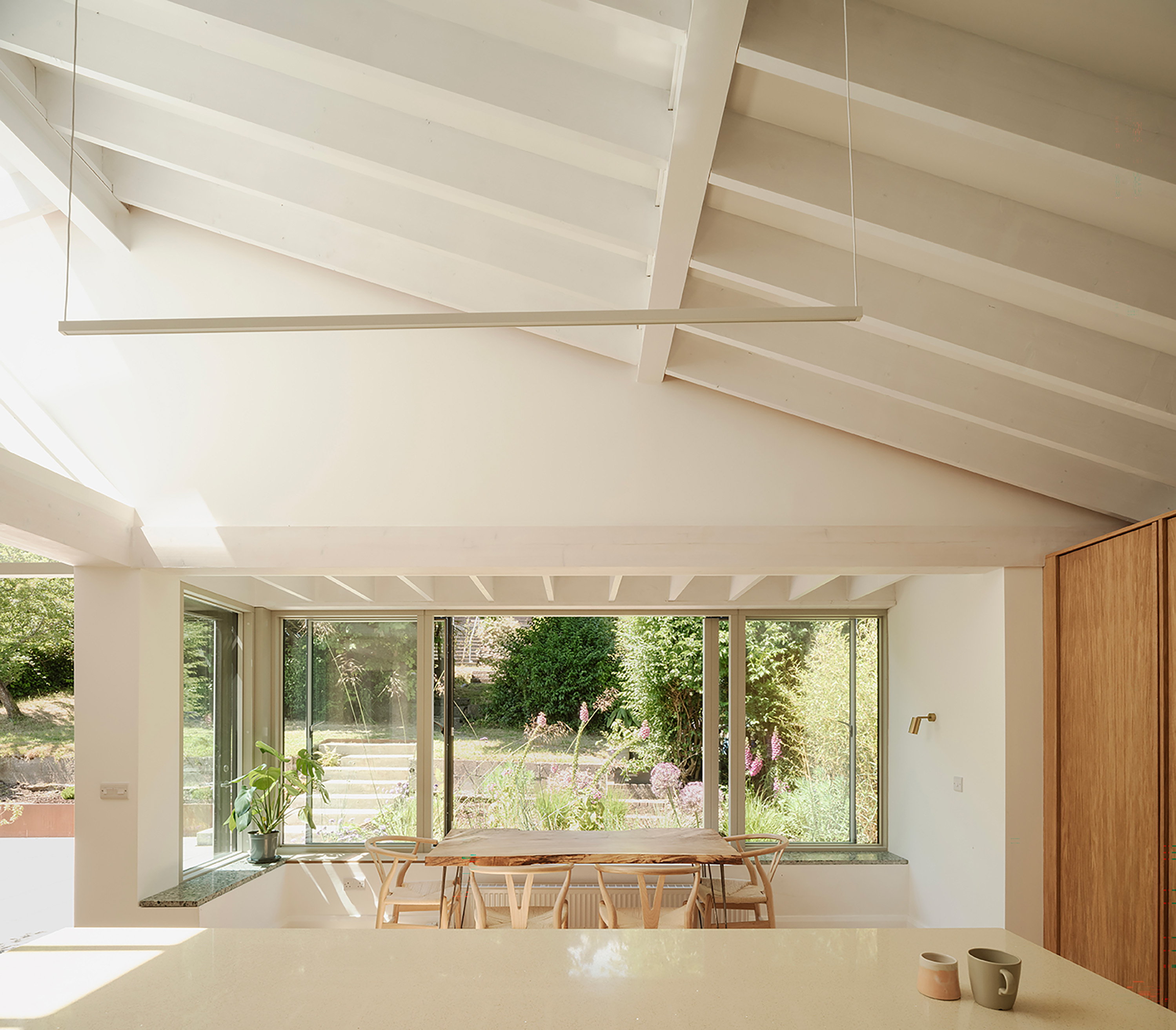
A bungalow in Greystones is cast upon the projector: red lines indicate the points of incision, domestic acupuncture. Walls and rooms are removed to make space for a generous open-plan kitchen-living-dining area, enabled predominantly by a single bay window, provided here in lieu of extension, to establish a renewed connection to the cascading garden beyond. Ultimately, it was through working-with, rather than adding-on, that unlocked the project. The vaulted ceilings that sail overhead serve as a reminder of what we can do with what we already have.
Similarly, a cottage in Dundrum is presented as a reaction to as-found conditions; a stone wall extending inside to outside, a novel crank in the plan, and a cherry blossom in the garden. The two-storey brick-faced extension is perhaps most notable for its a double-height void, viewed initially by the clients as ‘wasted space’ within such a tight footprint - it has proven to be a much-loved feature of the extension, particularly by the family’s newest arrival. It features a clerestory window to introduce dynamic light and unexpected views of the cherry blossom that provides seemingly endless entertainment.
It is moments like these that seem to define many of REIR’s projects; a framed view of the landscape between schoolyard canopies, the joy of students racing down oversized ramps. Their work evokes a celebration of the everyday, as achieved through an understanding of practical realities, an ethos that extends across both their residential and educational output.
There is a sense of refinement throughout the projects; of learning and developing both details and systems of working. Projects are consciously adopted to dovetail with anticipated lapses in stage approvals (to which payments are often deferred). Details resolved in one project carry forward to the next, economies in design make space for architecture - deceptively simple geometries, figures and details are deployed as a mechanism of unlocking value elsewhere in a project in a bid to make the ordinary exceptional.
REIR’s work demonstrates a deep understanding of people and an ability to respectfully push back, to challenge convention, and ultimately, to find solutions people didn’t even know they wanted. This is not a case of the architect imposing their vision on the unsuspecting public; it is about having the tools to facilitate a meaningful conversation, to develop a mutual understanding and go beyond expectations in order to define the core ambitions of the work. This is the art of the brief.
The value of this particular skillset has been described by many architects over time, but perhaps it is the late Peter Aldington, the uncompromising and visionary British architect, who best described the humanity and empathy it demands in an essay about briefs:
‘The brief is the means by which the designer may come to understand the difficulties, disciplines and customs of a way of life … It is based firmly on existing functions and patterns of life as well as future needs …
The brief is a combined ‘exploration’ carried out by architect and client together. The architect learns about the difficulties, problems and desires of his client. The client learns of pressures outside his own requirement which will also influence the building design. It is essential to achieve this deep mutual understanding at a very early stage in the association before design work starts.
The initial process of briefing is not easy for either client or architect … The clue to producing a good brief, and consequently a good working design, is - simply - investigatory interest and enthusiasm’.
- Peter Aldington on briefs [3].
There is often limited room to exercise this skill in public works projects, but in a particularly impactful anecdote, REIR recalled a project where the initial brief outlined a location for SEN classrooms that would ultimately segregate these classrooms from the rest of the school and invariably produce a sense of separation for the students that required additional assistance. In observing this, REIR advocated for the restoration of an existing building and repositioning of the proposed classrooms to a more equitable location. It was recognised that this move would ultimately result in increased costs - a hard sell in a public works project where margins are squeezed, yet the necessity was understood and the move received public support. This was undoubtedly a commercial risk to both the project and the practice that arose on the subject of principles, and might be one that a more world-weary practice would be unlikely to take.
It is often espoused that your ethics become your reputation, and seeing the capacity for REIR to go from strength to strength with this spirit should be a call to arms for more architects to do the same.
‘To make a building well assumes an understanding of people - to build otherwise is degrading.
Materials and people; understand them - then build.’
- Peter Aldington (1933-2026)
REIR’s lecture concluded with an engaging conversation that spanned procurement issues, the inevitable appropriation of buildings once handed over, and the value in intermediaries and advocates in the design process.
On its ninth rendition, Conversation Club has solidified its footing as a valuable new contribution to the architectural calendar, seamlessly relevant alongside long-established fixtures by the likes of the IAF and the AAI - providing a distinctively public space to discuss and engage with our built environment and those involved in its making.
As the lights flickered on in the Joly Theatre, there was a sense of hope for the future. This was REIR Studio’s first public lecture of their work. It will not be the last.

the write-up is supported by the Arts Council through the Arts Grant Funding Award 2026.
1. Paul, Mark. ‘Cost to take priority over ‘aesthetics’ in future State infrastructure projects.’ The Irish Times, Dublin. 27.06.2025. Available at: Cost to take priority over ‘aesthetics’ in future State infrastructure projects – The Irish Times, accessed 14/05/2026
2. O’Flaherty, Enda. ‘Modernising National School design during the mid 20th century - Basil Raymond Boud Barrett - Architect of National Schools for the Office of Public Works’, endaoflaherty.com, 08.02.2019. Available at: Modernising National School design during the mid-20th Century – Basil Raymond Boyd-Barrett – Architect of National Schools for the Office of Public Works | Disused School Houses – Home Page Accessed 14/05/2026
3. Aldington, Peter. ‘Houses: Created by Peter Aldington’. 2016. RIBA Publishing: London. p.10-11.

The wide glass doors which bookend the room were left open. The occasional sounds of street laughter, magpies and seagulls were grounding, giving an immediate sense of place. Even though you float above the context, you're aware of your surroundings in a controlled way through sound, shadow and the occasional chimney.
Orla O’Kane’s Studio Sessions has returned.
Studio Sessions began in 2024 with co-hosts John Tuomey and Sheila O’Donnell of O’Donnell + Tuomey Architects. It was held in their garden studio space and across six evenings, they interviewed people in the arts of personal interest to them.
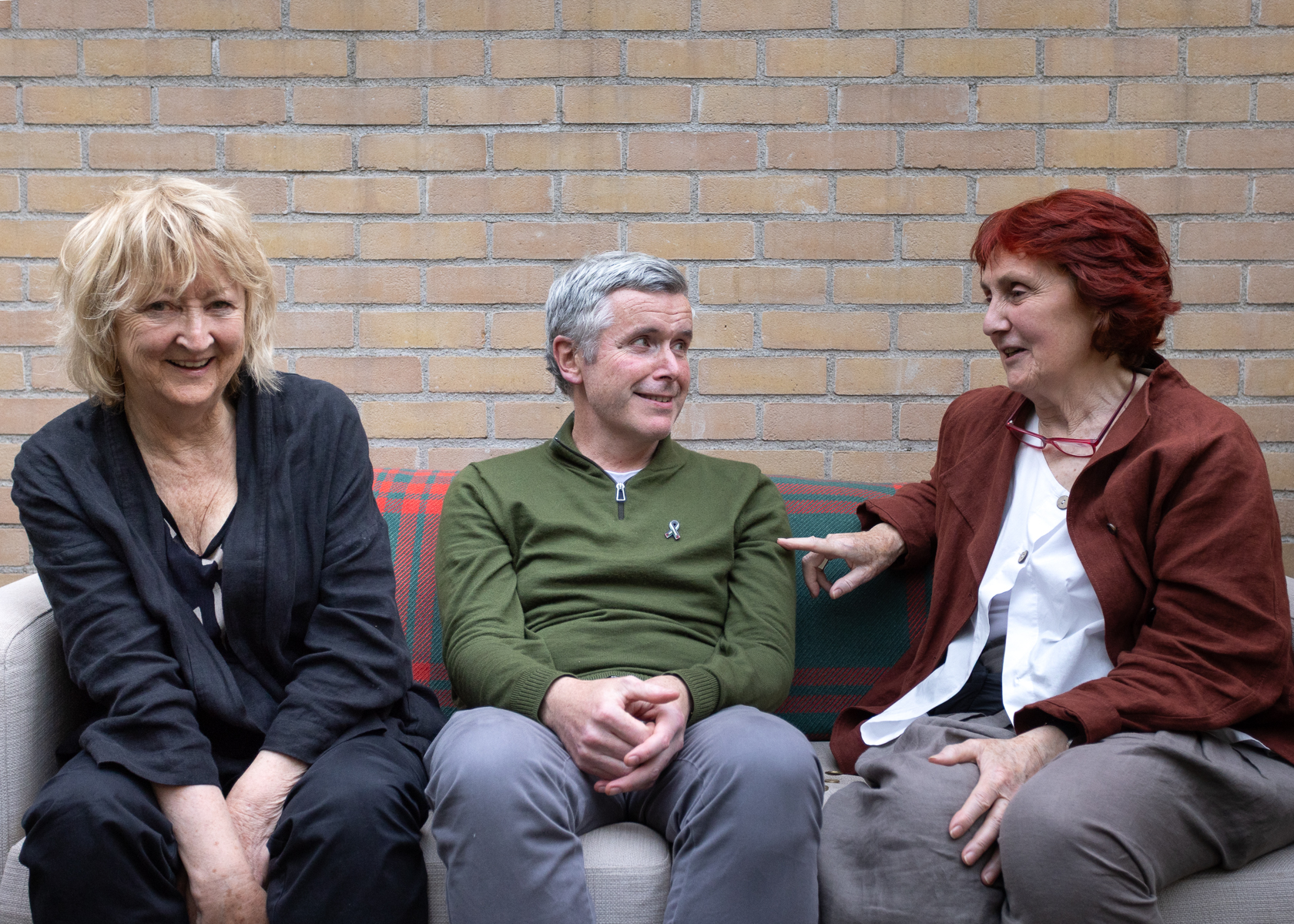
Upon celebrating twenty years in practice, Peter Carroll of A2 Architects was invited to host this next series. Peter is a Dublin-based, Limerick-born architect. Before establishing A2 Architects he worked with O’Donnell + Tuomey in Dublin and Raphael Moneo in Madrid. He is also currently the head of the School of Architecture in Limerick. The conversations happened between June and August this summer and took place predominantly in Peter’s house on Lucky Lane. Peter interviewed architects and artists who had influenced his life and work, each was given a title; The Enabler, Master, Mentor, Encourager, Originator, Provocateur and Initiator.
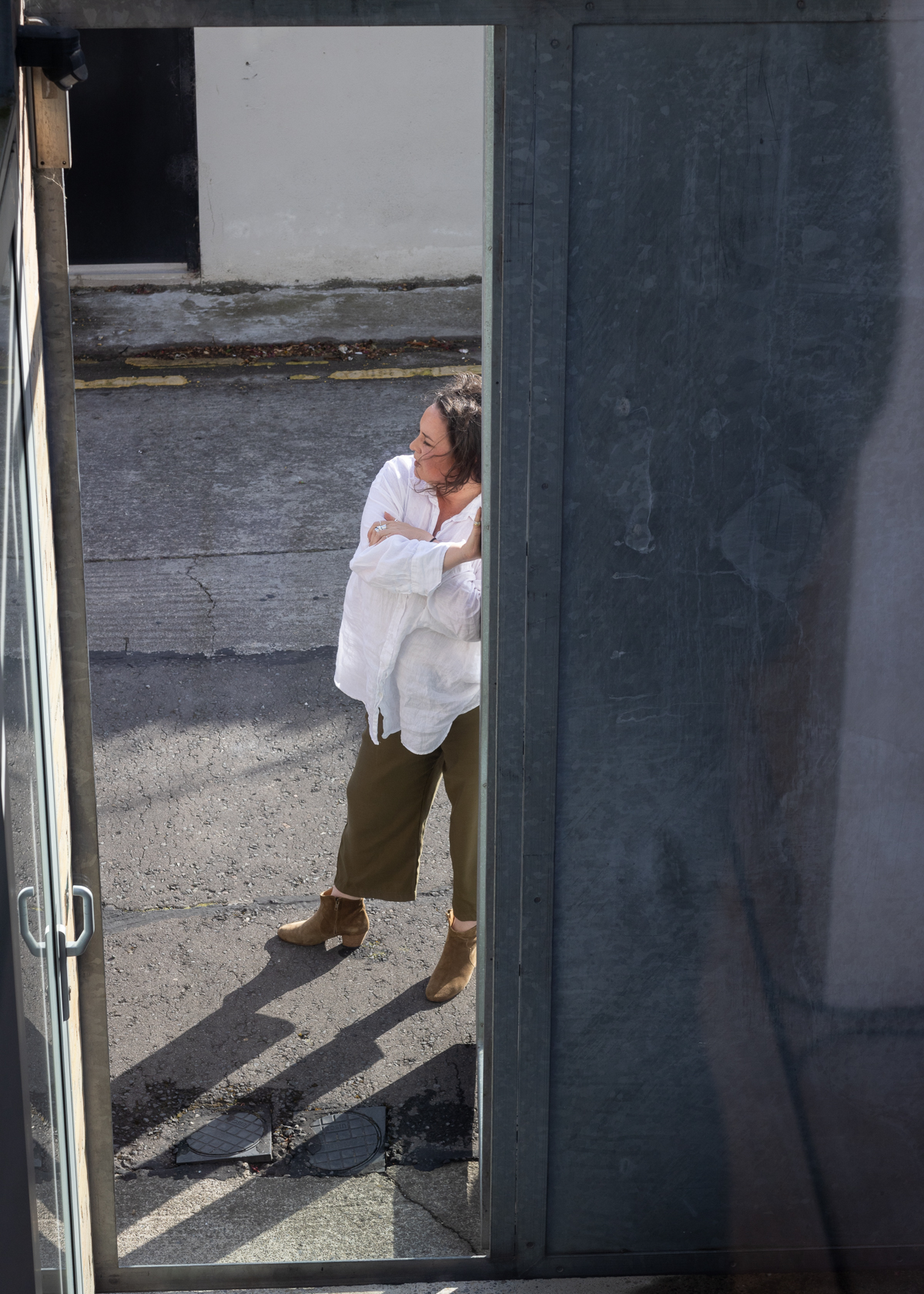
Arriving on the lane each evening, Orla greeted people in the courtyard as it filled up with bikes. The recordings took place in the upstairs living space, the centre. Voids and terraces on either side, the courtyard on one, a duvet of ferns and maturing trees on the other. The audience faced a backdrop of gently-rocking silver birch. The dining table was iced like a cake every evening with meats, wines, cheeses, and fruits. Much more than your usual complimentary glass of warm white wine at some post-work book launch. A clear statement of care.
The room quickly filled, around twenty sitting snugly together. The mélange of people that Peter attracted to his house was eclectic. Students, emerging architects, masters, artists, and strangers. The coffee table was carefully dressed with objects of interest, fragments collected through the years that related to the guests. Sometimes referenced during conversation but often enjoyed by the audience afterwards.
There was a natural flow between topics. Guests were given the space to elaborate at length about shared interests and experiences, thoughts on the profession and details of artistic practice. At times it was deeply personal yet always retained a light-hearted, lively, audience-focused energy that was simultaneously engaging and soothing. The conversations were relaxed, many of the guests had worked alongside Peter throughout his career so it was as though we were watching old friends catch up. A temporary studio culture began to form each week, rising and falling like breath in a sleeping chest.
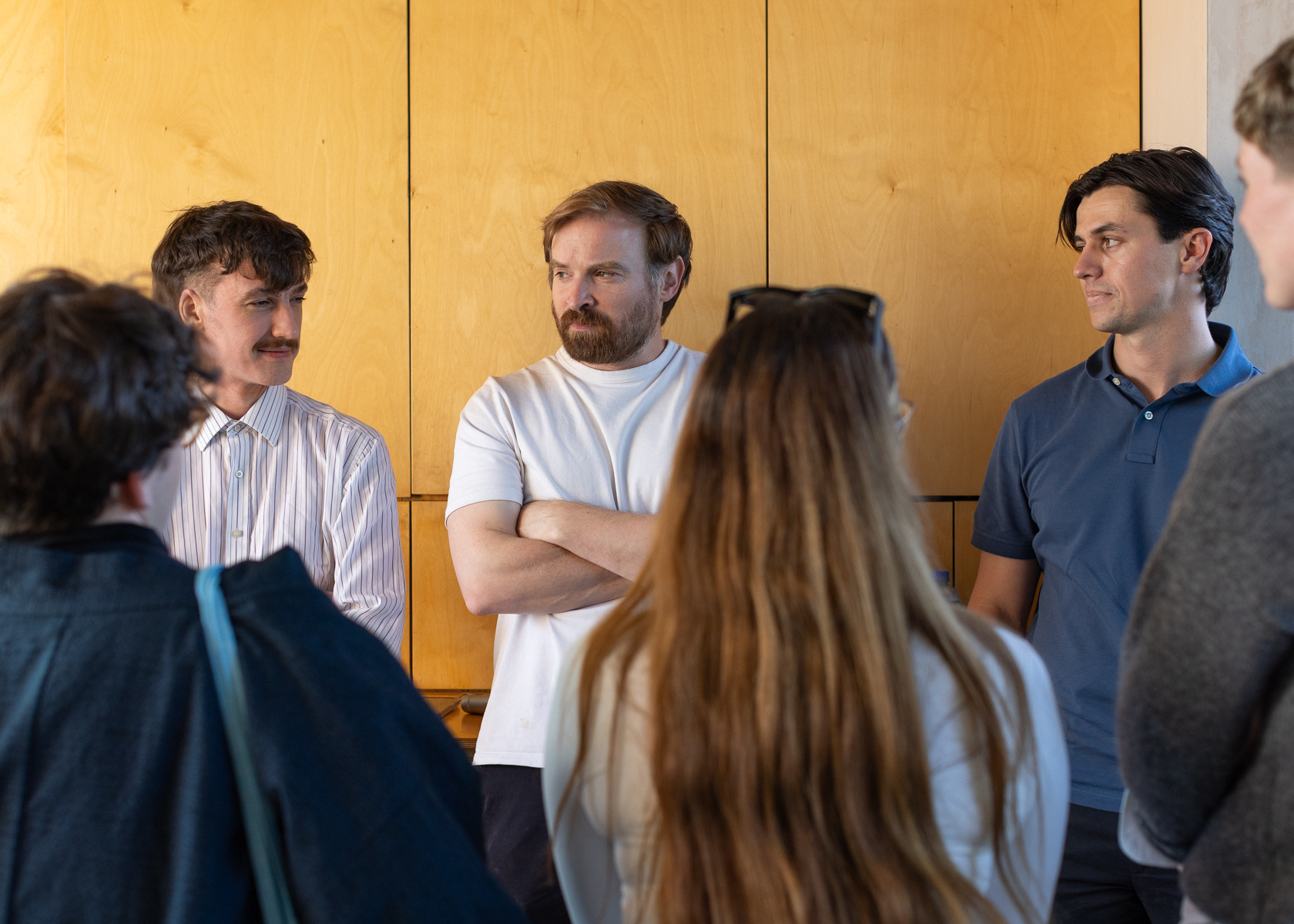
The value of these sessions lies in the willingness of the interested individual to pause, to have the pleasure of sitting still for an hour in the world of these stories. I experienced candid reflections between masters and mentees both within the confines of the recording and in the hours after, moving around the room, flitting between conversations of new and familiar faces. The recordings are a slice through the middle of everything discussed in those long evenings. People gather around the couch and the conversation continues on. The sun goes down and the lamps on the floor melt pale bricks into gold.
There is a pleasant layering of interaction with this body of work, in how Peter connects to the guests, in how his space connects to the public of the night, in the participation of the intimate audiences with each other and then the listener stepping into the room through the recording. The character of the future, non-physical listener is present in the room, and there is a sensitivity to their presence despite them not having arrived yet. Peter and Orla’s understanding of the care required for a successful studio ecosystem was evident throughout.
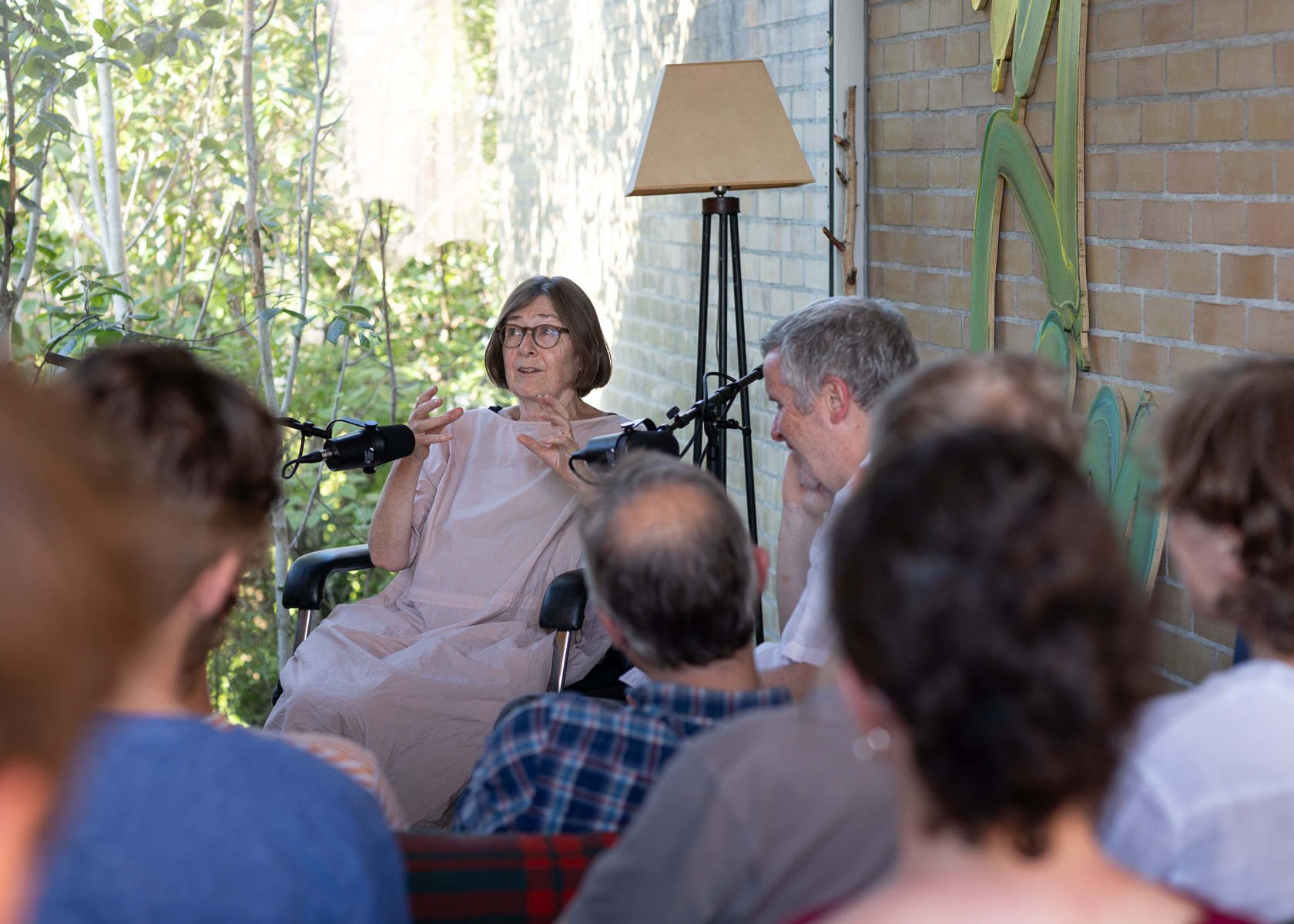
The safe haven of Peter’s home studio welcomed the public generously, drawing people together in a warm and unpretentious fashion. The house felt like an essential organ in the city this summer through the weekly ritual of the conversations. These cultural organs come and go throughout the year, but in the making of the podcast Orla has created an artefact with the careful curation of one of these spaces. The exchanges are approachable living moments, a collaborative effort of the room on each evening. On second consumption they will get redigested by the public to once again create a new conversation that may be greater in scale and a new experience for the individual listener.
Leaving architecture school brings the loss of an established studio space. It has left me considering the importance of what spaces such as these bring to a small and interconnected community like the Irish architecture scene. A solid centre is something not nearly as readily available as one would like. These evenings granted the much-needed opportunity for a group of architects to come together, beginners, established practitioners and those in-between. These events can't bear the total weight of our need for specific creative social space in the city, but they do become a momentary flourishing of architectural culture because of the well-made occasion for the robust sharing of ideas and stories. It's not a panacea, but a vital succour.
The Studio Sessions of A2 Architects included the following speakers: The Enabler - Merritt Buckholz - 03.07.26; The Masters - Sheila O'Donnell + John Tuomey - 09.07.26; The Mentor - Rafael Moneo - 13.07.26; The Encourager - Shelley McNamara - 23.07.26; The Originator - Peter Cody - 29.07.26; The Provocateur - John Gerrard - 05.08.26; The Initiator - Niamh McCann - 10.08.26. Recordings will be made available on all podcast platforms.
The Studio Sessions podcast is made possible by the support of the Arts Council, provided by way of a 2026 Project Award.
For more information, see thestudiosessionspodcast.com
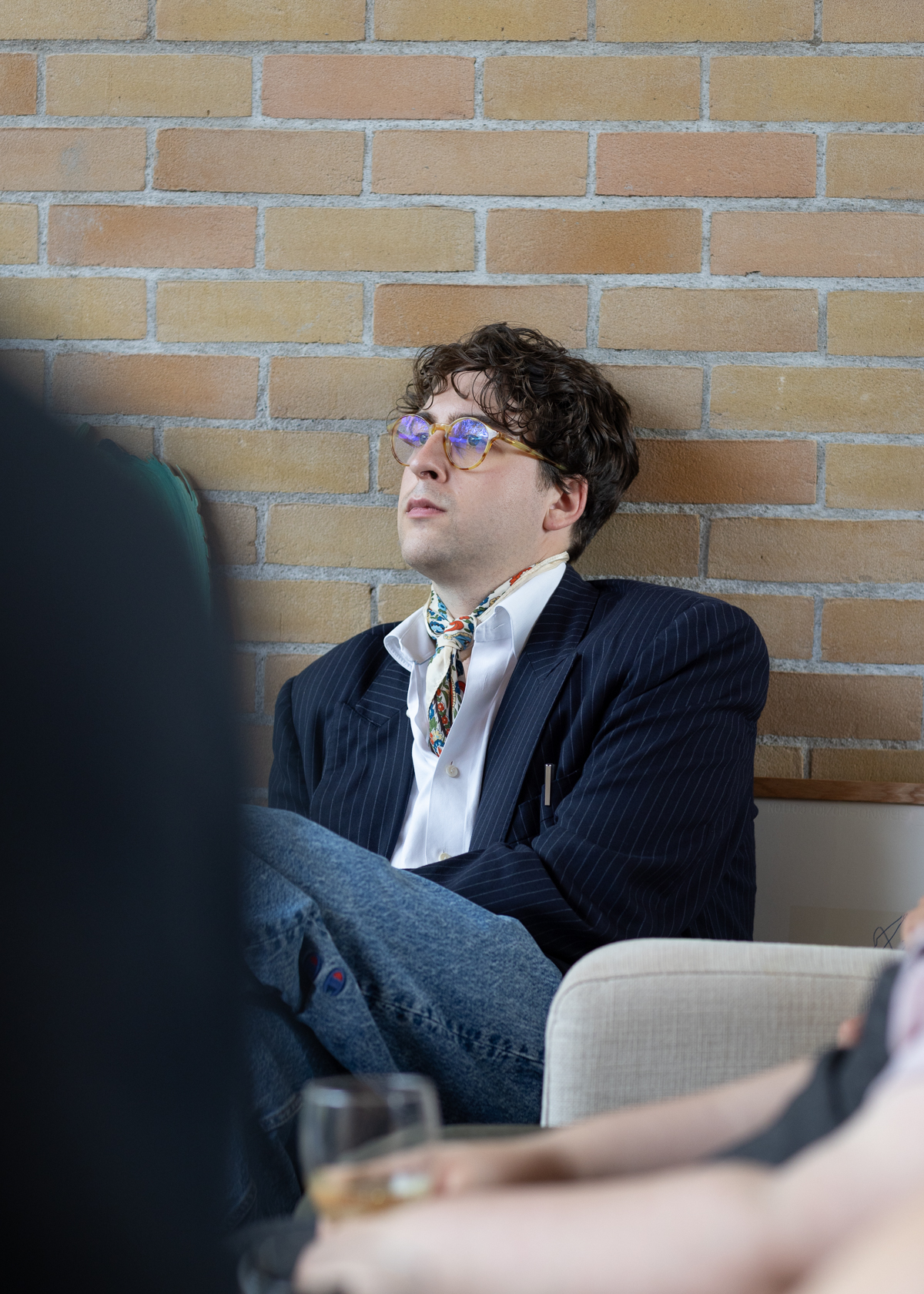
Norman Price reviews 'The Studio Sessions of A2 Architects,' a series of discussions and recorded podcasts created and produced by Orla O'Kane. The series had seven sessions across July and August 2026. It celebrated the twenty years since the establishment of A2 Architects with conversations between Peter Carroll and curated guests. Discussions took place across two venues in Dublin and one in Spain. The Studio Sessions podcast was supported by the Arts Council through a 2026 Project Award.
Read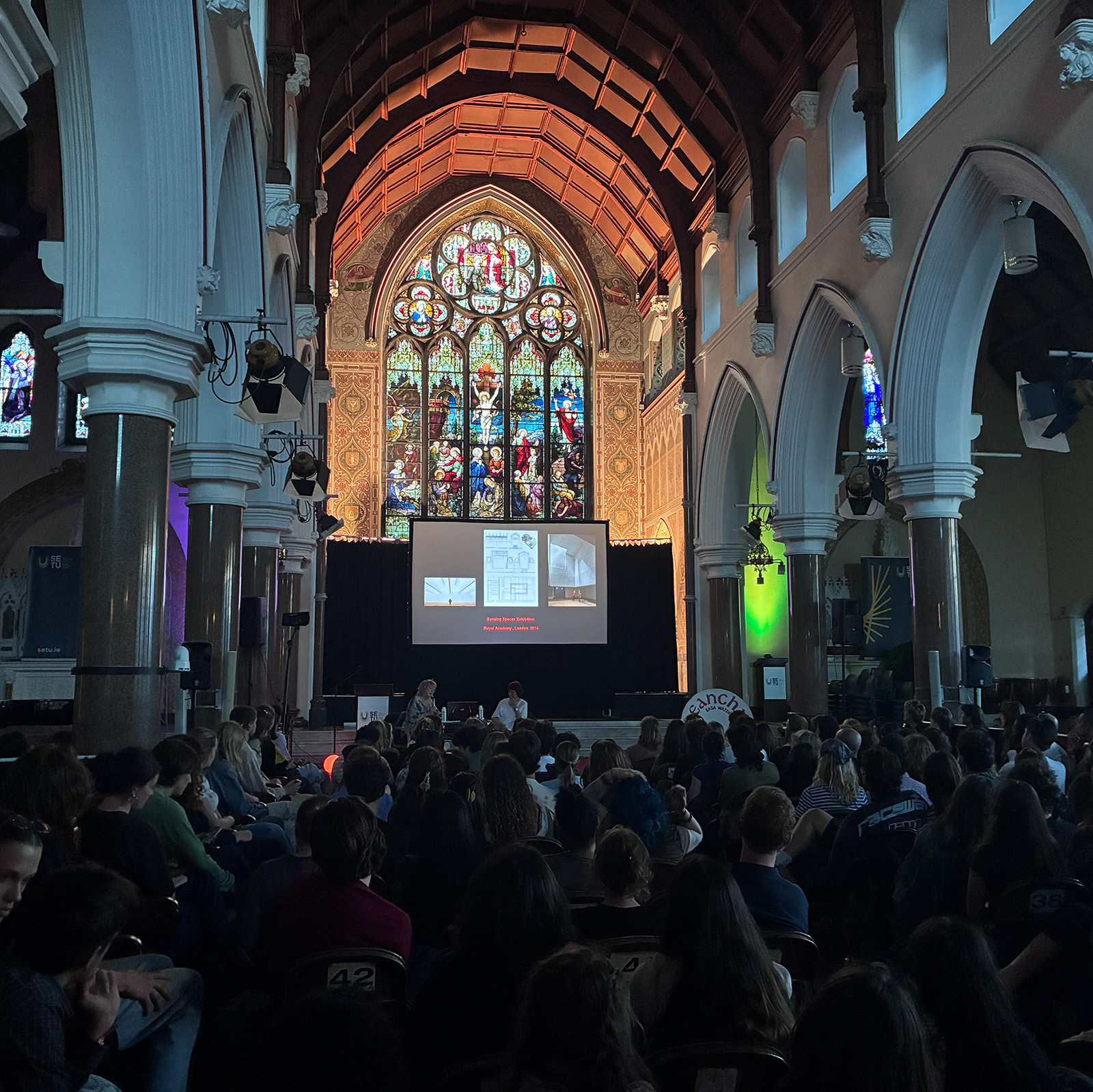
For forty-six years, the European Architecture Students Assembly (EASA) has brought students and young practitioners together to live, work, build and learn outside conventional architectural education. This year's assembly in Waterford, under the theme of Seanchaí, brought together workshops, lectures and social events. It hosted a temporary community, one shaped as much by shared experience as by architectural production.
I first attended EASA as a bachelor student in 2013. Since then, I have returned as a participant, tutor and guest, and helped organise a smaller EASA event in Ukraine. This year I returned as tutor of the Loomsday workshop. These varying positions have made me interested in reflecting on what EASA does differently to programmes run by conventional educational institutions. EASA creates a temporary learning environment where tutors and participants exchange skills, and where a workshop can change significantly through collective work. For two weeks, it becomes a world of its own, complete with an EASA newspaper, EASA TV, EASA FM radio and even its own currency, used to buy toasties at the info point.
Louis Koseda’s 2020 blogpost The Journey offers a particularly valuable history of EASA, tracing the network beyond its individual assemblies and showing how its culture has been shaped over decades. Reading it makes clear that what happens at each EASA is part of a much longer, constantly-evolving story, his article offers a deeper understanding of the origins and trajectory of this network [1].
The emphasis on making is equally important. Tim Ingold's writing on making challenges the idea that an object simply emerges from a preconceived design, arguing instead for an understanding of making as a process of correspondence between people, materials and environments [2]. This feels close to the experience of EASA workshops. Plans change when the material behaves differently than expected; an idea is altered by another participant; a structure becomes something other than what its authors initially imagined.
The Seanchaí theme adds another dimension. Traditionally, the seanchaí was a keeper and teller of stories, carrying knowledge through speech and from one generation or place to another. EASA itself operates in a surprisingly similar way, the assembly travels from country to country, with participants carrying stories, techniques, friendships and traditions from one event to the next.
This understanding of EASA as a temporary community also brought to mind McKenzie Wark's Raving, particularly her writing on raving as a collective practice [3]. Like the rave, EASA is intense precisely because it is temporary: for a short period, ordinary routines are suspended and a different social structure becomes possible. People who would probably never meet within their universities or professional networks suddenly spend two weeks together, the resulting community is difficult to explain to those who were not there, yet it can continue through future encounters and collaborations.
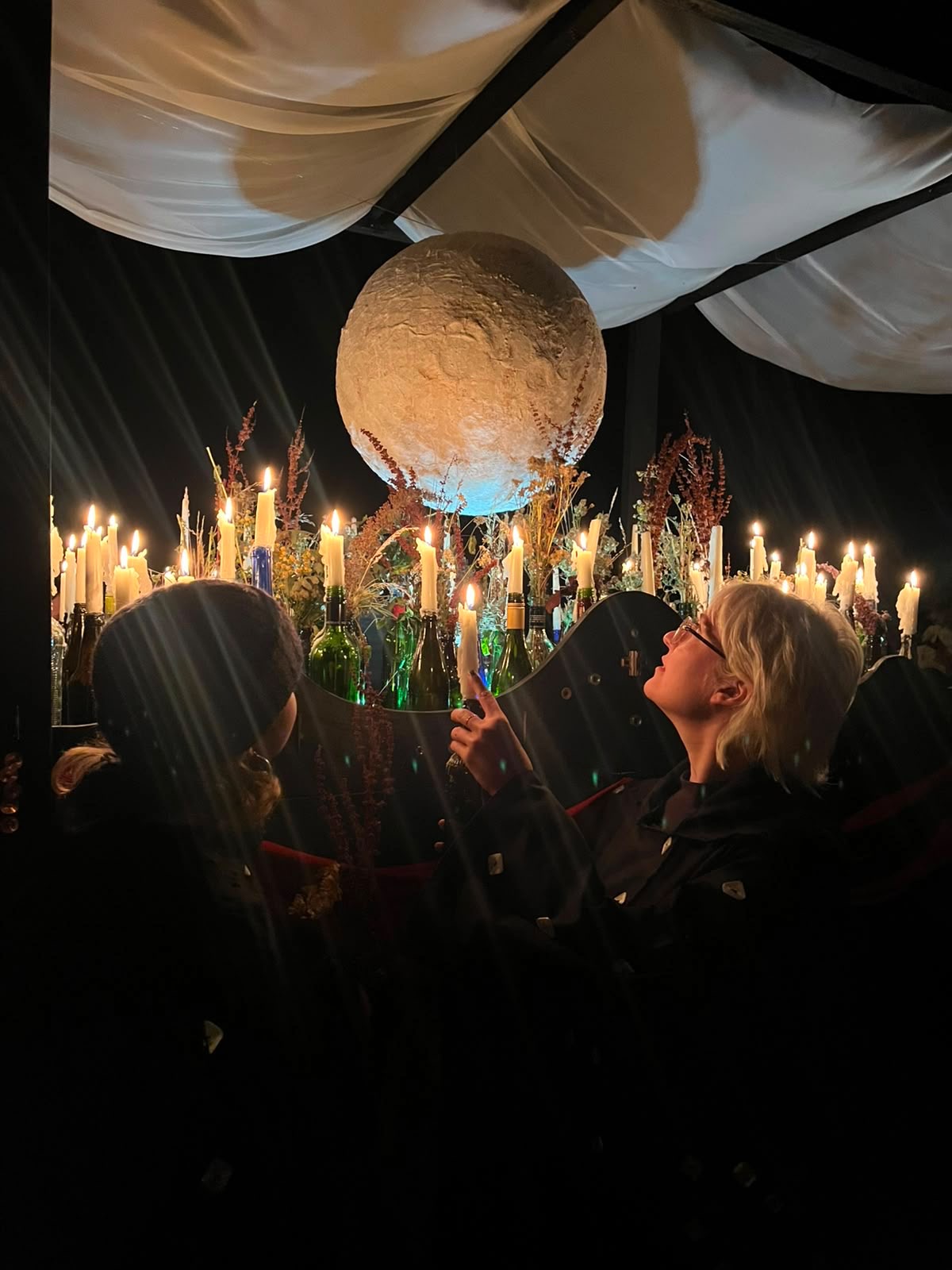
The following six workshops in particular showed the range of ways EASA approached the Seanchaí theme. Holy Moly, by Clara Arenas, María Ortíz and Bruno Solano, transformed local stories and urban myths into a processional float. Rather than treating folklore as something fixed in the past, the workshop asked participants to identify stories circulating around Waterford and give them a new public form. The float became both an object and a performance, bringing these otherwise quiet narratives into the streets.
Snug Life, by Liam Egan, Luke McSherry and Emily Naughton, began with the Irish pub's snug as a social and architectural typology. Participants researched and surveyed existing snugs in Waterford, measuring spaces and recording details such as tiles, windows and furniture before bringing these fragments back to the EASA site. The final structure became a collage of different skills and materials, including reclaimed pub glass and a fireplace. Importantly, the tutors did not try to control the final design: the snug gradually took the shape of the people who built it.
In The Embassy of Mythologies, by Alma Rose Fensholt, Alba Høeg Andersen and Julie Juhl Simonsen, architecture became a vehicle for collecting and performing stories. Participants developed a mobile embassy that could move through Waterford and engage with local myths and urban narratives. The tutors described the process as deliberately anarchic: rather than designing the structure in advance, they built it from the bottom up. A visit to the Danish Embassy also introduced questions of borders, protocol and representation, which became part of the workshop's playful, deliberately 'borderless' character.
Currently Constructing, by Hanna D'Aughton, Joris Kuijper and Tjitske Henstra, connected architecture with Waterford's maritime knowledge. Working with the local McLoughlin Boat Company, participants learned boat-building and maintenance techniques while exchanging sailors' shanties and stories of the water. These skills became the basis for collectively designing and constructing an architectural structure inspired by boat building, bringing local craftsmanship directly into the EASA learning environment.
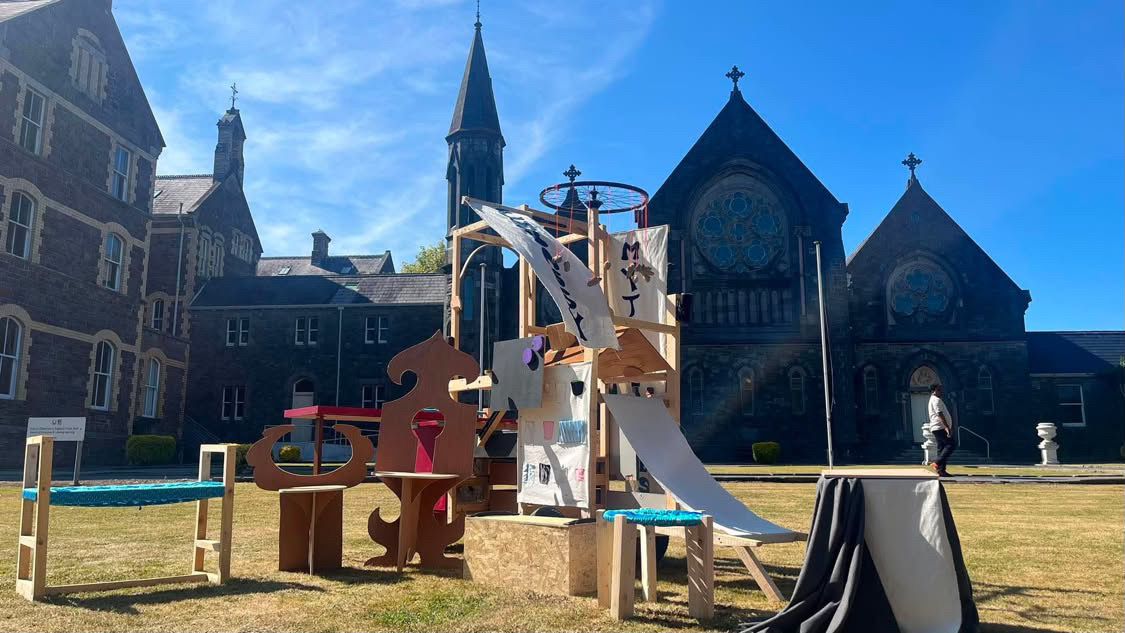
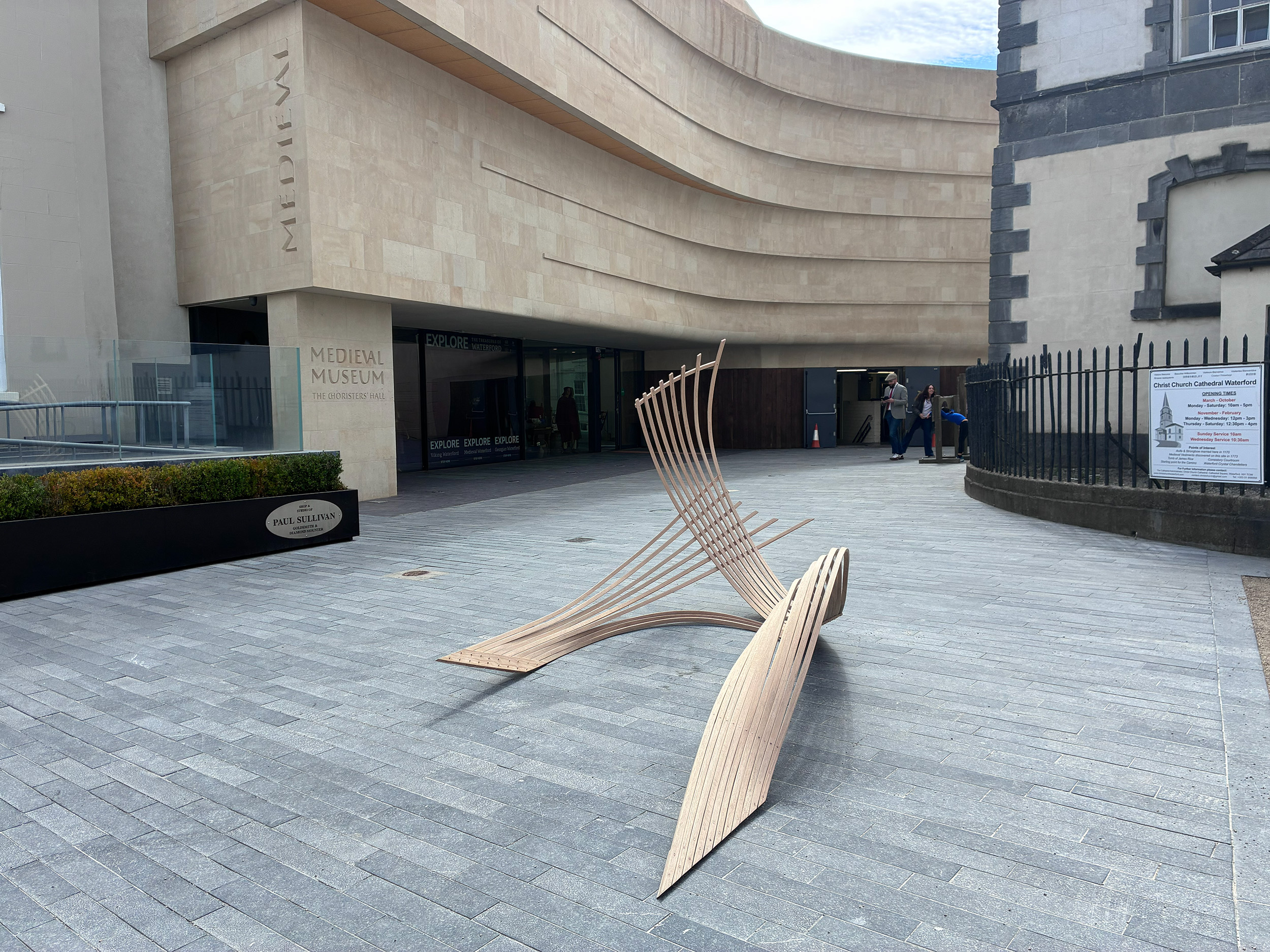
The Moon Gate, by Sian Powell, Daniel Holman, Elliot Follows, Jay Patel and Estera Rihtarić, focused on dry-stone walling as a disappearing craft. The workshop connected this traditional technique to the Seanchaí as a carrier of knowledge: participants learned by making, while the resulting stone arch became a new story embedded in the site. The tutors saw the structure as something that could outlast the assembly and invite future users to ask why it was there and how it was made.
Finally, Sacred, Superstitious, Vernacular, by Oryna Tokar and Olha Kozachenko, explored how belief becomes embedded in the built environment. The tutors were particularly concerned with avoiding the exoticisation of Irish folklore. Instead, moments that felt strange or unfamiliar became opportunities to examine their own assumptions. The workshop eventually translated these observations into diagrams and temporary spatial experiments, asking how everyday rituals and invisible systems of belief can shape the way places are understood and used.
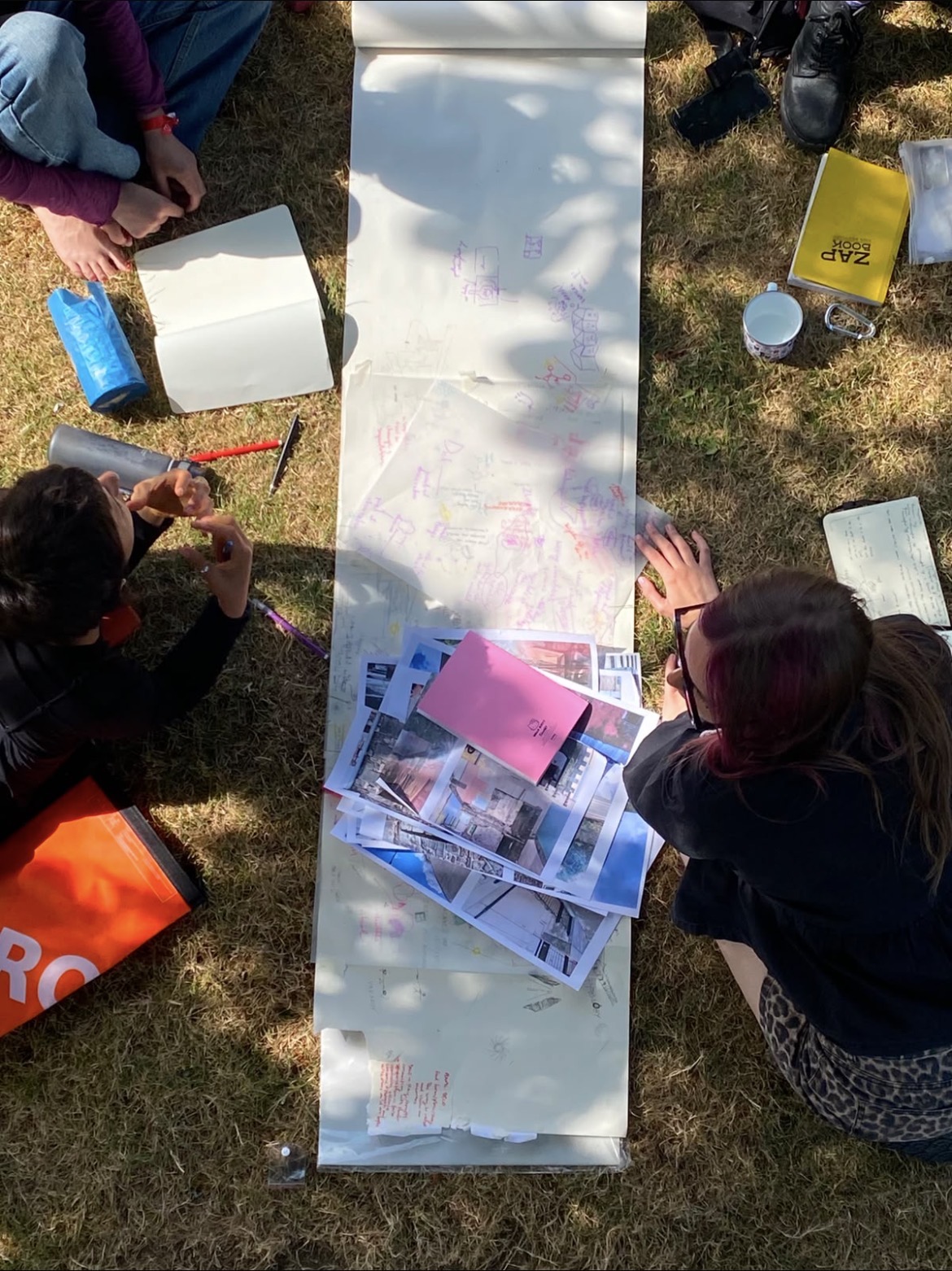
This year, EASA also placed a strong emphasis on sustainability: recognising the waste generated by temporary construction, organisers and tutors sourced second-hand and scavenged materials and tools wherever possible, while the kitchen served vegetarian food throughout the assembly.
The workshop programme was accompanied by a rich series of lectures on art, design and architecture, ranging from local practitioners and less familiar voices to established practices such as Grafton Architects and Clancy Moore. Several talks also explored Ireland through its spatial and historical contexts, giving participants different perspectives on how the island's history continues to shape its places and culture. This was extended beyond the lecture programme through an Irish culture night, where participants learned some Gaelic and were introduced to traditional Irish céilí dancing, before putting the lesson into practice late into the night.
The programme also made space for contemporary political realities. During Solidarity Night, artist and tutor Marynka Dovhanych presented her daily drawing diaries documenting life during Russia's invasion of Ukraine, while Jacqui Corcoran, Oxfam's Communications and Media Lead, discussed a Palestinian-led framework for Gaza's recovery. Together, these events expanded the assembly's understanding of architecture beyond objects and construction, towards the political and social realities in which places are made and lived.
The value of EASA lies precisely in its refusal to reduce architectural education to a fixed curriculum. It offers no degree, no conventional assessment and no single definition of architectural practice, instead, it creates the conditions for knowledge to circulate between people who are simultaneously teaching and learning.
Perhaps this is what makes the Seanchaí theme particularly appropriate. EASA's most important outputs are not necessarily the structures that remain standing at the end of the assembly. They are the stories people take home: how something was made, who taught them, what failed, what unexpectedly worked, and who they met along the way. The assembly ends, but these stories travel onwards. In this sense, EASA is less an event than an ongoing chain of knowledge, one that is built collectively, remembered imperfectly and retold by each new generation.
EASA Seanchaí, which ran from 26 July to 9 August 2026, was organised by Adam O’Neill, Alena Staats, Caoimhe Whelahan, Daragh Doyle, Eimear Kernan, Emily Laffan, James McGowan, Kate Hunter Hanley, Laura Ferry, Liam Evans, Louis Devane, Matthew Borne, Sally O’Sullivan, Tom Fitzgerald, and Tom Tsiantar. For further details and events, see www.easanetwork.org & www.easaseanchai.eu
Liza Goncharenko reviews Seanchaí, the 46th Annual European Architecture Students’ Assembly, held in Waterford from 26 July to 9 August 2026.
Read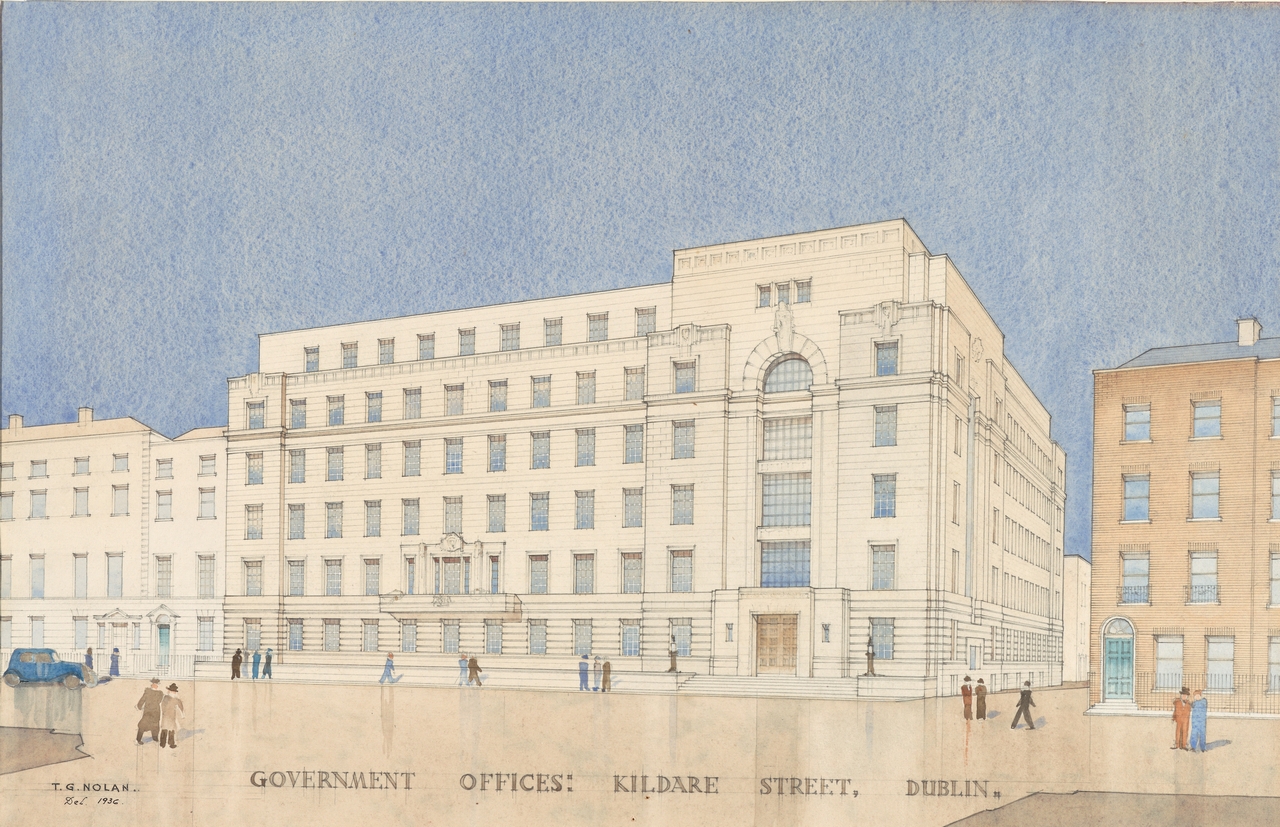
The Irish Architectural Archive was set up by Prof. Eddie McParland and Nicholas Robinson in 1976. Initially it shared its premises with the Royal Society of Antiquaries of Ireland in 63 Merrion Square, who also accommodated Taisce Cheol Dúchais Éireann (The Irish Traditional Music Archive). The latter have since moved to 73 Merrion Square, one imagines what a stimulating work environment that must have been.
Having been vacated by the Irish Patents Office, who decamped to Kilkenny, Nos. 44-45 Merrion Square were allocated to the Irish Architectural Archive by Finance Minister Ruairi Quinn (himself an architect) in 1996.
The renovation of the building occurred from 2002 to 2004. This process of restoration and adaption made the building itself a type of archive. The house, originally built in 1794, had been subdivided into 2 dwellings in the early 19th century when its large size made it uneconomic and anachronistic for Dublin post-Act of Union. Restoring this magnificent house not only gave the public insight to a Georgian town house in its splendour but also gifted new public rooms with views back to Merrion Square. The renovation also incorporated one of the interiors from the Heinz Gallery, formerly home to the drawings collections of the RIBA at 21 Portman Place in London, salvaged by the Office of Public Works.
Pivot Points is subtitled Moments and Movements in the development of Ireland’s built environment. It consists of thirty objects, presented chronologically. The exhibition is accompanied by a very handsome book, containing essays pertaining to the subject material, whose authors are a mixture of architects, educators, and academics.
It is difficult to fully appreciate the exhibits and their relevance without reference to this book. The figure of thirty was determined by the space available for the exhibition, which was whittled down from over 200 possible candidates. The discussions between the editorial team must have been fascinating.
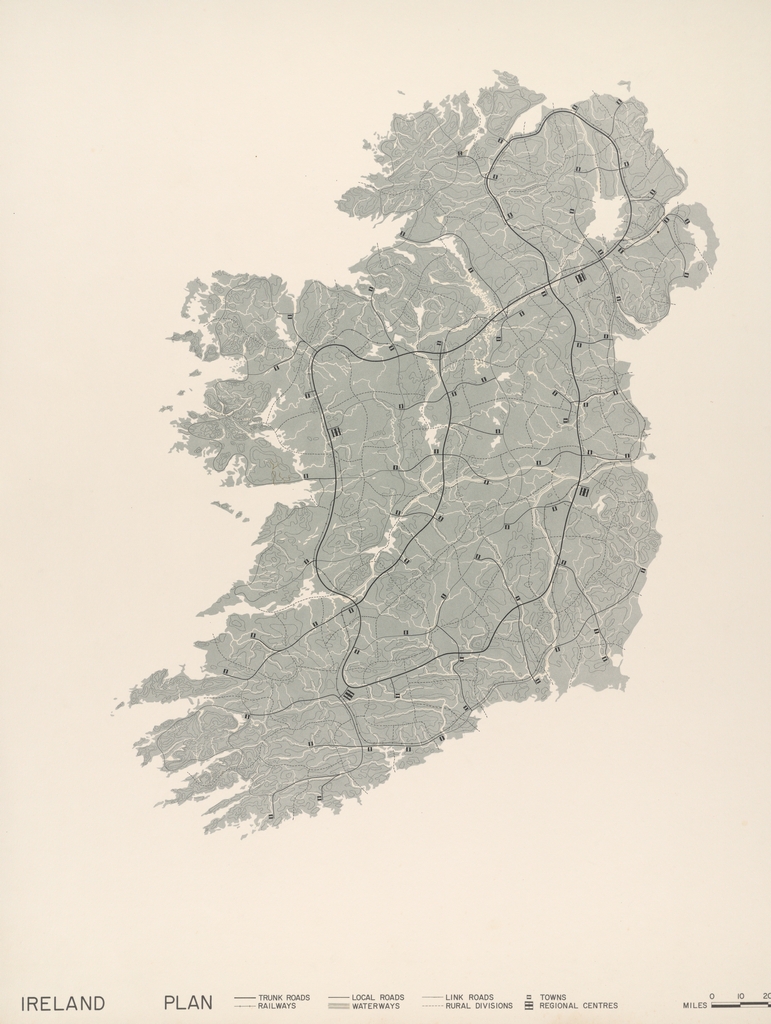
Collectively these exhibits from the archive tell a story of the architecture of Ireland, not a complete one of course, as the archive is understandably dependent on its contents and bequests. Some exhibits would appear more attractive to architects, others to planners, others to historians. An intriguing exhibit is 23: Ireland Plan 1958. Robin Walker, produced as part of his MSc in City and Regional Planning in the IIT Graduate School. It is an ambitious all-Ireland proposition, produced from an Ireland of then-limited economic prospects, and a declining population. In actual Ireland of the period, the comprehensive rail network was being closed, such an extensive network was considered a luxury that the country simply could not afford. Optimism and generosity would continue to characterise Walker’s ambitious architecture.
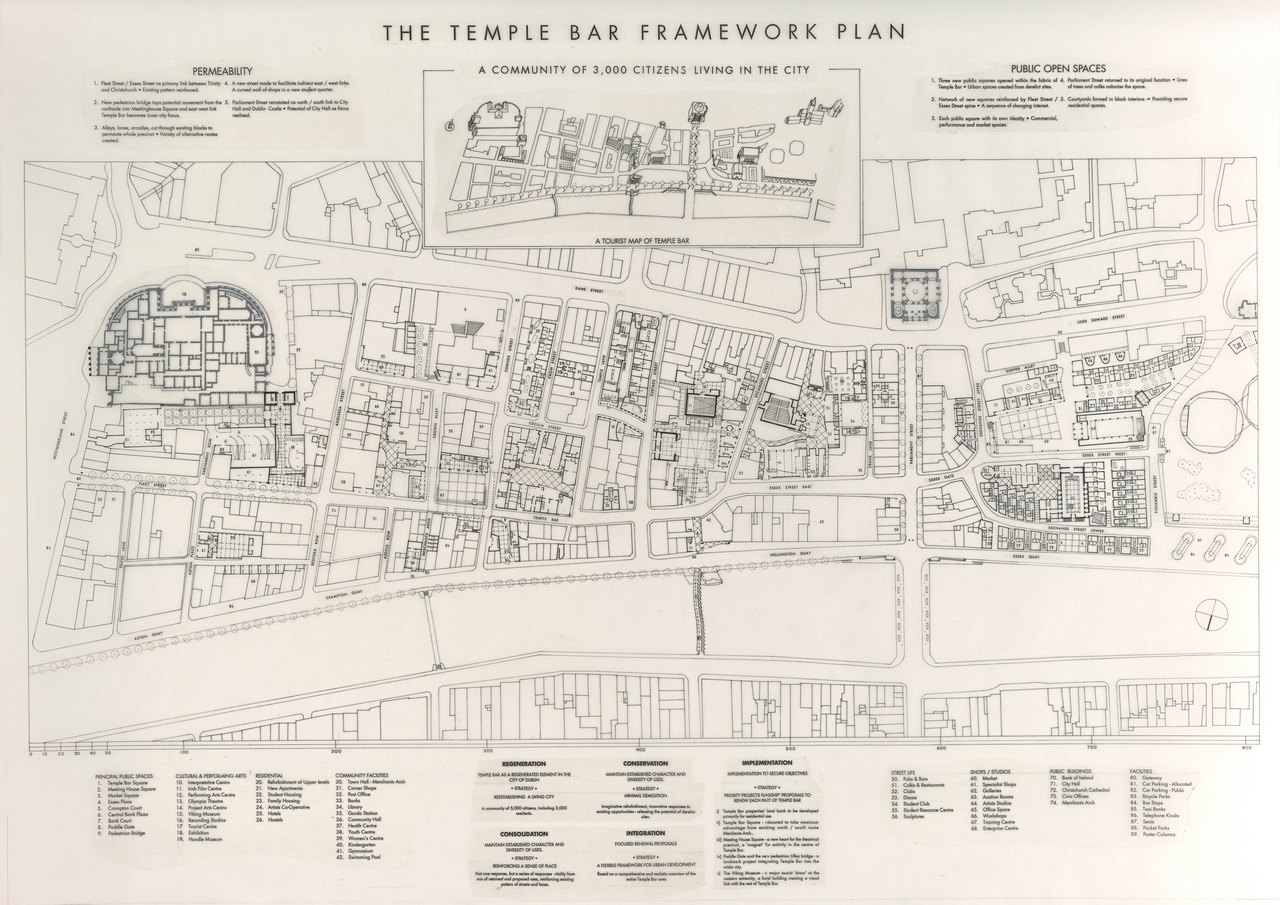
With exhibit 17: Perspective View of the Department of Industry and Commerce Kildare Street Dublin, a 1936 watercolour by T.N. Nolan of J.R.R Boyd Barret’s design, the rendering shows the building under a cloudless sky, facing into the morning sun, portraying an optimism and confidence this structure still exudes. Drawings can suggest a fluid view of the future, when the architectural vision has not yet fully condensed into a solid thing, still containing alternate possibilities for the finished building. This can be seen here, and also in 29: Temple Bar Framework Plan, by Group 91 Architects in 1991.
A surprising exhibit (to this reviewer) is 26: Aerial photomontage from R. Travers Morgan & Partners’ report on the Belfast Motorway for Ministry of Development and Belfast Corporation in 1967. Belfast is chosen ahead of Dublin, presumably, because about half of this scheme was actually built. Far less of a similar plan by the same authors for Dublin was carried out, but this did not lessen its destructive impact, Motorways in the city can be described as almost ‘anti-architecture’; the relationship these engineering structures have with architecture is far more fractious than other forms of infrastructure like railways (Railways and canals are covered in other exhibits; 7 & 9).

One omission would appear to be Jack FitzSimons’ ‘Bungalow Blitz’, which, even Maurice Craig has conceded, has had an outsized impact on the buildings in the country. That topic has been discussed at length, whereas much of the exhibits presented here may not be as familiar.
The exhibit 25: Perspective View of central plaza in Shannon New Town by Frederick Rogerson, c. 1965 shows an unrealised view of a future that may not have been that great in any case. It did at least propose a central space in a town, which seems to lack any focus, or even views outward.
The final Pivot Point; 30: Study Model for Grand Egyptian Museum, Giza, Egypt by Heneghan Peng Architects, 2002, shows that the story of Irish Architecture is no longer confined to Ireland.
Both the exhibition, and especially the book, will reward repeated visits. Every visitor will likely take something different from each experience of the exhibition, reflecting the great care taken by the exhibition designers when they set it out. Pivot Points invites a consideration of the archive in its entirety, offering a fleeting glimpse of its great wealth of drawings and plans. Some of the objects chosen, such as the Belfast photomontage, might intentionally provoke a negative or critical response. Recording this history nonetheless contributes to the health of architectural discourse in Ireland.
Celebrating fifty years of the Irish Architectural Archive is a recognition of its valuable contribution through its collections, exhibitions, and events over a half century. Its presence has become such an integral part of Ireland’s cultural landscape that it is difficult to imagine a recent past in which it did not exist.
Pivot Points, Moments and Movements in the development of Ireland’s built environment is free to enter and will be displayed in the Irish Architectural Archive, 45 Merrion Square, from June 2026-February 2027. The accompanying publication is available to purchase in the archive and the RIAI bookshop. A digital version can be accessed online
Máirtín D’Alton reviews Pivot Points, an exhibition commemorating the 50th anniversary of the Irish Architectural Archive, 45 Merrion Square.
Read

Website by Good as Gold.