
Membership of Type allows unlimited access to our online library. Join to support new research and writing on the design of the built environment.
You can read more about membership here.
Already a member? Login to your account to avail of unlimited downloads.

Membership of Type allows unlimited access to our online library.
Join to support new research and writing on the design of the built environment.
You can read more about membership here.
Individual Membership Fees
Individual membership is available on a monthly or annual basis.
The fee is €10/month or €99/year.

Cloistered in a thicket of suburbia just beyond the Dodder, Richview opened its doors on Friday 22 May for Outside In, the UCD School of Architecture, Planning and Environmental Policy’s annual end-of-year exhibition. The exhibition was opened by State Architect Conor Sreenan, following an alumni tour, an industry tour, and the finale of the student curator-led panel discussion series, Wasters, under its inevitably escalated title: Absolute Wasters.
Chaired by Professor Hugh Campbell, the Absolute Wasters panel brought together five so-called wasters, though of course they were anything but: Tanad Aaron, Ciarán Cuffe, Jane Larmour, Ste Murray and Orla O’Kane. Each speaker having followed a rich and varied pathway through and beyond architecture, and each was invited to present a single image or slide connected to a moment where wasted time, wasted effort, or apparent distraction had later proved creatively valuable.
Curated for the momentary threshold between study and practice, intellect and action, optimism and ambition, the panel began with former Green Party MEP and current co-chair of the European Greens Ciarán Cuffe. Cuffe appeared before Evelyn Hofer’s Dublin Sky (1966), an image of the city as seen from O’Connell Bridge House, the Liffey axial carving through Dublin below as smoke rose from the chimneys of the gap-toothed quays. The image demonstrated how much Dublin has changed, and also conveyed how Cuffe's position as a student of architecture was developed in response to Dublin's urban condition.
Cuffe recalled climbing the UCD water tower to hang a bow tie around its collar, and his creation of some kind of floating temple-like contraption in the lake on campus: alla Aldo Rossi Irlandese? What was this all about? Being a waster, maybe, yet the career that followed continued in that same counter-current, through political action, public engagement, campaigning and elected membership of the European parliament.
Interdisciplinary artist Tanad Aaron reflected on a formative moment for the Forerunner collective, being confronted by waste in their own practice, through the dismantling or moreover demolishing their first exhibition in the Project Arts Centre. Thereafter the group were forced to reconsider their approach and change how they consider their work not only relative to its potential for reappropriation beyond its present purpose, but in its ability to provoke paradigms of excess, waste and notions of permanence and impermanence.
Orla O’Kane, winner of the 2024 RIAI Emerging Award and former AAI President, mapped her multifaceted relationship with architecture through a matrix images on culture, community, conversation and construction. Yet she also spoke of confronting practical realities to realise design’s potential to deliver improvements to people’s everyday lives. Identifying that when an expense which appears as minor waste on a large project’s spreadsheet can represent a quiet design victory in her work, which when multiplied across a project can butterfly into architectural improvements of substance for the many.
Photographer, actor, filmmaker and UCD architecture graduate Ste Murray also sensibly refused the idea that ‘waster’ could ever be compressed into a single presentation slide. Through an enrapturing spoken word delivery, Ste proclaimed a philosophy of creative freedom, as a well-led creative life should be all-encompassing. His appetite for genre-defying prolific practice unveiled through an anecdote of his poster exclaiming 'MORE' that hung above his bed in his college years.
Resurfacing the materiality of practice, Jane Larmour of ALWA Architects embraced the inspiration found in the beauty of stones collected by her children on trips to the beach. She reflected on the unbuilt, and how the ideas aren’t wasted but in due course often reappear in her work through models and watercolours, exalting all experience as an education, achieved through a patient accumulation of varied ways of seeing.
As Orla’s multiple images and Ste’s rejection of the single-slide premise made clear, the conversation was never going to behave entirely by the prescribed rules. To write about it now is also slightly strange, having been behind the curtain of the exhibition’s organisation and having my own thesis on display. Through this contradiction, the review inevitably inverts itself, writing about Outside In becomes a way of reflecting from the inside out.
To peek as a student from behind the curtain, what emerges from the show is not a sense of assertive, self-anointed certainty, cast in perfect models of concrete and stone. Instead, the creations are quick, cheap, fast, fragile and alive. Each expresses an idea frozen in motion: an iteration, a proposition, a piece of thinking not yet cut perfectly clean. That is the distinct richness of the student exhibition. Every material work has been critically considered, but each has also been pushed against the tightest budget towards the broadest ambitions. These range from the hemp-farming regeneration of post-industrial Welsh landscapes to community-led care for elderly through housing embroidered into the urban fabric and weaving history of Dublin’s Liberties. All of this work is diligently conceived, then plotted, stuck, traced, reprinted, cut, glued, held, moved and hung before, with a shared sigh of relief, being exposed to all.

Celebrating the work of almost 350 students across the school, who exhibited across the Richview campus, the show included work from the Undergraduate and Master’s in Architecture programmes, the MSc in Urban Design and Planning, the MSc in Environmental Policy, and the MSc in Architecture, Urbanism and Climate Action. Students are prepared by a devoted teaching staff to be ethical, skilled and thoughtful future practitioners, positioned to adapt to the changing building profession and construction ecosystem, as they embrace climate resilience, imagining and designing together for a post-carbon future. The show’s initiative aims to bridge academia, practice, industry, and decision-makers, fostering a dynamic space for exchange, collaboration, and innovation.
Across drawings, models, material experiments, photography, film and podcasts, the exhibition and panel opened a window into how future practitioners can and are beginning to redefine the role of architecture, planning and environmental policy in a rapidly changing world. There is no single thesis here, no neat school-wide position, but rather a productive mess of approaches: careful, critical, sometimes unruly, and often full of hope.


Absolute Wasters was held on May 22nd 2026 in the Planning and Environmental Policy Building in the UCD Schoolof Architecture, Richview. Outside In ran in Richview from May 22nd until June 19th.

the write-up is supported by the Arts Council through the Arts Grant Funding Award 2026.
Outside In Exhibition Team: Fiona Hughes, Livia Hurley, Nathalie Weadick.
Sponsors:
UCD APEP Seed Funding,
DTA Architects,
Grafton Architects,
O’Connell Mahon Architects,
O’Mahony Pike Architects,
RKD Architects.
What does architecture have to do with food have to do with belonging? A lot, I guess? With a packed programme themed Le Chéile – the Architectures of Belonging, the changemakers behind this year’s Architecture on the Edge (AATE) seem to think so.
Nine years since its inception, there’s little doubt AATE belongs. What began as a weekend of Open Houses is now a ten-day festival and year-round initiative promoting responsibility and design excellence in the built environment. AATE reliably delivers fresh ways to engage audiences and explore architecture’s societal impact with each new iteration raising the bar. 2026 is no exception. The theme may feel a little familiar, but is suitably broad for the festival’s wide-angle approach and remains a vital topic for today’s fractured world.
Among the many food-adjacent offerings this year is settle: an installation by TRESTLE that plays stage to a talk by JP McMahon and a supper club from Guzzle. My choice is to attend the flagship Friday night offering, Pálás an Phobail (The People’s Palace): an immersive exploration of belonging told through food, sound, stories and space. This unique event is a collaboration between Zurich-based architect-polymath Blanka Major; Claire Davies and Enda McEvoy of social enterprise Hinterland and AATE Director Frank Monahan.
As part of the Swiss urbanism group ZAS*, Major’s hybrid portfolio breaks the ‘architecture bubble’ via site-specific, performative events. Galway-based organisation Hinterland, on the other hand, work at the intersection of food production, policy and community. Neither easily hemmed nor classified and with both motivated to redefine space for the public good, their collaboration promises an exciting mise-en-scène.
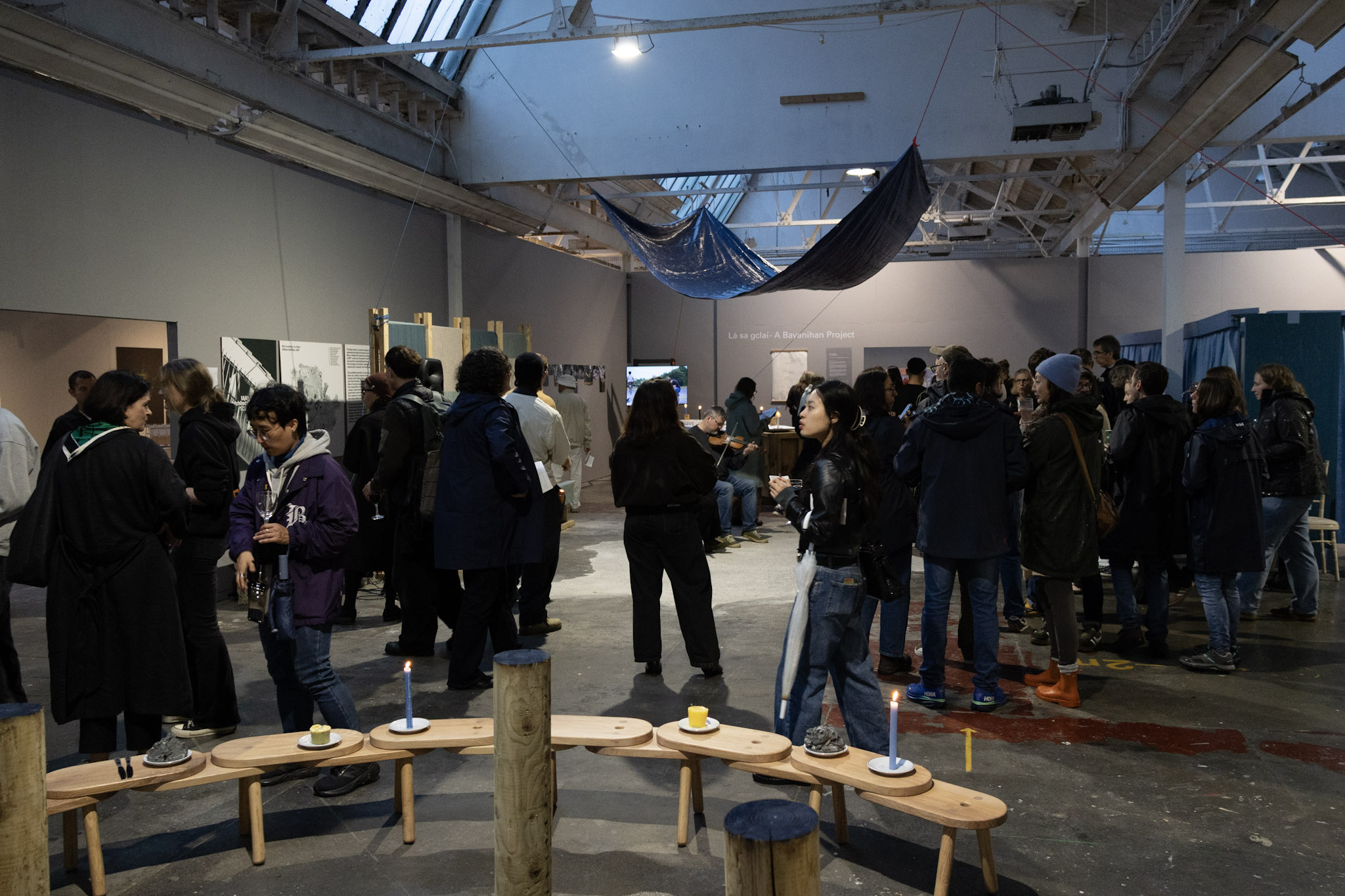
But it’s a tough brief. Pálás an Phobail must compete with hundreds of concurrent Culture Night Late offerings and be distinct from almost a decade of previous AATE programming. Held in the festival hub the Printworks Gallery on Market Street in Galway, even the venue does little to exclude comparisons. The space also home to exhibits including the potent Chloran Síle Flag by Miriam de Burca and Aine Phillips; Nocht Studio's interlocking KinStools and Ambacht Studio’s cyanotypes. Despite distractions; Pálás an Phobail holds its own.
The event conceptually pairs Galway’s beloved (and newly derelict) Pálás Cinema with the Maison du Peuple - Victor Horta’s art nouveau mansion commissioned as a multi-use civic space by the Belgian Workers Party. We are invited to imagine the Pálás an Phobail as a series of fictitious ‘rooms’: a market, a pub, a garden, a library, an assembly hall and swimming pool. As we move through, sampling indigenous flavours of Ireland, we will consider home-grown and imported ideas around food sharing and community infrastructure. With Hinterland’s Claire Davey in interview with Professor Anna Davies of Trinity College Dublin and Michael Higgins of Bohemians Cooperatives, the event is a hot ticket. You can’t get more accessible than free, but the audience seems in the know.
The location, next to Portershed a dó, is large, almost secret, and another example of a significant city-centre building fallen to disrepair. The floor inside is glinting with the day’s rain. My teen and I arrive dripping wet, grateful to be handed illustrated menus and heavy spoons and be ushered kindly towards a stall heaving with a dark, textural spread of Clew Bay oysters in blue spirulina on undulating and oily seaweed. We squint at sour lemon among bodies swaying to the sound of uileann pipes. Smiling faces. Hands clasping drinks. This is not your average night in Galway, granted, but it exudes a familiar warmth.
Further in, we are welcomed by our hosts and Davey asks pointedly: ‘who don’t we see here tonight?’
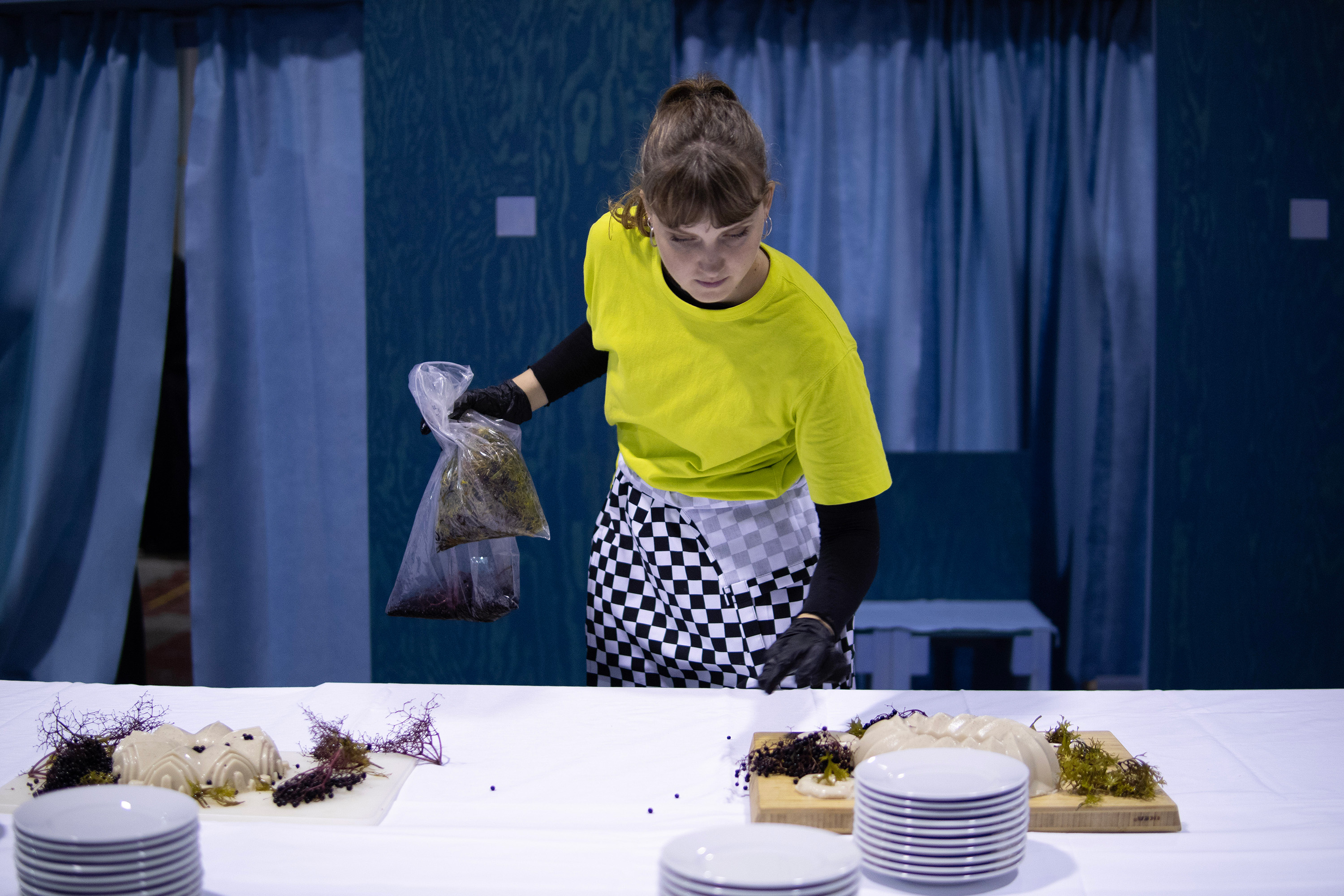
‘What if we had a shared food space, community owned and accessible to all?’ Major, then, dressed enigmatically in chequerboard whites and fluorescent yellow declares open ‘a space of possibility’. We begin ‘breaking the architecture’ - hammering windows of coloured sugar, making noises like nails beaten into walls. Sound is already a striking element.
Next? The pub. Guinness and cheese toastie wedges topped with beetroot remoulade. Devised by Major and delivered by Michelin-starred McEvoy the food is hearty, moreish, of the land. The menu asks us to consider taste inseparable from landscape, home or hearth: a carrier of ‘weather, labour, habits and memories.’ Anna Davies calls food sharing ‘a bedrock of human civilisation’ - a behaviour that endures globally, despite disinterest from Capital and neoliberal governments. When she talks of her struggles to secure funding, not for R&D but for implementing and maintaining the resulting ideas long term, I imagine tonight’s spectacle could easily precede same.
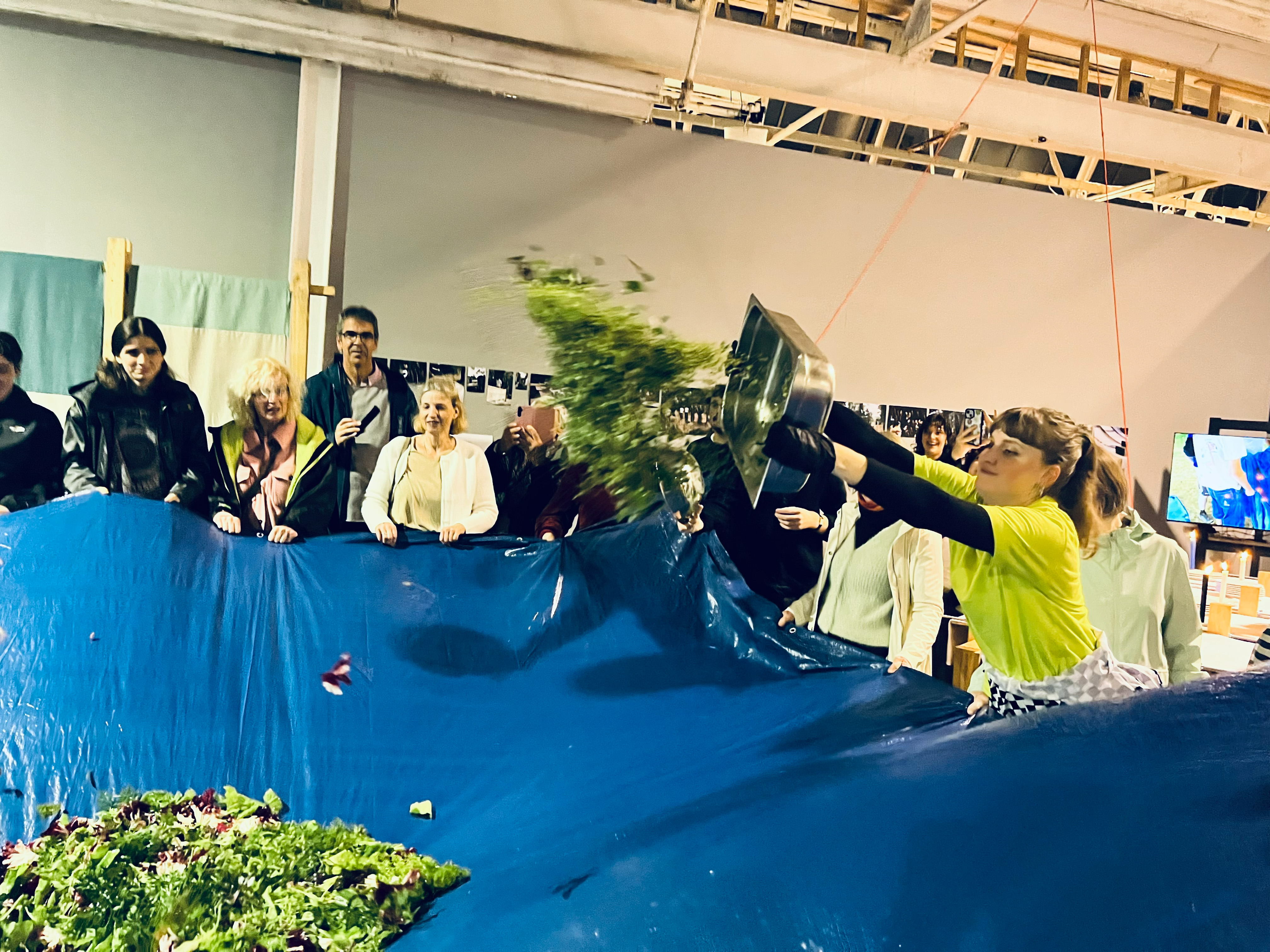
Looking up, a sheet of blue tarpaulin is being lowered to waist height. We grab and wave it as though playing the parachute game. Major and a parade of volunteers bring bowls of greens harvested from Fergal Anderson’s Leaf & Root Farm. We throw the salad onto the wind-strewn tarp, tossing it with collective energy. Major splashes on raspberry vinaigrette and spice from a popped balloon. This theatrical highlight an unexpected, joyous play inspired by Fluxus artist Alison Knowles. On hands and knees we scoop the unusual mix of potent stems, buds and leaves onto plates and into our mouths.
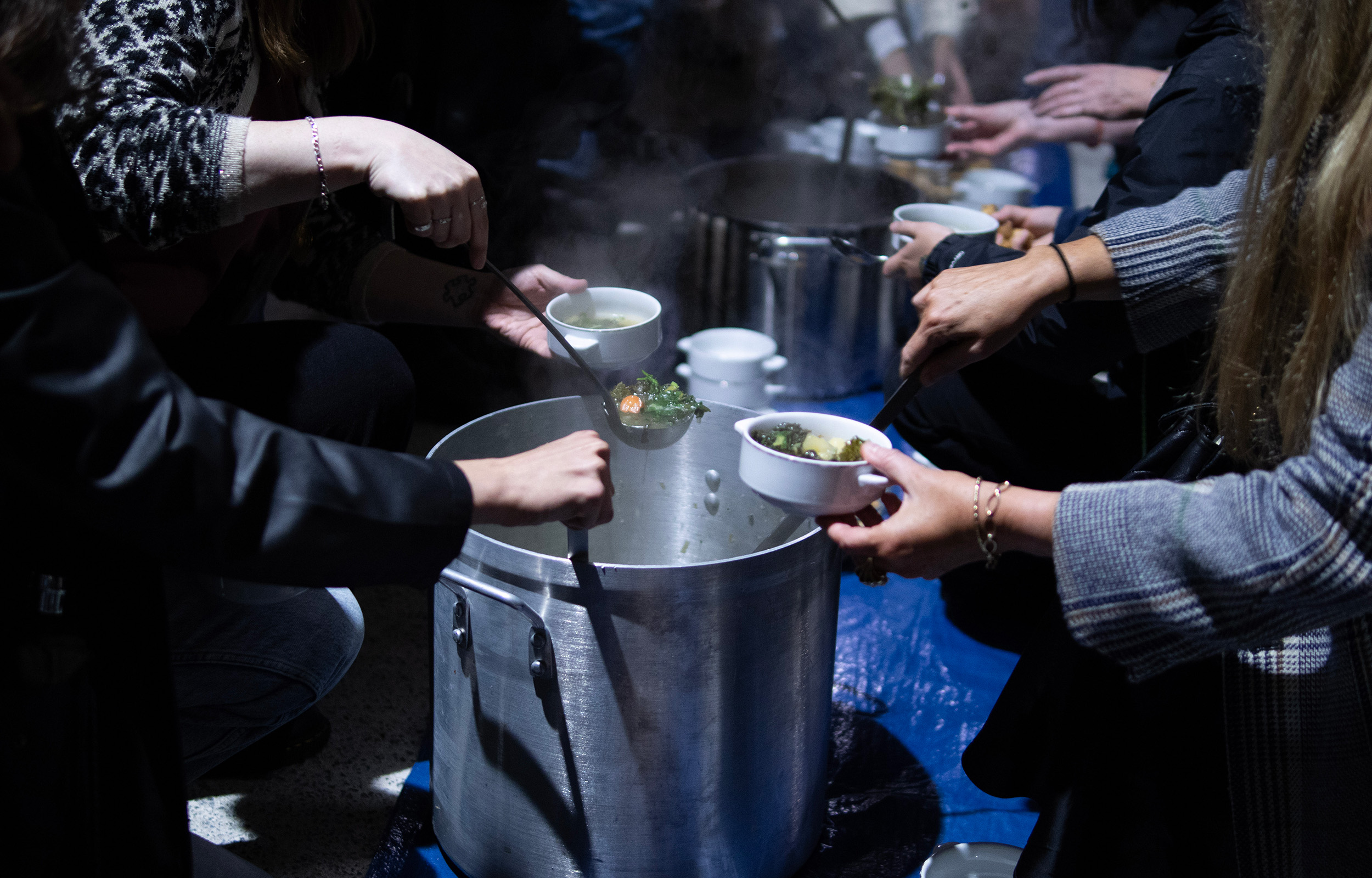
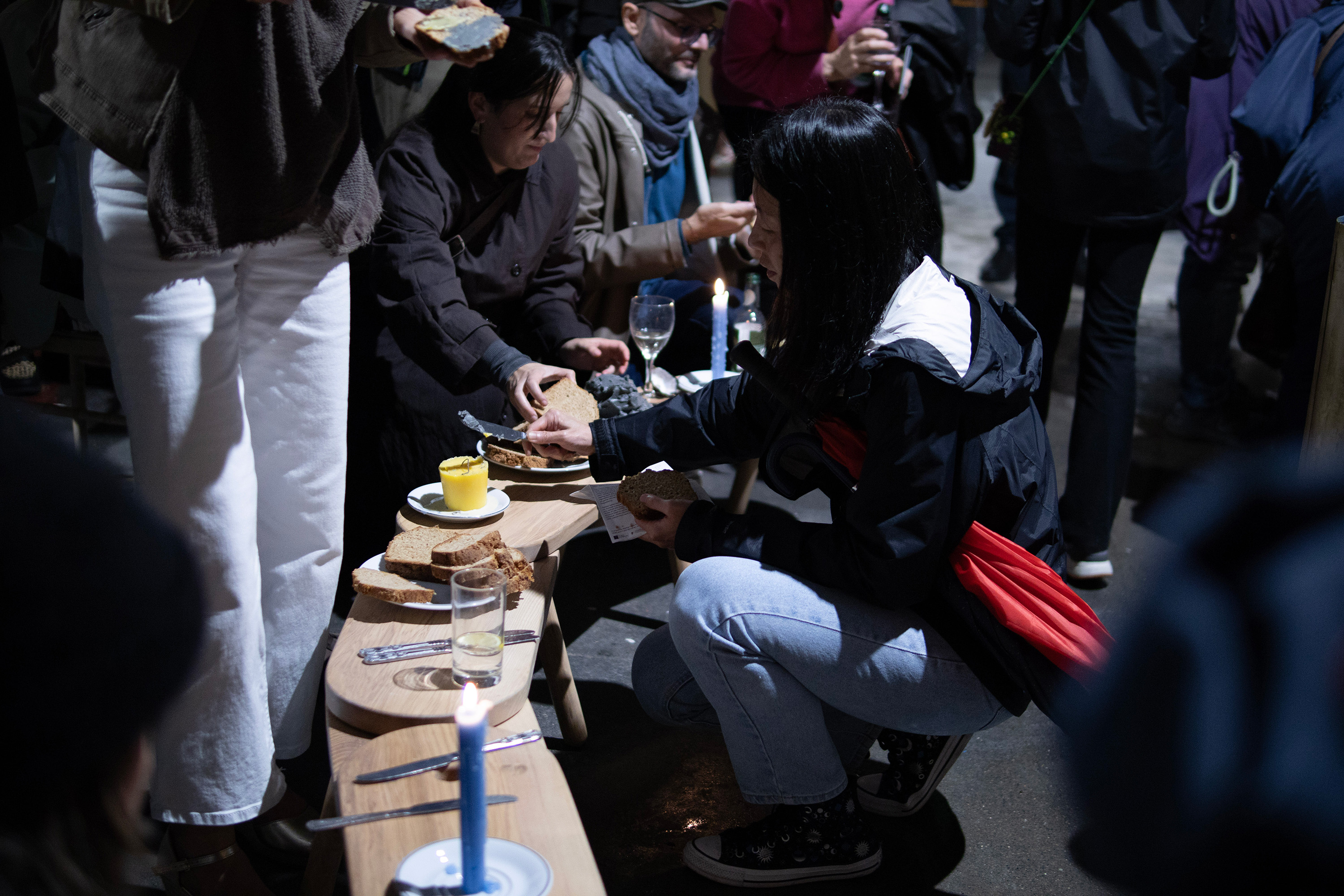
At this energetic peak, the night changes again. Crouched at KinStools lit by butter candles we slather slices of bread with putty-like charcoal butter. Michael Higgins invokes Plato’s Symposium – ‘I’ll talk to you after you’re fed’ – and social barriers are dissolved. We kneel, scooping potato and seaweed soup from deep vats and pass bowls around as friends.
It is a perfect illustration of the connecting, grounding power of food. The meal as a vehicle engineered to deliver big ideas. The pithy nature of the interviews that pepper the evening only adding emphasis to their pitch: we must build community wealth.
The final course is served at more of a distance. Moulded jellies of unctuous carrageen with jewel-like berries adorn a candlelit table. I peer in as they are photographed, pearlesque and shimmering behind blue pleated hospital curtains and ponder the banal separation between digital and real. My phone dies. The event has broken divides: diner and kitchen, organiser and audience. When plates are finally passed around, it ends with a flavour of sweet childhood nostalgia.
Which brings us back home to belonging, which is in a basic sense, synonymous with eating. Where else does one belong but with friends and family eating an heirloom milk pud? But this is just one layer. The underlying truth is, in an Ursula le Guin sense, that food is a carrier bag: a way to say things without saying them. Food can say: ‘I love you’ or it can say: ‘I am disempowered’. Food can be a means to navigate thorny issues of difference and entitlement, to communicate respectfully about socially charged issues such as ‘who belongs?’ Indeed, this complexity is part of what makes the subject beguiling. It is also, I imagine, a reason why AATE is making itself almost as much about eating. There is immense power in coming together for a meal, just as there is often a question over who is invited.
For one night only, Pálás an Phobail proved that what might appear an obscure, high-concept premise can be both accessible and vastly enjoyable. It was an embodied experience to engage the senses, emotions and intellect, even as it asked more questions than it could answer. Among those, a puzzle: who wanted to come but couldn’t? Who needed to come but wouldn’t?
‘Pálás an Phobail - tasting a sense of place’, is part of the Culture Night Late programme, funded by the Arts Council and the Department of Culture, Communications and Sport under the Night-Time Economy programme with support from Galway City Council Arts Office.
Chloë King reviews ‘Pálás an Phobail’, an immersive event curated by Blanka Major, a collaboration by Architecture at the Edge in partnership with Hinterland. The event was held as part of Culture Night Late in Galway City on 18th September and featured contributions from Professor Anna Davies of Trinity College Dublin and Michael Higgins, Political Liaison and Systems Change Lead at Bohemians cooperatives.
Read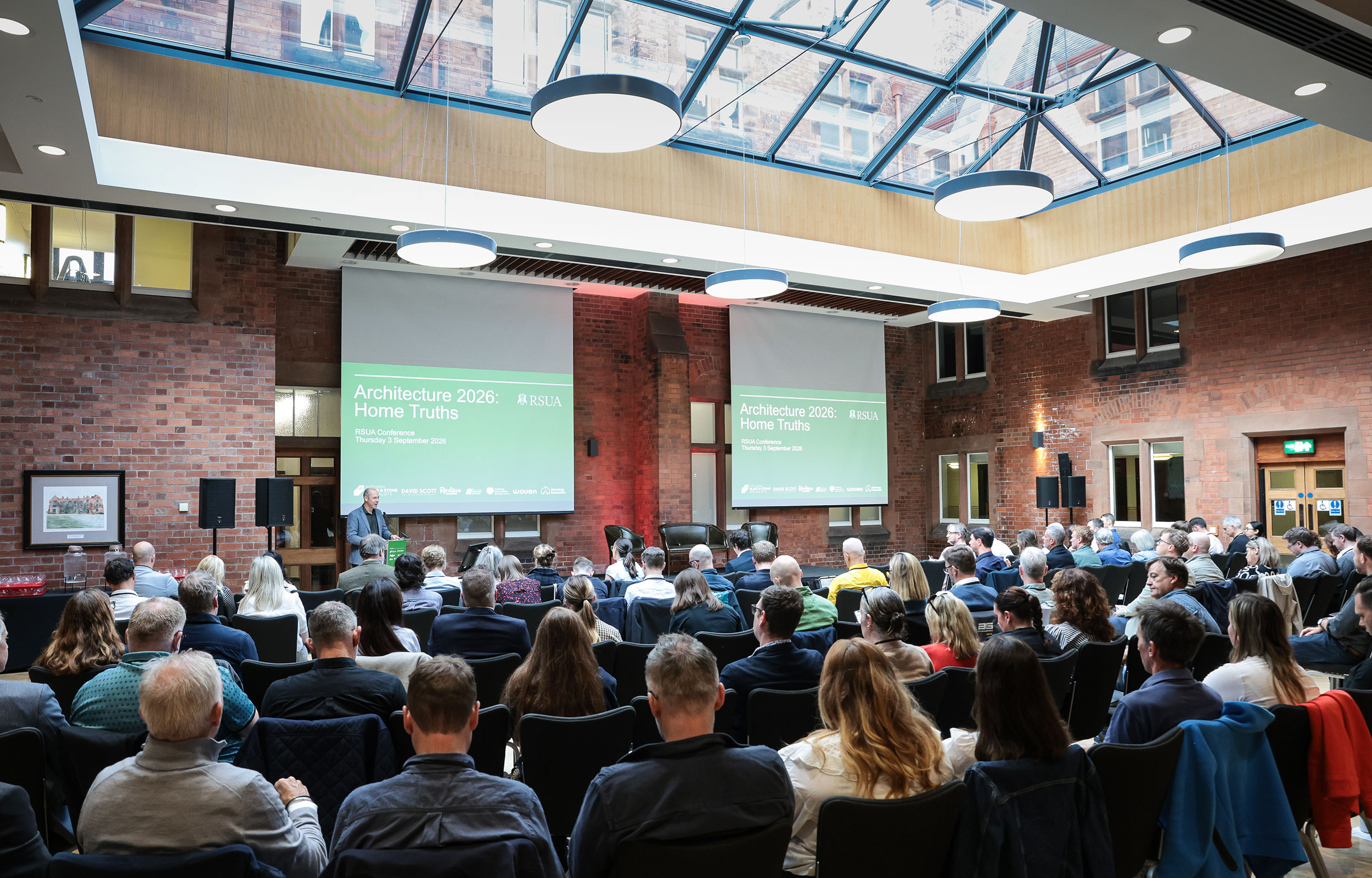
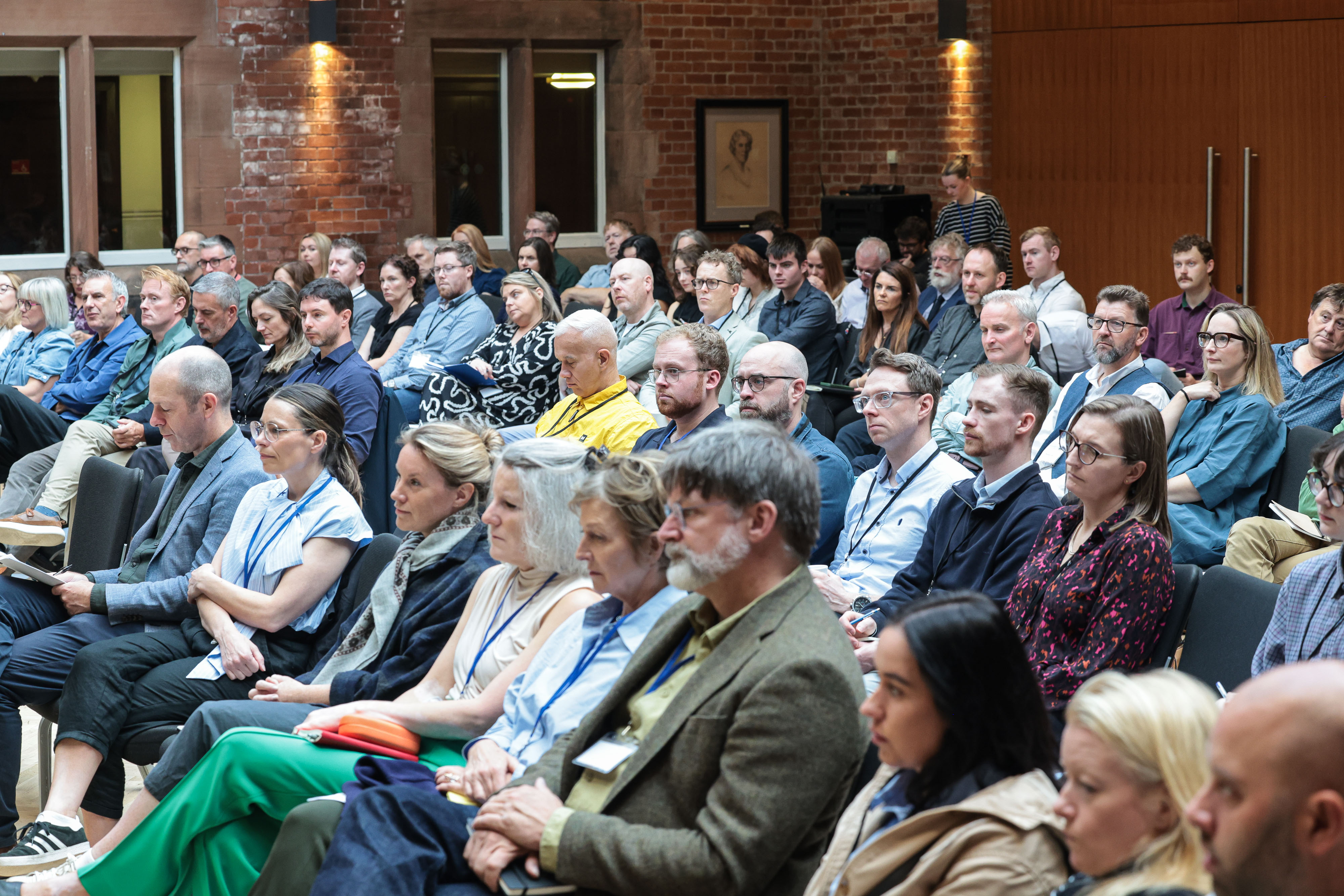
The newly renovated Riddel Hall situated on the campus of Queen’s University Belfast was the host of the second annual Royal Society of Ulster Architects (RSUA) conference, which was aptly named Architecture 2026: Home Truths. As the title suggests, the series of lectures and panels attempted to take stock of current housing design trends while also taking a chance to project more broadly into the future of housing provision.
The event was split into three sections, each with one or more lectures spanning varying scales of housing, followed by a panel discussion chaired by RSUA Director Ciarán Fox. Seven guests spoke across the day, with chances for informal dialogue scattered throughout. Although the conference acts as a diagnostic for construction across Ulster, what was immediately apparent was the international character of the invited guests. So although the conference provides some opportunity for conventional architecture exhibition, the visitors bring a sort of exotica to the discourse, acting as a catalyst against local stagnation.
Quoting T.S. Elliot, RSUA President James Grieve stated that ‘Home is where one starts from’[1], and indeed so too this event began with the motif of the rural house/home, and its entrenchment within the Irish rustic ideal. Eilidh Izat (Izat Arundell) and Roisin McCann (Marshall McCann) both presented examples of one-off rural homes, with the former presenting a case for locality and craft being the primary driver for highly contextual design. Focusing on the construction of her own home, Izat mapped the almost totalising extent which the island itself, the Isle of Harris, provided for the build: from the Lewisian gneiss stone which was quarried 5 miles from the site, to the construction team made up of entirely family or local builders. Izat’s presentation was ultimately an expression of local craft in home building, but projecting further, it provided a case for how subtle reference to surrounding regional building peculiarities could pave way for a new vernacular, one without pastiche or nostalgia.
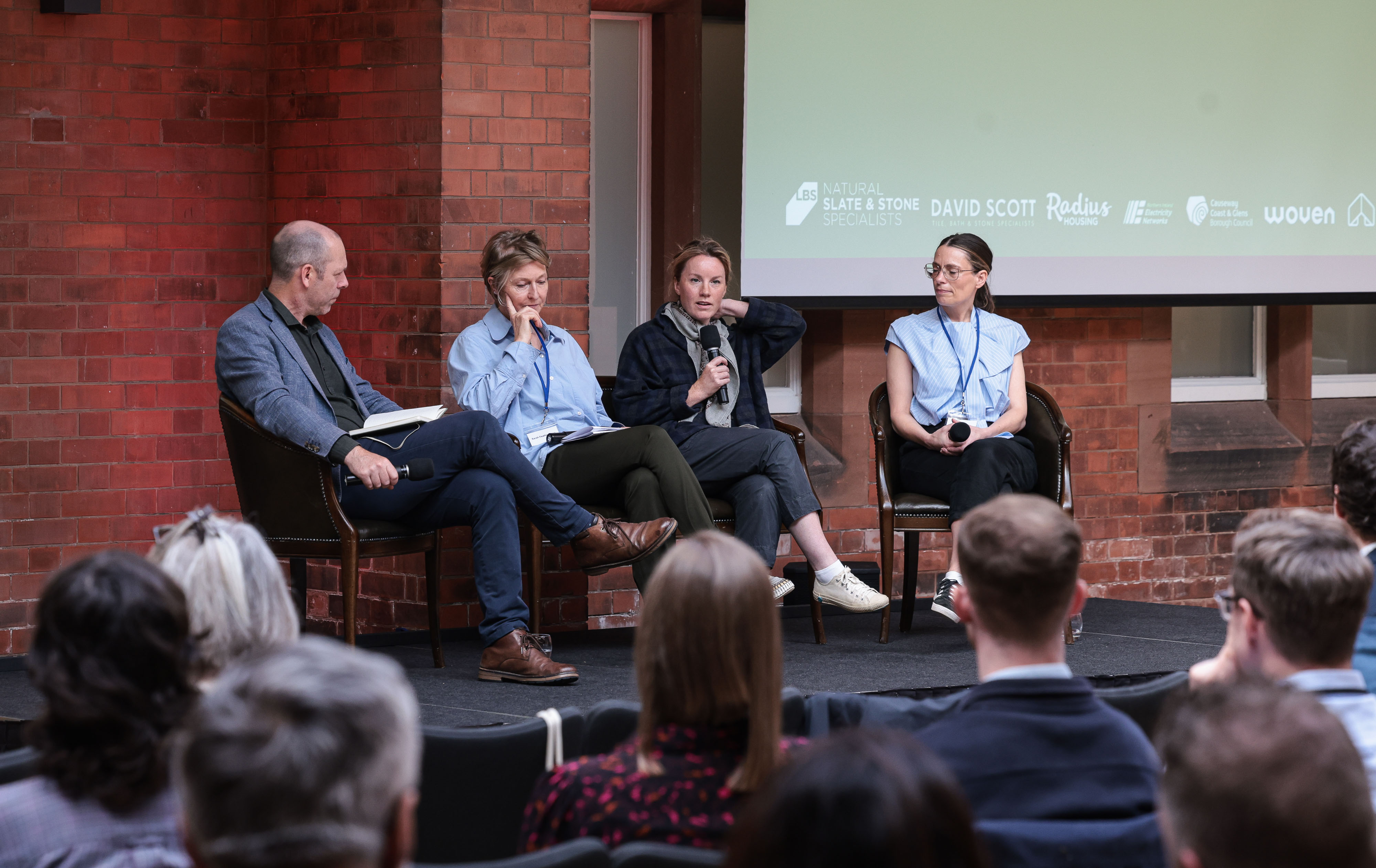
Mid-morning brought forth a shift in scale and spotlight, to one in which architects are often indifferent to, if not slightly ambivalent: the provision and procurement of housing. Speakers Siobhan Porter (Apex Housing) and Claire Bennie (Municipal) highlighted the many actors who, although often disparaged by architects, are crucial to engage when attempting to deliver housing of high quality. Both previously engaged in architecture directly, Porter and Bennie confidently argued that intelligent and robust design is the ultimate qualifier for successful housing developments and provided insight into how they attempt to champion this within their respective procurement bodies. However, Bennie also supplied a reality-check to architects in the audience, arguing that the profession is often let down by its ignorance (intentionally or not) to the importance of the building life beyond handover. In an industry rife with meticulously-curated portfolios and websites, Bennie positioned the lived experience of the built artefact and the community it fosters as the ultimate measure of accomplishment.
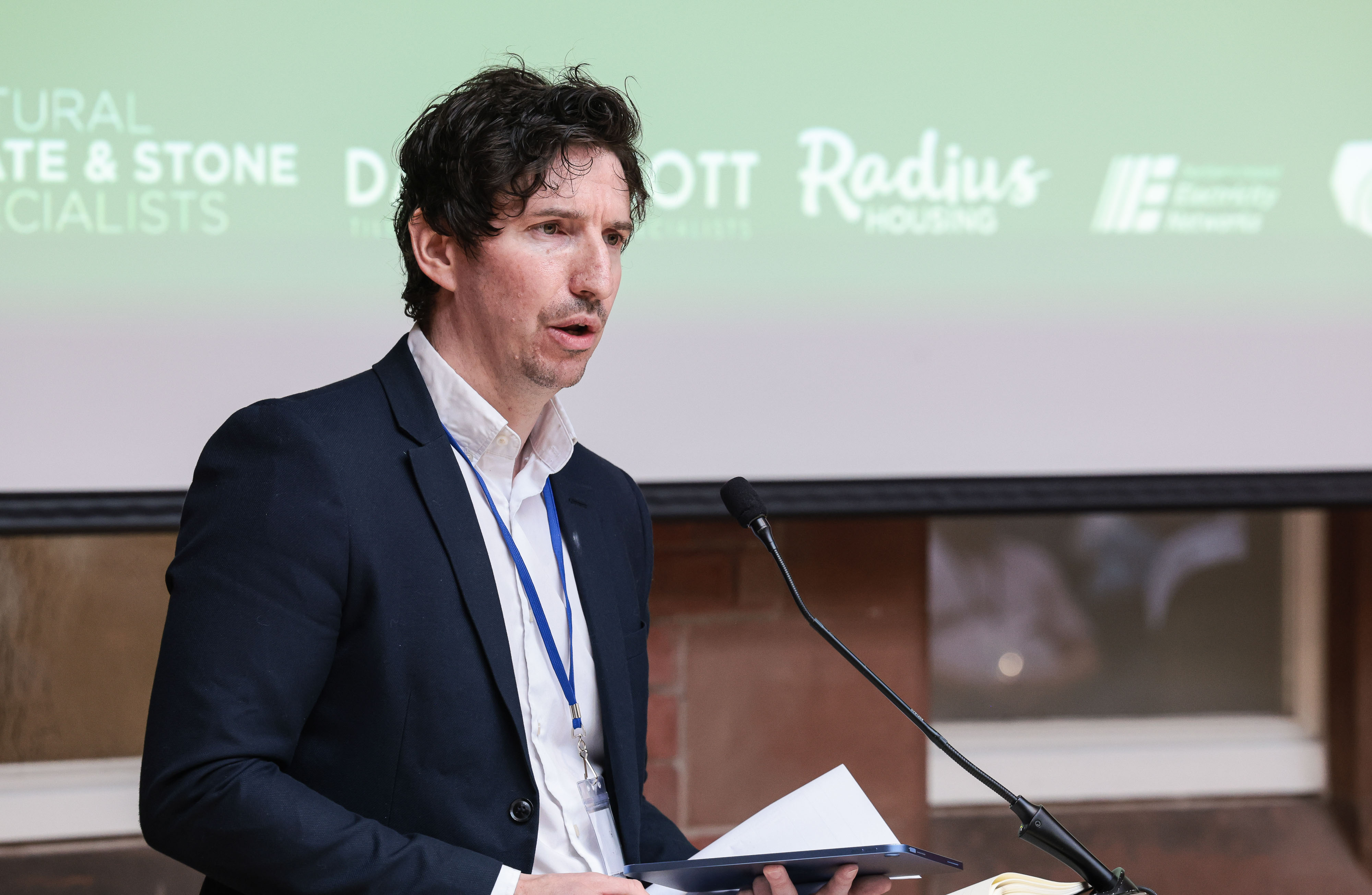
To conclude the conference, architect Oliver Schulze (Schulze+Grassov) provided his keynote lecture Home is not a housing unit or, as he changed it to on the day, Retain or Explain in reference to Denmark’s new construction idiom which is driving national planning policy. Initially presenting the sobering, but nevertheless damning, reality of the construction industry’s impact on our changing climate and pollution, Schulze summarised his involvement in the shaping of the Architectural Design Code pamphlet for the Danish city of Kolding, which can be used as a reference for the municipality when assessing future development in the city. Presenting the delivery of diverse streetscapes as the maxim, Schulze deemed that the architect’s role in urban design is to develop interfaces at the human scale, whether that be a permeable approach or otherwise. With this approach, the designer is forced to scrutinise the built fabric and make more intelligent extensions or transformations rather than any wholesale architectural gesture.
Although this discerning approach to design is something we have come to expect from our Northern European colleagues, inserting these principles on this land seems to be decisively more difficult. Schulze went on to discuss lessons learned from his involvement with the Belfast Waterfront before concluding with imagery of Belfast’s latest housing project: the North Street and Donegall Street Developments. The scheme aims to breathe life into a now neglected district of the city with the lofty promise of one thousand new homes interspersed around public realm development. Although Schulze praised Belfast for its existing modest network of pedestrian streets around the city centre, he commented somewhat solemnly on some of the obstacles that faced him and his colleagues in implementing a ‘street-centred’ approach into the city, due to the reality of statutory bureaucratic processes. However, despite the development’s previous 'cynical' iterations, Schulze did not hide his enthusiasm for the scheme, and so too his warmth towards the city as a whole.
The North Street and Donegall Street development is indicative of an inflection point in housing provision across the island. As the island’s population rockets towards its pre-famine levels, the Irish cities descend deeper and deeper into a housing crisis. So far the cities have responded through sprawl, often leaving valuable crumbs of vacated or dilapidated inner city housing stock on the table. With the absence of a cohesive design direction, speculative development has no issue with eating up ripe greenfield sites on the fringes of our urban centres, perhaps even believing this to be the solution. It is abundantly clear that the Irish cities must adopt an approach that incorporates higher densities, while infrastructures must deliver services to support them. But the old Irish dog may find it hard to learn new tricks, and the dog(ma) of building a home on one’s patch seems to be an inevitability, without meaningful challenge. This promise of one thousand homes in a city centre is this challenge on paper, but as discussed on the day, the proof lies in the developed artefact.
What Home Truths provided was an annual opportunity to debate housing and cities - the fly in the ointment of an otherwise affluent economy, both North and South. What remains to be seen is whether the learnings presented in these debates leads to tangible changes in approach, or whether we will wait until the conference swings around next year, to talk about something else entirely.
Ben Murray reviews ‘Architecture 2026: Home Truths’, the 2026 conference of the Royal Society of Ulster Architects. The conference was held at Queen’s University Belfast on 3 September 2026.
Read
The wide glass doors which bookend the room were left open. The occasional sounds of street laughter, magpies and seagulls were grounding, giving an immediate sense of place. Even though you float above the context, you're aware of your surroundings in a controlled way through sound, shadow and the occasional chimney.
Orla O’Kane’s Studio Sessions has returned.
Studio Sessions began in 2024 with co-hosts John Tuomey and Sheila O’Donnell of O’Donnell + Tuomey Architects. It was held in their garden studio space and across six evenings, they interviewed people in the arts of personal interest to them.
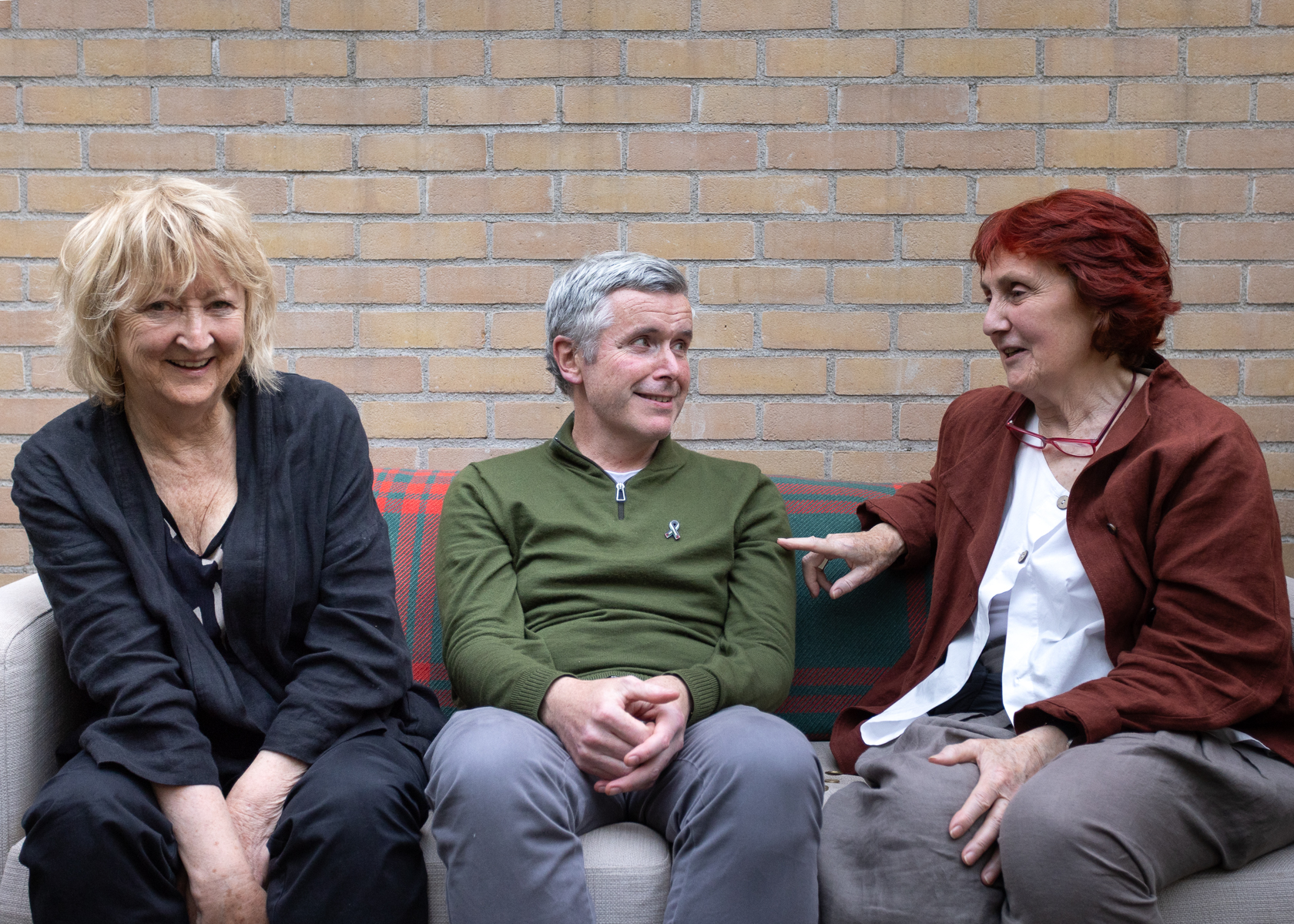
Upon celebrating twenty years in practice, Peter Carroll of A2 Architects was invited to host this next series. Peter is a Dublin-based, Limerick-born architect. Before establishing A2 Architects he worked with O’Donnell + Tuomey in Dublin and Raphael Moneo in Madrid. He is also currently the head of the School of Architecture in Limerick. The conversations happened between June and August this summer and took place predominantly in Peter’s house on Lucky Lane. Peter interviewed architects and artists who had influenced his life and work, each was given a title; The Enabler, Master, Mentor, Encouragers, Originator, Provocateur and Initiator.
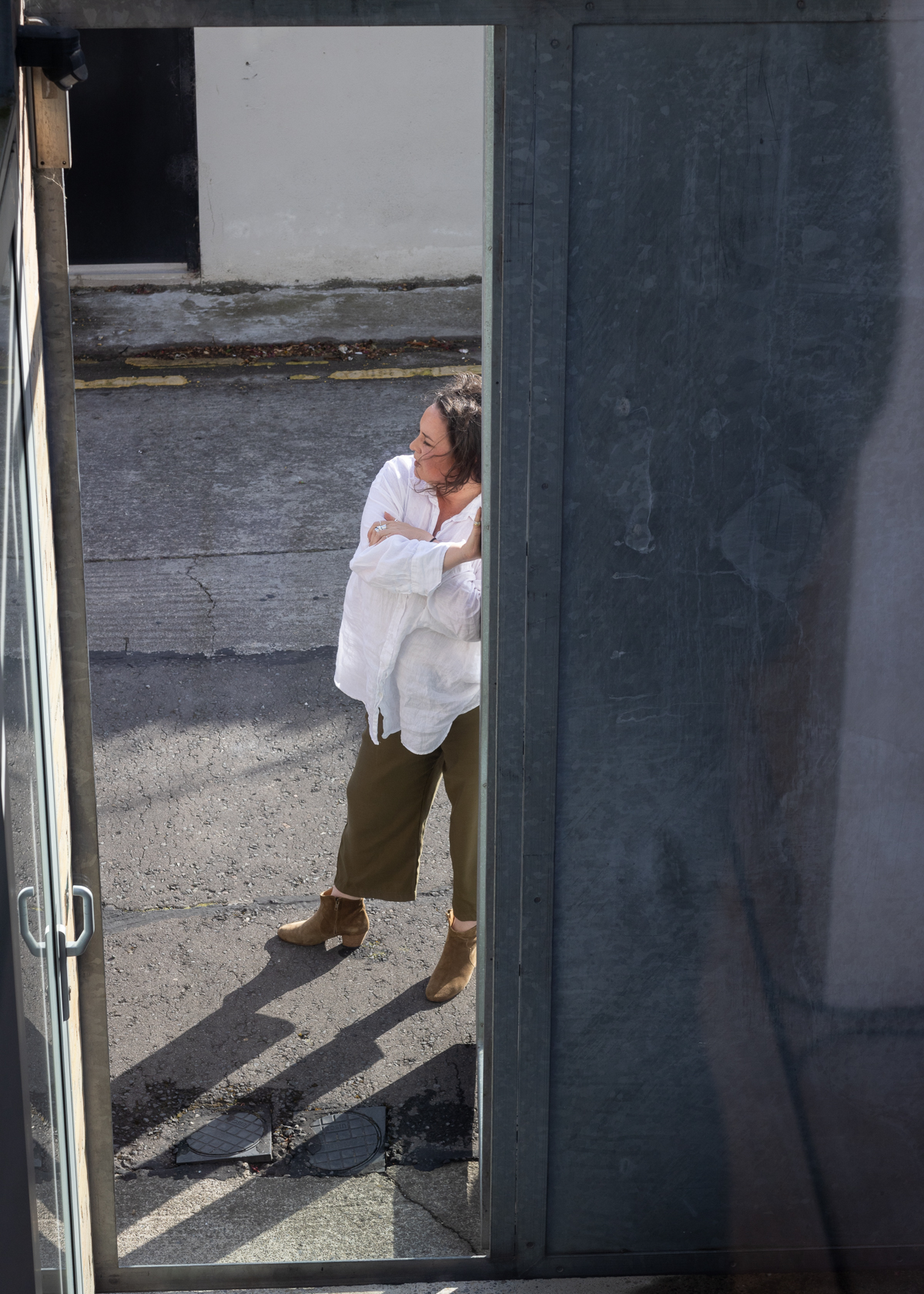
Arriving on the lane each evening, Orla greeted people in the courtyard as it filled up with bikes. The recordings took place in the upstairs living space, the centre. Voids and terraces on either side, the courtyard on one, a duvet of ferns and maturing trees on the other. The audience faced a backdrop of gently-rocking silver birch. The dining table was iced like a cake every evening with meats, wines, cheeses, and fruits. Much more than your usual complimentary glass of warm white wine at some post-work book launch. A clear statement of care.
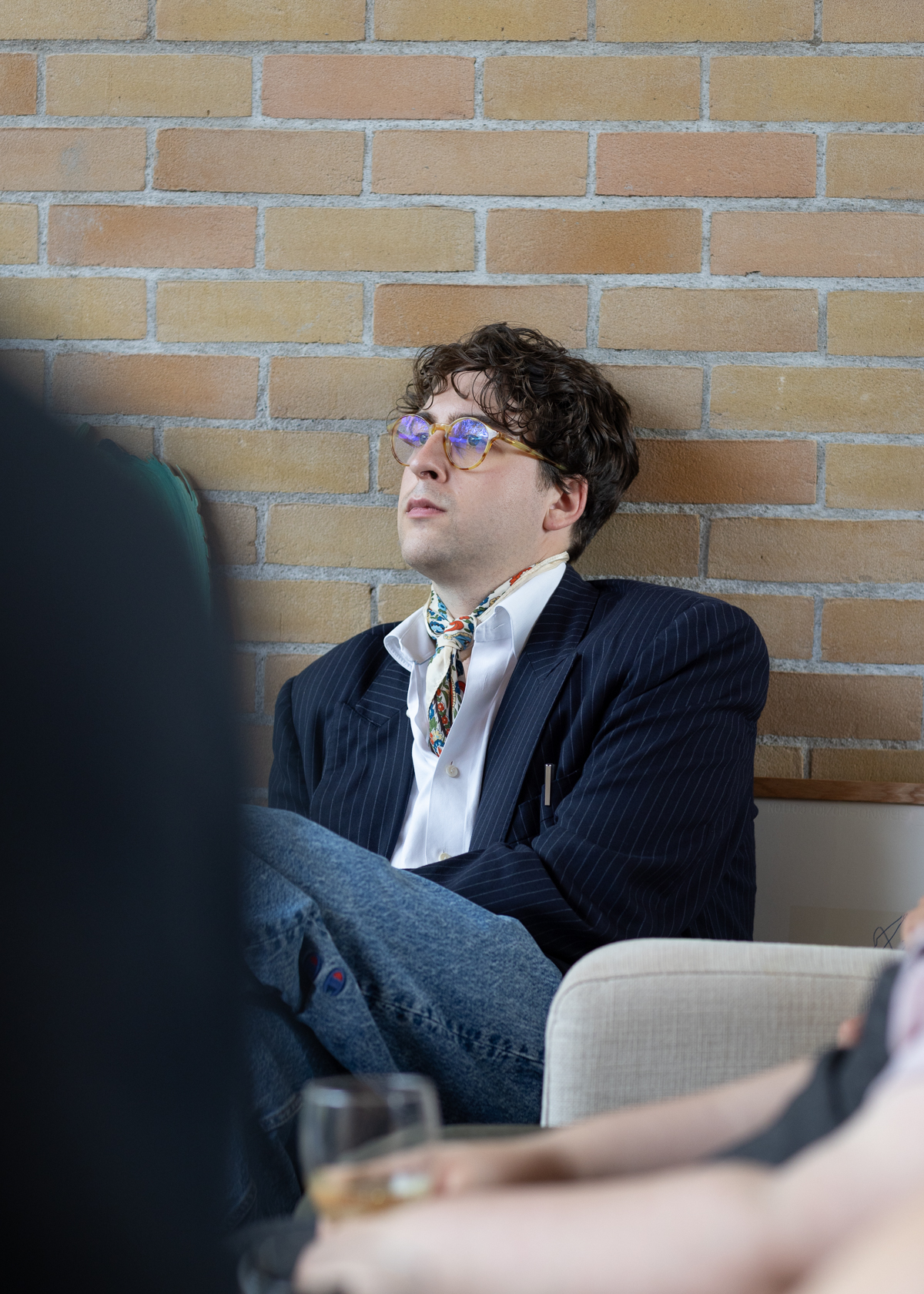
The room quickly filled, around twenty sitting snugly together. The mélange of people that Peter attracted to his house was eclectic. Students, emerging architects, masters, artists, and strangers. The coffee table was carefully dressed with objects of interest, fragments collected through the years that related to the guests. Sometimes referenced during conversation but often enjoyed by the audience afterwards.
There was a natural flow between topics. Guests were given the space to elaborate at length about shared interests and experiences, thoughts on the profession and details of artistic practice. At times it was deeply personal yet always retained a light-hearted, lively, audience-focused energy that was simultaneously engaging and soothing. The conversations were relaxed, many of the guests had worked alongside Peter throughout his career so it was as though we were watching old friends catch up. A temporary studio culture began to form each week, rising and falling like breath in a sleeping chest.
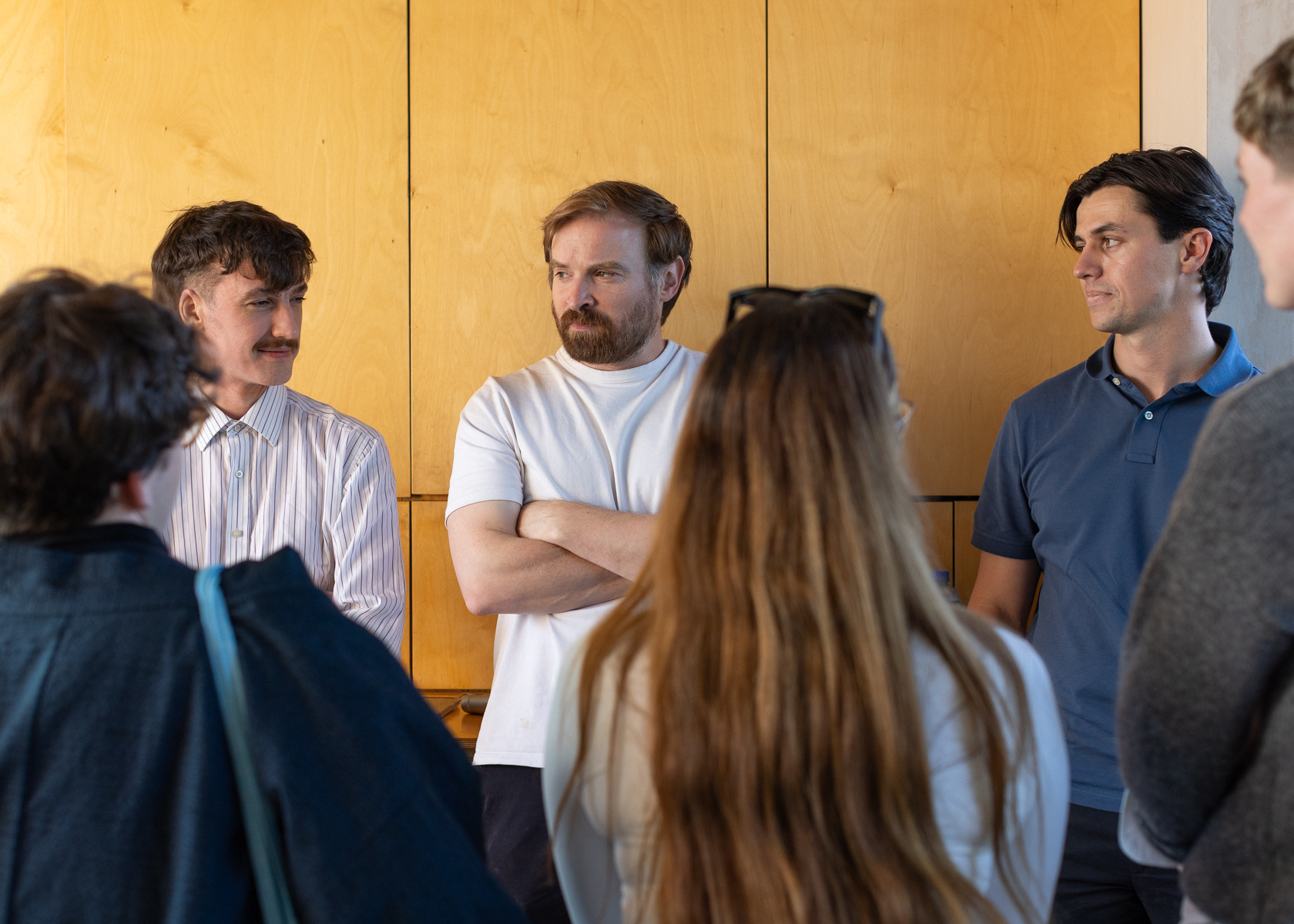
The value of these sessions lies in the willingness of the interested individual to pause, to have the pleasure of sitting still for an hour in the world of these stories. I experienced candid reflections between masters and mentees both within the confines of the recording and in the hours after, moving around the room, flitting between conversations of new and familiar faces. The recordings are a slice through the middle of everything discussed in those long evenings. People gather around the couch and the conversation continues on. The sun goes down and the lamps on the floor melt pale bricks into gold.
There is a pleasant layering of interaction with this body of work, in how Peter connects to the guests, in how his space connects to the public of the night, in the participation of the intimate audiences with each other and then the listener stepping into the room through the recording. The character of the future, non-physical listener is present in the room, and there is a sensitivity to their presence despite them not having arrived yet. Peter and Orla’s understanding of the care required for a successful studio ecosystem was evident throughout.
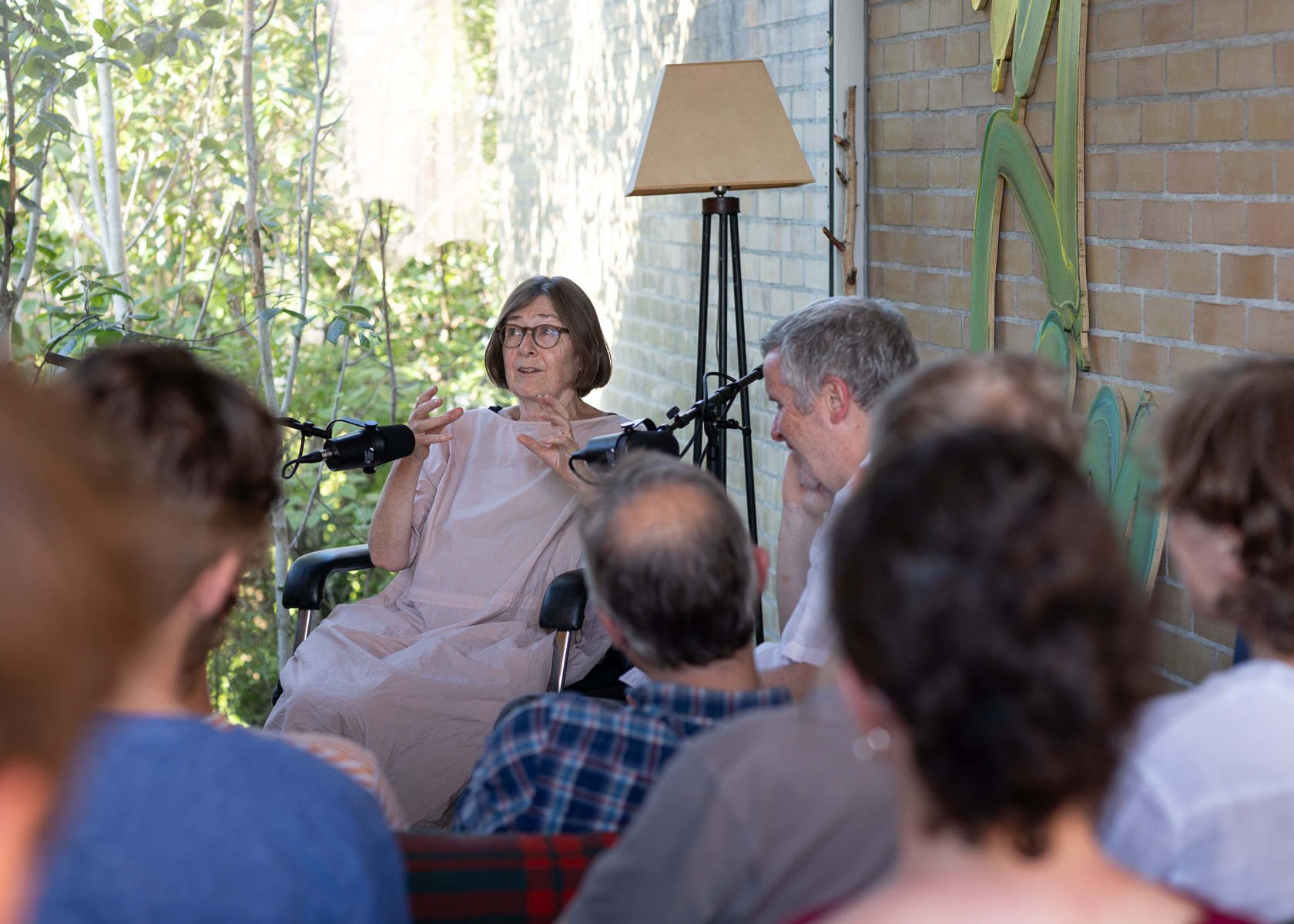
The safe haven of Peter’s home studio welcomed the public generously, drawing people together in a warm and unpretentious fashion. The house felt like an essential organ in the city this summer through the weekly ritual of the conversations. These cultural organs come and go throughout the year, but in the making of the podcast Orla has created an artefact with the careful curation of one of these spaces. The exchanges are approachable living moments, a collaborative effort of the room on each evening. On second consumption they will get redigested by the public to once again create a new conversation that may be greater in scale and a new experience for the individual listener.
Leaving architecture school brings the loss of an established studio space. It has left me considering the importance of what spaces such as these bring to a small and interconnected community like the Irish architecture scene. A solid centre is something not nearly as readily available as one would like. These evenings granted the much-needed opportunity for a group of architects to come together, beginners, established practitioners and those in-between. These events can't bear the total weight of our need for specific creative social space in the city, but they do become a momentary flourishing of architectural culture because of the well-made occasion for the robust sharing of ideas and stories. It's not a panacea, but a vital succour.
The Studio Sessions of A2 Architects included the following speakers: The Enabler - Merritt Bucholz - 03.07.26; The Masters - Sheila O'Donnell + John Tuomey - 09.07.26; The Mentor - Rafael Moneo - 13.07.26; The Encouragers - Shelley McNamara & Yvonne Farrell- 23.07.26; The Originator - Peter Cody - 29.07.26; The Provocateur - John Gerrard - 05.08.26; The Initiator - Niamh McCann - 10.08.26. Recordings will be made available on all podcast platforms.
The Studio Sessions podcast is made possible by the support of the Arts Council, provided by way of a 2026 Project Award.
For more information, see thestudiosessionspodcast.com
Norman Price reviews 'The Studio Sessions of A2 Architects,' a series of discussions and recorded podcasts created and produced by Orla O'Kane. The series had seven sessions across July and August 2026. It celebrated the twenty years since the establishment of A2 Architects with conversations between Peter Carroll and curated guests. Discussions took place across two venues in Dublin and one in Spain. The Studio Sessions podcast was supported by the Arts Council through a 2026 Project Award.
Read

Website by Good as Gold.